
Three campus food locations close for the academic year
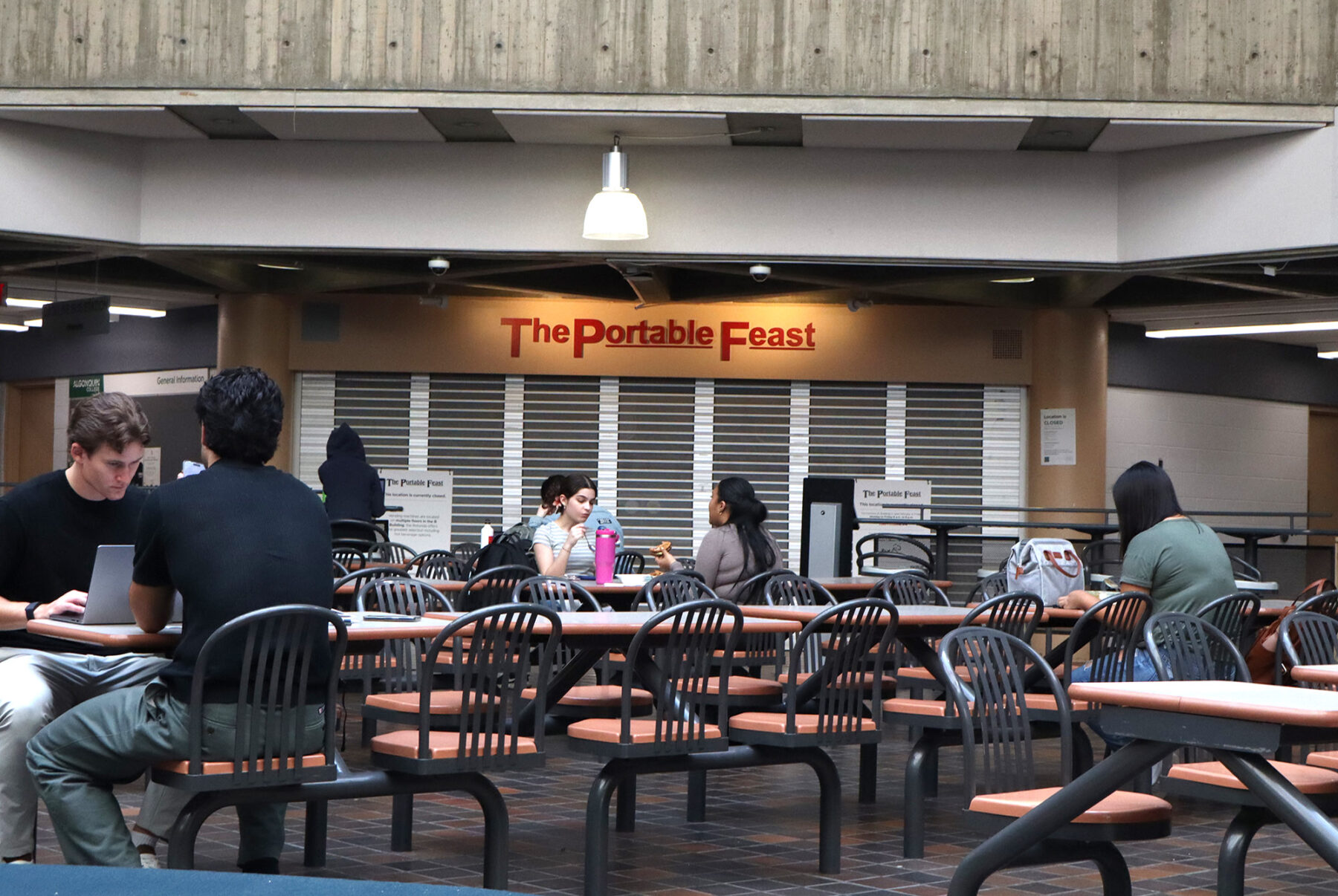
Algonquin College has closed three of its food service locations at the Ottawa campus for the fall semester as it plans to contract out the school’s food services.
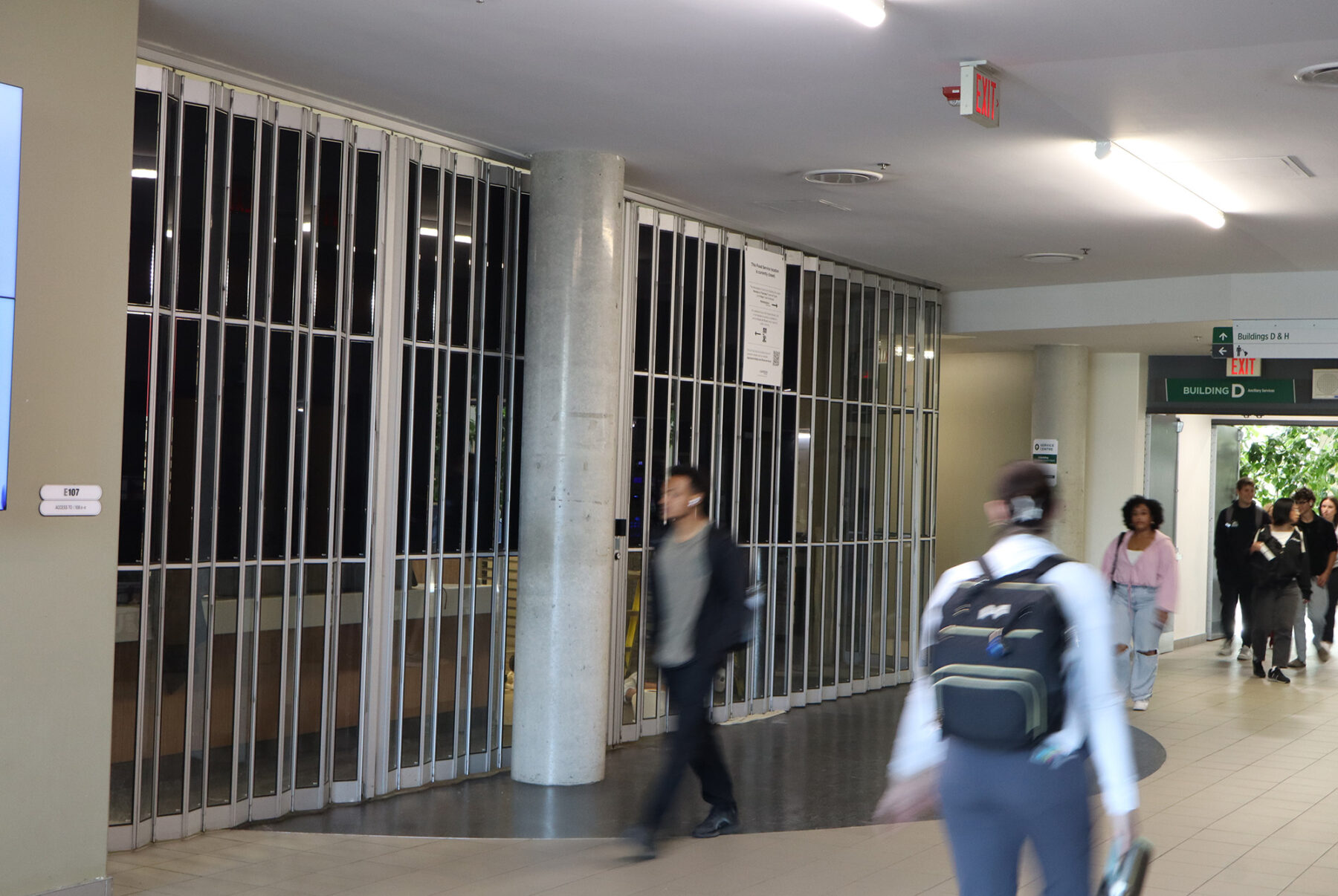
Bits n’ Bytes in T-building, Booster Juice in E-building and The Portable Feast in B-building are all temporarily closed, with no formal announcement from the school. At each of these locations, there are signs encouraging students to use the remaining food service locations along with the vending machines all around campus.
These closures coincide with the Students’ Association closing the Observatory as a campus pub, making it a space that can only be rented.
Originally, the college expected six food locations to remain open for the semester, alongside the school’s vending machines. However, Tim Hortons in A-building and The Fix in ACCE-building temporarily closed due to the ongoing full-time support staff strike.
The only campus food locations open during the strike are the Wolves Den, Starbucks, the food market in D-building and the 35th Street Market Cafe in residence.
Students are left with significantly fewer food options on campus than they were offered during the last fall and winter term.
“It’s a shame,” said Darian Cassidy, a music industry arts student. “On campuses, you want to have a lot of options. If you go to a university, they have one or two cafés, a student bar (and) fast food on site,” he said.
Cassidy explained that he is also thinking about the students who were employed in these locations.
“It sucks, because you are taking jobs away from people who probably need them.”
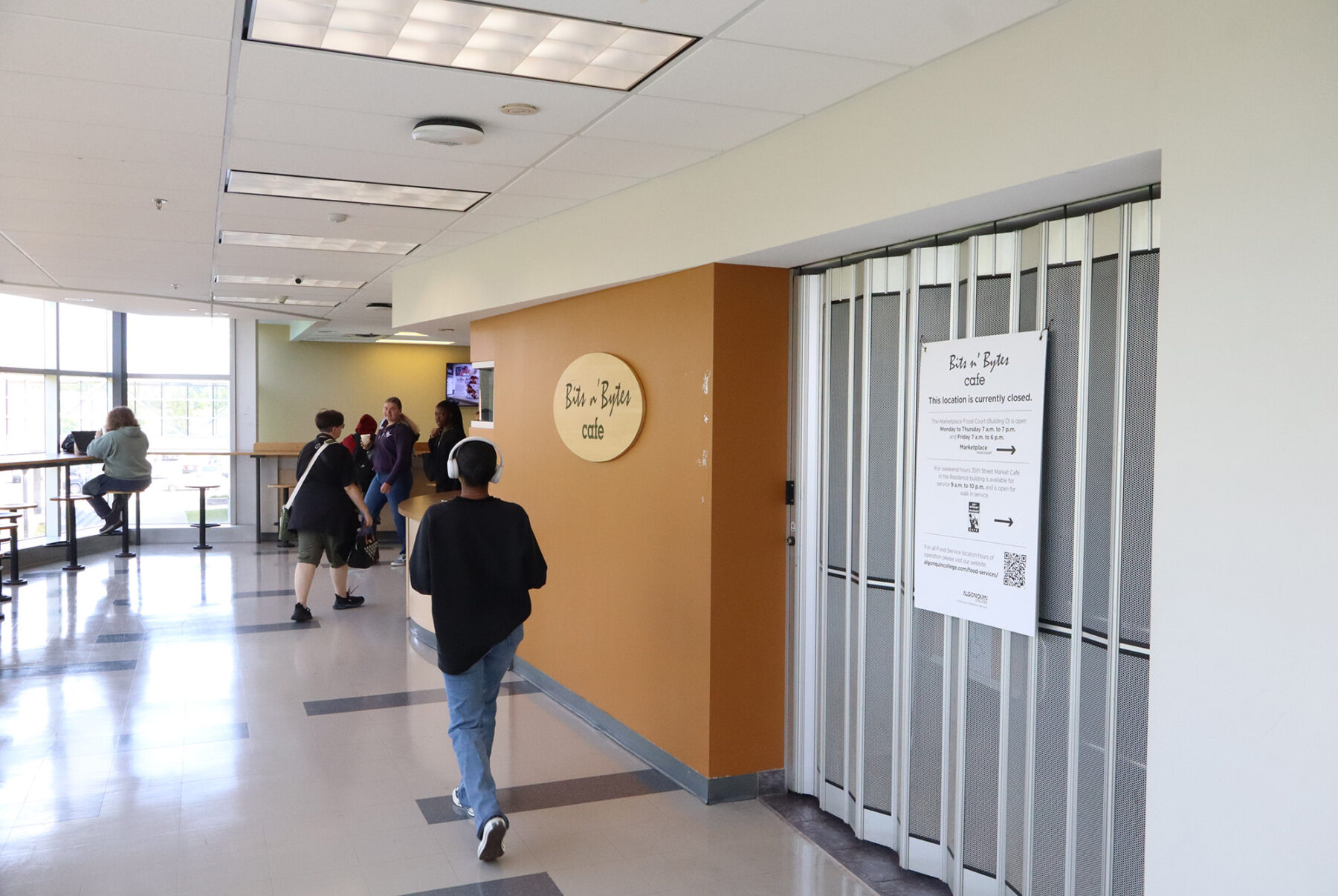
Mary Baxter, the general manager of Food Conference Services, said the decision of these closures “was based on reduced enrolment and financial performance.”
“Ahead of the fall, we review enrolment numbers and financial forecasts to plan food service hours for the upcoming academic year,” she said in a written response. “As a result of this planning, we decided to open a number of locations based on the forecasted demand.”
All of the impacted employees from these locations were relocated to other food locations, according to Baxter.
When asked about the effect this will have on students with meal plans, Baxter said: “Based on previous sales within the closed locations and the reduction of enrolment on campus, the impact is expected to be minimal.”
Students with meal plans are able to purchase food from the locations remaining open. However, they are not able to use their meal plans at the campus vending machines, which have been presented as an alternative by the school.
While Tim Hortons and The Fix are expected to reopen after the strike, the three closed-down food locations are not expected to open this academic year, according to Baxter.
This change to the campus locations is coming alongside the recent announcement that the school is planning to contract out food services.
On Aug.18, Grant Perry, the vice president of Finance and Administration, told the campus community about the college’s plan to outsource food services.
“Over the past several years, our food services operations have experienced sustained financial losses,” stated Perry. “Rising operational costs and increased competition have made it increasingly difficult to maintain a financially viable model.”
The school has started a request for proposal process in order to find a suitable partner to take over the food services. The school is hoping to make the transition in the 2026 spring/summer term if the process goes as planned, according to Perry.
If the college does not find a partner, the school will continue operating food services and will reassess its options.
Perry’s message to the campus stated the school is prioritizing financial sustainability, service quality, affordability and alignment with the college’s values during this process.
Claude Brulé, the president of the college, discussed these same difficulties in February.
In a message to the campus community, Brulé mentioned a potential $60-million deficit for the current academic year and a $93-million deficit in 2026/2027 if the school does not intervene.
Brulé identified measures taken by the school, which included the program cuts. Food services losing locations and being contracted out were never mentioned in the February message, although Brulé acknowledged that there would need to be action to eliminate the deficit.
Cassidy is not sure how to feel about the food services being contracted out, but there is one thing he hopes stays the same.
“Ideally, I would like students to be employed, especially on campus,” Cassidy said.
Due to the process still being underway, Baxter was not able to comment on the potential changes this may bring to the campus food locations.
Brulé and Perry couldn’t be reached for comment on the future of food services.