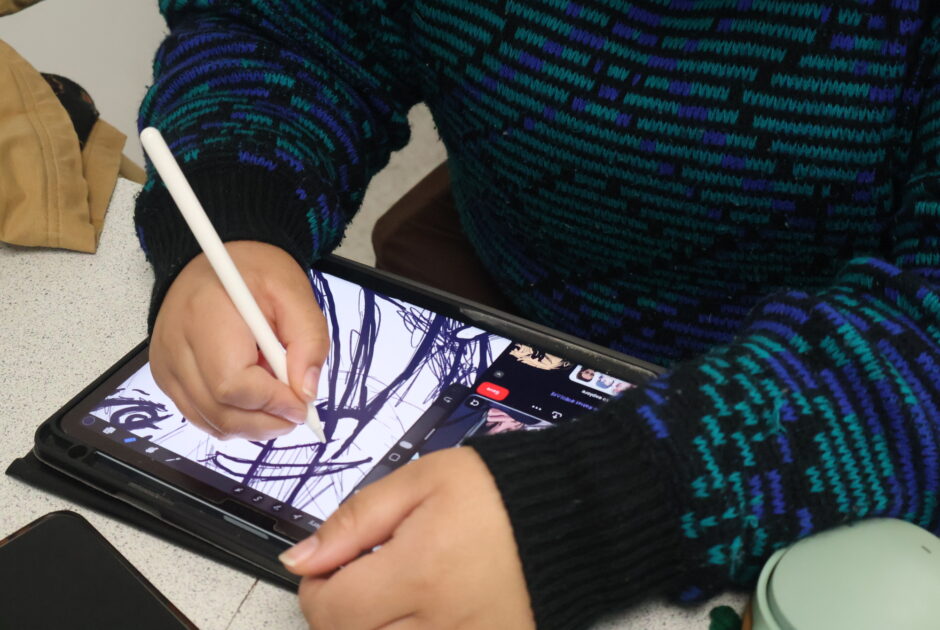
Tech club building more than just robots at Algonquin

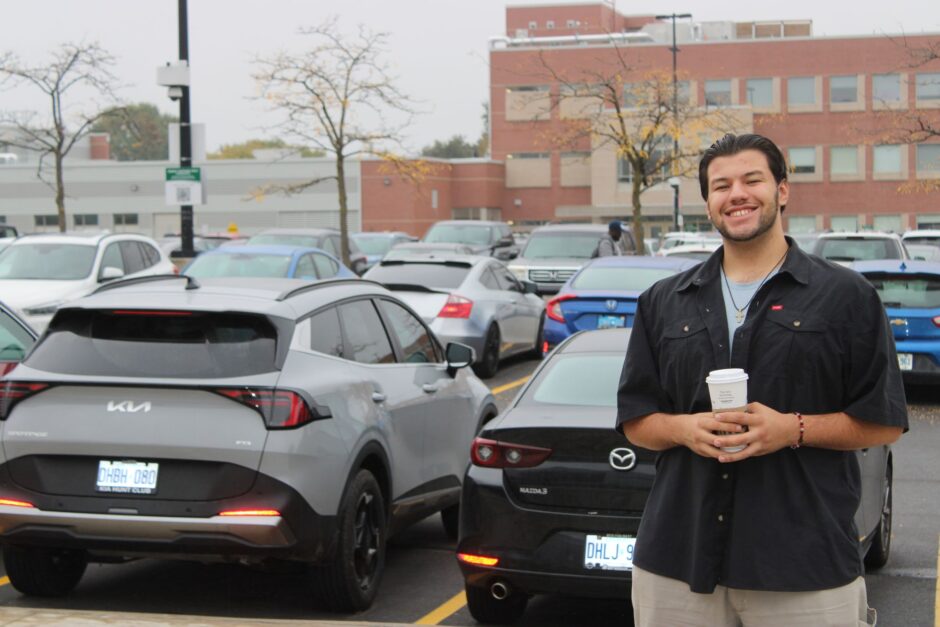
When Dwij Brahmbhatt came to Algonquin College in 2023 to pursue his bachelor of engineering (automation and robotics engineering), he sought out a robotics club, only to find the college didn’t offer one. So he did the next natural thing: he made one.
“(I thought) if I can’t find it, maybe perhaps I’ll start my own so somebody like me who comes newer, they can join our club as well,” Brahmbhatt said.
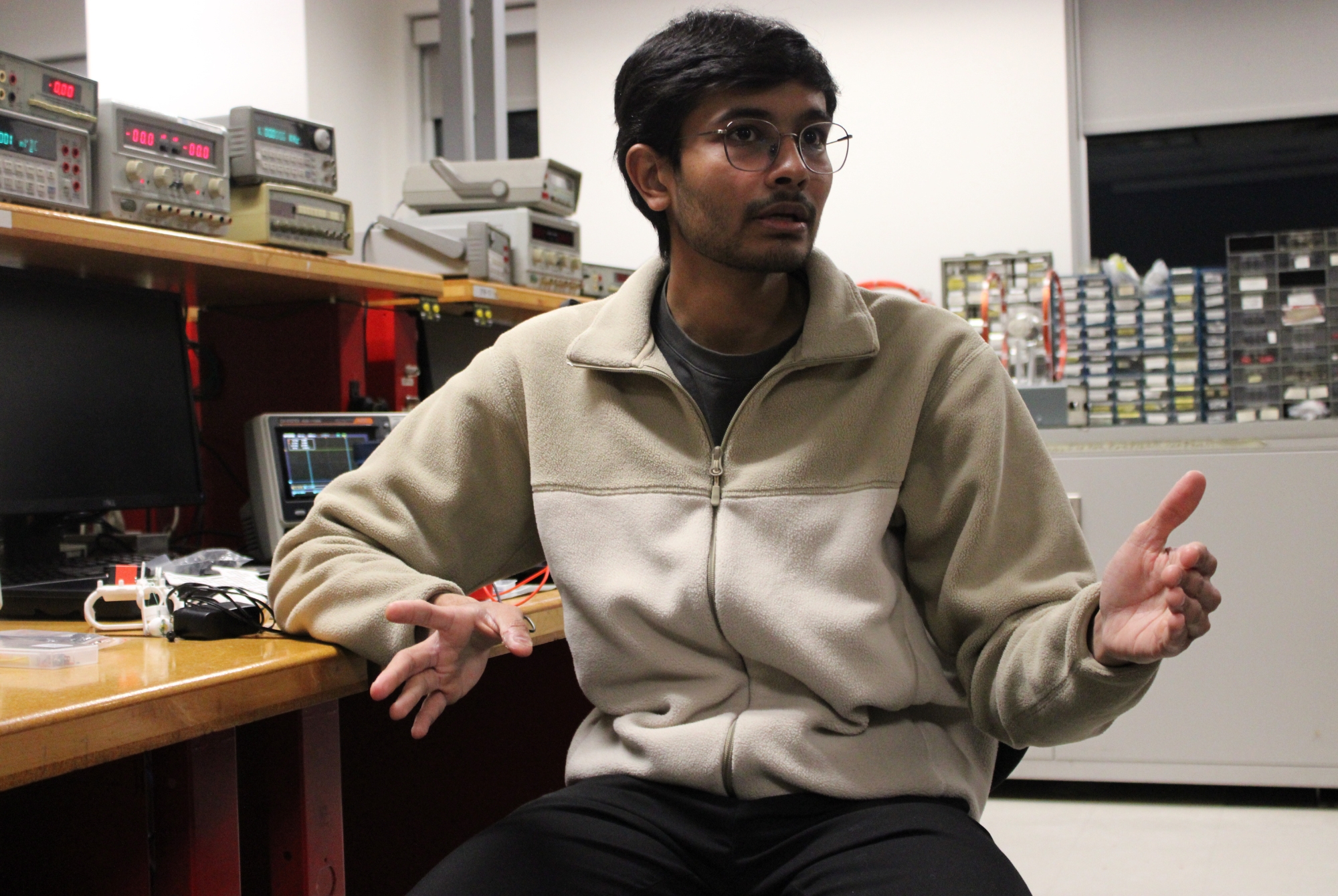
Brahmbhatt, along with co-founders Miguel Fausto and Iliya Papoulias, had club meetings for the next two years, collecting members along the way from similar technology programs.
The club, now recognized by the Students’ Association, has become a place not just for engineering and tech students, but for students from all programs to come work and learn.
“Now, we even expand it to outside of tech people – like arts, PR people, we have marketing, culinary arts, travelling students,” Brahmbhatt said, explaining that he wants to continue diversifying the club.
“People join from whatever background that they have,” said Fausto. “And not only learn (but) also have their own ideas, have their own projects.”
Fausto came to Algonquin from Mexico, where he had attended a robotics school in his youth, to pursue his engineering degree. He recalls the in-class project that inspired the club’s first real brainchild: a robotic arm that they decided to take to the next level and turn into a gauntlet.
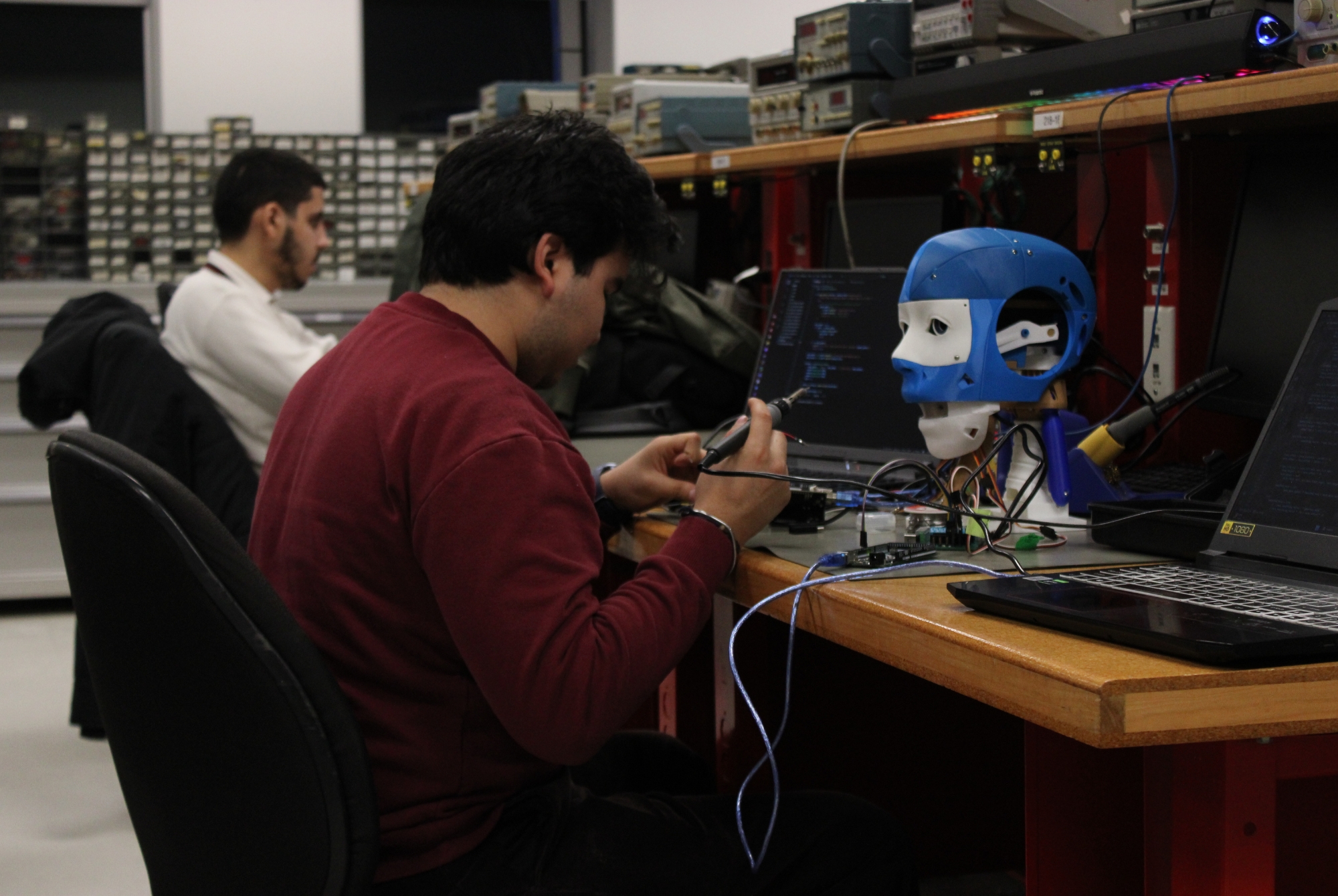
“Our next project from there was the robotic head…We (decided) to build the head because it’s more visual. And the eyes move, and you can talk back. It was a great project,” recalls Fausto.
The robotic head is named NIKO (neural intelligence knowledge operator), an AI-powered virtual assistant. It solves problems, tells jokes and has a camera in its eyes that tracks your movement, making its eyes follow in that direction.
Newer member Haeden Fethi-Henriquez describes being excited about something they’re working on now, a drone called AERIS (autonomous exploration and reconnaissance intelligence system), that could potentially be used to send into volatile environments like nuclear facilities rather than sending people.
The drone is part of an initiative the club has called “Engineering That Gives Back”, where the club focuses on projects that benefit both professional growth and the community. Along with the drone, they’re developing a low cost prosthetic hand aimed at improving accessibility and quality of life.
“We need a bunch of sensors for (the drone) to be able to work and communicate with itself. But we need to have those sensors communicate with themselves. And that’s called fusing the sensors, or centrifusion. And for that, we have to kind of code little pathways to each other,” said Fethi-Henriquez.
A computer systems technician student, Fethi-Henriquez grew up moving around a lot as an army brat. He says the connections he’s made here in the club are important.
“I have made, probably, the closest friends I’ve had in my entire life,” says Fethi-Henriquez.
“The club has been the place where I’ve been learning the most compared to my program or my personal hobbies. I’ve been learning so much to the point where all I can think of are the projects that I do for the club.”
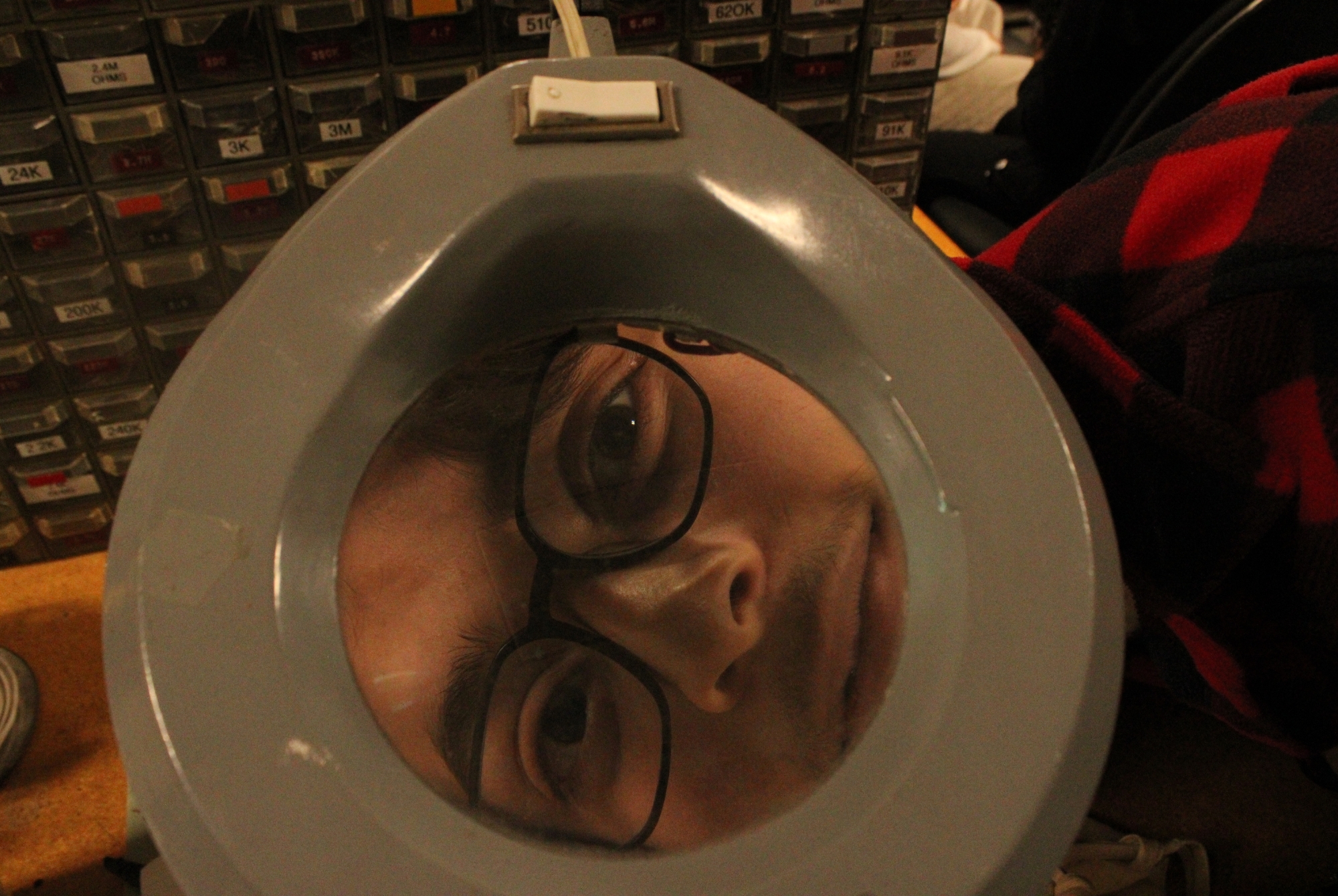
It’s clear the club has been influential in its members’ lives, and possibly to Brahmbhatt and Fausto’s program as well.
In 2025, the bachelor of engineering (automation and robotics engineering) program was accredited by Engineers Canada.
“Our program started from 2019, and they’ve been trying to get accredited,” said Brahmbhatt. “One of the criteria (for) accreditation is how are your students actually applying whatever they are learning? In that, some of the members from the club actually got interviewed and they talked about what they actually do in the club.”
The Canadian Engineering Accreditation Board had visited the college every year for six years. Last year was the first visit to result in the program being added to their accredited list. It’s the only program of Algonquin’s on the list.
As Brahmbhatt and Fausto prepare to graduate next year, Brahmbhatt is reflecting on what he wants for the future of the club.
“Our goal is to create a big community where even (when) we go, we pass down to other people and it stays long in Algonquin,” said Brahmbhatt. ”So, whenever someday I come back and I see, oh, this club is still running. Because that was the plan from day one.”
Computer engineering technology student and new club member Mahmoud Hajoui plans to do just that.
“(This has been) the best experience I could have had. I had my expectations, but this is much better,” said Hajoui, who is set to graduate in 2029.
“It’s so fun. I love it. I cannot wait to get to come to this club after I finish my classes.”