Students get their voices heard in a panel discussion with Ottawa city councillors

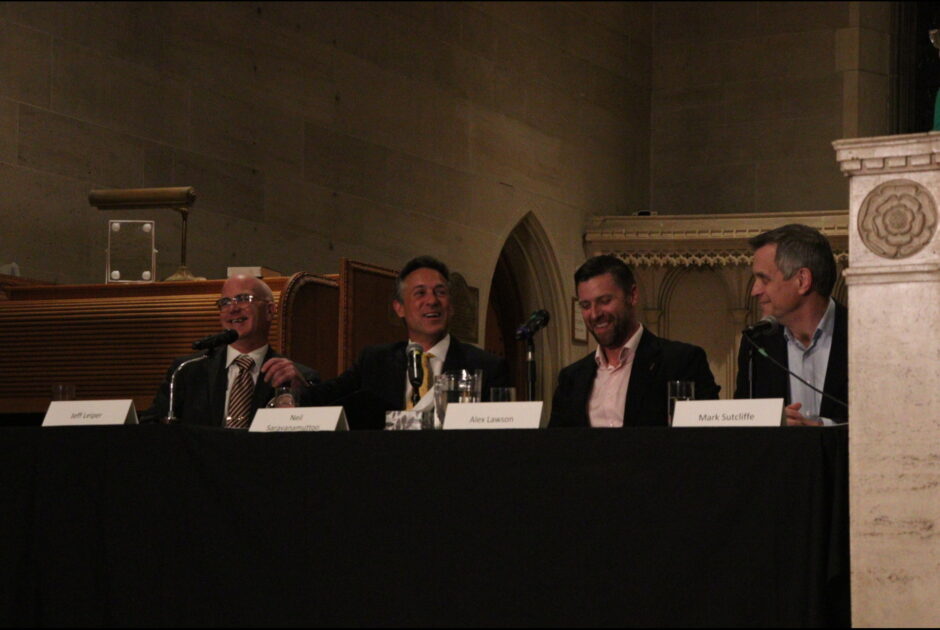
Students filled the Algonquin Commons Theatre on Jan. 29 for a candid conversation with Ottawa city councillors, speaking directly on their own issues and representing themselves in an unfiltered setting.
“When we are making city decisions, we’ll often hear from people who speak on behalf of young people,” said Laine Johnson, councillor for College Ward. “I believe that young people and students have a strong idea of what they want and need.”
Hosted by the Algonquin Students’ Association, the panel opened with brief introductions from each councillor, who outlined the priorities shaping their work during this term.
In addition to Johnson, the councillor panel also included Jeff Leiper, chair of the planning and housing committee; Glen Gower, chair of the transit committee; and, Tim Tierney, chair of the public works and infrastructure committee.

Johnson opened the discussion by acknowledging the past few weeks on campus and drawing a connection to the city’s own financial strain, while providing consolation to the students.
“I know that the tenor at Algonquin College has been somewhat sombre over the last week or so, and I’m very disappointed to hear that the college has had to make further cuts,” said Johnson. “We feel similarly at the City of Ottawa as an institution that gets, our financial support from other levels of government.”
When the discussion switched to current student issues, housing was one of the first topics.
Johnson mentioned that during her campaign, housing emerged as the primary concern, with discussions centred on older homes being divided into multiple rooms or apartments to address the demand for affordable housing, which was deemed unsuitable for students.
“They weren’t necessarily meeting the needs of students. And so, one of the things that we really wanted to see happen was more purpose-built rental housing,” said Johnson. “When you build multi-unit properties, you actually get more control over garbage, storage, parking and things like that, that you wouldn’t necessarily have when you slice and dice a home.”
The discussion quickly shifted to the topic of transit which was brought up by many students.
Gower talked about his community that predominantly travels by car, and he emphasized the need for reliable public transit that supports the entire city.
“People say, ‘Why am I paying more for transit on my taxes? Why are they running? Who uses the bus?’ I try to remind them,” said Gower. “Without transit, our society does not work. It amazes me sometimes how some members of the public don’t have that perspective because they drive.”
He also pointed to a major funding proposal now under discussion: shifting ownership of the LRT system to the province.
“What that will do is free up tens of billions of dollars a year that the city is paying that we can reinvest into our bus system so we can add more frequency to routes,” said Gower. “Whether they’re along Baseline or coming from Kanata or Leitrim or Barrhaven or wherever it may be, and I think in the coming years that’s going to be a real thing.”
The council has all sorts of responsibilities that they have to deal with, such as transit, homelessness, public health and infrastructure like sewers, roads, parks and community centres. Despite having property taxes as a tool, city council members still struggle when it comes to funding.
“We need good public services because good public services make life more affordable,” said Leiper. “But, we’re really struggling on how to properly pay for those services. So, it’s a real challenge and something that we deal with in many ways at city council.”
After having answered many of the audience-submitted questions and offering great insight on the inner workings of the Ottawa city council, the presentation ended with a closing address from Johnson, who encouraged students to reach out to their city councillors, noting that the councillors are accountable to residents and often act based on the feedback they receive.