Environmental tech students build weather station after years of anticipation
Three students embarked on a mission to build a weather station, which at times felt impossible, to learn more about weather trends in the Pembroke area
Photo: Pragnya Singidi
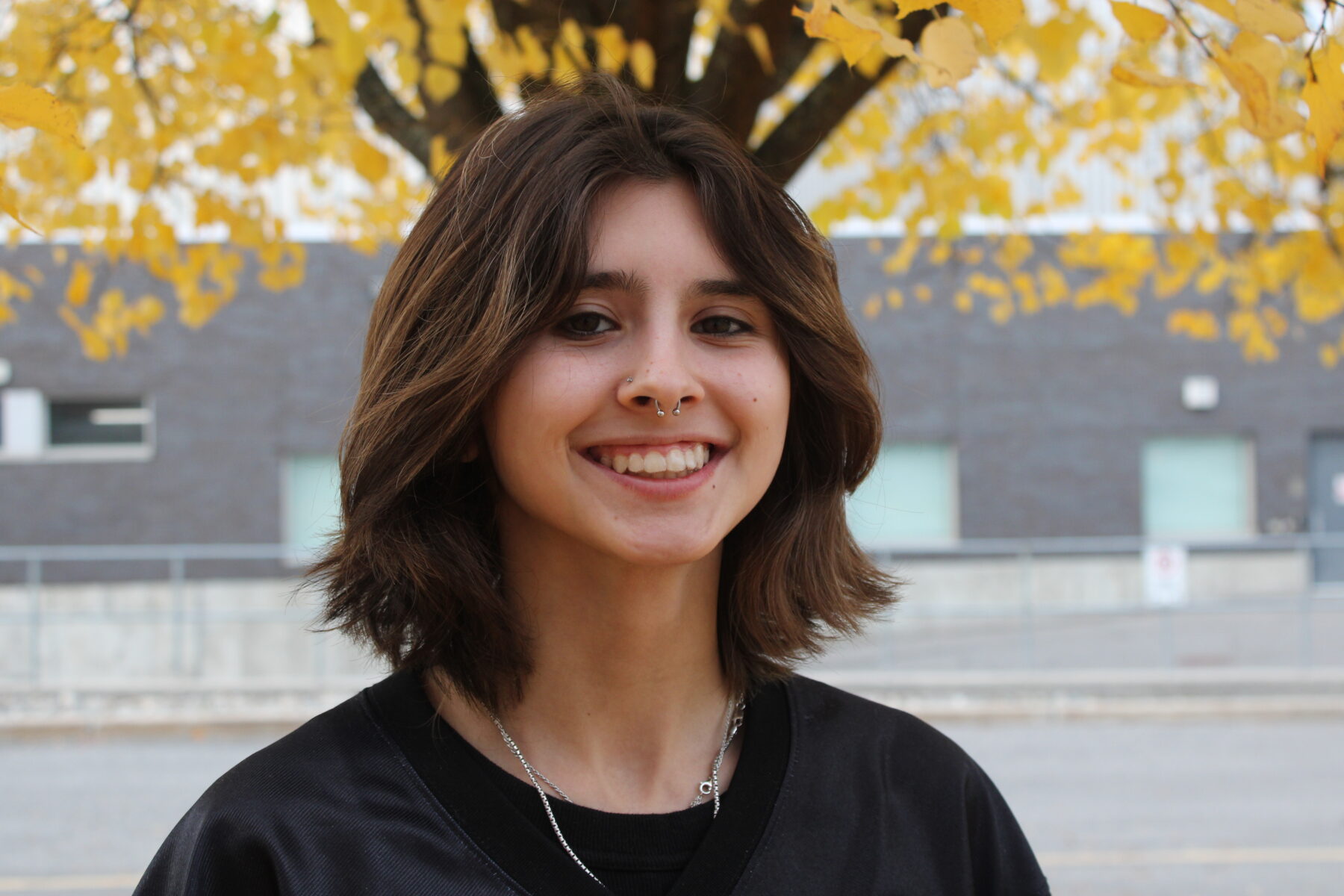
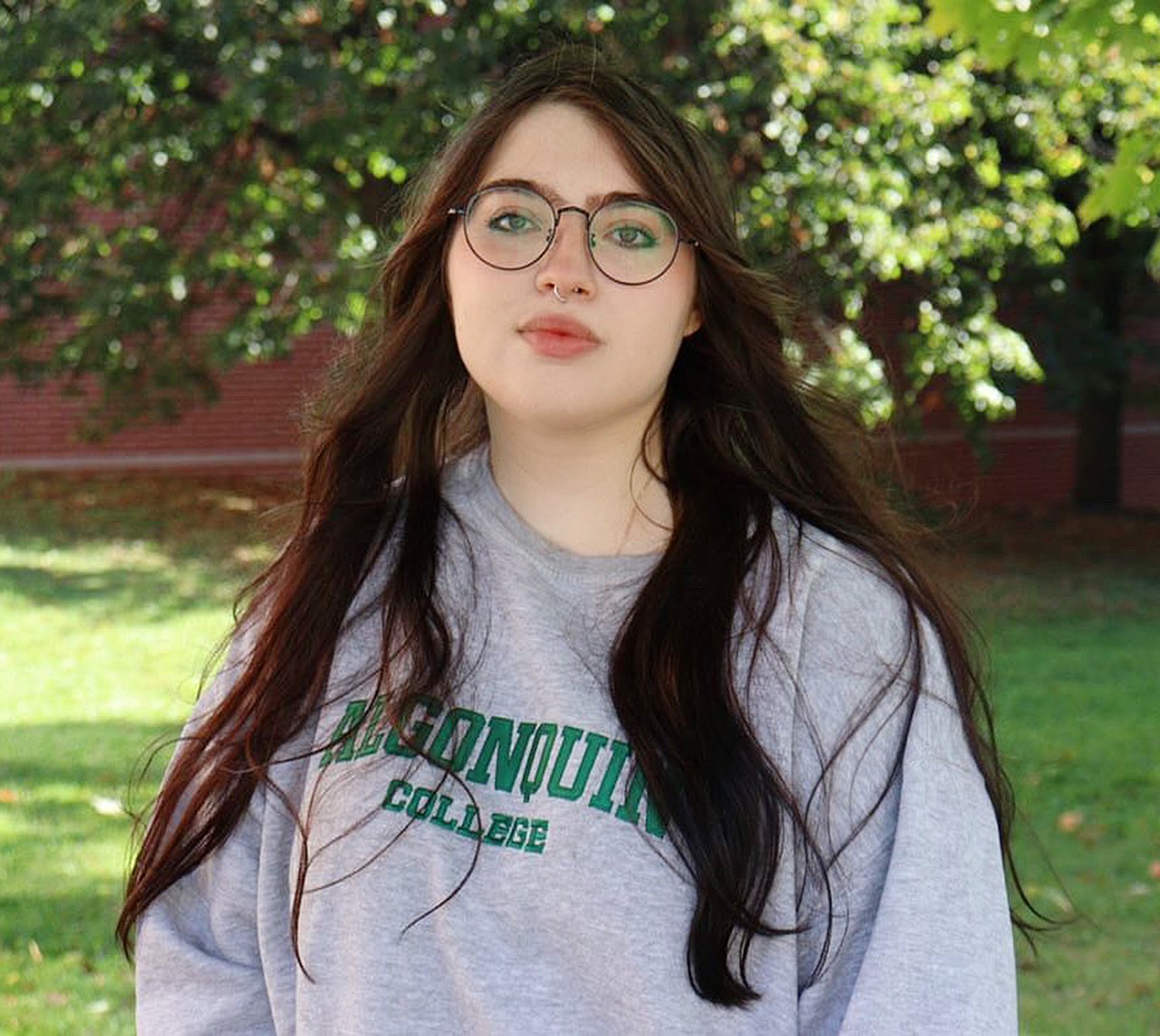
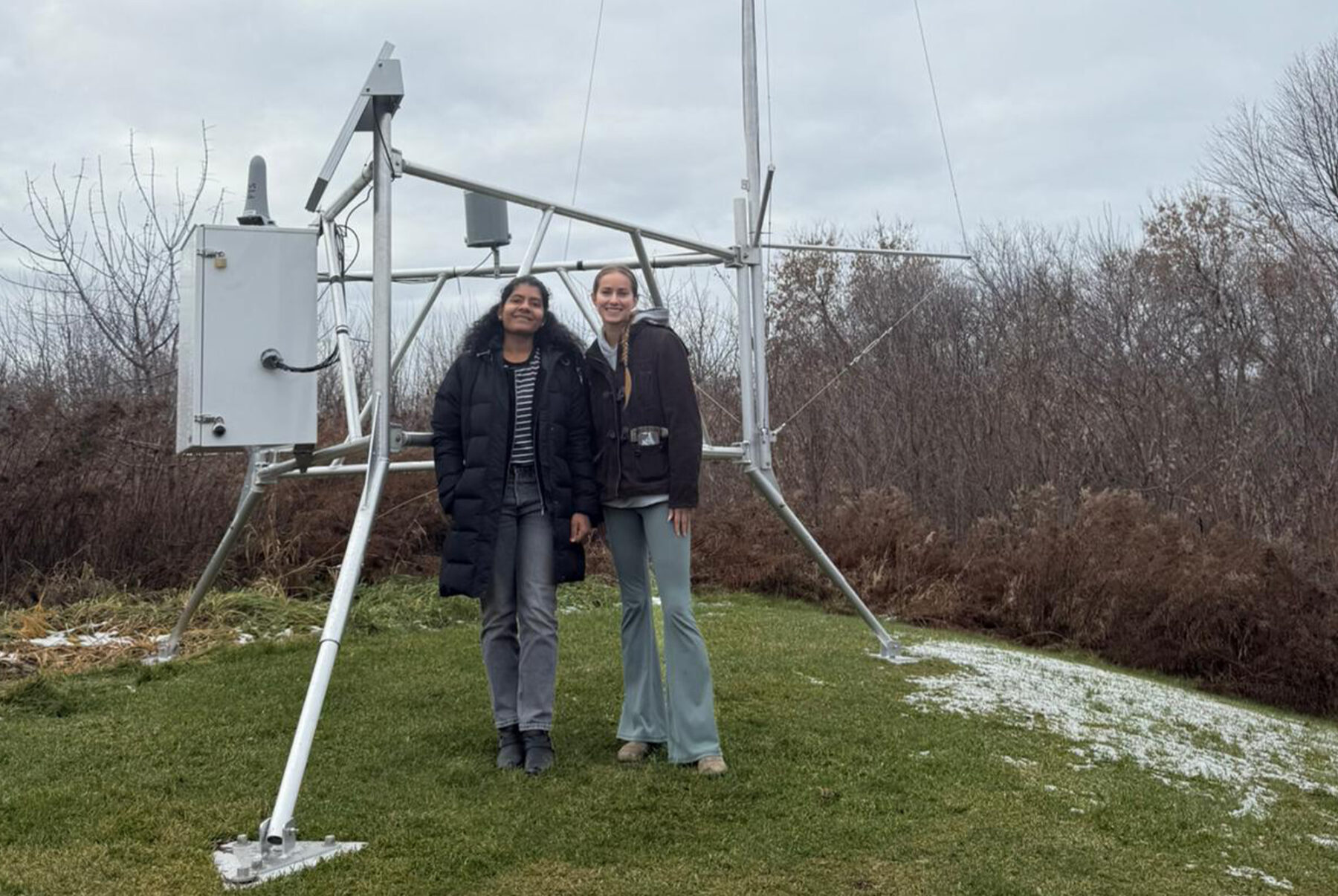
Pragnya Singidi (left) and Jenna Drefke (right) pose in front of the completed weather station on Algonquin College's Pembroke campus in November.

Algonquin College’s Pembroke campus has been dreaming of building a weather station for years. Now, despite certain challenges, the environmental technician program has been able to realize that dream and launch their very own weather station.

After years of inaction due to working out logistical issues such as who would build the weather station and where on campus it should go, the environmental technician program took it on.

As part of a Level 3 course based on land and water stewardship, students are assigned to work on a project that focuses on bettering the college community and collecting environmental data within the region. One of these projects turned into the weather station.

Four students were initially assigned to build and run the station, but one dropped out of the program leaving the project in the hands of three students — Jenna Drefke, Pragnya Singidi and Juniper Galt.

At the start of the fall semester, when the weather station team began their planning, they outlined why their project was important — the weather station will help educate future environmental technician students, high school students and authorities within the region, with the aim of spreading awareness for climate change and keep Pembroke informed on the weather.

“It’s (the weather station) really important for climate change because it covers all the parameters that affect climate change,” said Drefke.

Their mission this semester is to collect as much data as they can. Data is collected through numerous sensors which gathers information on precipitation levels, solar radiation, temperature, humidity and wind patterns. After the data is collected, it is sent to a computer through an EON2 GOES/Meteosat antenna.

“We are working on it to collect data and use it for future students,” said Singidi. “For instance, for measuring the precipitation, we’ll get to know how much rain we had in past weeks.”
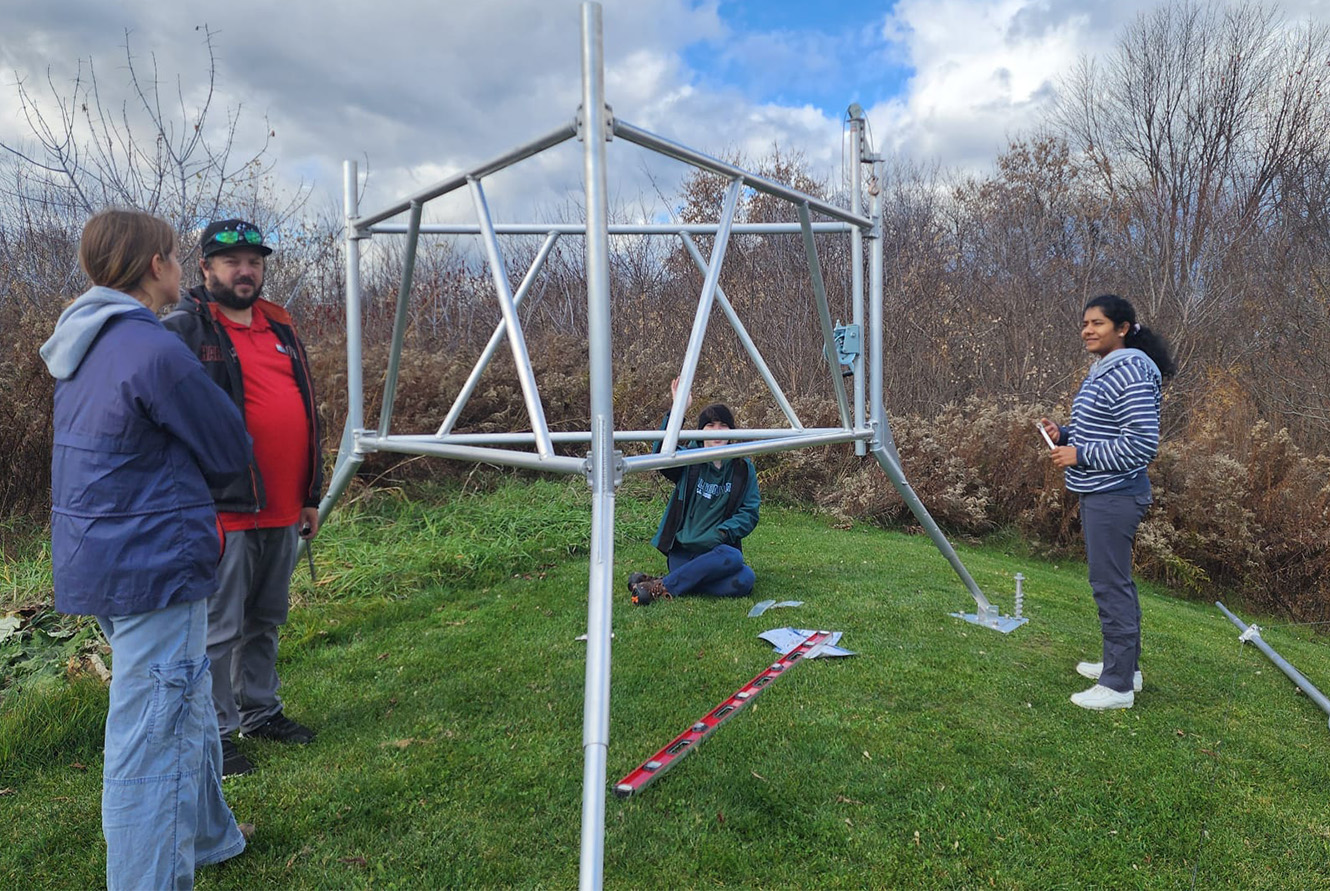
The weather station team and some spare hands working to put together the weather station on Algonquin College's Pembroke campus.
The weather station team and some spare hands work to put together the weather station on Algonquin College's Pembroke campus. Photo credit: Pragnya Singidi

A survey done by Abacus Data found 63 per cent of Canadians are concerned about climate change. Weather stations have always been an important way to track how climate is changing and inform the public of the same.

According to Environmental XPRT, weather stations are significant because of the information they provide. Meteorologists use weather stations to help predict weather trends and forecast natural disasters, as well as study climate trends. Farmers use weather stations to make decisions about their crops.

Not only is the weather station helpful for the public, but it is also helpful for the students in the environmental technician program. All the projects in the land and water stewardship course are designed to give students hands-on learning. Since the weather station team was building the station from the ground up, they faced several challenges over the semester.

One challenge the team faced was programming the equipment for the weather station. The team said their programming “involved a lot of trial and error,” resulting in the team wondering if the station could even be installed by the end of the year. However, to ensure success, the team decided to focus only on the weather-specific equipment – scrapping the original plan to install soil and water monitoring as well as the weather monitoring.

Despite these challenges, the team was able to come out on top, with the weather station becoming functional on Nov. 8. The team said the experience was great and really helped their learning.

“We didn’t have experience (using) mechanical tools and fixing these things,” said Singidi. “We don’t know the actual tools, how it works, how they (the weather station equipment) collect data.”

But now, Singidi and her team do know. And, with the stress of building the weather station out of the way, the team is able to learn from their creation.

“It’s certainly an achievement,” said Galt. “It was one that came with a lot of stress and frustration. I’m mostly just glad it’s done.”

This “achievement,” Galt said, is one that has “immense potential as a classroom resource.”

Singidi agrees with this sentiment and said the weather station provides useful information for students’ learning.

“Climate change means a sudden wind change, sudden rain, or like the wind direction or radiation change,” said Singidi. “That’s what we can measure. And by collecting the data from months, we can estimate what is going to happen next year or month.”

This is just the beginning for the weather station. Plans for next year include adding the soil and water monitoring sensors that were scrapped this year. As the years go by and the station collects more data, students will be able to analyze any trends found in the data. Galt said the data the station collects could also lead to future projects for the environmental technician students.

As the weather station team finish their final semester of the environmental technician program, they reflected on what led them to the program in the first place.

Galt said she has always loved the outdoors and grew up reading non-fiction novels about nature. This love for nature is what led her to the program as she wanted to help the environment.

“There’s something about it that feels like a duty, but I also enjoy learning about the subject matter,” said Galt.

Drefke feels the same as Galt.

“I have a strong passion for protecting the environment and there are a lot of environmental issues locally around the world,” said Drefke. “To be able to help fix those issues, I believe a better understanding of the environment itself would be the first step. This program provides that information.”

Singidi has a biotechnology degree, but knew she wanted to do more hands-on work. The environmental technician program and her experience working on the weather station has given her the experience she wanted.

“It’s about using my background in science to contribute to meaningful change and to help create a healthier, more sustainable world,” said Singidi. “We hope this project will benefit students and professors.”

Perth campus buzzing with anticipation for Bee Club

The newly created club unites people with the passion for pollinators
Photo: Itel Sapozhnikov
Miriam Musca (left) and Lauren Clemenger (right) on Perth's campus in the location where the hives are expected to be stored.

When two business agriculture students at Algonquin College’s Perth campus used their knowledge and skills to create Bee Club, it turned out to be the sweetest combination. Their goal is to give back to the community and educate on the art of beekeeping.

During the fall semester, club leader Lauren Clemenger and co-leader Judd Andrew Ada used a blueprint created by graduated business-agriculture students to start Bee Club.

“We are now building on their foundation, continuing their dream to benefit future students,” said Ada.

Clemenger is an experienced beekeeper. She owns hives, tends to her bees and harvests their honey. The breed she currently works with is Ontario domestic bees, these honeybees are sourced from Perth County, Ont. and are known to be docile.

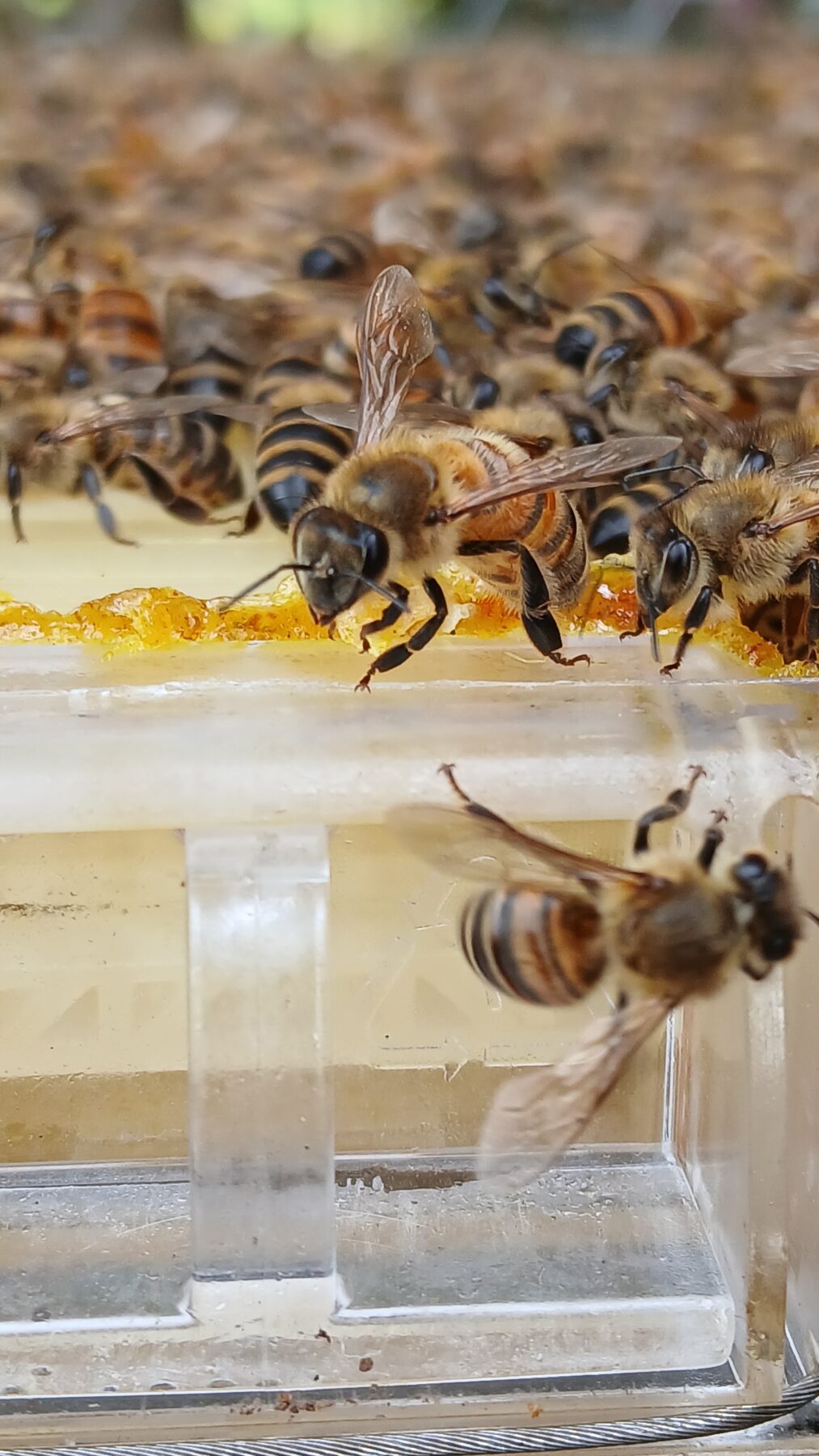
A close up of Lauren Clemenger's honeybees.
A close up of Lauren Clemenger's honeybees. Photo credit: Lauren Clemenger

Ada has a degree in entomology, his knowledge of different insects is beneficial to the newly created club. According to Clemenger, Ada created a system similar to Brightspace containing visuals with information to educate members on the basics of bees and beekeeping.

“Most of beekeeping is knowing the education of the bee,” said Clemenger. “We need to educate our students before they go into the hive and endanger themselves.”

Thirty students have signed up since the creation of the club, which is six times the amount required to start a club on Perth’s campus.

“Given that most of our members are enrolled in the Business-Agriculture program, we decided to focus our club’s efforts on supporting students in this field, while also fostering appreciation for bees and agriculture among those with little to no prior knowledge,” said Ada.

The club charter breaks down the yearly process the club leaders aim to follow. During the winter, club members will learn, reflect and hone their skills while the bees hibernate. From spring to summertime, members will get the hands-on experience which involves working with bees and selling their honey at markets.

Majority of the club members are students in the same program as Clemenger and Ada, which inspired them to incorporate the club into their coursework to enrich the program.

“We’re also planning on doing a business plan for it so that our club can continue to go on and possibly turn into something that’s a tool the professors in the business-agriculture program can use,” said Clemenger. “Maybe create a course on bees, or they can use it for student jobs, or co-ops for the summer.”

The Bee Club’s ambitions are more than just spreading the knowledge of bees, they hope to create some buzz in the Perth community by planting flowers on campus to include those who aren’t fully intrigued in working with hives.

“We want to be able to plant some flowers on the campus so that the bees can pollinate and we can beautify our campus,” said Clemenger. “Judd’s idea is to allow seniors and the public to come in and look at the flower gardens, so if people aren’t interested in the hands-on [harvesting and working with bees], they can work on some horticulture.”

Miriam Musca, a second-year heritage carpentry and joinery student at Algonquin College’s Perth campus, is a member of Bee Club. She joined the club because of a personal interest in beekeeping.

“I live on a small hobby farm, so bees are something that we always wanted to do but it’s kind of hard to get into the knowledge of beekeeping,” said Musca. “I thought it was a great opportunity to learn all about it.”

When she joined the club, Musca was most interested in the production and harvesting process, but may not get the chance to participate in those activities since she is graduating this year.

Clemenger is also graduating this year and hopes to open the club to alumni. She will still be an active member in the club post-graduation, but will pass the leadership to Ada.

Tim Lee, the Perth operations coordinator, is supporting the club and its initiative. Clemenger said he is willing to tend to the flowers during the summer with the nursing students in the club who are enrolled during the off-season.

“It’s a great opportunity for not just the business-agriculture students, but all the students on campus and the staff as well are just interested to see and learn what it’s all about,” said Lee. “I’m here as a resource for them, if any assistance that the club leaders need, I’m helpful to answer any of their questions.”

Clemenger is working on collecting supplies during the winter and prepare for the first season with bees. According to the Ontario Beekeepers’ Association, “anyone who owns or is in possession of honey bees must register annually with the Ontario Ministry of Agriculture, Food and Rural Affairs (OMAFRA).”

Since Clemenger is licensed with the local Lanark Bee Association and Bee Club is a student-led enterprise with the goal to educate others on bees, the association donated supplies that will arrive in the spring.

“They’ll get all the information that they need to be able to then go into the hive, have an understanding of bees, and then we’ll [club leaders] work on getting the supplies and funding that we needed during the winter months, then we’ll set up the hives,” said Clemenger.

The club is hoping to expand for students outside of Perth using online resources such as Zoom. Clemenger said long distance club members can visit the hives on Perth’s campus to their own discretion.

“This initiative will support agri-tourism efforts and enable us to market honeybee by-products at local farmers’ markets,” said Ada. “Ultimately, our goal is to refine the program to ensure its sustainability, allowing the learning materials and the club’s legacy to endure at Algonquin College, even without the involvement of current key members.”

Miyawaki Forest Initiative cultivates hope amid climate despair

An Algonquin College student revitalized local ecosystems with a 50-year-old Japanese reforestation method, hoping to inspire future environmental projects in the Ottawa Valley
Photo: Mckenzie Mitchell
Kristi Beatty (left) and Mckenzie Mitchell standing in the forest patch they, along with their community, worked to restore.

Mckenzie Mitchell is a 28-year-old environmentalist who grew up on a farm in the Greater Toronto Area. Constantly surrounded by nature, he developed a lifelong passion for the outdoors. Unsure of the right career path, he took a leap of faith, enrolling in the environmental technician program at Algonquin College, where he became a part of the Miyawaki Forest Initiative.

The initiative uses a method of planting native species in dense layers to restore ecosystems and accelerate growth, created in the 1970’s by “Keeper of Forests” Professor Akira Miyawaki, a Japanese botanist considered one of the greatest pioneers in the realm of nature conservation.

Mitchell was inspired by the similarities between the origins of the Miyawaki method and the realities of damaged forest area in the Ottawa Valley. He decided using the approach, including its community focus, was the best way to make a difference. So he applied for the “Healthy Habitats” grant, funded by the British Home Invasive Species Council.

Kristi Beatty, the coordinator of the environmental tech program at the college’s Pembroke campus, had introduced the Miyawaki method in her ecology class, but funding was an issue.

Mitchell received just shy of $5,000 from the grant and that, along with community participation, was enough to set the project in motion.

“The funds provided us with 700 trees, 200 shrubs, as well as over 1 ton of mycorrhizal soil,” said Mitchell. “Mycorrhizal fungi are a type of fungus that are linked throughout the forest underground. Kind of like fibre optic internet. Going through the trees and plants, they help promote growth within the soil.”

But before the afforestation efforts could start, Mitchell had to get a comprehensive understanding of the method. It consists of utilizing trees that are native to the area and planting them in a dense but balanced configuration. The trees are chosen to form four structural layers: canopy, sub-canopy, arborescent trees and shrubs.

When Miyawaki was first developing his method, he noticed that in Chinju-no-mori (sacred groves of Japan) natural forests grew steadily. This led him to deduce indigenous species flourished wherever human interference was strictly disallowed, according to Crowd Foresting, an organization that collaborates with the Agriculture and Ecosystem Management Group to promote natural forests.

“We have proved that it is possible to restore quasi-natural multi-stratal forest ecosystems in 20 to 30 years if we take the ecological method,” said Miyawaki, in correspondence with the Japanese Center for International Studies in Ecology and Nagano Nature Conservation Research Institute.

Miyawaki’s method has been used in over 3,000 projects worldwide.

Mitchell said in Pembroke’s case, the forest had many overgrown Himalayan balsams and Manitoba Maples, and the soil was very low in nutrients. By introducing mycorrhizal fungi to the forest, they were able to restore nutrients needed to grow a thriving habitat, and by planting a wide range of native species in the forest, establish a tree canopy of species to support the local wildlife.

Miyawaki’s method helps restore soil health, establish a fungi network and restore the forest’s biodiversity. The method introduces native species into the environment by planting them in a hyper dense layout, creating competition between the species, which has been shown to create accelerated growth rates, according to the Tree Council organization, a registered charity based on the United Kingdom which acts on a range of innovative planting and research initiatives.

“I wanted to get my classmates together and work on a memorable project that would help us all make an impact that lasts hopefully until we’re long gone,” said Mitchell. “‘Think global, act local’ has always been a life motto for me, and this project was no different. Local change, to me, is the best way to make an impact all over the world.”

The project faced a variety of challenges, but the most pressing challenge was time management. Due to the nature of planting season the team had to make sure to plant as soon as possible, to help plant survival rates, but making sure to avoid any frost.

“This tight window left us with only a few days to prepare and plant before students would be leaving town for the summer,” said Mitchell. “It was a tight squeeze, but we were able to account for this and planting day went without a hitch.”

Now armed with supplies, knowledge and the support of professors, community members and classmates, they were finally able to plant the seed of the Miyawaki Forest Initiative. Once they had cleared the area of waste, the team was able to prepare the soil, add mycorrhizal fungi and plant native species in a single day. And according to Mitchell, the impact is already noticeable.

One of the forest areas in the Algonquin College Pembroke campus the Miyawaki Forestry Initiative restored using the Miyawaki method.
One of the forest areas in the Algonquin College Pembroke campus the Miyawaki Forestry Initiative restored using the Miyawaki method. Photo credit: Mckenzie Mitchell

“We’ve noticed some amazing changes already,” he said. “We’ve noticed some restoration in the soil health thanks to the mycorrhizal fungi. We’ve raised the biodiversity by introducing over 20 species of plants that were not in the area that should have been.”

This biodiversity will serve as support and food source for wildlife native to the Ottawa Valley. Weeds will be be removed from the area for the next three years according to Mitchell, but after that maintenance period, the forest will thrive on its own.

This initiative will also be used in the environmental tech program curriculum, integrated in environmental assessment classes.

While the team reached out to many Pembroke locals who wanted to get involved in the project, some were unable to be present for planting, so they were supplied with a variety of plants and mycorrhizal soil to build their own mini-Miyawaki forests at home.

“Miyawaki was strict with his methodology. It must involve the local community,” said Mitchell. “He believed strongly that children should be educated to appreciate the environment around them. Thankfully, we had a great team of local citizens, students and horticultural society members willing to help the forest come to life.”

The Miyawaki Forest Initiative was recognized by the college and led Mitchell to winning the 2024 Changemaker award, presented during a Board of Governors meeting at the Ottawa campus. Mitchell was also awarded a $1,500 Colleges and Institutes Canada (CICan) ImpAct Climate Challenge bursary for his efforts as a student climate leader.

“Mckenzie is a true changemaker. He has embodied the values of the college,” said Julie Beauchamp, senior vice-president academic at Algonquin College.

When Mitchell graduates this winter, the project will continue to be overseen by Beatty, who hopes to potentially expand the forest onto municipal land, and for the method to be used in both the environmental tech and urban forestry programs at the college.

“I had an amazing time working on this project,” said Mitchell. “I hope to return to Pembroke in the future to a thriving forest.”

ABBA Experience Christmas show was exciting and triumphant

Tribute band dazzled a dancing crowd at the Algonquin Commons Theatre
Photo: Linda Verreault
Andrea Valois (Frida) and Christine Irons (Agnetha), tribute show performers.

If you needed a fun time out dancing, listening to music and relieving stress, then this event was made for you. The Algonquin Commons Theatre was rocking to the tunes of ABBA on Dec. 7 during the ABBA Holly Jolly Christmas show.

People enjoyed a variety of their favourite ABBA tunes and got to get up and dance.

“We get together with our daughter every year to watch movie (Mamma Mia) at Christmas,” said Elenor Hodgson, 68.

Hodgson said her favourite song is Dancing Queen.

ABBA’s music has remained popular generation after generation.

“You can dance to any song, it has upbeat music and a great message in them,” said Keira Greig, 23.

Bonnie Levesque came out with a group of friends. The ladies are part of the Nordic walking club in Carleton Place.

“I got these ladies together and tonight we’re coming to see ABBA. We are going to dance and have too much fun together,” said Levesque.

They were unanimous on their favourite song: Mamma Mia.

Chris Eveland on lead guitar and John Wiberforce on bass.
Chris Eveland on lead guitar and John Wiberforce on bass. Photo credit: Linda Verreault

The lead singers Christine Irons (Agnetha) and Andrea Valois (Frida) got together five years ago.

“I got a phone call from Christine asking me if I wanted to form an ABBA tribute band. Christine and Kevin (who plays Benny in the band) came up with the brainstorm idea, and the rest is history,” said Valois.

They were inspired to focus on ABBA music.

“I think ABBA is the great equalizer,” Valois said. “You have little kids and there are those in their 90s. They all love it. It is celebratory music everybody can relate to it, and they just have a good time. “

Recreating the famous fashion was no easy task — they spent a lot of money having custom costumes.

“I think one of our favourites is the blue and white dresses that we wear that has tails. Another is our gold and white dresses,” said Irons.

They select most of their songs from the gold album and add on a few lesser-known songs in each show. They have been doing well and have even toured with the Tribute show.

“We took our show on tour, we just went to the Maritimes, and upstate New York. We are going to B.C. next year. We have done a lot of Ontario and some shows in Quebec,” said Valois.

When performing a vast array of music there is always one that stands out as a favourite.

“My favorite song to perform is Winner Takes it All,” said Irons.

Both of the women are amazing vocalists and put on a top-notch show. Valois had an early start in her musical career.

“I actually studied music at University of Ottawa, and I have been singing professionally since I was eight,” said Valois.

She met Irons back in high school and they sang and performed many times over the years.

It was a natural transition to being together on this project. It is something that unites them.

“We just did it because we loved the music and we love performing and we love being together we’re all great friends in the band,” said Valois.

Two days in the Algonquin College spa

The college's estheticians are weeks from graduating the program, and there's lots they want you to know about their job
Photo: Claire Donnan
Izzy Leblond Robert, Sophie's daughter, poses with her brand-new, Christmas themed nails. She wants to make sure people notice the heart decal painted onto her thumb.

It’s 1:45 p.m. on Thursday, Nov. 14. The air smells sweet, with the cloying scent of acetone lingering underneath. Soft music plays over speakers in the corners of the room. A dozen students sit at chairs and stations around a spa, while their instructor Evey Ross-Linton speaks, taking attendance and gesturing to a schedule projected at the front of the room.

It’s another busy day for the students of the Algonquin College esthetician program, participating in their spa operations class to meet their graduation requirements. However, these students may be some of the last to take this course.

Students and professors know the program has limited time left. The Board of Governors first suggested suspending the program in February, and the last intake of students will be graduating in August 2025.

But it’s not August yet. Today, these Level 3s are weeks from graduating. They have patrons to service, quotas to meet and plans to make.

The esthetician program consists of theory and lab classes, taught by a variety of professors. Sylvie Canonico, the esthetician program coordinator, says learning in a program like Algonquin’s is key for entering her industry.

“The consumer, they want professionalism, and this is what our program gives,” says Canonico. “We train beyond the actual service. We train as far as presentation, attitude, friendliness, compassion, empathy, listening skills, communication skills.”

A white woman's hand with a bracelet tattoo is held by a hand wearing blue gloves, who is giving her a manicure. Both are estheticians
Algonquin College aestheticians practise on one another. This class of level 3's are about to graduate, and excited to step into their careers. Photo credit: Claire Donnan

The day continues, and students’ work is never done. They clean stations, restock product, sweep floors, cut foils and practise services on each other to meet their quota. Eve Welbourne completes a manicure on fellow student Magda Serageldin.

“I’ve enjoyed the nails aspect of the program. It’s just an artsy thing that I like doing,” says Welbourne as she files Serageldin’s nails.

That’s not the only service students enjoy. Saloni Thakkar is particularly fond of makeup.

“I wanted to do it professionally. I realized I love it so much,” says Thakkar. “It’s very therapeutic for me. So I got into this program only because of makeup application.”

Thakkar shares this passion with her instructor Mariève Siracusa, who recently invited her to work at a photoshoot event.

“I created an event which was a photoshoot with models and photographers, and I chose Saloni [Thakkar] to assist me on the photoshoot,” says Siracusa. “Two models, she did the full makeup. Designed the look, did the makeup look, and the photographers loved her and she made connections out of it.”

An esthetician in blue gloves uses a pink buffer on a white woman's toenails. Her pant legs are rolled up and she sits over a silver basin.
Tasha Hickey gives Sophie Leblond Robert a pedicure. While Sophie warns Hickey that her foot has a tendency to move, Hickey just smiles and insists Sophie is fine. Photo credit: Claire Donnan

As the day winds down, students need things to do after their clients leave. Zayra Pose Aguilar applies purple polish with meticulous precision as students filter back in and begin packing up their things, saying goodbye to clients and tidying up their stations.

“I love the labs. I love how we have practicals [courses] as well,” she says as she works. “We get to take clients and get real world experience, somewhat.”

It’s Friday, Nov. 15, and the spa is immediately packed with people.

By 1:46 p.m. almost every student is occupied with a client, like Sophie Leblond Robert and her daughter Izzy. Leblond Robert recently began coming to the spa again after experiencing a stroke, and is getting a pedicure from Tasha Hickey.

“It’s great to be able to teach people at the same time,” says Leblond Robert. “Poor girl [Hickey] has to deal with my foot because it twitches a lot, and I don’t feel [the other] side as much. So she definitely has to learn to manipulate my foot and stuff like that a lot more.”

While she says this, Hickey shakes her head and insists Leblond Robert is fine, continuing to buff out her nails.

It’s on this day that Dianne Williamson, a full-time professor and one of the instructors that first developed the full-time program in 2009, pops in to see how things are going. Williamson recalls with pride some milestones from early in the program’s existence.

“The first time I went to one of the graduation ceremonies,” says Williamson, “sitting up on the stage and watching your students walk by, oh my gosh. You just want to go and hug them, and you’re so proud of everything because you saw them from day one onwards.”

Williamson also remembers the first crop of students welcomed into the A-building labs, after spending years teaching the program in an old science lab in Confederation High School.

As the sun sets outside the window again, students gather as they’re finishing services. With instructor Ross-Linton they reflect on the state of the industry they’re about to enter: How to make money, the severity of the work they do, and the rising popularity of injectables like Botox.

Among the almost 20 people interviewed for this story, a shockingly similar feeling on the esthetics industry emerged.

It’s more than an industry. The work they do is difficult. This isn’t basic, it’s hard, it’s not superficial. It’s more than painting nails, doing facials, and applying makeup. The job is demanding, physical, emotionally taxing. Estheticians are therapists. They help with self-confidence. They are knowledgeable on science, communication, socialization. Every student and every professor agreed – they are more than people may think.

This mindset is evident through every interaction in the A-building spa. As students make idle chatter with their clients, guide them through consultations on their health and cap and cure gel nails, a feeling of care and passion ripples through the air.

“Everybody here comes to work with that same passion,” says Ross-Linton. “Everybody that works here and teaches these students wants to impart all that passion for our industry on the students that are leaving here, so that our industry stays as good as it is.”

It’s true there may not be too many days like this left, at least for now. When the program is suspended in August there’s no way to say for sure if or when it will return. Professors and students know this.

But it’s not August yet. Today, another day of spa operations is just beginning. The esthetician students are sitting at their stations, studying the schedule and prepping for clients.

Today, at least, they are here.

Behind the tent with Kyla Kennaley

Great Canadian Baking Show's Kyla Kennaley opens up about her past, present and future
Photo: Photo supplied by Kyla Kennaley
Bruno Feldeisen (left) and Kyla Kennaley (middle) are the judges in the Great Canadian Baking Show, which has been airing since 2017.

As CBC’s Great Canadian Baking Show opens contestant auditions for season 9, Algonquin College graduate Kyla Kennaley will be returning to judge the next batch of baked goods.

The Great Canadian Baking Show is a reality competition series where amateur bakers across Canada showcase their skills through a variety of challenges in an attempt to impress the judges and win the title of Canada’s best baker.

Season eight recently ended on Nov. 24, with Elora Khanom crowned as the winner.

“Every season is unique due to the organic nature of the show. Each baker brings their unique experience and style which shapes the way the season unfolded,” said Kennaley in an interview with the Algonquin Times. “In season 8, we had an extremely talented mix of bakers who rose to every challenge with grace and brought delicious flavour combinations to the tent, along with brilliant skills.”

Kennaley is a pastry chef who graduated from the culinary management program at Algonquin College in 1994 with knowledge in classic skills of European cuisine. She also completed a bachelor’s degree from the University of Ottawa.

“This foundation has allowed me to explore global cuisines and find common factors in flavour profiles and techniques,” said Kennaley. “Without a strong foundation, I would not be able to judge effectively.”

Photo supplied by Kyla Kennaley
"Culinary math is the most delicious pursuit of ratios, fractions and percentages," said Kyla Kennaley. Photo credit: Photo supplied by Kyla Kennaley

Kennaley said she is constantly inspired to try new recipes that are featured on the show in hopes to provide a similar experience for her friends and family.

The two-year program equips students with the fundamentals of cooking, advanced culinary techniques and management skills. Although baking and pastry is a separate program, culinary management students get a small taste of both worlds.

“It’s important that cooks know how to bake bread and know how to make some simple desserts,” said Daniel Halden, the culinary management program coordinator and a chef in Ottawa.So we add a little component of baking in both the one and two-year programs.”

Norah Kinny, a second-year culinary management student, said she was inspired to start her culinary journey and develop her baking skills because culinary shows, including the Great Canadian Baking Show, made her see that it’s possible.

“I don’t do much baking, but I feel like I can after watching the show,” said Kinny.

Kinny occasionally catches episodes of the baking show alongside other culinary competitions, but she wouldn’t join a televised culinary show due to the amount of stress that competitors may face.

“She (Kennaley) understands it from a different perspective where she’s not criticizing, but she’s helping to further yourself in either the competition or the future,” said Kinny, referring to Kennaley’s judging on the show. “It’s nice to see there is somebody who’s taking that approach, especially with what people believe the culinary field is like.”

For students with similar ambitions as Kennaley, she advised them to “travel, eat everything and show up.” She said every opportunity she experienced was due to coming prepared and showing up early.

“When I was starting out a chef said to me ‘peel carrots with your eyes up,’ meaning that if you don’t look around at what others are doing and learn from them, you will find yourself stuck in one job for your whole career,” said Kennaley.

Halden said for cooking to be a fulfilling career, there must be passion in order to be able to make a living out of it and to excel.

“We get satisfaction out of satisfying people by cooking food that they love,” said Halden. “That I really enjoyed about what I did, the satisfaction I gave to people by sharing or nurturing them with food and good dining experiences.”

When away from the kitchen, Kennaley enjoys to travel and explore parks, gardens and neighbourhoods.

“I find it both peaceful and energizing at the same time,” said Kennaley. “I am guilty of working too many hours and often have multiple projects on the go. It is my goal to become better at balancing time off.”

The next step for her is following her dream, which is to open a small cookery school inside an old chateau in Europe.

First Person: Martial arts training can help body and mind get in sync

Juggling the weight of assignments and Muay Thai training, I've discovered that proper focus isn't found in perfect balance. It's in the fight to stay present
Photo: Korbin Amaya
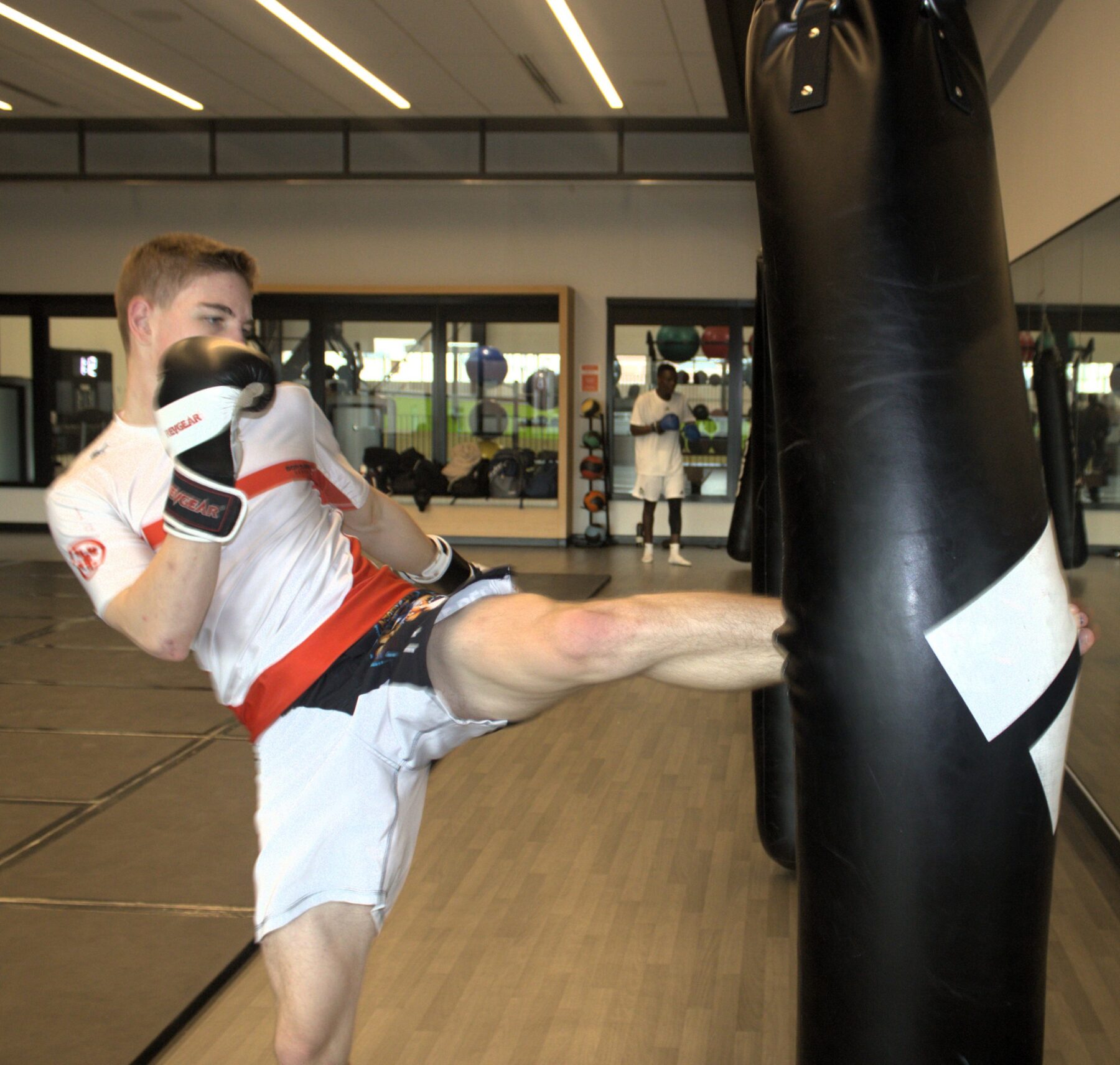
"The gym is a shared space of effort and grit where every person has their own story," writes the author.

Studio A in the Jack Doyle Athletics and Recreation Centre gym hums with a muted intensity, the air thick with the scent of sweat and determination. I focus on the crackle of gloves striking bags and the rhythmic bounce of skipping ropes. My fists connect with the heavy bag, each strike deliberate, each thud echoing a dialogue I’m having with myself.

Under the fluorescent lights bathing the room in a cold glow, I’m hit with a moment of clarity. After a full day of dissecting interviews and story drafts as a journalism student, I come to the gym not just to train but to find a sense of balance that writing cannot entirely give me.

Muay Thai – an art that marries precision and power – strips away all pretense. It is a brutal and honest style that demands discipline from every fibre of your being. I have practiced for eight years now, on and off, and it’s almost enough to know this is not just about the fight but the fight within.

As I plant my feet, pivoting slightly, I unleash a jab-cross combination. My motions are sharp and measured swiftly as I recall my jab back to guard my head, resetting my stance with a steady breath.

These motions mirror how I navigate the push and pull of my days: the hours spent chasing deadlines and nights crafting the art that matters to me. Each punch feels like I’m carving out space to get in sync with my body and mind.

The gym is a shared space of effort and grit where every person has their own story. Like me, they are not just here for the physicality. The room pulses with something that eats doubt: a quiet, collective understanding that what we do here feeds the rest of our lives.

For some, like Wren Doucette, a police foundations student and rugby player, martial arts became a way to channel emotions.

“I started wrestling in high school to improve my rugby performance,” said Doucette.
What initially began as a way to get better at another sport quickly became a passion that contributed to her personal growth.

“I use it a lot because I’m a pretty angry person, and tough sports really help me calm down,” said Doucette.

For Doucette, martial arts do not just build physical endurance. They strengthen her mental perseverance and prepare her for her future career in law enforcement.

There’s also Nathan Rolland, another Algonquin student who recently started training in jiu-jitsu. For Rolland, martial arts became a key to maintaining a sense of balance amid the pressures of school.

His jiu-jitsu classes lined up perfectly with his academic schedule, allowing him to dive deep into training without compromising his schoolwork. Rolland’s approach to balance comes down to time management.

“I pay attention to class, take all my notes, and study quickly after class so I don’t have to spend much time outside school on this,” he said. This focused approach enables him to train hard while keeping up with his studies.

"
Owen Armit believes "commitment is the key to balancing martial arts and academics." Photo credit: Korbin Amaya

Another student of the craft is Owen Armit, a jiu-jitsu enthusiast who believes commitment is the key to balancing martial arts and academics.

For him, the structure provided by regular training sessions creates a discipline that carries over into his schoolwork. “It’s all about finding that rhythm,” said Armit.

Armit’s passion for martial arts helps him stay grounded and focused in both arenas.

Keshan Hou, a dedicated Muay Thai student, says martial arts taught him patience and long-term vision.

“Muay Thai showed me that growth comes in phases,” said Hou.

The physical demands of the sport taught him to embrace the process, a mindset that extends to his academic pursuits.

“It’s not just about mastering a skill quickly but staying consistent, and that’s something I’ve applied to my studies,” said Hou.

"Joseph Ilunga balances boxing with playing varsity football for the Wolves."
Joseph Ilunga believes "discipline is the main thing in sports." Photo credit: Korbin Amaya

For Joseph Ilunga, he balances boxing with playing varsity soccer for the Wolves.
“Discipline is the main thing in sports,” said Ilunga. “You’ve got to keep going. You can’t stop.”

Ilunga’s dedication to the sport also stems from a deep personal motivation: making his mom proud.

“My main goal is to put a smile on my mom’s face,” said Ilunga. Martial arts can offer emotional purpose far beyond the physical realm.

For many of us, as we lift weights at the gym—it’s not just dumbbells. It’s the burdens of responsibility, ambition and identity. I think about my Salvadoran father, who immigrated in the ’90s with a drive that’s become a cornerstone of my resilience and ambition, and my stepmom, whose roots trace back to Italy. Together with my Canadian-born mother, they form a patchwork of cultures and cultivate stories that I carry daily. Their sacrifices echo in my drive to succeed—not just academically but in all the ways that matter to me: as a journalist, an artist and a person trying to build something lasting.

Muay Thai fits into my frame like something I need, not want. I have always been someone juggling multiple worlds. By day, I’m a journalism student at Algonquin, practicing interviews, research and storytelling.

By night, I pour my energy into music and visual art, chasing the bravest ideas that have always been my way of processing the world.

When I strike the bag, I’m not just releasing stress from a day of studying. I’m proving to myself that I can manage the weight of everything I’ve taken on.

SA president reflects on student leadership and personal growth

Maria Silveira offered insights to future leaders about living with purpose and overcoming challenges
Photo: Korbin Amaya
SA president Maria Silveira with director and election officer Marilena Postolache.

The Nawapon buzzed with anticipation on Nov. 19 as a room full of eager students gathered to their seats, ready to hear from a leader whose journey had traced the path they were beginning to navigate.

Maria Silveira, president of the Algonquin Students’ Association, was a guest speaker at the latest Student Leadership Program event. She shared her journey and reflections on leadership with the next generation of student leaders.

Silveira outlined three fundamental lessons she had learned along her path to leadership.

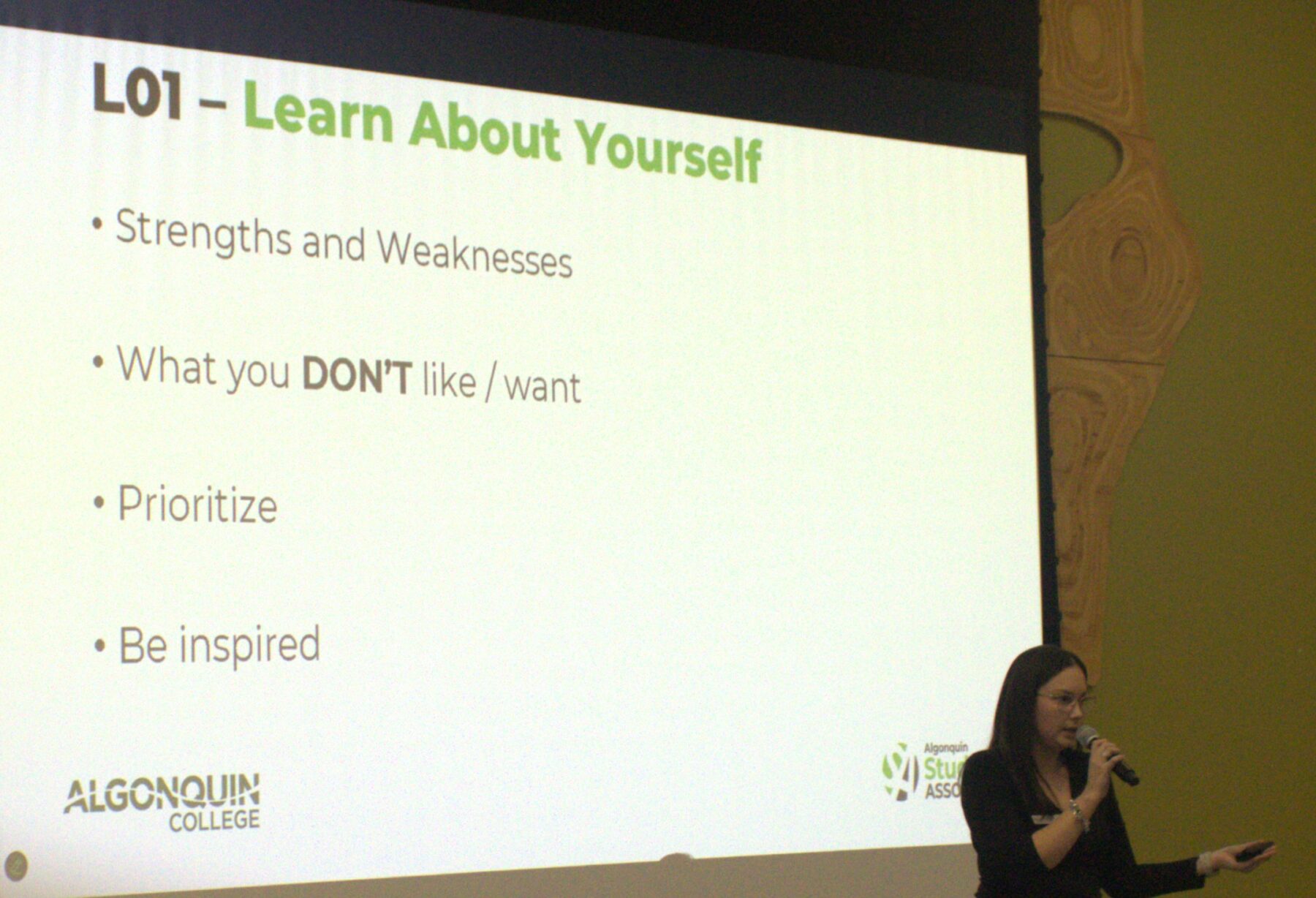
Learn About Yourself: The Foundation of Leadership

Maria Silveira is talking to the audience of SLP students; she is on lesson one, learning about ourselves.
Maria Silveira is talking to the audience of SLP students; she is on lesson one, learning about ourselves. Photo credit: Korbin Amaya

The first lesson she described was centred around learning about oneself. Drawing from Silveira’s professional measures, she explained how understanding your strengths, weaknesses and desires is the foundation of becoming an effective leader.

“Knowing yourself is the beginning of all wisdom,” said Silveira, emphasizing that navigating the complexities of leadership without self-awareness is challenging.

Taking the time to assess who, what and where she was in her professional life guided her to make decisions that were both purposeful and aligned with her core values.

“If we want to be better leaders, we need to first look to ourselves,” said Silveira, stressing the significance of personal growth before leading others.

Take Risks: Growth Comes from Stepping Outside Your Comfort Zone

Silveira challenged the students to embrace the unknown and take risks.

She quoted Eleanor Roosevelt to start her discussion: “Do one thing every day that scares you.”

Silveira said taking risks becomes easier when you understand why you are taking them. She urged others to embrace the importance of knowing what they truly want — and what they do not.

Silveira shared an example from her experience as an international student in Canada growing through overwhelming discomfort.

Still, to see the rainbow over the stormy clouds, she emphasized that taking that initial leap of faith — putting oneself out there — often leads to rewarding opportunities to connect with others and build meaningful relationships within the community.

“The risks we take today shape the leaders we become tomorrow,” said Silveira.

She suggested a novel that mirrors her approach and philosophy in Greg McKeown’s book Essentialism, highlighting the power of focus and the necessity of saying no to anything that does not serve a greater purpose.

Be a Lifelong Learner: Curiosity Fuels Leadership

Silveira repeatedly said that the learning process never stops, whether through formal education, meeting new people or exploring new ideas.

“Ideas come from curiosity,” Silveira said.

Silveira discussed embracing new experiences, cultures and perspectives to become well-rounded leaders. She also suggested volunteering as another excellent way to grow, providing opportunities to give back, learn from other leaders in the community and enrich personal growth.

Silveira then reflected on the responsibility of the time we have to learn, create and evolve.

“Time will pass anyway, so make the most of it,” said Silveira.

“Make the most of your time here at Algonquin. Do not just attend classes — explore opportunities, meet new people and grow,” said Silveira.

Silveira said leadership is not about titles or awards but about making aware, intentional decisions to learn, grow and impact others.

“Think about who you want to be, what makes you proud and how people will remember you. In the world of leadership, it is not just about the paths we take but the legacy we leave behind,” said Silveira.

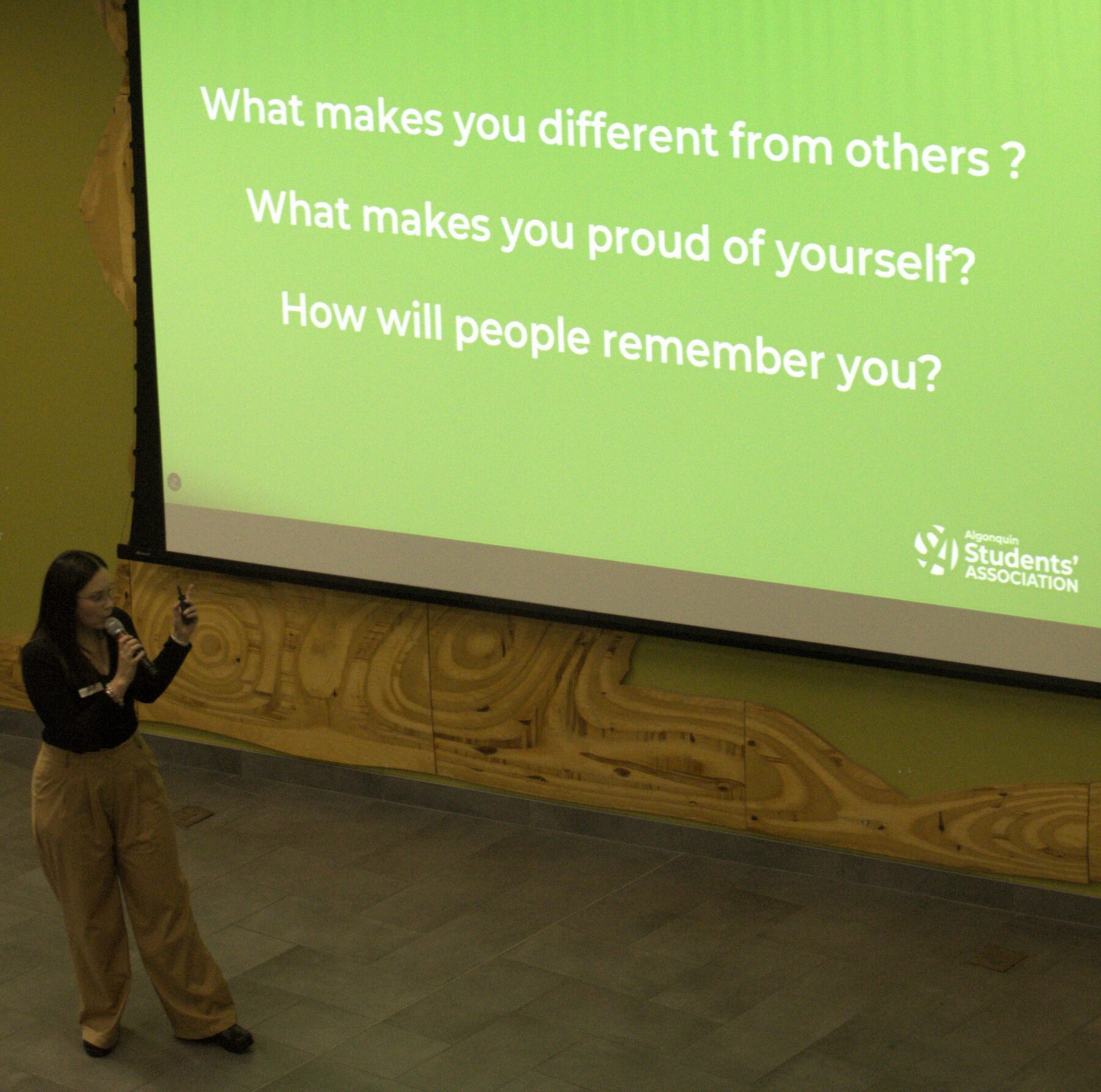
Maria Silveira is giving concluding advice to leave buzzing in the SLP students' minds.
Maria Silveira is giving concluding advice to leave buzzing in the SLP students' minds. Photo credit: Korbin Amaya

Silveira left students to consider three questions: What makes you different from others, what makes you proud of yourself, and how will people remember you?

“What I like most about my position as president is connecting with students personally. I am here to listen, guide and support students however I can,” said Silveira in an interview with the Algonquin Times after her presentation.

When asked what led her to pursue a leadership role, Silveira highlighted one of her dreams, studying abroad, which she fulfilled upon arriving in Canada last year.

“I decided for myself that I would make the most of my time here,” said Silveira.

She described that her values are rooted in her experiences in her hometown, São Paulo, Brazil.

“Coming from Brazil, where I did a lot of volunteer work with NGOs (non-governmental organizations), I always believed in the power of people coming together to make a difference.”

Silveira’s one-year term as SA president has centred around on governing through policy development, a process she described as a deliberate and collaborative effort.

“We represent all students, and our priorities reflect their needs,” said Silveira.

This year, the board focused on academics, transportation, and mental health, critical areas identified through extensive student feedback and data collection.

“When students see that we are addressing what matters to them, they feel heard, and that is what leadership is about—listening and taking action,” said Silveira.

Beyond formal speeches, she values personal connections with students, often meeting them over coffee or walks to discuss their concerns and ideas.

“It is in these one-on-one conversations where you understand what people need and how you can help,” said Silveira.

Students sip, learn and play with Mocktails and Trivia

The Umbrella Project connected students through an event at the AC Hub focused on mental health and substance use
Photo: Aicha Chamor
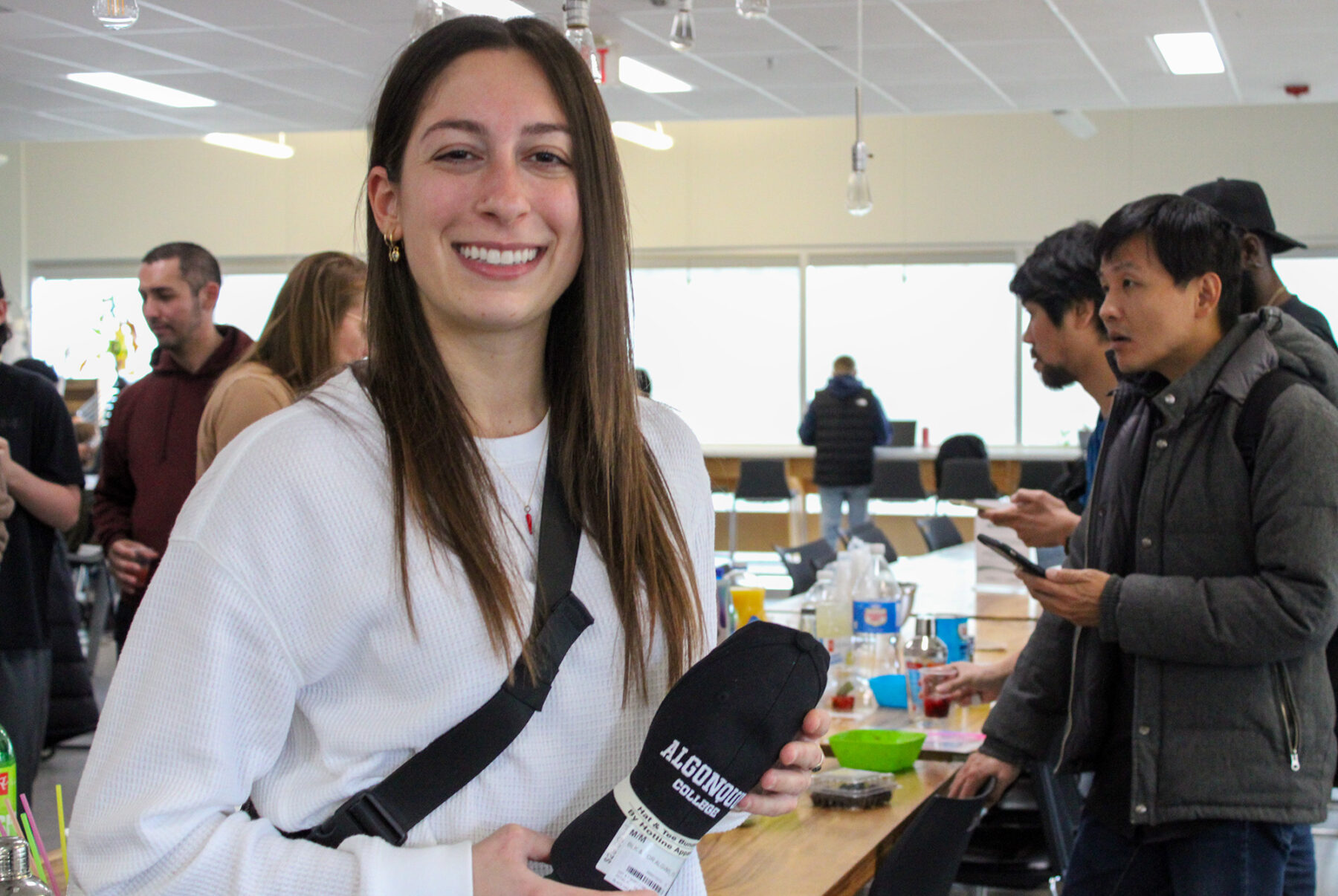
Sera Lolli holds her Algonquin College T-shirt and cap after winning the Kahoot game.

The rate of alcohol use among students is notably high. According to the Ontario Student Drug Use and Health Survey, 35.6 per cent of students in Grades 7 to 12 reported using alcohol in 2023. The Umbrella Project hopes to help students promote healthier choices.

“I have family members who deal with mental health issues, like my grandmother, who has depression. I even deal with a bit of anxiety myself,” said Sera Lolli, a former student at Algonquin College and a winner of the “Kahoot” game that took place at the Umbrella Project Mocktails and Trivia event.

The AC Umbrella Project is funded by the Ministry of Advanced Education and Skills Development’s Mental Health Innovation Fund, which focuses on increasing awareness, providing education and building a healthy campus community.

Lolli’s journey helping friends who are dealing with mental health and addiction issues has equipped her with the knowledge needed to win the game.

The winners chose their prize: either a cap and an Algonquin T-shirt or a well-designed food container.

An Umbrella Project staff member is making drinks for attendees
An Umbrella Project staff member makes drinks for attendees. Photo credit: Aicha Chamor

There were scientific questions included in the game like, “What is the area of the brain that deals with memory?” which made it challenging for Tom Truong, a first-year paralegal student, who has no experience with alcohol or drugs.

“I started out pretty well with the true or false questions, but then I started failing because they were asking about blood alcohol, which I have no idea about,” Truong said.

Truong believes that consuming alcohol is a waste of money and destructive to health. He said that the motives behind substance use may be related to culture or stress relief. He blogs and draws as productive ways to ease his stress.

In addition to trivia, the event featured a mocktail workshop and offered three drink recipes: Pineapple Coconut Frizz, Magic Colour, Changing Lemonade and Berry Basil Smash.

Students could use these recipes or invent one from their imagination.

“I feel like a scientist in a lab. I tried to mix many ingredients at once but it didn’t taste good,” said Sophie Brown, a business management student.

Mocktails and Trivia was the final event in the four-part series for National Addiction Awareness Week.

Algonquin College lease with Ottawa Police Service may end in 2026

Students are concerned they may lose access to important role models and learning tools as OPS exit draws near
Photo: Nathalia Lencioni
Police and Public Safety Institute sign located in P-building, where OPS currently has its training facility

A non-renewal notice has been sent to Ottawa Police Services for the use of the P-building. The future of the shooting range in the building remains uncertain, with potential changes likely, according to a report for the Board of Governors released ahead of its Dec. 9 meeting.

Algonquin College’s police foundations students, whose program is known for its collaboration with the Ottawa Police Service, are bracing for a significant disruption as the termination of the lease agreement, set to take effect in 2026, will not only impact OPS but also limit valuable learning opportunities for students.

Elise Nizio, a Level 2 student in the police foundations program, said students are already having a difficult time accessing the OPS-run simulation lab, which exposes them to hands-on scenarios before going into the field.

“I’ve found the sim lab to be very helpful. It’s given me a good feel of what to expect in standard situations, but high stress situations as well,” said Nizio. “Without the sim lab, I’d probably be uncertain on whether or not I would want to be a police officer, as I would not know what to expect.”

Nizio added that being in the same building as OPS officers was important to her as a student.

“Having done the program thus far, I’ve been able to see the new officers train and use it as motivation,” she said. “The idea that I would be in their shoes eventually almost felt like motivation, and having that disappear might cause future students not to take the program as seriously.”

The Ottawa Police Service has relied on the college’s professional development centre for over 20 years. The facility has been an essential hub for police recruits and officers, featuring classrooms, a firing range, a defensive tactics studio and a simulation lab. OPS uses the space for everything from firearms training to critical use-of-force qualifications for its officers.

Olivia Fuoco, a program alumna, said she wasn’t aware of the change and regrets that future students won’t be able to have the same opportunities.

“I had not heard about them leaving,” said Fuoco. “We got a few pretty awesome experiences. We got to meet officers and have them speak at our classes. We practiced mock interviews with them as well to help prepare us for our actual interviews. We also got to experience how to do our fitness testing with officers who were still on the force, which was awesome.”

Jill Reeves, program coordinator for the Police and Public Safety Institute at Algonquin College, provided a statement about the program’s view on the change.

“The Police Foundations program has been independent and strong since its beginnings. We foresee that it will continue to be valuable and recognized. No further comments at this time,” said Reeves.

Deputy Chief Steve Bell expressed surprise at the college’s decision in an interview with CBC, stating that the OPS has relied heavily on the facility for the past two decades.

“This is a very big focal point for the Ottawa Police Service,” Bell said in the CBC interview. “We heavily rely on that area.”

While OPS officials are currently negotiating with the college to secure continued access to the firing range beyond 2026, the future of the entire training facility remains in flux. One of the more immediate concerns is the lack of suitable alternatives for the OPS’s specialized training needs. According to Bell in his interview with CBC, other ranges around the city could not meet the high demand of OPS recruits and officers.

Bruce Hickey, the college’s communications manager, said the college has no comment at this time.

Algonquin Times podcast

Stay Informed

Sign up for our newsletter

Subscribe

* indicates required