Mental health and mid-terms

With mid-terms fast approaching, students at Algonquin College are facing stressful times ahead. While course delivery has changed for most of the programs offered at the college, the process of learning information remains the same. New balancing skills are required at this time of year, as stress can creep up and feelings of exhaustion follow […]
Photo: Liam Fox
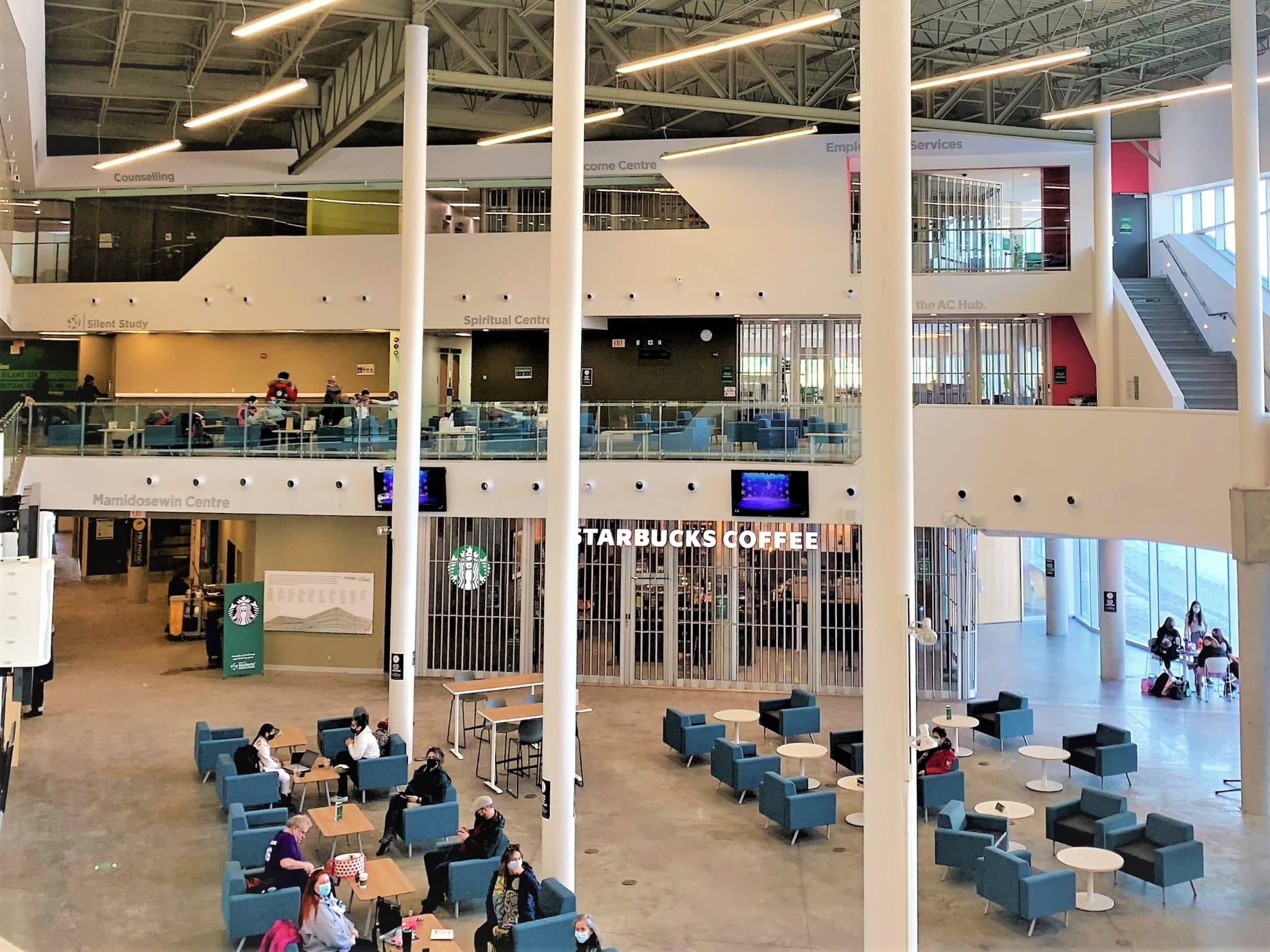
An overhead view of the Algonquin student commons, where students can study or talk to unwind from classes.

With mid-terms fast approaching, students at Algonquin College are facing stressful times ahead.

While course delivery has changed for most of the programs offered at the college, the process of learning information remains the same. New balancing skills are required at this time of year, as stress can creep up and feelings of exhaustion follow suit.

It is even more important during COVID-19, as time away from campus can cause an uninspired feeling, according to Grace Lukaschuk, a graduate of the medical sonography program at Algonquin College.

“It was important for me to set time aside every day to hang out with my friends and roommates and take my mind off the stress. I found it very difficult not to get overwhelmed when mid-terms were approaching. You can’t spend every waking minute studying, or you will burn yourself out,โ€ said Lukaschuk.

Studying for mid-terms is the current reality for college students, and absorbing all the facts has caused students to think outside of the box, according to Brock McNish, a graduate of the heating, refrigeration and air conditioning technician program at Algonquin College.

โ€œUtilizing the school resources such as the library and quiet spaces was an effective way to get work and studying done while on campus. We would often get together in groups and use cue cards with test questions from our modules,โ€ he said.

Keeping things in perspective and allowing yourself time away from textbooks and notes can be as important as studying, when taking your mental health into account. Having gone through the whole process, McNish offered up some advice to current students.

โ€œI would remind them to take breaks, eat healthy full foods, get good sleep and enjoy time away from the books whenever they can. Prioritize work, set goals and surround yourself with people who want to achieve success as much as you do,โ€ he said.

Staying motivated can be a tall task at times. As the work load increases throughout the term and deadlines come and go fast, getting creative through utilizing different resources is a crucial motivation method, according to Ellen Cotter, a third-year applied museum studies student.

โ€œMy program cohort has a really active group chat and staying connected to my fellow students has helped motivate me to be the best student I could be. We are a close group, so we look out for each other, and if one of us is struggling, we all try to keep them going. Having good friends to rely on helps when times get tough,โ€ she said.

Something to keep in mind for students, is that there are services at the college for anyone who feels overwhelmed and stressed. Cotter believes they are an asset.

โ€œI am a student with a disability, and the centre for accessible learning has been extremely helpful since I started at Algonquin. My programโ€™s student support specialist (Tony Mendes) has been a great resource for when Iโ€™ve been struggling with issues within my program, since he knows what resources are good for different situations. Health Services are great, especially if you donโ€™t have a family doctor,โ€ she said.

Something to remember, is that while mid-terms do serve a purpose and they provide professors with progress reports for each student, they arenโ€™t the final part of the term, according to Lukaschuk.

โ€œMy advice to someone struggling with mid-term anxiety would be to remember mid-term results aren’t the be all, end all. Just do your best to study, but in a few years the exact grade you get won’t matter,โ€ she said.

While stress and anxiety are normal occurrences for students, allowing time and space to breathe provides the necessary reflection to keep everything in perspective.

For any studentโ€™s feeling as though they could use the help, professors are always all ears. However, should you wish to reach out directly to couselling services (personal, academic and career support) you can do so by telephone at 613-727-4723 ext. 7200, or via e-mail at welcomecentre@algonquincollege.com

Algonquin College Library is set to reopen and will be fully staffed

The Algonquin College library is coming back with a full-staffed reference desk on March 7 for the second half of the winter term. “What’s going to happen in the spring, it’s going back to a fully staffed reference desk, so students will be able to go in and ask questions in person in addition to […]
Photo: Sahlym Florestal
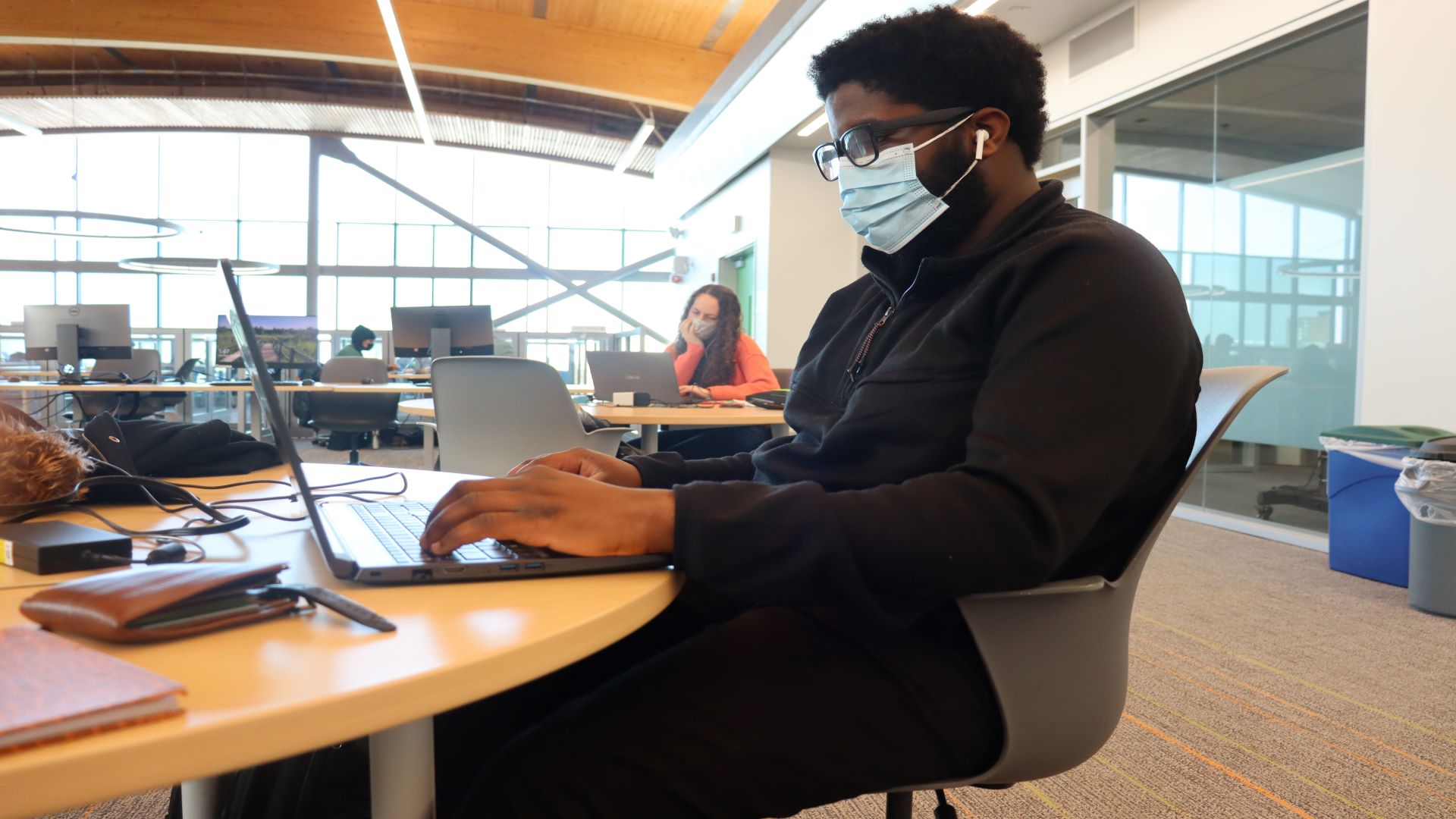
Mofeyisopi Ayeni, a former Algonquin College student, studies for class at the library.

The Algonquin College library is coming back with a full-staffed reference desk on March 7 for the second half of the winter term.

“What’s going to happen in the spring, it’s going back to a fully staffed reference desk, so students will be able to go in and ask questions in person in addition to having the online chat staffed during the same hours,” said John Ellis, manager of the student learning and libraries.

With some ups and downs throughout the pandemic, the library went entirely virtual after the first wave of the pandemic.

Then came the second wave where it went from entirely virtual to doing curbside and pickups where students would wait in the parking to get their books.

The hybrid phase is still going on right now. “We have three desks that are 100 per cent staffed when it’s fully opened,” said John Ellis. “But because it’s hybrid, only one of them is.”

Things are going to change for the second half of the semester, where the library is coming back with a fully staffed desk.

The AC library has been a great place for students to study during the lockdown.

“It’s a really quiet and calm place to study,” said Amy Sommerville, a first-year dental hygiene student. “I’m here very often.”

Amy Sommerville working on her assignment after being interviewed.
"It's a really quiet and calm place to study," said Amy Sommerville, a first-year dental hygiene student. "I'm here very often." Photo credit: Sahlym Florestal

“The uOttawa library was only open to students during the lockdown,” said Mofeyisopi Ayeni, a former Algonquin College student who is currently attending the University of Ottawa. “This one is still open for the public, and it’s closer, that’s why I come here.”

“Honestly, I’m just happy it stayed open during the lockdown,” said Michel Akpro, a second-year student in the automation and robotics program. “The public libraries were closed, so this was the best place to study. But what’s the point of it being open if we have no access to the meeting rooms.”

Students will also be happy to know that the meeting rooms which have been closed since the beginning of the term are next in line to be reopened.

“We will reopen the group study room and additional onsite support by the spring/summer term,” said John Ellis.

Ottawa police warn protesters to leave the area

Local News CBC News: Ottawa police warn protesters to leave the occupation area as protests go on Day 20. The written warnings have been distributed during the protests about the vaccine mandate. Other warnings include warnings from the Children’s Aid Society if unable to provide care for their children after police action. The honking injunction […]

Local News

CBC News: Ottawa police warn protesters to leave the occupation area as protests go on Day 20. The written warnings have been distributed during the protests about the vaccine mandate. Other warnings include warnings from the Children’s Aid Society if unable to provide care for their children after police action. The honking injunction was also extended again for another 60 days starting Thursday.

National News

CTV News: The Canadian Armed Forces and Joint Rescue Co-ordination Centre suspended their search for a sunken Spanish fishing vessel after 36 hours of searching in frigid waters. On Feb. 15, reports came in about a Spanish fishing vessel that sunk off the shore of Nova Scotia in international waters with multiple casualties. Ten members died and 11 were missing. The boat had 24 crew members from Spain, Peru and Ghana.

International News

CBC News: Canadians in the midst of a potential Russian invasion of Ukraine have been secured escape routes from the federal government, says Foreign Affairs Minister Mélanie Joly. Joly said Canadians fleeing Ukraine are assured to enter neighbouring countries without trouble. Those countries include Poland, Romania, Hungary and Slovakia. Ottawa has urged Canadians to leave Ukraine as soon as possible as the tensions rise between Ukraine and Russia. Ottawa and Moldova are discussing together to ensure Canadians can use the country as another option to evade the conflict.

Restaurant International has partially reopened

Restaurant International, Algonquin College’s student-run restaurant located on the Woodroffe campus has reopened. The restaurant was forced to close down due to provincial COVID-19 restrictions announced in January. “I’m looking forward to fully reopening. I’m looking forward to September when hopefully we have all our students back and we’ll be able to be open five […]
Photo: David Rotel
Culinary management students display their pleasure to be back at Restaurant International.

Restaurant International, Algonquin College’s student-run restaurant located on the Woodroffe campus has reopened.

The restaurant was forced to close down due to provincial COVID-19 restrictions announced in January.

“I’m looking forward to fully reopening. I’m looking forward to September when hopefully we have all our students back and we’ll be able to be open five lunches and five nights a week,” said Cathy Dewar, manager of Restaurant International.

“Right now we’re only open four lunches and one night. That’s due to our enrolments because Restaurant International is student-driven for the courses, so if we don’t have students cooking in the classes we don’t open,” she added.

Some chefs had concerns about the future of the restaurant while it was temporarily closed.

“There’s so many variables and so many things going on. Even today, we don’t have firm dates on when things are going to happen. So yeah, for sure I was concerned,” said Roy Legge, chef instructor of the culinary management program.

Other chefs have shared their excitement about being back in the restaurant.

“It feels absolutely great to be back,” said Wes Wilkinson, a chef instructor in the culinary skills program.

Wilkinson revealed some of the rules the restaurant has to implement because of the health measures.

“We have to abide by the COVID restrictions and laws the college and the Ministry of Health set up. So everyone needs to have all of their doses,” Wilkinson said.

Wilkinson also stated the number of students allowed to work in the kitchen has been shortened. Before the restrictions, 16 to 17 students per class were allowed in the kitchen. Now, because of restrictions, ten people are allowed in the kitchen. Nine students and one instructor.

According to Wilkinson, the restaurant will provide a smaller menu as a way of practising and making sure students get their learning outcomes.

Working at Restaurant International can be a great way for students to gain real work experience.

Andrew Skorzewski, another chef instructor of the culinary management program explained why the reopening of Restaurant International is beneficial for the learning experience of student chefs.

“It’s really nice because it adds an element of realism for the students rather than just making the food for nobody,” Skorzewski said.

“They get real-life experience in an educational setting. So they can practise, make mistakes and learn stuff before they go out and work in the industry,” he added.

First-year culinary skills student, Jasper Bundale-Cowan, said he was not concerned with the restaurant’s temporary closing.

“I knew eventually we were going to reopen, it was just a matter of time,” he said.

“I guess it was kind of just mentally preparing for it to reopen during that time. Making sure to learn as much as you can, gain confidence working in a kitchen and get used to the way your restaurant functions,” said Bundale-Cowen.

“Working here is definitely beneficial for me. I work at a restaurant right now and it’s even better having this course because It’s a bit more organized here than my actual job, which is nice,” he said.

“I’m looking forward to just trying to gain as much knowledge and experience as I can. Learning every step I can along the way and improving every day,” Bundale-Cowan added.

First-year culinary management student Ali Roushdy is another student who didn’t have any concerns.

“I went to Egypt to work and there weren’t that many shutdowns over there so I didn’t have too many concerns,” he said.

“Working here is great because it helps you get a feel for how everything runs in an actual service. It boosts your confidence and it’s really helpful to get the speed and technical stuff down,” Roushdy added.

Despite being partially open for the moment, the restaurant manager is excited for the future of Restaurant International.

“It gets more exciting for students when there’s a lot more happening in the restaurant because we’re fairly popular. I think we’re Ottawa’s best-kept secret,” said Dewar.

Are students rolling up their sleeves for the flu shot?

While the college has had to stop its annual flu shot vaccination clinic due to the COVID-19 pandemic, Algonquin College Health Services is still administering the shot by appointment only. In previous years, the clinic was done a couple of days a week throughout November. Students could drop-in without appointments. It would operate until supply […]
Photo: Myriam Landreville
A Health Services nurse administering the flu shot vaccine at Algonquin College's Health Services.

While the college has had to stop its annual flu shot vaccination clinic due to the COVID-19 pandemic, Algonquin College Health Services is still administering the shot by appointment only.

In previous years, the clinic was done a couple of days a week throughout November. Students could drop-in without appointments. It would operate until supply runs out.

This year, as of Nov. 1, the flu shot clinic at Algonquin College Health Services has been running by appointment only.

Some students, however, are unaware of this option.

Nicole Boeyenga, a first-year interior design student, and Olivia Mortimore, a first-year personal support worker student, have not gotten their flu shot.

“I didn’t know we had a flu shot clinic,” said Boeyenga.

“They should advertise it more,” said Mortimore. “They should email it to us instead of putting it on posters. I check my email a lot more than posters.”

Elizabeth Silk, a first-year practical nursing student did know there was a flu shot clinic at Algonquin College but instead opted get it at a pharmacy across from the school.

“I needed to get it for my program. It was just easier to get it there,” she said.

Although not many students are aware of the flu shot clinic, Algonquin College has still administered 374 shots as of Feb. 16, and is still administering flu shots daily.

Health Services expect the number of students having the flu shot to be much higher than the numbers they have. For many students, it is easier to go to pharmacies in their communities.

“This year the demand (for the flu shot) was absolutely there but we saw our greatest demand last year when the COVID-19 vaccines were not available,” said Joanne Childs-Stynes, a registered nurse at Health Services

“Most people who need to get the flu shot for their program do not hesitate at all,” said Childs-Stynes. “And we would see them the following year.”

“I get a lot of questions about the importance of the flu shot if they already got their COVID-19 shot and I say it’s best to prevent illness in any form, especially if you are someone that is at risk of developing illness, getting a shot of any kind is recommended,” said Caprise Perrineau, the health promotions and education coordinator at Health Services.

“By getting the flu shot, it helps limit the burden on our health care system in light of COVID-19,” said Childs-Stynes.

Algonquin College Health Services continues to administer flu shots. Appointments are available Monday through Friday from 8:30 a.m. to 5:30 p.m. Call health services directly to book an appointment at 613-727-4723 ext.7222.

Hothouse series returns to showcase scripts with ‘otherworldly’ qualities

Students in Algonquin College’s scriptwriting program are excited to hear their 10-minute original plays read publicly by actors, as part of the annual Hothouse play reading series. Hothouse is a three-part theatre event whereby emerging Ottawa playwrights are given the opportunity to showcase new scripts for a supportive audience of family, friends, faculty and industry […]
Photo: Nicole Burggraaf, Bottom left
Three of the playwrights showcasing their scripts in Hothouse 1 on Friday, Feb. 25, 2022. Top left

Students in Algonquin College’s scriptwriting program are excited to hear their 10-minute original plays read publicly by actors, as part of the annual Hothouse play reading series.

Hothouse is a three-part theatre event whereby emerging Ottawa playwrights are given the opportunity to showcase new scripts for a supportive audience of family, friends, faculty and industry professionals.

The first of three Hothouse presentations will be on Friday, Feb. 25 at 6:30 p.m. for a virtual livestream audience. Hothouse 2 will take place on March 11 and Hothouse 3 will be on March 25. Each evening will consist of eight short plays broadcast out of a television studio on campus.

Hothouse has been running every winter semester since 2007 but has gone through many evolutions since then, according to Laurie Fyffe who took it over in 2017 and introduced the 10-minute play. She and the team made the pivot to an online presentation format last year.

Fyffe is an established local theatre artist and teaches writing for actors at the college. The readings are an essential part of the creative process, she says.

Dialogue is meant to be read aloud,” she said. “Students benefit so much from the talents of actors. This is when the real rhythm and energy starts to come alive.”

Every year Fyffe said she gets the same comments from students over and over after the readings: “I had no idea it would be so valuable.

What makes this season of Hothouse unique, in Fyffe’s opinion, is the poetic language and otherworldliness the writers are using to create alternate realities.

“Maybe it’s because we’re living in an alternate reality,” she said.

Fyffe helped playwright Abdelghafor Elgamri think theatrically when it comes to his writing.

Elgamri moved to Canada from Sudan in September 2021. An established Arabic writer, he is in the process of finishing his third novel. Elgamri said the scriptwriting program expanded his mind and helped him discover new ways to tell stories. He entered the program as a novelist but will exit as a playwright and screenwriter as well.

Elgamri is excited to see his words come to life at Hothouse.

“You feel like a God or something; you created something and now it’s there,” he said.

Elgamri has written a “startlingly good allegorical script” based on the political situation in Sudan, according to Fyffe. It is called The Absurdity of Ghosts and reflects on the psychological state of the leader of the military coup after killing anti-coup protesters.

“I can’t wait to have this thing be acted out and then share it with people back home through social media,” said Elgamri. “This is an opportunity to show what happened in Sudan and put it out there into the world.”

Also included in the first evening of Hothouse is Nicole Burggraaf’s I’ll be Loving You Parenthesis Forever and Meagan Le Duc’s A Haunting Melody.

Burggraaf was in her mid 40s working as an optometric assistant when “COVID happened” and she had an epiphany.

“’Oh my goodness, I love to write,'” she said she remembers thinking. “I’ve got to do something about it.”

Her script, she said, explores the need to hold onto your younger self as you grow older. The protagonist, Heather, wakes up from a leisurely afternoon nap to discover she is married to her childhood crush, Joey McIntyre from the boy band New Kids on the Block.

This comedy inspired by fan obsession is the first play Burggraaf has ever written.

“It will be interesting to hear my own words come out of someone else’s mouth,Burggraaf said. “I am also very curious to hear the work of my peers acted out loud.”

This is not Meagan Le Duc’s first play, but it is the first time she plotted out the storyline in advance before beginning the writing process. Her piece is about a near-fatal car accident triggering its victim to face haunting memories and come to terms with the truth.

Le Duc said she recognizes a lot of herself in Merlin, one of the characters in her two-hander script.

“I had a lot of fun writing this,” she said. “I am very satisfied with how it turned out.”

Le Duc looks forward to being amongst the crowd and witnessing everyone’s reactions. Though the virtual format will feel different than having her script read aloud in person, it still allows Le Duc to share the piece and get feedback.

“I am eager to see how people interpret the ending,” she said. “My writing has a very implicant style and the only way to know whether I’ve left it too open-ended is to see how it lands with a test audience.”

Le Duc is aiming to acquire a strong grasp of script writing at Algonquin College before pursuing a career in film production.

“I want to prove to myself that my passion can be more than a hobby,she said.

The Hothouse script readings allow playwrights to experience firsthand what works and what needs more work in a supportive and playful environment. It is an exciting opportunity, according to the playwrights, and they are all looking forward to it.

Forestry technician program grows to include inclusivity efforts and new technologies

When the pandemic first started, Peter Arbour, the forestry technician program coordinator, was faced with new challenges. “I only had one full semester before COVID-19,” Arbour said. “At first, there were some stutters, but I think we did a good job given the circumstances.” Over the last two years, the forestry technician program at Algonquin […]
Photo: Myriam Landreville
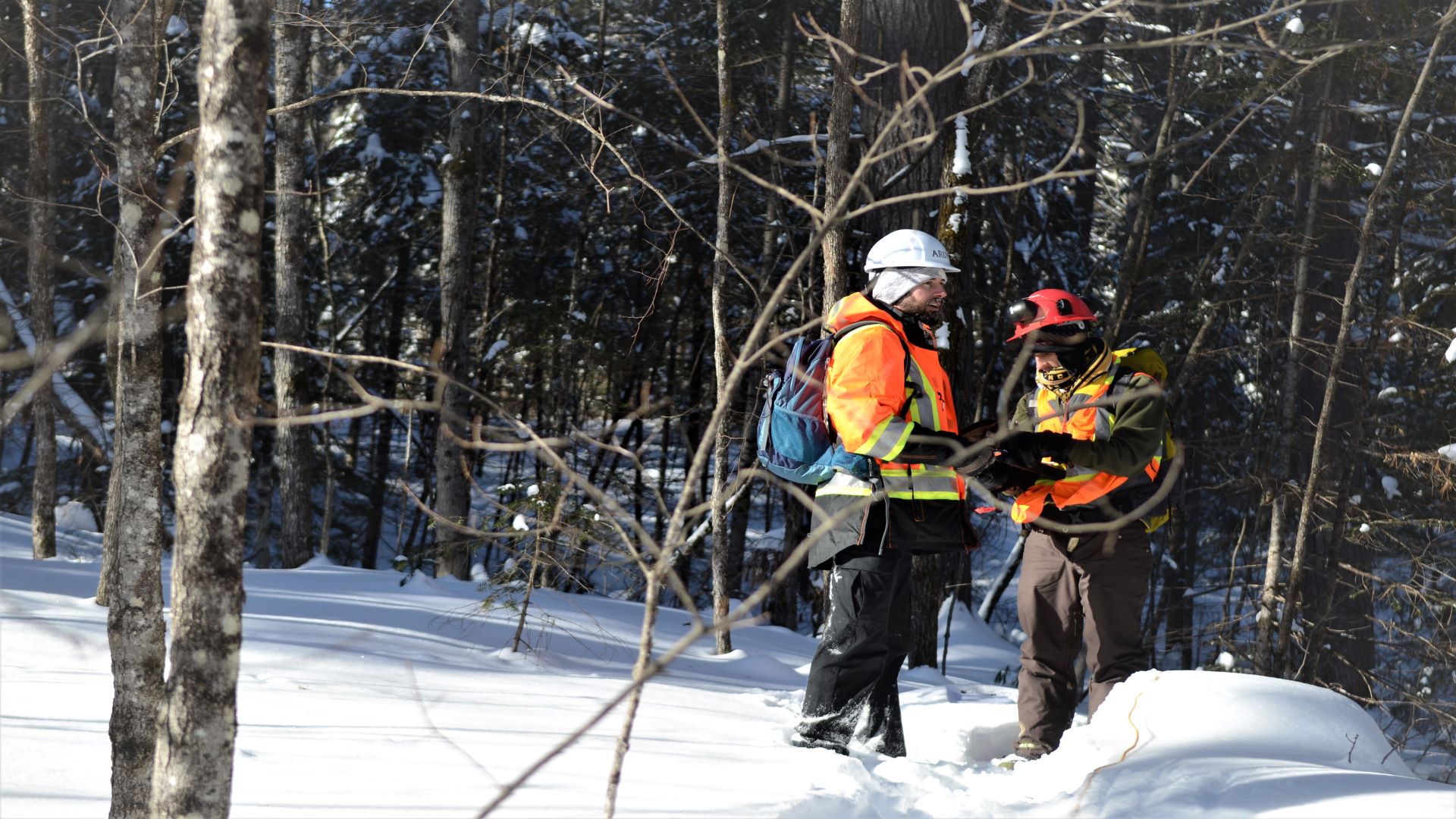
The students spend most of their field days at the Petawawa Research Forest, one of the oldest research forests in Canada.

When the pandemic first started, Peter Arbour, the forestry technician program coordinator, was faced with new challenges.

“I only had one full semester before COVID-19,” Arbour said. “At first, there were some stutters, but I think we did a good job given the circumstances.”

Over the last two years, the forestry technician program at Algonquin College has worked to push the program towards inclusivity, introduce new technologies and provide a COVID-19 safe workplace all at once.

The forestry technician program, 45 weeks in length and based at the Pembroke Campus, is built to make students ready to work.

The students spend close to half of their time outside, making field days essential to the program. The students learn tree identification, fire management, insects and diseases identification, forest measurement and management.

“It was important to us to keep the field placements despite COVID-19,” said Arbour. “So we built our own safety protocols and our own rules. We had two buses instead of one to keep students separated.”

Due to COVID-19, the program has moved all of its theory classes online. For some students that has been more difficult.

“Working with COVID-19 and Brightspace has been the biggest challenge,” said Simon Coughlin-Schmidt, a full-time forestry technician student. “I know for a course like this, hands-on approach is very important, especially in a classroom setting where you can bounce ideas off each other.”

“Getting into the mindset of homework and routine was one of the most important things I had to develop for myself,” he said, “but what I learned about myself and the lessons, I appreciate.”

The students spend most of their field days at the Petawawa Research Forest, one of the oldest research forests in Canada.

“Gratefully we can use it and explore and do big long hikes throughout the woods and get to learn about the different species,” said Coughlin-Schmidt.

“They throw a lot at you early on really quickly, but you take it on in a personal setting outside of school and the more you practise the better you will do,” he said.

The program has not only been changing because of COVID-19. In the past two years, there has been a big effort to modernize the program with technology. The students now learn how to use tools such as satellites, plane-based aerial LiDAR and terrestrial LiDAR .

Algonquin College has also done a lot of work to acknowledge the Algonquin nation and people as the traditional custodians of the land on which the three campuses are located. The forestry technician program is trying to bring more Indigenous values as well.

“Indigenous values are woven in forestry management but not so much tech,” said Arbour. “One of my goals is to have Indigenous values embedded right into the curriculum. We have started to make some headway towards that, but we need to keep working on it. A completely settler-based approach towards forestry is not the way of the future.”

According to the last census done in 2016 by the government of Canada, 12,000 Indigenous people work in forestry jobs. The census also indicates about 17 per cent of forestry employees are women and 12 per cent immigrants to Canada.

The program has mostly female professors. Pushing the program to become more women-friendly helps female students feel welcomed and have good role models to look up to.

“To put it crudely, the trouble with forestry is it has been an old white man’s game forever and luckily that is starting to change,” said Arbour. “Both in terms of other ethnicities getting into it and the culture of acceptance around that. Not to mention the number of women in the class is rising every year.”

With only 46 spots in the program, it has had a waitlist for the past two years.

Contest: Win A $15 Gift Card To Starbucks!

The taste of home

Students from India know what they are getting into when they leave home and head to Canada in search of a better life. They are no strangers to hardship, struggle and a longing for familiarity. The prospect of staying in touch with loved ones digitally is a compromise, but it still works. But then there […]
Photo: Aadil Naik
Thaya Kandiah, owner of Thana Markets on Bank St., said 60 to 70 per cent of his customers are non-white. He has witnessed demand for Indian groceries continue to grow since he bought the place in 2008.

Students from India know what they are getting into when they leave home and head to Canada in search of a better life. They are no strangers to hardship, struggle and a longing for familiarity.

The prospect of staying in touch with loved ones digitally is a compromise, but it still works.

But then there is food. When it comes to the palate, those memories seared in the mind are hard to replicate, and even harder to let go. It is where an Indian is weakest.

Food is to an Indian is so much more than mere taste; it is part of their being. Not just a means to exist, but a purpose to do so. And with every mouthful, it reflects all they left behind.

The last decade of research into neurogastronomy – the study of flavour perception – gives credence to this. We know taste and the sense of smell (aroma plays a dominant role in flavour perception) first evolved to help our ancestors detect safe foods, poisons and nutritious consumables. But then we invented fire, and food went from being a means of sustenance to an object of pleasure.

This change happened over a relatively short time period and our brains, tongues and noses did not evolve perfectly enough to reflect food’s new position in our lives. Instead, the brain decided the centres that dealt with memory and nostalgia would deal with flavour, too.

And that is why the butter chicken an Indian eats here in Canada is unable to fill the soul the way it should. Because tied inseparably to the mouthfeel and aroma is the multidimensional memory of location, environment and emotion. It is why what we ate as children tends to define what we enjoy as adults. And it is also why your mother’s food tastes better even though it is objectively inferior to a Michelin Star chef.

But in lieu of the rest, all an Indian student has here is taste and aroma, and no compromise can thus be afforded.

At first look, it is grim. Nowhere in India is butter chicken or chicken tikka masala served with rice. “Naan bread” and “Chai tea” are just blatantly foolish terms to anyone who speaks Hindi. And when a dish is labelled spicy – an arguably subjective definition – it is supposed to make the Indian tongue tingle, at least.

It feels inauthentic to an Indian – sitting down for the first time at a restaurant that reminds them of home in a foreign land – to be served what can only be described as the bastardisation of an entire cuisine. To see what they hold so dear be so overtly desecrated.

For the proud, distrustful and desperate Indian, taking things into their own hands is the only way through. If you want a good Biryani, you must make it yourself. Of course, this endeavour needs ingredients that are not readily available at the local store. Fortunately, grocery stores – like Thana Markets on Bank street – that stock spices and ingredients endemic to India have popped up everywhere.

But for the uninitiated – or the simply lazy – the hunt for an establishment designed to serve a clientele like them becomes a pedantic mission. And while they are few and far between – Taj Indian Cuisine on Carling Avenue is an example – they do exist. A restaurant dedicated to providing an unadulterated slice of home. A place that does not pander to local tastes.

As to how one finds these? Patience and perseverance. Try as many as you can, because there is no visual difference from the authentic and inauthentic. The proof is in the proverbial halwa.

There exists a third alternative – one that has more of the aforementioned memory associations – tiffin services. Back in India, this makes up the bulk of how Indians who are not home for lunch get their food: simple, home cooked meals that are packed and delivered on schedule.

Here in the Algonquin College community, Saatokda is one such service. It provides vegetarian food made at home by Guddi Vaishnav, a member of the Algonquin Indian Student Alliance. It is rapidly growing popularity online. From laddus and pav bhaji, to rotis and theplas, it is home food away from home.

Indian cuisine is hugely popular in Canada. But the Indian who tries it here is left wondering if the average Canadian has even experienced true Indian food? And, do they recognize that most of what they enjoy is specific to the North of India? And – this cannot be repeated enough – butter chicken is never served with rice?

Over the last few centuries, India was plundered by every white nation that could afford to make the trip for its spices and flavours. Unfortunately, they took the spices but not the palate. Perhaps it is time that changed.

If memory is tied so intricately with taste and aroma, it would be a travesty to not make the right ones for the next person introduced to such glorious food.

Algonquin students dominate We Got Game esports tournament

Algonquin esports team mRNA swept their way to a League of Legends championship and a $150 prize pool in the We Got Game college tournament on Monday, Feb 7. There were two Algonquin College teams in the tournament. Both Algonquin mRNA and Algonquin C7 made it to the semi-finals, but mRNA went all the way […]
Nick Dudar, a student in the heating, refrigeration and air conditioning program, has been playing League of Legends for years.

Algonquin esports team mRNA swept their way to a League of Legends championship and a $150 prize pool in the We Got Game college tournament on Monday, Feb 7.

There were two Algonquin College teams in the tournament. Both Algonquin mRNA and Algonquin C7 made it to the semi-finals, but mRNA went all the way to win the finals and take home the championship.

There was a lot of hype for Algonquin mRNA. Fans were heckling in the Twitch chat for Algonquin mRNA to start their game. The team never showed up on screen because none of the players were streaming, but fans were able to watch them through their opponents’ streams.

The Toronto-based We Got Game esports company has hosted four campus tournaments so far this year. Each tournament pits Ontario campuses against each other in a variety of games. All of it is streamed live on Twitch.

The tournaments weren’t always online. “We used to do them on campus every week.” said Alison Barnes, the events programmer for the Algonquin Student’s Association. “We’d have about 40 game systems in rotation all day. FIFA, Mario Kart, Smash Brothers. We even had VR.”

Barnes has been helping coordinate esports on campus for over four years. When the COVID-19 pandemic shut everything down, Barnes worked with We Got Game and the tournaments moved online. Now they have the opportunity to play against students from other campuses.

“It’s nice to be able to compete with other colleges and not just with themselves,” Barnes said.

Algonquin mRNA were hyped for the League of Legends tournament before it began. Augie Berganio, a police foundations student who goes by the handle n0t3d and a team top laner, has been playing League of Legends since Season 3.

“I was very OG guy. Most of my champions are OG,” he said. “I stopped for two years when I first came to Canada from Philipinnes. I didn’t have a PC or laptop. But now I’m back at it.”

Teammate Nick Dudar, who goes by Tay, has a similar story. Dudar is in the heating, refrigeration and air conditioning program and has been playing League of Legends for years. “I’ve been a gamer since I first got an N64,” he said. “I’ve been playing League for almost nine years, since the original seasons.”

Both Algonquin College teams dominated in the first rounds. mRNA knocked Cambrian College out of the tournament to face off with sister Algonquin College team C7 in the semi-finals.

It was a tough fight but mRNA moved on after taking out all of C7’s turrets. Then they faced off with the Niagara Neons in the finals. The Neons put up a tough fight but after nearly 40 minutes of intense gameplay, they fell. Algonquin mRNA were the undisputed champions of the tournament.

We Got Game will host the next League of Legends campus tournament on March 11. Fans can watch the streams live on Twitch at wegotgame_corp.

Algonquin Times horoscopes
Follow Algonquin Times on Instagram
Algonquin Times on Instagram
Algonquin Times podcast
Follow Algonquin Times on Instagram
Algonquin Times on Instagram
Algonquin Times horoscopes
Algonquin Times podcast

Stay Informed

Sign up for our newsletter

Subscribe

* indicates required