Algonquin College’s Garden Centre is open for business. The Garden Centre will be open every Tuesday and Friday from noon. to 1 p.m. during the student’s outdoor lab time, just […]
Mathew Dicsi
Photos: Mathew Dicsi
June 16, 2023 Revised: January 30, 2024 3:36pm
Photo: Mathew Dicsi
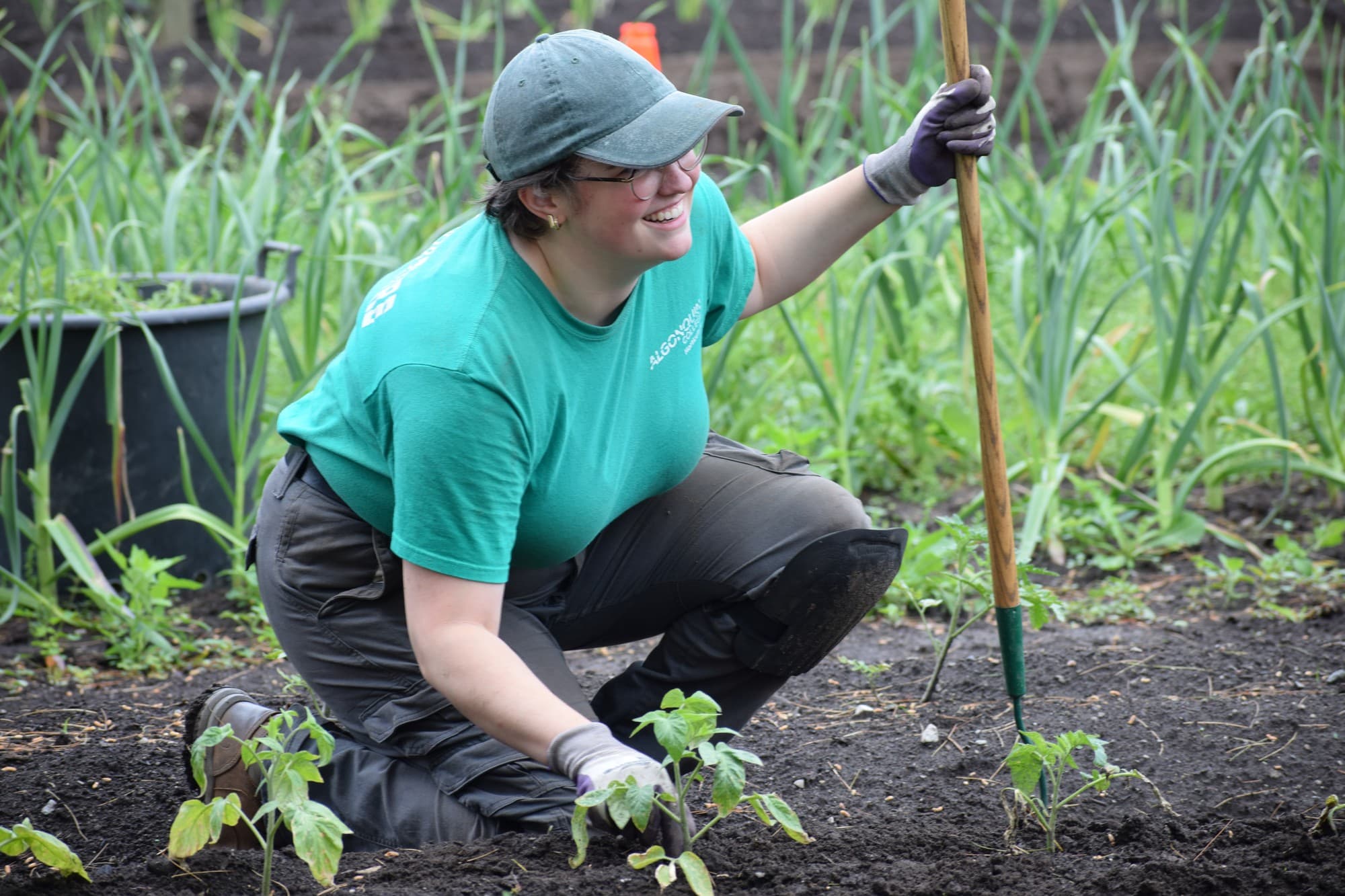
Horticulture Industries student Annalyse Broumpton caring for her tomato crops
Algonquin College’s Garden Centre is open for business.
The Garden Centre will be open every Tuesday and Friday from noon. to 1 p.m. during the student’s outdoor lab time, just outside the M-building.
“All proceeds from our garden centre go back to the students” said Horticulture Industries professor Jason Vodden. “We use it to pay for field trips, student barbecues, or stocking the fridge with popsicles and drinks for hot days.”
“Plants bring me joy” said Lise Snedden, a member of the Kemptville Horticultural Society and graduate of the Algonquin College Horticulture Industries program. “I cannot live anywhere without plants with me. I have always had tons and tons of greenery with me.”
For those with no experience taking care of plants, both Vodden and Snedden recommend a form of succulent.
“Succulents such as Kalanchoe and Echeveria are among the plants considered easier to tend to.” said Vodden.
“Jade plants can grow almost anywhere under any circumstance,” said Snedden “I’ve got two jades and every morning I turn on the living room lamp they’re under. That’s all the light they get.”
Algonquin College organized a special event as part of Indigenous History Month, highlighting the significance of Indigenous culture and cultural understanding among students. The Indigenous History Month Film Series event […]
Sebastian Pinera
Photos: Sebastian Pinera
June 14, 2023 Revised: January 30, 2024 3:36pm
Photo: Sebastian Pinera
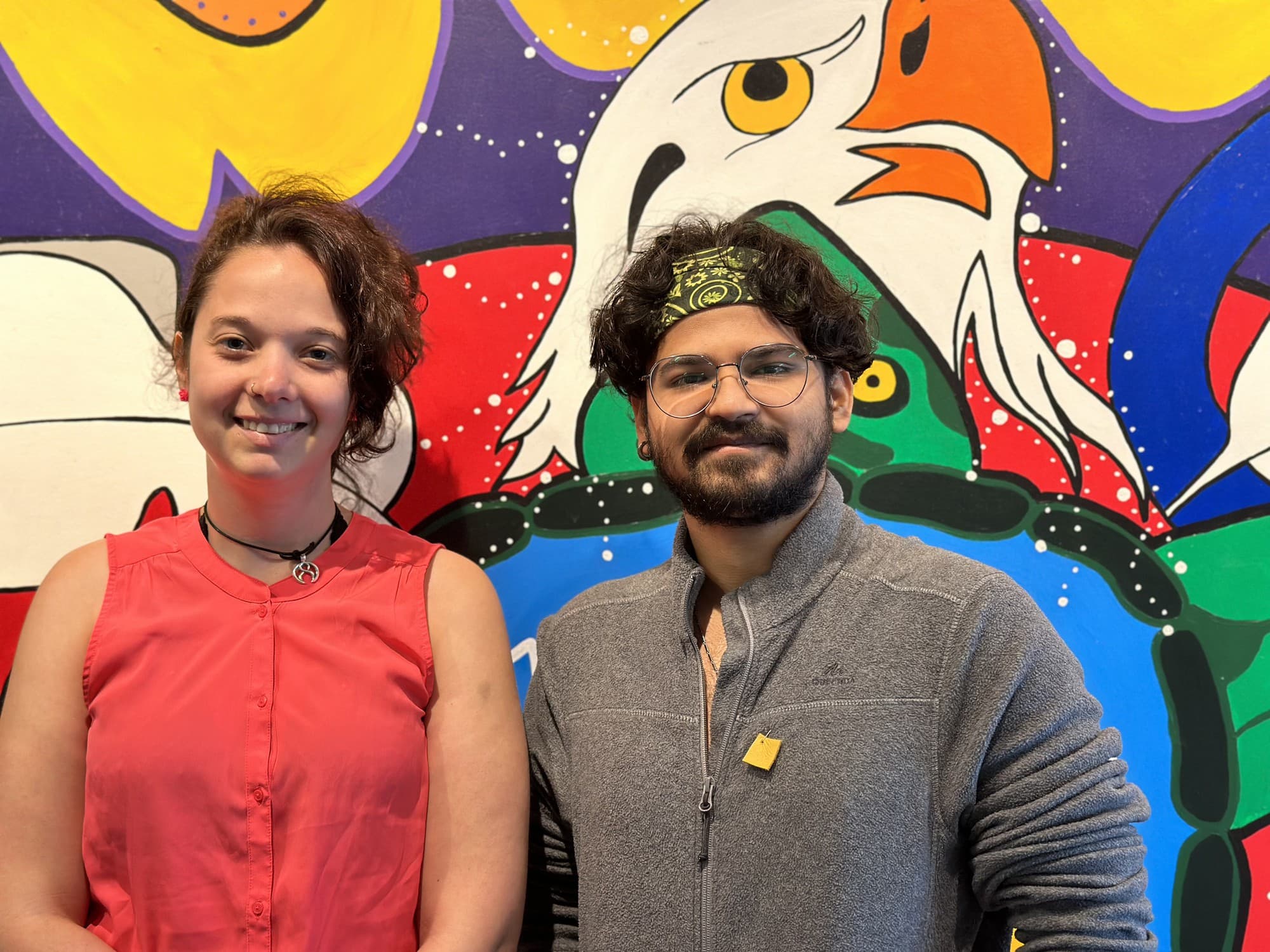
Crystal Rossnycol (left) and Jay Lad (right) attended the Indigenous History Month Film Series
Algonquin College organized a special event as part of Indigenous History Month, highlighting the significance of Indigenous culture and cultural understanding among students.
The Indigenous History Month Film Series event began on June 9 at the Mamidosewin Centre, located in the E building. It continues weekly until June 23.
Crystal Rossnycol, an Architectural Technician student, attended the event.
“For me, it wasn’t particularly the event. I come to the centre here to kind of get back to my native spiritual roots, because I’m mostly Scottish, but I also have some Indigenous background,” said Rossnycol.
” . . . When you are seeing it from your perspective, and being in someone else’s shoes, that’s when reality strikes that Indigenous people have been going through a lot of things for such a long time and it’s not a joke,” said Jay Lad, a Regulatory Affairs Sciences student.
The Mamidosewin Centre holds significant importance for some students at Algonquin College. Serving as a cultural hub, the centre provides a welcoming space where students can connect with their heritage.
“I think the centre is great because it gives a better understanding to people who might not be Indigenous, or people that are partially Indigenous like myself. You don’t have to be Indigenous; you just gotta be yourself, and that’s what I love about this particular centre – It’s very impactful,” Rossnycol said.
The centre says multiple documentaries began showing starting June 9 until June 23, with showtimes starting at 2 p.m. in the Mamidosewin Centre (Room E122), followed by a discussion. No sign-up is necessary.
The remaining films are:
June 16 – Trick or Treaty
June 23 – I Am Indian Again
The Mamidosewin Centre is open on campus from Monday-Friday, 8:30 a.m.-4:30 p.m., with evening programs as well.
For more details about this event, visit Algonquin College’s Instagram page (@algonquincollegess) or check the events calendar on Brightspace.
Algonquin College is bringing back Food Truck Tuesday, offering diverse cuisines and a unique culinary experience for everyone on campus. This weekly event occurs outside of E building, and continues […]
Sebastian Pinera
Photos: Sebastian Pinera
June 12, 2023 Revised: January 30, 2024 3:36pm
Photo: Sebastian Pinera
Renée Leduc (Employee preparing the food) and Andrew Lay (Owner of the restaurant)
Algonquin College is bringing back Food Truck Tuesday, offering diverse cuisines and a unique culinary experience for everyone on campus.
This weekly event occurs outside of E building, and continues to satisfy students with a delicious variety of food options from 11 a.m. to 2 p.m., or as long as supplies last.
“I absolutely love that the college is hosting these type of events, it’s a great opportunity for everyone to explore diverse food options aside from the food of the cafeteria that we are already used to,” said Hannah Toth, a Broadcasting – Television and Streaming Video student.
In early June, the Sula Wok restaurant was the first truck invited to campus. Andrew Lay, owner of the restaurant, shared his perspective on the event.
“It provides students with an opportunity to try something different. It’s not something repetitive; it gives people different options,” said Lay.
“In terms of service, we like to come out to do something different once in a while. We have a restaurant down on Main Street, so most of our business is taking place there, but it’s nice to be here at the college,” said Lay.
“The only issue for us was that we had to pay for parking, which wasn’t really thrilling for us. We thought we would be able to park for free – It’s one extra cost that we didn’t expect.”
Different restaurants will be participating for this event on select Tuesdays. For more information, visit the Instagram page @accampusservices.
Local News Ottawa Citizen: Zacharie Robert Lamoureux, a 21-year-old man from Mississauga, Ont., was charged with two counts of first degree murder, and one count of attempted murder with a […]
Mathew Dicsi
Photos:
June 11, 2023 Revised: June 11, 2023 6:33pm
Local News
Ottawa Citizen: Zacharie Robert Lamoureux, a 21-year-old man from Mississauga, Ont., was charged with two counts of first degree murder, and one count of attempted murder with a firearm. All three victims were 16-years-old, and all were also from Mississauga. The shooting took place on Mackay Street in Pembroke, Ont., in May.
National News
CBC: Forest fires spread across Canada, covering the country with smoke. The Air Quality Health Index, a scale of one to 10, rose to 14 for the Ottawa area. N95 masks were recommended. Ottawa’s medical officer of health, Dr. Vera Etches suggested reducing outdoor activities and for those at high risk to avoid any strenuous outdoor activities.
International News
CNN: Beloved singer Tina Turner, passed away at the age of 83 on May 24, in her Switzerland home. Her family says she passed away peacefully.
Heavy smoke from wildfires filled the air at Algonquin College
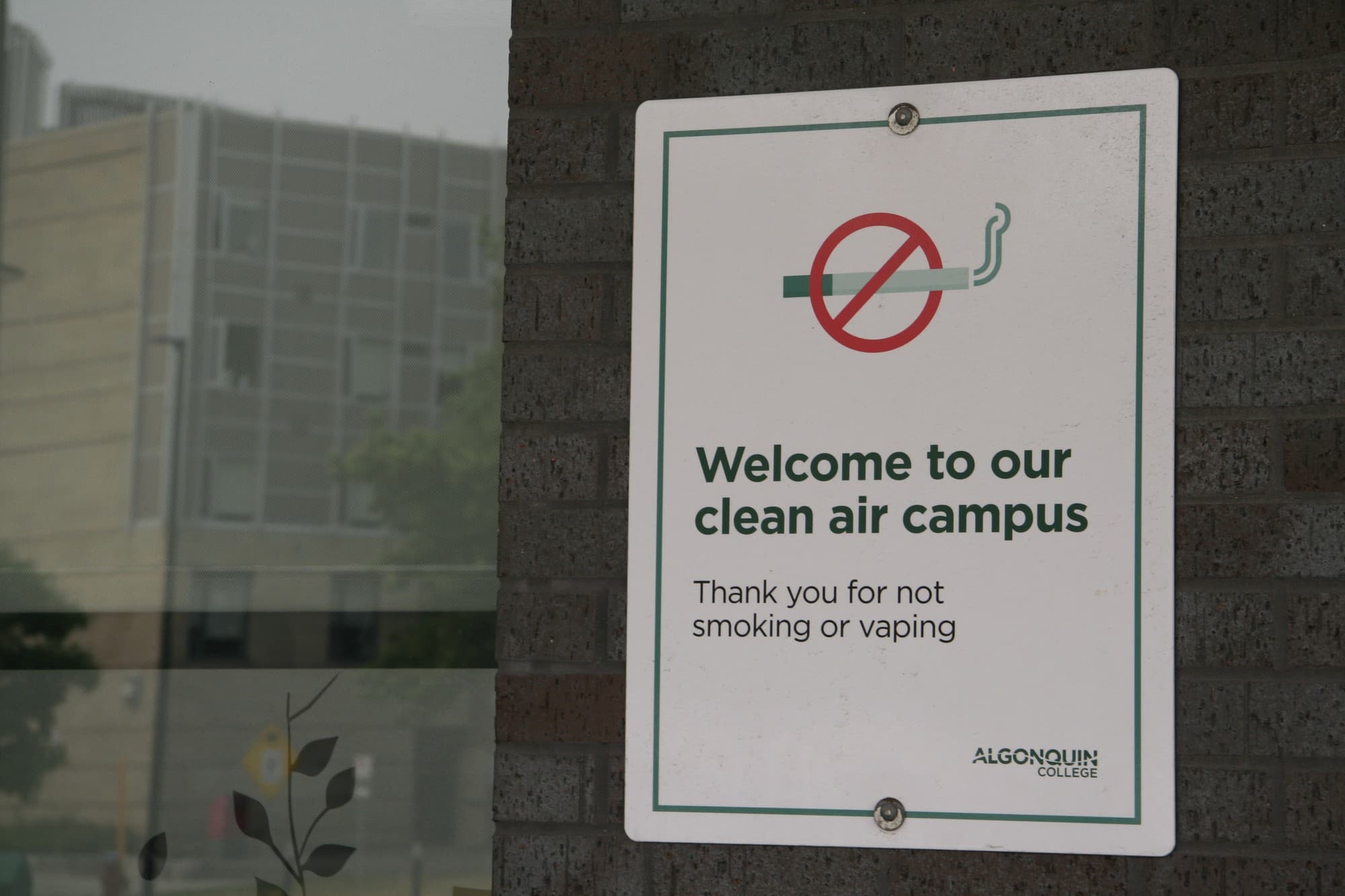
Algonquin College students have been encouraged to stay inside as wildfires in Ontario and Quebec lowered air quality in Ottawa.
On June 4, a wildfire erupted in Calabogie, Ont., about 150 kilometres west of Ottawa. The smoke combined with Quebec’s wildfires, leaving Algonquin’s Ottawa campus dark and smokey.
“It smells disgusting, it’s not pure – I’m definitely not getting the same amount of oxygen.” said Bem Partington, a film and media production student at Algonquin College.
Students were asked to stay inside when possible, and to wear an N95 mask to protect themselves from harmful toxins when outside. The smoke contains cyanide, carbon monoxide, carbon dioxide, and hydrogen sulfide according to Katie Preston, an Algonquin Fire Service student.
“Stay inside if you don’t need to be out here,” said Jenna Gibson, another Algonquin Fire Service student. “Make sure you’re in a well ventilated building – libraries are good for that.”
The Calabogie fire has been contained and is no longer spreading, according to the Ontario Ministry of Natural Resources.
The college issued a special air quality statement which included updates from Environment Canada and Ottawa Public Health.
“Learners and employees are encouraged to monitor air quality for their regions and follow best practices, as health officials are advising the general population to reduce or reschedule strenuous outdoor activities, especially if they experience symptoms such as coughing and throat irritation. It is suggested that learners studying outside, in programs such as forestry, consider wearing a mask,” the release said.
Ottawa Public Health says symptoms of smoke exposure include: headaches, a mild couch, a runny nose and throat irritation.
More information can be found at ottawapublichealth.ca
Algonquin College staff members gathered for the President’s barbecue on June 1 to celebrate the end of the academic year, marking the highest guest count since the pandemic began. With […]
Thomas Gordon
Photos: Thomas Gordon
June 6, 2023 Revised: January 30, 2024 3:36pm
Photo: Thomas Gordon
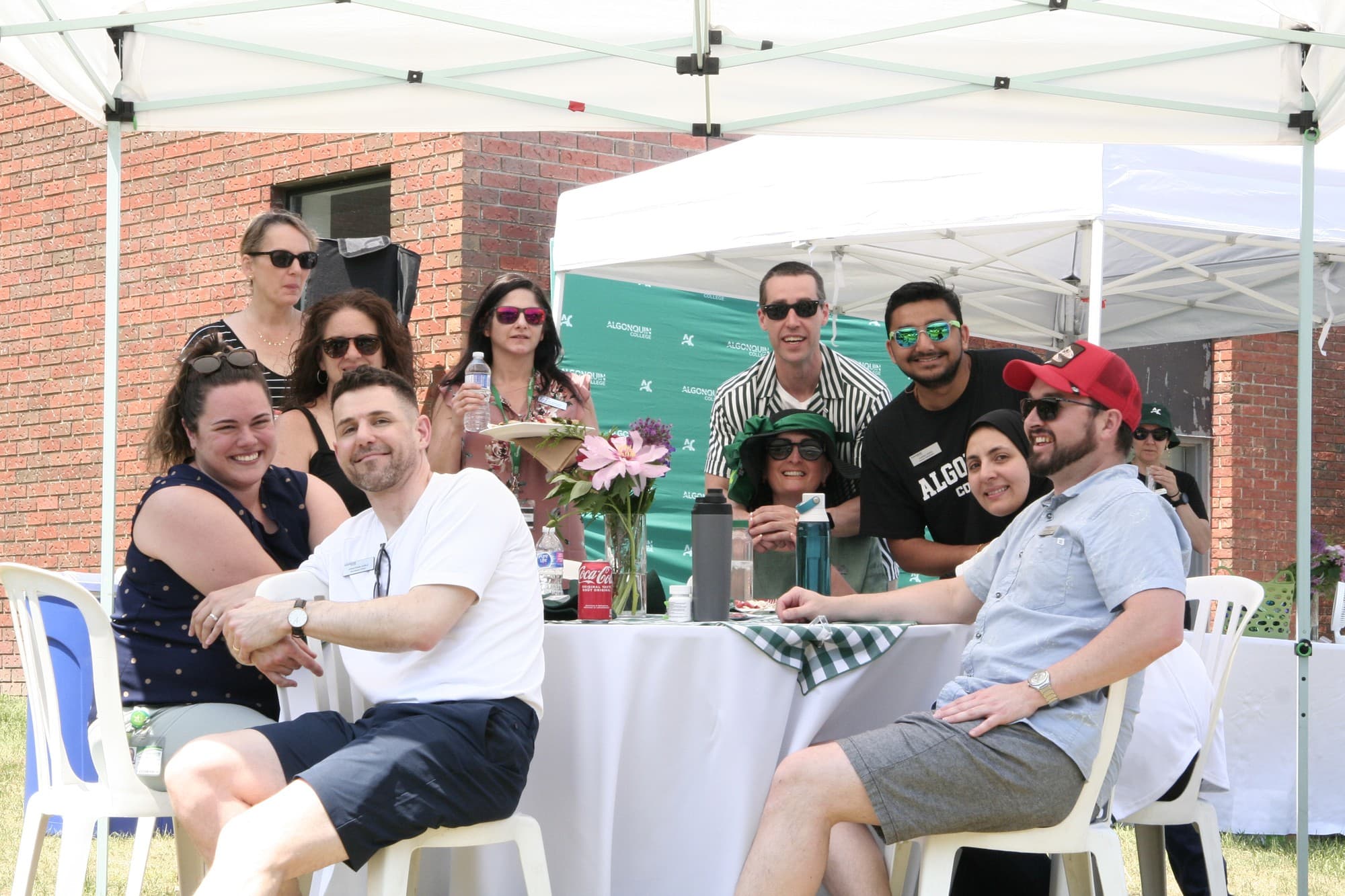
Enjoying the President's staff BBQ
Algonquin College staff members gathered for the President’s barbecue on June 1 to celebrate the end of the academic year, marking the highest guest count since the pandemic began.
With the school year wrapping up, the college hosted its annual President’s barbecue – designed for staff to celebrate, reflect and socialize.
Algonquin’s president, Claude Brulé, spoke at the event and reflected on the record registration numbers.
“Its terrific to see people coming back in person for work, for studying and for activities,” said Brulé, “It warms my heart – it’s really good medicine.”
This year marked the highest guest count since the pandemic, with 800 staff members in attendance – a 60 per cent increase from 2022.
“I think the numbers are up from last year – it was a little Covidy – it’s nice to be reminded what a diverse and pretty awesome community we have here,” said Teri Loretto, a scriptwriting and performing arts co-ordinator at the college.
The event made use of Algonquin’s spacious Ishkodenwan Courtyard, and featured a live performance by Ottawa band Jackson Miles.
“They’re a great band – they just have that really nice rock ‘n roll type of sound.” said Felix Lebeau, the event’s sound engineer.
The Algonquin College Students’ Association is kicking off the summer weather with a free, outdoor movie night on Thursday, June 22, at the Ottawa campus. The original date of June […]
Meg Wall
Photos: Meg Wall
June 3, 2023 Revised: January 30, 2024 3:36pm
Photo: Meg Wall
Ottawa campus hosting a movie night
The Algonquin College Students’ Association is kicking off the summer weather with a free, outdoor movie night on Thursday, June 22, at the Ottawa campus.
The original date of June 8 had to be changed because of weather.
Now that the hot temperatures have arrived, the Students’ Association is offering a free showing of Top Gun: Maverick on the Student Commons front lawn (E Building), from 8 p.m. to approximately 10 p.m.
Nakeya Francis, the Students’ Association’s diversity and inclusivity events co-ordinator, hopes the movie night will provide current students the opportunity to enjoy the campus with their peers while simultaneously attracting future students.
“It is a great way to welcome the community on to our campus and help integrate our new students into the Algonquin community in general,” says Francis.
The event will be open to anyone in the college body and general public (but is advised for those aged 13 and up).
When the 2022 film (starring Tom Cruise, Miles Teller, and Val Kilmer) hit theatres last year, it received a 96 per cent rating on Rotten Tomatoes’ “tomatometer”.
Level two TV broadcasting students, Vera Scultety and Mike Taylor, say gathering a bunch of movie lovers together for an evening is bound to create a great night.
“Top Gun: Maverick was my favourite movie of last year,” says Taylor.
“I think it’s a great idea,” says Scultety. “But alternating different genres – if we do this more than once – would be a really cool idea too, and I think it has potential to keep going.”
However, some Algonquin College students are concerned about logistics.
“There’s nothing really flat here,” says Denis Vykhodtsev, a level two massage therapy student, when asked about the front lawn being a good location for the event. “I’d have to be at the back, since I’m a pretty tall individual.”
Vykhodtsev also expressed concern over the number of mosquitos this year.
Attendance is free, but the net capacity will be limited to 150 people. For those visiting the campus by vehicle, paid parking will be available in Lots 8, 9, 10, and 12.
For additional information on the event, the Students’ Association can be contacted by phone at (613) 727-4723 x7711 or by email at studentsassociation@algonquincollege.com.
If you have ever passed by Antonios Vitaliotis in the hallways of the H-building, you’ve probably got a friendly pat on the back followed by a cheerful, “Don’t worry, we […]
Arty Sarkisian
Photos: Arty Sarkisian
May 29, 2023 Revised: January 30, 2024 3:36pm
Photo: Arty Sarkisian
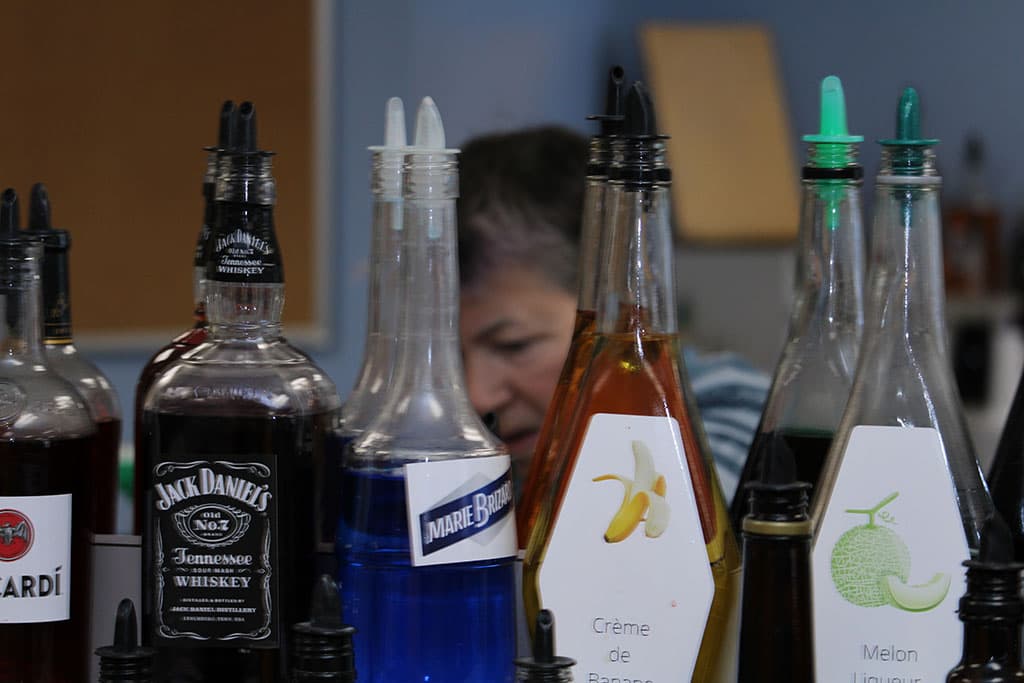
Mixology classes at the college try to recreate the experience of real bars. However, students use coloured water instead of real alcohol when they practice.
If you have ever passed by Antonios Vitaliotis in the hallways of the H-building, you’ve probably got a friendly pat on the back followed by a cheerful, “Don’t worry, we don’t bite in here.”
Vitaliotis is a bartending professor at the college. He seems as cheery as the industry he teaches. The industry that never feels “blue.”
But COVID-19 changed everything for him and the industry.
“I saw a world which I never wish anyone to go into,” Vitaliotis said, remembering the quarantine and the online teaching.
Vitaliotis studied in an all-boys school in Athens. In the early 80s, the school was still strictly following the educational traditions of the past. All boys wore uniforms. They all had shaved heads to prevent lice. And the teachers had sticks. They were the “kings.”
“It was about memorizing rather than learning,” Vitaliotis said. “The information was coming one way, and you’re sending it back the very same way.”
Vitaliotis vowed never to teach like that. He vowed to be as approachable and engaging as he possibly can.
But in 2020 he was forced to teach via Zoom to a bunch of squares with names on the screens. And that reminded him the way he was taught. But now he was in the role of those teachers.
He was still trying to make things entertaining. The college provided some extra cameras and lighting gear, so that he could show rather than tell.
“Now I know how hard it it to produce a TV show,” Vitaliotis said.
He was putting more and more effort into each class. But he still didn’t feel like he was doing his job properly.
“My heart started beating funny,” Vitaliotis said, describing one of his Zoom classes. “I couldn’t breathe. I got a bit dizzy.”
Vitaliotis ended the Zoom call for everyone.
“I just sat there for a second. I didn’t know what it was.”
He connected to the conference once again and told the class that he was having “technical issues.”
When that happened again, Vitaliotis went to the emergency department. “I thought I was dying,” he said. “I thought my heart was going to explode.”
Vitaliotis was prescribed antidepressants.
“I’ve never thought of suicide. I started thinking of suicide.”
Antonios Vitaliotis studied in an all-boys school in Athens. “It was about memorizing rather than learning,” Vitaliotis remembered. “The information was coming one way, and you're sending it back the very same way. That’s how Zoom felt too.” Photo credit: Arty Sarkisian
COVID-19 destroyed almost every aspect of normality in our lives. Restaurants and bars were shut down in the earliest stages of the quarantine, since they were considered “pandemic accelerators.” Many of them closed permanently. A large number of employees left the industry.
All college programs had to follow the new regulations and switched to online learning. Bartending was one of the first programs to go back in person. It had to come back. Otherwise, students wouldn’t have had the chance to get their degrees that year.
“It would have defeated the purpose,” said Marie-France Champagne, the bartending program coordinator. “You need to own your skills; you need to practice. If you don’t have a bar in front of you, it’s hard to bartend, right?”
Marie-France Champagne, the bartending program coordinator, believes that the program coped well with the pandemic difficulties. "Of course, at first, you needed to adjust your mask a few times. It got a little hot in there, but then it was just business as usual.” Photo credit: Arty Sarkisian
Champagne is a frequent guest on CTV. In 2019, on Valentine’s Day, she and her colleague, chef Harsh Singh, were matching fortified wine with a coffee truffle in the studio of CTV Morning Live.
A year later, Champagne and Singh appeared on CTV once again, now in masks and via Zoom. They were still pairing wine with chocolate for Valentine’s Day. In a world where nothing seemed certain, it’s nice to know that lemon truffle still goes well with Moscato d’Asti.
“We’ve adapted rather quickly,” Champagne said. “Of course, at first, you needed to adjust your mask a few times. It got a little hot in there, but then it was just business as usual.”
But the business was still quite unusual.
Classes had to be split up to follow the social distancing regulations. Restaurant International, where all the hospitality students get to practise their skills, had to follow the constantly changing provincial regulations for restaurants.
However, Champagne believes that the program coped well with the pandemic. She argues that the industry that we have collectively pronounced dead is actually very much alive and prosperous.
“Restaurants and bars are booming,” she said. “People are tired. They want to go to restaurants. Even the higher prices don’t change that.”
This instant “boom” has led to labour shortages. There are not enough waiters and hostesses because many of them lost their jobs and left the industry during COVID-19.
The bartending program had to change.
From now on, bartending and sommelier students are also trained to be waiters, managers and fronts of the house.
They are trained for the new, post-pandemic normality.
Vitaliotis feels okay. It’s the new, post-pandemic okay. An okay that follows the world that almost made him quit everything.
“If it wasn’t for my family and my surroundings,” Vitaliotis said, “if I was younger and and on my own, it would have been a no-brainer.”
Vitaliotis still takes some of his antidepressants, but he is “90 per cent well.”
“I was brought back to reality,” he said. “It’s like day and night. I walk into the classroom, and I am feeling super confident.”
The bartending classes are back to being chaotic and loud.
Can it really be different when students can be barely seen behind all the bottles of alcohol? As it turns out, all of them are just coloured water, but let’s be blind and deaf to this disappointing detail.
Almost every five minutes someone would approach a huge ice maker to scoop up a bucket of ice. Ten minutes later the same person would come again. And again.
This is all very “in person.” Every little detail of this in-personness is vital.
At some point, Ezio Margiotta, one of the bartending professors, paused Ed Sheeran’s Shape of You that was playing on his laptop during a class.
What followed was the definition of deafening silence.
“See? It’s horrible,” Margiotta said.
He laughed as if nothing like that could ever happen. Nothing can silence this noisy industry, right?
Algonquin College is renovating three washrooms across campus. A universal washroom is being developed in Room 127 of E-building, Room 109 of P-building, and the Four-Corners washroom of A building. […]
Mathew Dicsi
Photos: Mathew Dicsi
May 28, 2023 Revised: January 30, 2024 3:36pm
Photo: Mathew Dicsi
Algonquin College is renovating three washroom across campus.
Algonquin College is renovating three washrooms across campus.
A universal washroom is being developed in Room 127 of E-building, Room 109 of P-building, and the Four-Corners washroom of A building. These washrooms will be closed until the currently projected completion date of September or October 2023, according to the school’s Facilities Management announcements website.
The Four-Corners washroom in A-building will gain 12 gender neutral stalls, three accessible washrooms, a universal washroom with an adult lift/changing table along with a dedicated nursing room.
The washroom located in E-building Room 127 will be renovated to meet the most current accessibility code.
“As a trans man, I couldn’t use the men’s bathroom until I started growing facial hair – the other guys would stare at me like I was in the wrong place.” says animation student Tyler Lucas. “A universal bathroom being available when I was going through that would have been perfect for my situation.”
Lucas also referred to his friends who are non-binary saying: “They don’t feel comfortable using either men’s or women’s washrooms. Having a universal washroom will create a space where they feel most comfortable and welcome.”
“Being more inclusive for everyone is important” says Andre Bolton, a business administration student at Algonquin College. “It’s a step in the right direction, everyone should feel wanted and included.”
“It would be easier for me to clean,” says Algonquin College Janitor Juana Garcia.
“People can be whatever they want to be” says Garcia. “So, the washroom they use is their choice.”
A common fear which comes with genderless washrooms is the increase in people using it. With double the number of people, the number of toilets needs to double with it.
This fear is being combated by not only renovating but expanding the P109 washroom according to the Facilities Management press release.The exact number of toilets has yet to be determined.
Rosin Sara Roy never imagined Canada would be this expensive. Her 10-hour night shift with the Amazon fulfillment center starts at 8 p.m. after a long day of classes at […]
Brahim Ait Ouzineb
Photos:
May 26, 2023 Revised: January 30, 2024 3:36pm
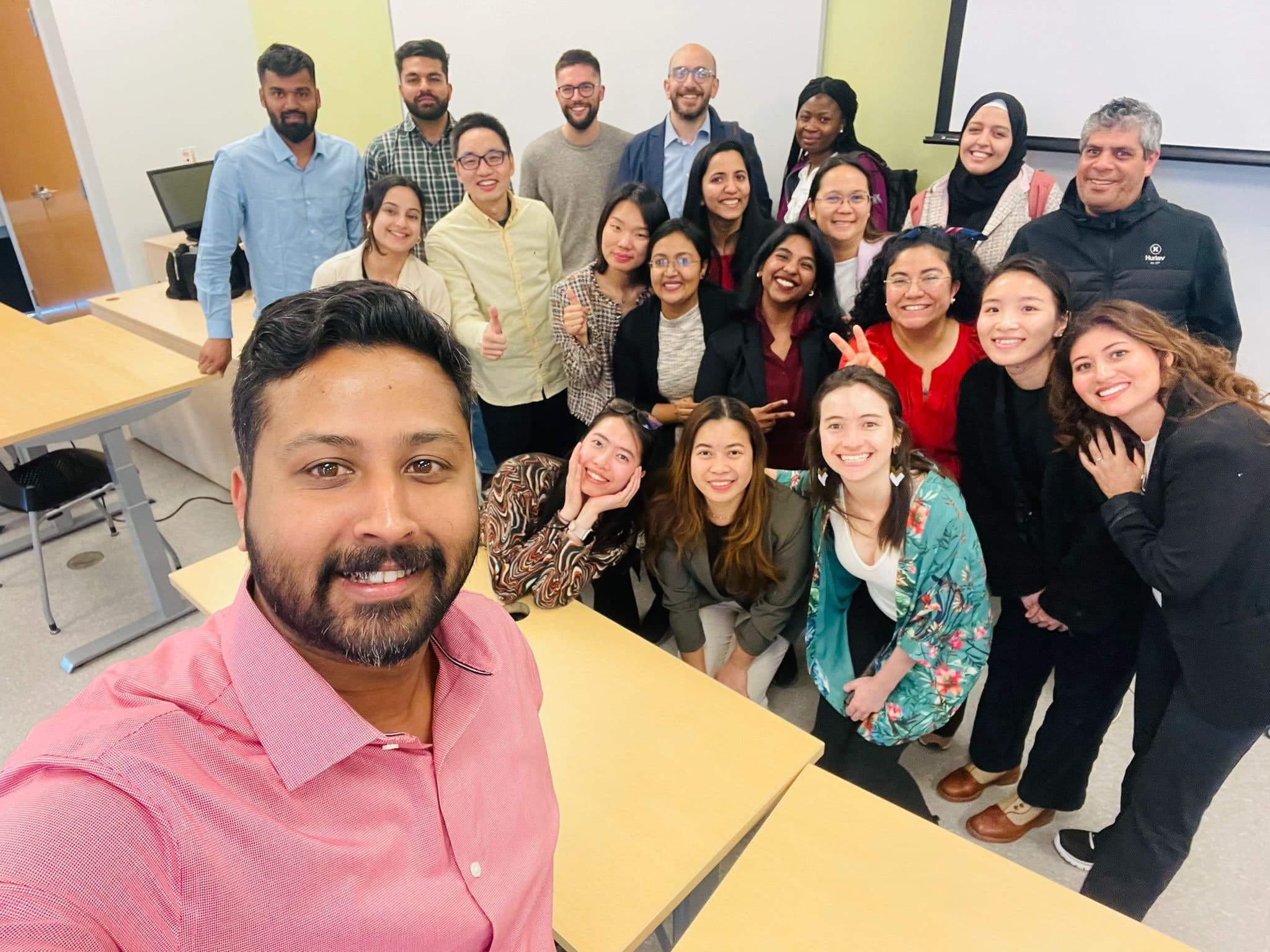
Rosin Sara Roy enjoys brand campaigns, social media strategy and brand measurement courses. Here she is with her classmates - center, in the second row from the back - at the end of a class at Ottawa campus.
Rosin Sara Roy never imagined Canada would be this expensive. Her 10-hour night shift with the Amazon fulfillment center starts at 8 p.m. after a long day of classes at school. Sara Roy is currently looking for another job to make ends meet.
The level-one brand management student left sunny Kerala in 2022 to fight the cold weather in Ottawa. Along with the climate challenges, the food shocks and the high cost of living, Sara Roy also had to spend four months in a house without a lease. Like most international students, adjustment to the new life in Canada comes at a cost.
However, there are bright spots too. For instance, Sara Roy enjoys learning about brand campaigns, social media strategy and brand measurement in her courses at Algonquin College.
Students in the brand management program want a career in Canada. However, as 100 per cent of them are international, the approach and the curriculum need to be a bit different from traditional programs.
The program, which was introduced at Algonquin College in 2014 in a one-year format, has a 90 per cent employability rate. Last year, the program added a second year.
Graduates get full-time jobs related to their studies within two years of graduating. According to the program’s co-coordinator, Kindha Gorman, half of the graduates end up working for all kinds of agencies – advertising, campaign, market research, social media – or for companies.
“We live in a complicated world that is developing at a lightning-fast pace,” said Gorman. “Brands don’t live in their own little world. They are part of the news cycle and social conversation, so we pay a lot of attention to the news and trends.”
Even when the program lasted only a year, it helped a lot of international students understand the Canadian landscape.
“I feel now that I have been working in the Canadian advertising industry, I realize how important this course was for me,” said Pranav Kundra, an alumnus of the program who graduated in 2022. “Without it, this would have been weird for me to mingle and understand the Canadian humour, the etiquettes and the intangibles.”
Kundra’s love for brands goes back to his childhood. It was a TATA-AIG ad in which a child helps an old lady with her groceries. As a gesture, the old lady gives the child a coin. The little boy was so excited that he run to his father’s office to show him his earnings. He told him that it was his first salary. This ad had a deep impact on Kundra the kid. It pushed him to save money he got from his parents or relatives on occasions. Till now, this ad makes Kundra realize the value of money and the innocence in kids.
Thanks to the courses and the group projects, Kundra is familiar with the nuances of a brand. Today, his daily routine at Response Advertising Inc. is handling nameplates for Toyota and deciding the assets to use like Google display banners, Facebook ads, radio spots or TV commercials.
What Kundra learned in the program time fits seamlessly with what he is doing. Things they were taught are valid in today’s scenario as well. However, the faculty strives for continuous improvement in order to better serve students.
In 2022, the program was extended to two years to allow students more time for exposure to brand behavior and market research. A two-year program also allows international students to obtain a post-grad work permit, which wasn’t possible in the shorter format.
It would also improve their chances of finding work in Canada. The new longer program prioritizes leadership, professional communication skills and innovative mindset development.
“These are three key courses that didn’t exist in the past,” said Norma Perez Cervantes, professor and program co-coordinator. “So now, we are helping our students to get those skills that they need to start their professional careers here in Canada.”
For Perez Cervantes, the key to a brand’s success is its customers, but the shopper is the one who purchases the product. Students must understand the difference and adapt their brand strategy accordingly.
“I think the program itself is giving us tools to control the perceptions of the people about the brand,” said Shams Rehan, a level-one student. Photo credit: Noah Simmons
Putting the students in real-life situations in their class is far more fulfilling for Shams Rehan, a level-one student. Coming straight from Malaysia in 2022, the first month of adaptation was tough. In the beginning, he had his apprehensions about racism, being accepted or feeling included. Despite the high cost of living, a two-hour bus ride to college and the cold weather, Rehan gets to enjoy the numerous facilities on campus, especially the ARC.
Level one international students need time to adjust to a demanding curriculum. The most challenging course so far for Rehan is marketing research. For instance, on one assignment he received a 50 per cent deduction on his mark because of a lowercase first letter of a brand’s name. Proper research on brands is essential and students are given tools to navigate that.
“I think the program itself is giving us tools to control the perceptions of the people about the brand. Our professors actually work in the industry,” said Rehan.
Most professors work for big firms or have their own business. The program designers maintain strong ties with community partners to understand the changes in the business environment. Brand management is not their job but a passion. Being at the top of the game drives them and they make sure to infect their students.
Kindha Gorman believes brand management goes way beyond logos and ad campaigns. The team analyzes the world to look at best practices, develop comprehensive strategies and spend lots of time thinking creatively. It is a true balance of both sides of the brain.
Successful brand managers need a set of competencies, but the most sought ones are curiosity and agility. Gorman advises students to challenge how brands fit into the big picture. It is important to ask questions and go over assumptions.
“We help students hone the skills of writing, problem-solving, analytical and critical thinking skills because they are key,” she said. “We push them to apply the fundamentals to hands-on exercises and projects. There is never a dull moment in the program.”
Featured Story | News
Communication | Faculty | International | Leadership | Management | Research