main

Algonquin student is runner-up at provincial pageant

Pageants today are about "more than pretty dresses," says PR student
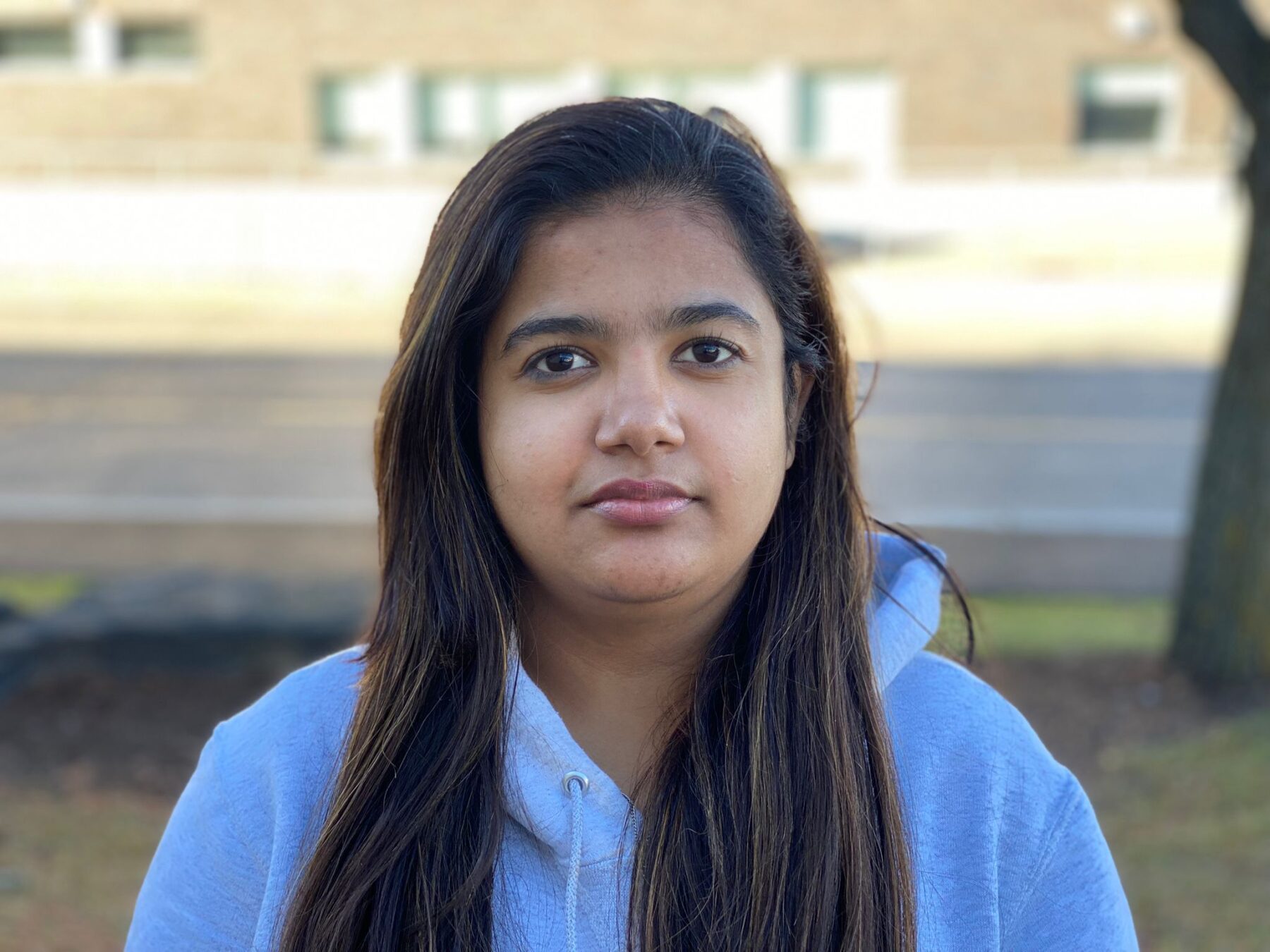
Photo: Agrani Tiwari
Sophia Wojdak, an AC student, was second runner-up at the Ontario Regional Canada Pageant

Sophia Wojdak, a level 2 public relations student, was the second runner up at the 2024 Miss Ontario Regional Canada Pageant.

“I was the former Miss Teenage Edmonton, because I’m from Alberta, and the former Miss Northern Alberta as well,” said Wojdak. She has been doing pageants for four years now. This was her second time competing in the Miss Ontario Regional Canada Pageant.

Wojdak says that pageants are a lot different than most people think. “I think people have an idea that pageants are all just pretty dresses and baton twirling and it’s really not that,” she explained. “A lot of it is fundraising, public speaking preparation, panel interview preparation, and each delegate has to have a personal charitable platform.”

For this pageant, Northern Ontario Families of Children with Cancer was the primary charity of the organization. “But everybody has to have a personal philanthropic platform,” Wojdak explained, “so mine was Consent on Campus, which was promoting sexual assault survivor resources and consent education on university campuses.” She says that doing research for the platform, fundraising for the organization, preparing for the interview and speeches are the big parts of preparation for the competition.

“Sophia used her pageant platform to raise awareness, understanding and money for issues and causes that are important to her,” said Bradley Moseley-Williams, coordinator of the public relations program. “I also found her interest and concern to be genuine, and she was effective at making presentations about these issues. She spoke in class, at pageants and leveraged the value of various social media channels to get the word out.”

“My favourite part is just meeting all the other women that compete,” said Wojdak. “I’ve made a lot of really good friends through pageants. You make a lot of good connections, not just personally, but also professionally.”

Hailey McDonald, Miss Prince Edward County, met Wojdak in person for the first time at Miss Ontario, Regional Canada 2023 Pageant in May 2023. “Sophia is the sweetest during pageant week,” said McDonald. “She’s extremely bubbly and energetic no matter how busy we are, and she always keeps the mood fun and light-hearted. I’m pretty sure she was the one cheering the loudest for me when I placed in the top six.”

Sophia Wojdak (left) and Hailey McDonald (right) at the Ontario Regional Canada Pageant's final day.
Sophia Wojdak (left) and Hailey McDonald (right) became friends at the Ontario Regional Canada Pageant Photo credit: Ontario Regional Canada Paegant

Jewel Lindemann, Miss Cambridge, said the same thing. “When I won a side award for the competition, Sophia was cheering the loudest and you could tell that she was genuinely so happy for me.”

Wojdak says that she didn’t have to deal with anything negative while competing in the pageants, other than just dealing with the misconceptions and stereotypes on what the paginate actually is.

“When I tell people I do pageants, most people are positive about it and think like, that’s cool or whatever. But some people think that, it’s like objectifying or it doesn’t really have to do with people’s community work or their intelligence,” Wojdak said. “There’s a whole scholastic exam that’s a big part of this pageant, and, like, I won the scholastic award so I was very proud of myself. But it sucks sometimes when you tell people like, oh I do pageants and they think, ‘oh it’s just about being pretty’, ‘it’s just about wearing a dress’, it’s whatever.”

Wojdak wants people to understand that pageants are not just about pretty dresses but much more than that.
Wojdak wants people to understand that pageants are not just about pretty dresses but also about scholastics, public speaking and philanthropic community work Photo credit: Agrani Tiwari

Wojdak knows that the pageants are a lot of work and is not sure if she will do them in the future.

“I hope to get a job in PR going out of school and I just don’t know if I’ll have time for it.” Wojdak said. “But if I don’t have time to compete again, I would still love to go and watch pageants and volunteer at them and help. I’ve been able to help with some kids pageants in the community and I always really like doing that.”

To women competing in pageants, Wojdak has this advice: “Even if you walk away and you don’t win or you don’t have the experience you want, just remember that you still do take lessons away from that experience and you still get to make great friends and you still, you know, get to have that experience.”

She says that she started pageantry because she wanted to grow.

“I have to kind of ignore what naysayers said about what pageantry was, [who] thought that I was dumb for wanting to do it. Pursue the things you want to do to help your community, and help yourself, and then make you happy. And don’t care too much about what other people have to say about it.”

Put the phone down, idiot

Picture this: You’re doom scrolling away, happy as a pig in filth, thumb flicking down the screen when suddenly, wedged between a meme about House of The Dragon and a […]
Photo: Tyler Reis-Sanford
When we engage in rage online, we're not doing justice to the communication skills humanity has taken centuries to develop, argues Tyler Reis-Sanford

Picture this: You’re doom scrolling away, happy as a pig in filth, thumb flicking down the screen when suddenly, wedged between a meme about House of The Dragon and a recipe for gluten-free funnel cakes, you see it. Someone is wrong on the internet. Not only are they wrong, but you know you’re right.

Struck with divine fury and righteousness, you engage, launching into your well- thought-out argument. You cite sources, send links, attack this online troll with facts and logic. You bombard this petulant know-nothing with a well-articulated, scientifically backed barrage of informational explosives.

When we engage in rage online, we're not doing justice to the communication skills humanity has taken centuries to develop, argues Tyler Reis-Sanford
When we engage in rage online, we're not doing justice to the communication skills humanity has taken centuries to develop, argues Tyler Reis-Sanford Photo credit: Tyler Reis-Sanford

This, of course, goes nowhere. The only reward for your righteous crusade against those nameless, faceless brainless accounts is further aggravation. You roll your eyes, toss your phone down and sigh. “What an idiot,” you say to nobody in particular.

Meanwhile, somewhere in the world, that same person you were arguing with slams their phone down and says the same thing about you.

Social media is here to stay. Whether or not it’s a necessary tool for our survival is irrelevant; whether it’s even useful is irrelevant. Facebook, Instagram, the platform formerly known as Twitter, they’re not going anywhere. They simply make too much money; money they make from you and your engagement. Do you know what kind of engagement makes them the most money? The kind that makes you mad.

Rage-baiting is not a new term, or even a new concept. The idea is simple, people are more inclined to focus on and remember the bad. It’s why you remember the one rude server you had, and not the 100 perfectly kind and lovely ones. It’s why you remember the teacher who was strict and mean. It’s why Facebook’s internal documents show their algorithm prioritized anger and posts that elicit it.

For young people in the age 18-29 demographic, social media is the most popular form of consuming news. Consider first that these billion-dollar private companies have a fiduciary responsibility (meaning they are legally obliged to act in the best interest of) to shareholders.

They are required to take actions that make the most money for the people who invest in them. Nowhere are they obligated, or even encouraged, to design a platform that acts as a conduit for sane, rational, reasonable discussion.

In fact, as you now know, the voices that get amplified are the ones that stir the pot. The squeakiest wheel yelling into the online ether, simply asking to be greased by its loudest, rudest, most obnoxious supporters and detractors. Regular people looking for their dose of thumbs-up fuelled dopamine, and screaming back into the void to get their next hit. Served up and steaming, your daily dose of rage-slop.

Social media is reducing us. It is making us lesser. Fortunately, we don’t have to engage this way online. There are endless things to argue about in this complicated world, ranging from the colour of a dress, what defines genocide and whether or not pineapple belongs on pizza. The good news? We can argue about them in person, too.

Communication theory is the study of the numerous ways humans have explained and interpreted each other over our long history. It also outlines the numerous things that are lost when communicating online.

Many successful ingredients to communication have evolved for humans to signal and perceive. A change in tone might suggest sarcasm. Body language might represent humour. Gestures and volume could indicate levels of anger. We’ve evolved myriad ways to communicate, consciously and unconsciously, the minute details that help the receiver of information decode the full extent of our message.

Most experts agree that 70 to 93 percent of communication is nonverbal. For the most part, what we say isn’t nearly as important as how we say it. When we engage in these serious conversations online we’re trading in our millenia-old ancestral toolkit for emojis and caps lock. I’m no expert, but I’d be willing to argue that’s a bad deal.

This isn’t to say that social media is the devil and we all need to burn our phones. There is plenty of good to be found online, and even in social media. The matter is complicated and intricate; even now I recognize the irony of typing these words onto a keyboard so that someone might one day read them while scrolling on the toilet.

There are, however, some conversations that are worth having in person. Let’s all try our best to remember that the next time we engage online, and let’s also try to remember that the next time we engage in person.

At the risk of sounding like your grumpy grandfather, shaking his fist at the sky, let me give us all (yes, even me) a small piece of advice.

Put the phone down, idiot.

Algonquin continues work on Indigenous representation after Kwey language video series launch

Director of Indigenous initiatives says “very important activities” are coming up
Photo: Tyler Reis-Sanford
The intersection of Wajashk Private and Wร bisheshi Private at Algonguin College's Ottawa campus

Algonquin College launched the Kwey video series as part of its commitment to embracing the traditional Anishinàbe language on campus.

The videos feature Algonquin’s director of Indigenous initiatives, Anita Tenasco, teaching words in the language while giving information on Indigenous topics.

In April, the college introduced four city streets with Indigenous names on the Ottawa campus. The new streets are Wajashk Private, Nigig Private, Adjidjàk Private, and Wabisheshì Private. These are named after animals in the Anishinàbe language— muskrat, otter, crane and marten, respectively.

Tenasco, who has been the director of Indigenous initiatives since January, and is herself part of the Kitigan Zibi Anishinabeg community, played an integral role in the project.

“This was a project that I committed to when I started my work back in January,” said Tenasco. “Other First Nations students see that our college’s leadership values our languages, understands the need to revitalize our languages and really honours part of the true history of the territory.”

Algonquin College is located on unceded Algonquin Anishinabek territory, and classes, ceremonies and events often start with a land acknowledgment. The idea of a land acknowledgment is fairly well known, but not every student understands the significance.

”It’s fair to say I don’t know as much as I should,” said level two business analytics student Rajesh Ganji. “I am new to Canada but I know it’s important. I know there is a history, I just don’t know what to look it up.”

The Mamidosewin Centre is Algonquin College’s Indigenous student hub. The Kwey video series says that Mamidosewin is Algonquin and Ojibwe for “meeting place” or “walking together,” and it’s a place where students can learn more about Indigenous cultures and the land that Algonquin College is built on.

Tenasco describes the Mamidosewin Centre as “so important to First Nations students… a safe space to access resources, to access indigenous knowledge keepers”, and “a home away from home” for Indigenous students.

The Mamidosewin Centre also hosts events for non-indigenous students, such as information sessions and film screenings.

”I think at the core we need to acknowledge that we’re still here, that we were here first and we’re still here,” said Sydney LaRoux, an Algonquin College student who is part of the Inuit community. “A lot of people dance around indigeneity, there is a lot of history people get uncomfortable about, but that makes it that much more important to talk about.”

June was National Indigenous History Month, but Algonquin College has more material planned for the future.

”We’re planning a series for the fall [of] 2024. It will be about welcoming people to the territory, back to school… with phrases to talk about accomplishments and studies and success and perhaps even feelings,” said Tenasco. ”Truth, reconciliation, indigenization and most importantly in all of this, building meaningful relationships with the host nation of Ottawa and the host nation of the territory is so crucial.”

The Mamidosewin Centre is located in Algonquin College's E-building.
The Mamidosewin Centre is located in Algonquin College's E-building. Photo credit: Tyler Reis-Sanford

Tenasco also mentioned other events that Algonquin College was might hold in the future, including but not limited to special guest speakers, important elders teaching student about their communities.

Ottawa man charged with hate-motivated crime in Rideauview area

Reporting hate motivated incidents can stop the cycle of hatred, say police

Local

Ottawa Citizen

Zachary Smith, a 26-year-old Ottawa man, has been charged with hate-motivated incidents such as mischief/damage of property and verbalizing threats of death or bodily harm to another person, according to police.

The events allegedly took place over the past year in the Rideauview area.

Police encourage all citizens who witness or experience such an incident to report it. “Reporting hate-motivated incidents is an important step in stopping cycles of hatred,” a news release stated.

Anonymous submissions can be made to the Crime Stoppers phone line, toll-free 1-800-222-8477.

National

CTV Ottawa

Canada plans to reach defence funding targets in support of Ukraine by 2032. Two per cent of national gross domestic product is being offered by NATO’s summit partners.

“We’ll meet the two per cent pledge and I think we even need to go beyond that,” said Defence Minister Bill Blair at today’s NATO summit in Washington, D.C. He hinted at a path forward through partnership with other NATO members. Blair told the audience that Canada had entered into an agreement with Norway and Germany to “work together on issues around production.”

Canada is falling short but provided a plan on how to meet the set benchmark. Canada is expected to see military spending increase to 1.76 per cent of GDP. Twenty-three of 32 NATO members are aligned with the projected two per cent pledge in 2024, while NATO’s Secretary-General has implied that this is the lowest recommended support.

International

CBC World

Several people were tragically killed in the Caribbean by the category-3 Hurricane Beryl.

Richard Thompson, acting director general at Jamaica’s disaster agency, said in an interview on local news that 1,000 Jamaicans were in shelters by Wednesday evening. Presently, a death toll of 10 has been mentioned and is expected to rise.

“It’s terrible. Everything’s gone. I’m in my house and scared,” said Amoy Wellington, a 51-year-old cashier who lives in Top Hill, a rural farming community in Jamaica’s southern St. Elizabeth parish. “It’s a disaster.”

The storm reached 200 to 205 km/hr winds in most areas, causing floods, power outage and roofs being ripped off homes.

Several prominent tourist areas such as Cancun, Playa Del Carmen and Barbados have been damaged, which may harm the long-term economy of the regions.

Three people were reported killed in Grenada and Carriacou and another in St. Vincent and the Grenadines, officials said. Three other deaths were reported in northern Venezuela, where four people were missing, officials said.

Health authorities advise against swimming in Ottawa today, citing E.coli risk

Local CTV News Ottawa Public Health has recommended that people not swim in Ottawa’s waters after the heavy rainfall recently. They’ve detected a dangerous amount of E.coli bacteria, which can […]

Local

CTV News

Ottawa Public Health has recommended that people not swim in Ottawa’s waters after the heavy rainfall recently. They’ve detected a dangerous amount of E.coli bacteria, which can cause infection, vomiting, fever or even Crohn’s disease.

Ottawa received 2.7 centimetres of rain over the past few days, due to a weakened remnant of Hurricane Beryl which caused so much devastation in the continent’s south.

The health authority updates its water quality advisories daily.


National

Global News

Canada’s housing sales remained slow in June despite an interest rate cut from the Bank of Canada at the start of the month.

There was no noticeable change in home-buying activity, which overall has been slow in the spring compared to normally.

Phil Soper, CEO of real estate company Royal LePage, told Global News that he thought rates are still too high for first-time mortgage buyers without a lot of capital, and that “[i]t probably will take an additional couple of rate cuts of that magnitude to start to make a real difference.”

The high interest rates were justified as a counter-inflation measure; Bank of Canada governor Tiff Macklem said that further rate cuts could be expected if inflation remains under control.

But others speculate that shortages of houses will keep prices high regardless of mortgages’ status, and that this could continue to shut first-time buyers out.

International

CBC News

A fistfight broke out between Uruguayan soccer players and Colombian spectators at a semifinal of the Copa America tournament yesterday. This occurred after Colombia defeated Uruguay 1-0.

The cause of the fight is unknown, with the involved players claiming that their families were being threatened by drunk people. The fight was broken up by security, and no serious injuries have been reported.

CONMEBOL (Confederación Sudamericana de Fútbol/Confederação Sul-Americana de Futebol), the organization that runs Copa America, stated that they are investigating the situation and condemned “intolerance and violence on and off the field.” CONMEBOL has not announced any punishments related to the fight.

Uruguay’s team will face Canada for the bronze medal on Saturday, while Colombia will play Argentina for gold on Sunday. Both matches start at 8 p.m. EDT.

Peer mentor picnic brings international students together

Students connect, find support and have fun amidst mid-term stress
Photo: Aicha Chamor
Algonquin College international students Ece Kaplan (left), Md Irteza Chowdhury (right) and Leah Grimes ( centre) gathered at Ryan Farm Park to celebrate their cultural diversity and shared college experiences

On Friday, June 21, 2024, the International Peer Mentor (IPM) program held a midday picnic at Ryan Farm Park near Algonquin’s Woodroffe campus. Around 20 international students attended the picnic, enjoying the warm weather and company of their peers.

The event aimed to provide a welcome break from academics, helping international students connect with each other and build relationships and reduce stress.

The IPM program connects international students with each other and provides support during their transition to Canada.

The mentors organized the picnic as part of ongoing efforts to foster a sense of community among IPM participants.The team ran a variety of activities for the picnic, including a footrace, painting, dancing, badminton and Ono cards. A smorgasbord of food, including meat and vegetarian sandwiches, soda, cookies, chips and fruit was served.

“I love being part of this group,” said Ece Kaplan, a fitness and health international student at Algonquin College.

Kaplan, who recently joined the IPM program, had come from Turkey to Canada on her own. While she initially had few friends, she has now made many, thanks to the program’s supportive community.

Ece Kaplan holds a nature scene she painted during the picnic
Ece Kaplan holds a nature scene she painted during the picnic Photo credit: Aicha Chamor

“They’re the reason I never feel foreign or out of place,” Kaplan said.

She shared a traditional Turkish dance called dabke at the picnic. She was surprised to find that some of the Lebanese students shared the same dance with the same name and similar moves.

Yomeng Liu, a Chinese international student studying respiratory therapy, has been in Canada for two months. She likes the IPM program, and enjoyed the picnic’s footrace in particular.

The IPM program gives Liu an opportunity to connect with others from her home country and share her culture with the international student community.

“We had a deep talk about religions and women’s rights,” Liu said.

“Now I feel like I’m home with family.”

Mohamed Taous, an Algerian international student who works as a lead mentor in the IPM program, said that he applied for the role because “I liked the program and I wanted to help new students, the same way my mentor helped me in my first semester.”

Taous chose to host a picnic because he wanted to give students a chance to enjoy the nice weather after being cooped up at indoor college events.

"It was important for me to give back to the community that helped me when I first arrived at Algonquin College," said Mohamed Taous, a leader mentor in the IPM program.
"It was important for me to give back to the community that helped me when I first arrived at Algonquin College," said Mohamed Taous, a leader mentor in the IPM program Photo credit: Aicha Chamor

“I discussed this idea with my coordinator Leah Grimes and other mentors,” Taous said. “They liked it, so we planned the event and informed the other mentees and mentors through our WhatsApp group.”

Despite the important role the IPM program plays in supporting international students, it has faced some logistical challenges this semester. The program has a limited capacity of around 100 participants.

“It’s a lot to manage logistically,” said Grimes, who mentors Taous and others as an intercultural programming and support officer with the international education centre at Algonquin College.

The program is working to reach out to more of Algonquin College’s international student population, which numbers over 3,000.

“We’re actively working to expand the program’s reach and connect with more of the international students,” Grimes said.

Leah Grimes is an intercultural programming support officer at the college's International Education Centre.
Leah Grimes is an intercultural programming support officer at the college's International Education Centre Photo credit: Aicha Chamor

A closer look at the esthetician program suspension

Simple tweaking of the esthetician program could help restore a profit-making college enterprise, students and professors argue
Photo: Tasha Hickey and Jesika Sandhu. level 2 esthetician students. Photo credit
Left to right

The compressed 42-week esthetician program at Algonquin College will no longer accept new students as of Winter 2025, due to financial difficulties.

Every five years, each program at Algonquin College is required to do a program quality review. In 2022, the program PQR meetings got withheld, for a later emendation.

“We waited for a follow-up to find out that our PQR would be set aside. There were other more pressing programs that needed to be accommodated and there was also a lack of curriculum advisors/developers,” said Sylvie Canonico, coordinator of the esthetician diploma program.

Professors and the program coordinator have had time to think of possible solutions to help restore the esthetician program at Algonquin. They are waiting for an opportunity to share their ideas.

“Our recommendation was to change theory classes to one section including all 80 students. That is a significant saving when you consider that level 1 students have five to six theory classes,” said Canonico.

There are approximately 95 graduates per academic year.

“This could balance the cost of practical labs, which is what our program is dependent on, and that is where the financial strain is. We would like to be given an opportunity to revamp our program,” said Canonico.

According to Canonico, the union has been supportive and plans to meet with the staff in the fall.

Algonquin College offers hairstyling and esthetician services by students at a reduced cost to the public. Appointments can be booked at The Salon and Spa Boutique website or reception office.

“Every semester our esthetic and hairstyling students offer services that they have been trained and assessed on to the college community at very affordable prices. Our clientele includes students, employees and individuals from the local community,” said Canonico.

“The types of services change and broaden as the students move up into their programs. We offer retail products and would love to increase the selection of affordable products to our current inventory. There is much more that we can accomplish with our enterprise. Many recommendations were also suggested to improve revenue.”

On average, the salon can book between 25 to 30 people on Thursdays and 25 to 30 people on Fridays. The boutique can earn approximately $5,000 in two days.

“We have a boutique, and see real customers. We bring in money into the college,” said Gillian Gallant, an esthetician student.

“We could even see more customers. Most clients book three services – mani, pedi and facial, and stay in our salon for approximately three hours,” said Kristina Smith, a professor of esthetician services.

A customer can spend an average of $95 for a three-hour visit.

“Esthetician is a voluntary trade in Ontario and does not require a licence. Changing this is way overdue. Manitoba, Saskatchewan, New Brunswick and Nova Scotia require licensing. However, our program is structured on the vocational learning outcomes and essential employability skills from the Ontario College Program Standard: Esthetician,” said Canonico.

Presently, 95 per cent of the program’s students are women and all of the faculty staff are women.

“As a female-dominant program, we succeed in empowering women with the essential skills to work in the vast industry of esthetics. We pride ourselves on inclusivity in all practices. Losing this quality program would be detrimental to the community of women who come from all over to join our program twice per year,” said Canonico.

“Men, and boys come for services. Being pampered is for everyone,” said Smith.

Students pay a tuition fee of more than $13,000 for local students and approximately $30,000 for international students for the complete program.

“This includes our kits. We are also responsible to wash all the linen that we use at our own cost at home,” said Nawal Baroudi, an esthetician student.

Left to right Nawal Baroudi, Keira Fleming, Desiree Browne, Gillian Gallant, and Talia El-Hajj Ali - 2nd term esthetician students
Left to right Nawal Baroudi, Keira Fleming, Desiree Browne, Gillian Gallant and Talia El-Hajj Ali - level 2 esthetician students Photo credit: Angel Belair-Poirier

Sixties Scoop survivor explains issues to Algonquin College

Event was held at Pembroke Campus with the partnership of Local Immigration Partnership - Lanark & Renfrew, the Mamidoswin Centre, the '60s Scoop Network, and the Students' Association
Photo: Agrani Tiwari
Colleen Hele Cardinal, keynote speaker at the National Indigenous Peoples Day Speaker Series Event, gave a presentation on the scoop of trafficking of Indigenous children through welfare policies.

Colleen Hele Cardinal, an academic and activist from Saddle Lake First Nation, spoke at the Pembroke campus as part of Algonquin College’s National Indigenous Peoples Day Speaker Series. Her speech on June 21 was live-streamed at the Mamidosewin Centre.

Cardinal spoke about contextualizing Indigenous child removals in Canada and understanding the historical and contemporary circumstances surrounding the Sixties Scoop.

This period, which actually lasted from the 1950s to mid-’80s, saw the large-scale, non-consensual removal of Indigenous children from their families and communities. The children “scooped” in this way were put in foster homes or up for adoption, often in non-Indigenous families.

The program is considered to have been cultural genocide (as described in the famous Kimelman Report) and to have contributed to long-term issues dogging Indigenous communities, including mental illness rates.

Cardinal is herself a Sixties Scoop survivor and now works to help others. She has organized six national Sixties Scoop gatherings in Ontario and raises international awareness about the displacement experienced by survivors. She noted the connections between colonial child welfare policies, missing and murdered Indigenous women, and the Sixties Scoop, drawing from personal and familial experiences. She has written a book titled Raised Somewhere Else, and led the “GIS Mapping the Sixties Scoop Diaspora” project.

“Some of our issues are very unique and sometimes we have to teach non-Indigenous folks about what life could be like for us in isolated communities or without resources,” Cardinal said.

“My colleague, Elaine Kiknosway, and I go to communities and organizations, anybody who works frontline with Indigenous people, we want to help them understand how to work with Sixties Scoop survivors and our descendants.”

“ There is not one single Indigenous person that I know that has not dealt with these issues or is currently dealing with these issues . . . . missing and murdered Indigenous women, girls and Two-Spirit, as well as gender violence. My . . . older sister, Gina, and my sister-in-law, Lynn, were both murdered out in Edmonton while I was living out there. I was 16 years old at the time, and I carried that grief with me for a long time,” Cardinal said.

She said she didn’t have any context as to why that happened and wanted to know more.

Jacob Thompson Bonaparte, a music industry arts student, said, "I want them to stop taking our children."
Jacob Thompson Bonaparte, a music industry arts student, said, "I want them to stop taking our children." Photo credit: Agrani Tiwari

Jacob Thompson Bonaparte, a music industry arts student said: “My grandfather was a Sixties Scoop survivor and today us Indigenous are over a barrel and we are just trying to live … My community has lived through the Oka crisis and has gone through generational trauma. We are just trying to go through our healing journey.”

As Sixties Scoop survivors and co-founders of the Sixties Scoop Network in Ottawa, Cardinal and her colleague Kicknosway have worked to foster a supportive community for survivors since 2014.

“There was nobody else doing this work. It was important for us to have space to reconnect with our culture and to build community with other ’60s group survivors.” “To this date, 11 years later, we’re still continuing to partner with research initiatives, raising awareness to spaces like this and workshops and creating trauma-informed curriculum, which is hard to find out there, as well as anti-racism workshops.”

Cardinal also created the Sixties Scoop Geo forms, a website where Sixties Scoop survivors tell their stories. It is a map which shows where they were taken from, and where they ended up.

Summer Wabasse, events and communications officer at the Mamidosewin Centre, hopes that more people will attend the Centre's events in the future.
Summer Wabasse, events and communications officer at the Mamidosewin Centre, hopes that more people will attend the Centre's events in the future. Photo credit: Agrani Tiwari

Summer Wabasse, events and communications officer at the Mamidosewin Centre, said: “I think it’s really important that every student, every staff member, every faculty member here at the college takes time to attend an event like this, virtually or in person. Because we all have the responsibility to learn about not only Indigenous history, but candid history of colonialism and depression of Indigenous people.”

“I think it’s all of our responsibility to educate ourselves and so happy that we were able to partner and put on this event today … it was a great way to commemorate National Indigenous Peoples Day.”

Province announces new support for college students in highly needed fields

Designated Learning Institution program will issue work permits for international students
Photo: Angel Belair-Poirier
First-year baking student Jane Jane

International students from publicly-funded colleges, such as Algonquin College, will receive priority for allocation of work permits in high-demand jobs to support economic growth and the workforce in Ontario.

Skilled trades, health and human resources, Science Technology Engineering & Mathematics (STEM), hospitality and childcare are all fields identified as the most-needed in Ontario.

While employers look for French-speaking employees, French-language education has been recognized as an area of priority with fewer limitations to enrollment.

Students graduating from a Designated Learning Institution (DLI) are eligible for a post-secondary work permit. International students must have graduated from a program that is no shorter than six months in duration.

“I will need a work permit, I understand there are online webinars (Student Central) to support students with general concerns, but they directly do not help you with the documentation or the application of any work permit,” said Sara Aracelly Gomez Jara, a hospitality student.

A full list of publicly-funded colleges and universities can be found on the Study in Ontario website.

All students studying outside of their native country must gain a letter of attestation to successfully enroll in a college or university.

“I had received an attestation letter after applying to Algonquin College,” said Omkumar Thakkar, a financial services student.

People can reach out to the administration office of their desired college or university to pursue their studies. While there are still maximum allocations set by the Ontario and federal governments, students’ specific program choice can increase the students’ chances of receiving an attestation letter or “letter of acceptance” to study in Canada.

At present, 811 international students are enrolled in high-demand programs at Algonquin College. “We have 238 international students in Computer Programming, 104 in Computer Engineering Technology and 89 studying in Interactive Media Developer, making those three programs the most popular by far for international students,” said Ernest Mulvey, Director of the International Student Centre.

Student Central, level zero of C-building, is there to assist you.
Student Central level zero of C-Building, is there to assist you. Photo credit: Angel Belair-Poirier

Publicly-funded colleges that deliver education programs through private partnerships will not be eligible for post-secondary work permits. Conestoga College will be the most affected, due to its extensive private partnerships.

To ensure the success of post-secondary education, the government has worked to secure housing options for incoming international students, and invested $32 million in on-site mental health and counselling services. Moreover, the proposed Strengthening Accountability and Student Support Act, 2024 bill could reduce costs and tuition fees for all students.

Ottawa Mayor Mark Sutcliffe concerned over federal government’s plans for Canada Day

Local Ottawa Citizen Ottawa Mayor Mark Sutcliffe has raised concerns about how the federal government is choosing to limit pedestrian and train traffic on Canada Day this year. Heritage Canada […]

Local

Ottawa Citizen

Ottawa Mayor Mark Sutcliffe has raised concerns about how the federal government is choosing to limit pedestrian and train traffic on Canada Day this year.

Heritage Canada has detailed plans that limit pedestrian access to Booth Street and Pimisi Station, which connects to OC Transpo’s O-Line to LeBreton Flats, where this year’s Canada Day celebration is being held.

“It doesn’t make any intuitive sense to have a transit station near LeBreton and an event at LeBreton and not use it,” Sutcliffe said. He also wrote on X that he is “disappointed with the federal government’s plans for traffic flow.”

National

CBC News

Canadian actor Donald Sutherland has passed away at age 88, according to his son and fellow actor Kiefer Sutherland.

“With a heavy heart, I tell you that my father, Donald Sutherland, has passed away. I personally think one of the most important actors in the history of film. Never daunted by a role, good, bad or ugly. He loved what he did and did what he loved, and one can never ask for more than that. A life well lived,” Kiefer Sutherland said on X.

Donald Sutherland was born in Saint John, N.B. in 1935, and was known for his many roles in TV and film, such as M.A.S.H, The Hunger Games, and Pride and Prejudice.

Sutherland is survived by his five children — Kiefer, Rossif, Angus, Rachel and Roeg — his grandchildren, and his wife, Francine.

International

CBC News

Environmental protesters sprayed paint on Britain’s Stonehenge on Wednesday, with orange marks covering some of the stones of the world-famous prehistoric structure.

In video released by environmental group Just Stop Oil on the social media platform X, two protesters were seen running toward two of Stonehenge’s megaliths and spraying paint as another person attempted to stop them.

The group said that the paint was made of cornstarch and would dissolve in the rain.

Just Stop Oil has gained prominence in Britain for disruptive environmental protests, with its activists shutting down roads, disrupting cultural and sporting events and even throwing soup at a van Gogh painting.

They want the British government to end the extraction and burning of oil, gas and coal by 2030.

The organization English Heritage, which manages Stonehenge, said the vandalism was “extremely upsetting” and that curators were investigating the damage.

Algonquin Times podcast

Stay Informed

Sign up for our newsletter

Subscribe

* indicates required