main

What does it take to be scary? Professional scare actors know the secrets

For two Algonquin College students, making you scream is an art and a craft. When your job revolves around the thrill of the jump scare, the perfect haunt requires a lot of thinking
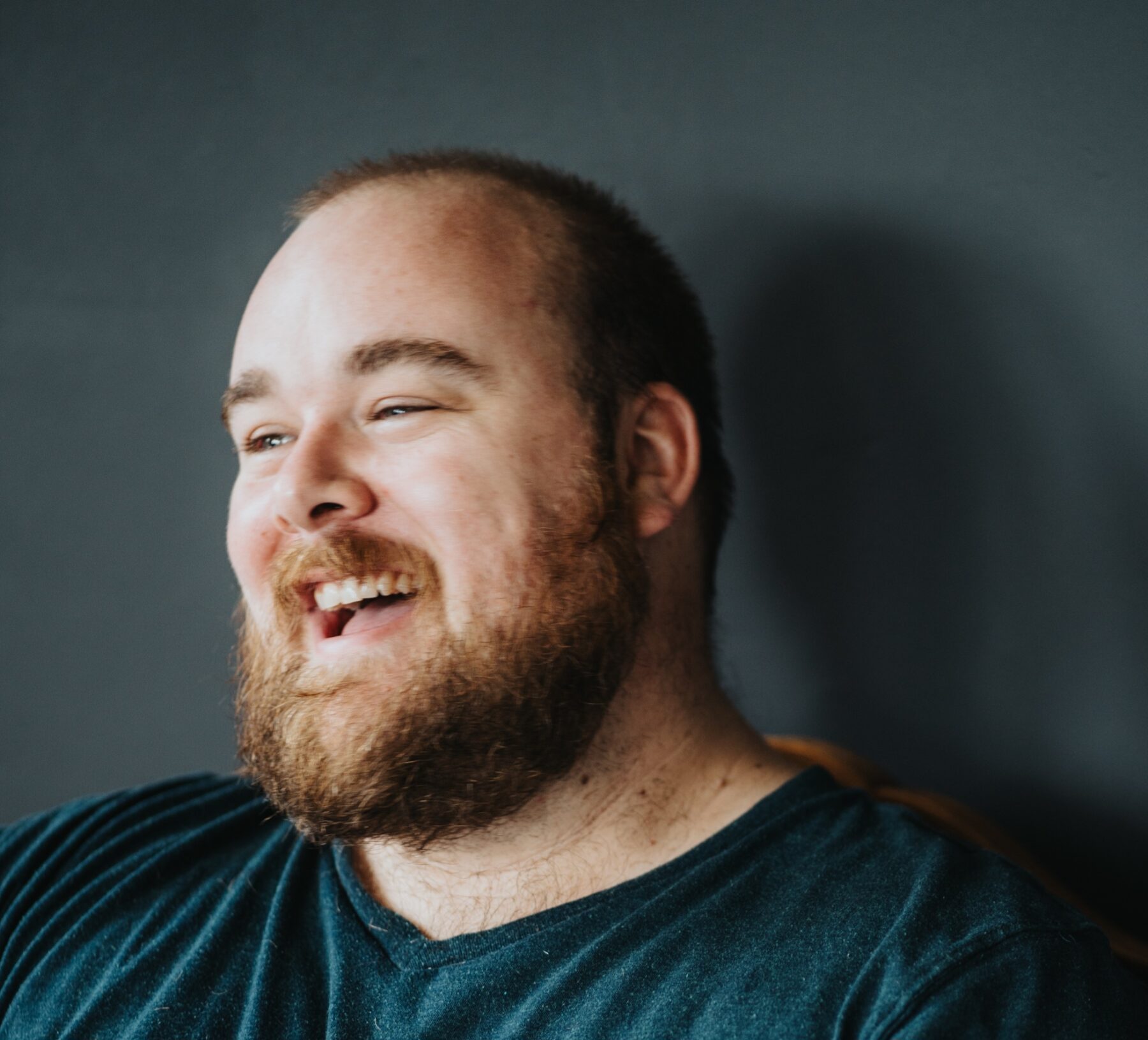
Photo: Siobhan Rollo
Quinn O'Malley as his Frightfest character, The Elevator Operator

It’s a dark October night. You find yourself being ushered into a small illuminated elevator, unfamiliar but deceivingly cozy. A haggard elevator operator taps his cane firmly against the floor as he slowly introduces himself: “My name is Henry,” he says, shrinking into himself. “I’m excited to introduce you to the family.”

As the elevator operator clicks a button and the door slides shut, the lights flicker off. The operator begins to move around in the dark. The cane he carries thumps against the elevator floor with every step. Outside the elevator’s small room, the moon hangs high in the sky. The wind whistles a tune you can’t recognize.

Is that a bite of cold air creeping up your neck?

Then, whoosh, as the lights flick on, the operator is gone. You hear a blood-curdling scream as the door opens to reveal zombified millworkers, who screech and lurch toward you, happy to find their next meal.

“I’m the elevator operator, so I click a button, the door shuts, lights go on and off, and I’m moving around in the dark,” said Quinn O’Malley, an Algonquin College radio broadcasting student by day – and a professional scare actor by night. He plays the role of elevator operator.

“My whole shtick is a disappearing act,” said O’Malley. “This year I have the cane so I’m able to play into it where I’m walking around and you hear it. And then the second the lights go off, you don’t hear it, and then the second they come back on, you hear it.”

This elevator ride is an attraction at Frightfest at Saunders Farms. O’Malley and fellow radio-broadcasting student Fiona Smith study by day and fuel nightmares by night, when they assume their roles for Frightfest.

Quinn O&squot;Malley and Fiona Smith, dressed in their "uniforms" of black clothing before their shifts at Saunders Farms.
Quinn O'Malley and Fiona Smith out of costume, going about their day jobs as radio broadcasting students. Photo credit: Siobhan Rollo

O’Malley plays a front-of-the-house character in the Sawmill attraction at Frightfest. There, it is his responsibility to be a ghost-host with the most. The Sawmill is an attraction that has guests descend into a hidden underground society. The society is full of lost, zombified millworkers.

This is one of the new attractions at Saunders Farms this fall.

“I will say a lot has changed, especially with the Coven. Sawmill was never a part of Saunders. Originally, it was a Lansdowne installment that they had for people that couldn’t necessarily make it out to the farm,” said Smith.

Smith is part of a different haunt than O’Malley, playing a possessed maid in the Coven. The Coven’s story was revamped for 2024 and now tells the tale of a vengeful Goddess who walks the farm grounds.

“Coven has had their story revamped because a lot of people weren’t finding it as scary,” she said.

Other new changes on the farm include changes to the hayride, which has a new accessibility platform so people with disabilities have an easier time accessing the ride.

In terms of scaring, Smith and O’Malley said that a lot of thinking is required to perform the perfect haunt. The thinking process is developed in their training period. The actors are encouraged to develop their roles as soon as they are assigned.

“Well, for your characters, some characters are very specific, like Quinn’s elevator operator,” said Smith. “They get lines. They get a premise to go off of. And some are a little more liberal, like mine. Mine’s just housekeeper, and my prompt was, ‘I’m being possessed by the part of the goddess of the haunt that I’m doing.”

You internalize the prompts that you’re given, explains Smith.

“You try to give that character a personality,” she said. “As you’re getting into character, you kind of go over in your head what things you can do to really put that character into fruition.”

Part of the process is naming the character you play, according to Smith and O’Malley. The reason is that naming your ghoul does two things: it makes it less scary, and it makes it easier for you to assume your role.

“Well, they call me Henry,” O’Malley said, his body folding in on itself, leaning in as he answered. “It’s my job to make sure my family gets what they need.”

“I also gave my character a name. Her name’s Penelope,” said Smith, sharpening her fingers and clutching herself tightly, twitching as she changed positions. “I can feel the goddess, she’s in my skin… and there’s no way out.”

But what happens when scare actors actually manage to get the reaction they seek?It’s interesting to see how people actually react to you, Smith explains.

“They know you’re a person, but you can bend reality to make them believe that, oh, that’s not a person,” she said. “I don’t look that intimidating as me, per se. But if I’m sitting in the corner, twitching and convulsing, or I turn around and I let out this huge shriek, you can even scare adults that are even, 30 plus.”

Circus Macabre is one of Saunders Farm's latest attraction, where you have to escape from clowns with chainsaws.
One of the clowns from one of Saunders Farm's latest haunt, Circus Macabre Photo credit: Siobhan Rollo

Guests often find themselves excited to get scared. What they don’t know is how exciting it is for the actors to give a guest a successful scare.

“Boo! That is the easy premise of it,” said O’Malley. “It is an utter adrenaline rush. I don’t mean that in like a mean way, because obviously someone’s terrified of you. Hearing those screams and knowing that you’re putting on a successful performance as someone whose passion is acting, it’s like no other joy.”

As it turns out, scare actors are not immune to their own tactics. O’Malley for instance, has a big fear of clowns. He also happens to share a breakroom with actors from Frightfest’s new Circus Macabre attraction. He credits the suspension of disbelief and the Saunders Farms actor’s toolkit for helping him with his fear.

For Sara St.Clair, a first-time Saunders Farms visitor, getting scared is simply an autumn activity. Her evening included going through haunt attractions such as the Coven and the Haunted Hayride.

“Honestly, I wanted to be scared,” she said. “Everyone here is so nice. The show was ten out of ten. The scare is everything.”

5 ways the college is helping students on World Mental Health Day

While it's one of the biggest things students deal with, mental health is also one of the least talked about subjects too, says an event participant
Photo: Sophie Daly
Mackenzie Visneskie, a worker at the Wellness Fair, stands at the reception desk to bring students into the event on Oct. 9.

As the world recognizes World Mental Health Day, Algonquin College is playing its part in offering resources to help students.

“There is a lot going on and it’s different with everyone’s coping system,” said Heri Wimana, a first-year tourism travel service student about mental health. “So having events like these may pull people together, maybe someone can find some comfort here.”

During the week of Oct. 8 to Oct. 11, Algonquin College is hosting several free events to help normalize mental health and help create a safe space for students to feel comfortable.

“Student mental health and wellness is everyone’s responsibility,” said Deirdre MacDonald, manager of Student Counselling and Wellness Supports. “There are some areas that specifically focus on providing mental health and wellness-related resources and support.”

Here are two of them you should check out, and three to make note of for next time.

Visit furry friends on World Mental Health Day: Thursday, Oct. 10, 11 a.m. – 1 p.m.

This year’s theme for World Mental Health Day is prioritizing mental health in the workplace, spotlighting the importance of mental health. Join the Student Health & Wellness Zone and Paws 4 Stress in The AC Hub on the second floor of Student Commons to relieve stress with furry friends. Stick around to gain knowledge from the Student Health & Wellness Zone, Counselling Services, Health Services and Good2Talk.

Dance and move with Moov Ottawa for the Fall into Wellness Series: Friday Oct. 11, 11:30 a.m. – 12:30 p.m.

The Impact Zone in A-building, room A117, is hosting the Fall into Wellness Series: Dance and Movement Workshop with Moov Ottawa an Ottawa-owned street dance company. Students are welcome to come move and destress.

Next time! Pick up a paint brush with the Fall into Wellness Series: Painting Night: Tuesday, Oct. 8, 3 p.m. – 5 p.m.

This event was a painting night with local artist Mitra Salamzada. She used art to express emotion and relieve stress. The college invited students to join Salamzada to express themselves through art.

Next time! Tour the Wellness Fair: Wednesday, Oct. 9, 11 a.m. – 2 p.m.

This event, which was hosted in the Student Commons, was to show students the Six Pillars of Health that the Student Health & Wellness Zone promotes through fun activities. Students could go booth to booth learning about general health, mental health, substance use and harm reduction, sexual health, nutrition and fitness and sleep.

“It’s one of the biggest things students deal with, but it’s one of the least talked about subjects as well,” said Mackenzie Visneskie, a worker at the reception booth at the Wellness Fair. “So, I think to just normalize it and incorporate a lot of fun to it as well to make it a lot more normalized for students and make them feel safe.”

Next time! Visit the Health Planning Info Session with WeSpeakStudents: Wednesday, Oct. 9, 2 p.m. – 4 p.m.

This event, held in the multi-purpose room in E-building, E206, helped students learn about the domestic health plan they get from being a student with WeSpeakStudents. This allows students to ask questions and learn about their coverage.

Listening for understanding on Orange Shirt Day

The AC Hub organized book wrapping and key chain beading on the National Day for Truth and Reconciliation
Photo: Angel Belair-Poirier
Samantha Therrien, an events officer, proudly holds the Every Child Matters flag on Truth and Reconciliation Day.

The AC Hub on the Ottawa campus set up a book wrapping and key chain beading station to honour Indigenous people on the National Day for Truth and Reconciliation, also known as Orange Shirt Day.

“I am a Sixties Scoop kid, that’s how they call us. I am part of the children that were taken away from their parent and put into white families. They told us we were not Indian anymore and were not allowed to do anything that was related to our native culture,” said Barbara Kelly, a pathways to Indigenous empowerment program student. “I left a brother and a sister, I had no siblings in my white family, it’s a very emotional day.”

She quickly grabbed a button and put it on her orange T-shirt. She started beading an orange key chain and mentioned that on the day of truth and reconciliation she feels recognized.

The final report of the Truth and Reconciliation Commission said the establishment of residential schools could be described as “cultural genocide.”

The acknowledgement of survivors of residential schools and the trauma they have suffered was being heard through ceremonies across the country on Sept. 30.

At the AC Hub event, a book wrapping station was set up a few steps away. The book wrapping is a symbolic approach to all of the humans who did not get the chance to tell their stories, the event coordinator said.

“My partner has an Indigenous background and I am here to honour all Indigenous communities,” said Justine Dupuis, a social service worker student. “That’s the past and this is now.”

Lauren Laroque, special events coordinator, poses in front of wrapped books for Truth and Reconciliation Day.
Laurent Laroque, special events coordinator, poses in front of the wrapped books for Truth and Reconciliation Day. Photo credit: Angel Belair-Poirier

Samantha Therrien, an AC event officer, is of Indigenous descent and grew up in Winnipeg. Winnipeg has five identified territories on the Native Land digital map.

Hamid Ayoub convicted of 2021 Baseline Road murder

A jury found Ayoub guilty of first-degree murder and attempted murder in crimes near Algonquin College
Photo: Nathalia Lencioni
The Ottawa courthouse building on 161 Elgin St. on Oct. 8, the day of the conviction of Hamid Ayoub.

Hamid Ayoub on Oct. 8 was given concurrent life sentences for the first-degree murder of his estranged wife and attempted murder of his daughter. The shocking crimes took place just around the corner from Algonquin College in June 2021.

The sentences mean Ayoub won’t have a chance for parole for 25 years.

It only took the jury one day to consider all the evidence and decide that beyond a reasonable doubt, Ayoub had criminally harassed his estranged wife Hanadi Mohamed and surviving daughter before the attack on June 15, 2021.

Both the Crown and the defence agreed that Ayoub had murdered his estranged wife and violently attacked his daughter. But the jury had to decide whether the crimes had been premeditated as part of ongoing persistent abuse or a frenzied impulsive attack, brought upon by anger at Mohamed for leaving him nine months prior.

“The murder was the execution of a plan,” said Superior Court Justice Kevin Phillips, reading from the Crown’s statement while instructing the jury on Oct. 7.

During the trial, the jury heard Ayoub stabbed Mohamed 39 times near the apartment building where Mohamed had moved to in order to escape the abuse she had been suffering since 2007. He then turned to his daughter and stabbed her 12 times until she pretended to be dead.

The attacks were carried out in broad daylight, witnessed by numerous passersby and the only warning Ayoub’s daughter had before being attacked was a scream from her mother.

Ayoub was arrested later that day at The Ottawa General Hospital where he went in search of treatment for an injury sustained during the attacks.

Ayoub’s daughter testified that the abuse suffered by her late mother was so bad, Ayoub had once “held a knife to her (Mohamed) and said ‘I am going to kill you.'”

The Crown told the jury Ayoub had placed a tracking device on Mohamed’s car, which she shared with her two children, in November 2020. The Crown argued Ayoub used it to monitor their location which suggested criminal harassment and that he had planned the attack.

“Since 2007, Ayoub dominated and demeaned a person who should’ve held his highest regard,” said Crown attorney Louise Tansey.

Ayoub’s defence argued that Ayoub’s bag containing, among other items, an expired passport and $8,000 was not a “getaway bag” but a bag for daily use. The fact that Ayoub had time to plan and consider the murder, along with a 20-centimetre knife in his possession, didn’t actually prove planning or deliberation, the defence argued.

The jury ultimately rejected those arguments.

Ayoub’s defence asked for a concurrent sentence of 14 years for the attack on his daughter but was denied by the judge, who ordered the maximum 25-year sentence served concurrently. A person convicted of first-degree murder is automatically given a life prison sentence with no chance for parole for 25 years.

Men’s soccer Wolves pull slick comeback in extra time to beat Seneca

Algonquin is now the top-ranked team in the OCAA Men's Soccer East Division
Photo: James Gray
Algonquin's Oscar Forward races Seneca's Franco Infante for the ball during the second half.

It took 91 minutes for Algonquin College to score the winning goal when the Wolves faced the Seneca Sting in men’s soccer at the Woodroffe Sports Field on Oct. 4. The home crowd’s roar at the final whistle was all the louder because of it.

The Wolves edged out Seneca 2-1, continuing their dominant season.

The game got off to a rough start with a goal from each team in the first 15 minutes, but both were disqualified as offside.

The Seneca Sting’s Cristiano DeFreitas sunk one that counted at 23 minutes. He snuck past his defender near the net to get a long cross from Dylan Campbell and jump-kick for the goal. Seneca then held the Algonquin Wolves on a grinding defence for the rest of the half.


“We came in (to the locker room) after the half, kind of unmotivated. It was tough to get the boys going,” said Oscar Forward, one of the vice-captains of the Wolves. “We started off really well, we started to decrease, started to rush the game. Coming into the locker game we had to regroup, get the boys back in place.”

The second half was initially more of the same, with few shots seriously testing the goalies.

There was also controversy with referees.

At 59 minutes, an unknown Wolves player or coach was shown a yellow card for shouting “Absolutely f—–g killing us!” to referee Austin Fromhold-Treu after Seneca was awarded a goal kick that they seemed to believe should have been an Algonquin corner kick.

This person could not be identified as they were on the sideline and a number was not visible on their clothing.

The turnaround finally came when Algonquin’s Alessandro Vivolo outran two opponents, then sniped the ball past two more and the goalie to score. The Wolves found new life and played more aggressively, but Seneca defended well for the rest of regular time.

Then, with three minutes of extra time added, Algonquin struck again. A free kick from central midfielder Alaa Mahfouz was headed away by Seneca goalie Amar Dhindsa. Wolves Centre-back Kerim Tosun charged in and sent it sizzling back, past multiple feet and into the net. Algonquin sailed through two final minutes to win the game.

This game came just after Algonquin’s women’s team lost 1-0 to the Sting. Seneca women were still in attendance and often chanted loudly, though they were drowned out by Algonquin fans at the final whistle.

Angus Wong, the head coach of the men’s soccer Wolves, was pleased with the result.

“We always had faith that if we were able to execute what we’re working on, we would be able to get a result,” he said in an interview after the game.

About 80 people came to watch on the misty evening, and some ran onto the field to celebrate afterwards.

Algonquin is now the top-ranked men’s soccer team in the Ontario Colleges Athletics Association’s eastern division. On Oct. 5, the Wolves kept that spot with a 2-2 tie against the Centennial Colts. With only two games left in the regular season, they could very well head to the playoffs in style. Their next game is against St. Lawrence in Kingston on Oct. 9. They then come back home to face Cambrian on Oct. 12.

Wong said the team wants to stay at the top of the league.

“That’s obviously the goal,” he said. “We know that tomorrow’s a tough game at Centennial, and then we have two more tough games. The schedule gets very compressed in these last weeks. We’re playing against the opposition, but we’re also trying to manage the workload of our players, and it becomes kind of tricky at the end.”

Forward was more optimistic.

“We’re looking forward to the game tomorrow and re-establishing our dominance in the division, and our dominance as a program in general,” he said. “When teams have to play us, we don’t want them to have to play us … being the number one team, (there’s a) target on your back, and the boys like it.”

Algonquin Wolves men’s soccer team battles back to earn a draw against Centennial

Driven by resilience, the Algonquin Wolves rally to secure a tie at home
Photo: Agrani Tiwari
The Wolves and the Colts fighting hard in the last minutes of the game to get the tie-breaking goal.

In a hard-fought men’s soccer match on home turf, the Algonquin Wolves fought back from a two-goal deficit to secure a 2-2 draw against the Centennial Colts. The game on Oct. 5, showcased the tenacity and resilience that has become synonymous with the Wolves’ style.

Centennial took control early, with Luca Ferrari scoring in the 17th minute, followed by Adonis Botsinis in the 33rd minute, giving the Colts a 2-0 lead.

However, the Wolves quickly responded just a minute later.

Gershom Dupuy, assisted by Jaeden Mercure, found the net to narrow the gap to 2-1. After halftime, Algonquin intensified their attack, and in the 58th minute, Alessandro Vivolo, with a setup from Cristian Aviles-Molina, equalized the score at 2-2.

Reflecting on the game, Wolves goalkeeper Nicholas Parry discussed the team’s strategy.

“We know we have the quality in the team to play the game how we want. In the first half, I don’t know if we necessarily did that, but in the second half, we really started to dominate. We’re happy with how the game went,” he said after the game.

Oscar Forward, noted the physical toll the match took, especially given that the Wolves had played a challenging game against the Seneca Sting the previous night.

“It was a tough game because we were out here last night playing a big game as well. The legs were a bit tired, mentally and physically,” he said. He added that despite the challenges, the Wolves fought back, embodying the team’s never-give-up attitude.

The Wolves’ intensity was evident on the field, with several players receiving yellow cards. Undeterred, they drew on the support of alumni in the crowd, including Christian Hoefler, a former player from 2002.

Christian Hoefler an alumnus and a part of the  2002 Algonquin Thunder, the National Soccer Championship gold-winning team came to cheer on Algonquin Wolves with his son Christian Hoefler.
Christian Hoefler an alumnus and a part of the 2002 Algonquin Thunder, the National Soccer Championship gold-winning team came to cheer on Algonquin Wolves with his son Christian Hoefler. Photo credit: Agrani Tiwari

“This is our Algonquin trend. We never give up,” Hoefler said, expressing pride in the team’s performance. “There’s a lot of history here, from Thunder to the Wolves. Once some of the players saw us in the crowd, they definitely increased their energy,” he added.

Parry summed up the team’s focus as they look ahead. “We’ve got to take six points in our next two games, finish top of the league, and then earn it into playoffs,” he said.

First Person: Love of cars revs up family bonds

Cars can transport us from point A to point B, but they can also connect us with others along the way
Photo: Emmet Paradis
My grandfather, Pierre, and me in front of his 2019 Mercedes SL 550 before a car meet on Thursday, Oct. 3.

The rumble of my grandfather’s brand-new Mercedes SL 550 engine made me question why I had waited so long to get my license. Although I was a new driver, he was eager for me to take his car for a spin. As he handed me the keys, I realized my obsession with cars had truly begun. But I wouldn’t be alone: I was joining a shared passion.

My family’s love of cars has been constant through generations. My paternal grandfather, Pierre, grew up with three older brothers who owned garages. This passion continued with my father, Alain, who was raised around his dad’s impressive collection of Porsches, Audis, Corvettes and other prized vehicles.

Pierre’s trust in young drivers was clear; he taught every family member to drive his Audi S7, eager to share his passion for fine cars.

On my mother’s side, her father, Yves, was known for his obsessive car care, refusing to let anyone touch his prized possession and cleaning it daily.

It’s no surprise that the legacy has continued with me, finding my interest in cars and even cleaning them as a job.

When I first turned on my grandfather’s Mercedes, that moment sparked a passion that would become my favourite hobby. But it was at my very first car meet, the weekly meet in the Orléans Fallingbrook Shopping Centre parking lot, that I heard a variety of engine sounds and connected with a community of car enthusiasts.

Nicolas Toscano, a videographer and car enthusiast who attends the weekly Orléans car meet, shares a similar story.

“The car community is my Thursday and Friday night,” said Toscano. “I’m not a big fan of going out to clubs and losing my hearing to some loud music. I much prefer to go lose my hearing to a loud-cammed V8 with catless headers.”

It was at the local meet, where I brought my grandfather’s Mercedes, that Toscano and I first connected over our families’ shared love for cars.

“I first became interested in cars at a very young age via my father. He wasn’t a big car guy, but he had very nice cars,” said Toscano. “To me, at that age, it was just my dad’s car, and it was normal. But as I got older, I noticed how people reacted to his car and respected what it symbolized.”

Toscano added that sharing this passion has brought them closer. “I remember being really young and riding passenger in my dad’s car and he would move lanes to get around slower cars and I would tell him ‘lane clear!’ and he would speed down the road,” he said. “A really cute core memory.”

From a father’s perspective, Pablo Coffey, my best friend Isabella’s dad, shares the same passion for cars as his son, Simon. Watching Simon appreciate vehicles brings back childhood memories and makes Pablo feel like a kid again.

“Not a day goes by that we don’t engage in multiple chats about cars and how much we love them,” said Coffey.

This passion has created a bridge across generations and formed lasting bonds. In a world that can feel divided, the sound of an engine and the shine of a cherished car show us that shared passions bring people together.

First Person: Living alone has shown me silence has its own rhythm

After moving to Canada I faced the unexpected challenge of living by myself for the first time. Could my studio apartment become a sanctuary where I'd learn to navigate life on my own terms?
Photo: Steven Dalloo
"Settling into the quiet rhythm of my studio, I realized that this little space held a new kind of freedom," writes the author. "Alone, I could shape my life in ways I'd never imagined—learning, adjusting, and finding comfort in the solitude."

The first time I closed the door to my new place on Sept. 3, the silence felt heavier than I expected. No sounds of family in the background, no roommates rustling about. Just me.

Standing in the middle of my small living room in a studio apartment in Ottawa west, I looked around at the space and realized that everything here was now my responsibility. If the dishes piled up, that was on me. If something broke, it was my problem to fix. It was strange, but it was also thrilling—a sort of test to see how well I could manage being on my own.

Living alone for the first time was exciting but intimidating in a way I hadn’t fully prepared for.

I come from a large family in India, where many extended family members live together. I have always lived in a big house surrounded by people. In fact, I’ve always shared a room with my younger sister and my mom. I had never spent a night alone before.

When I moved to Canada back in January of this year, I hadn’t thought I would live alone. I moved into my first apartment where I had roommates. It felt strange to live with strangers, but I was happy and relieved that I had people around me.

Moving into a studio apartment and living alone after eight months in a new country wasn’t the plan. My mother got her visitor visa, and we had arranged for her to stay with me for two months, so I signed a lease for a new place. But a day before her flight, something happened, plans changed and she couldn’t come and that’s how I ended up living alone.

The first night, I was hyper-aware of every sound. The hum of the refrigerator seemed louder than I’d ever noticed before. I swore I heard the creak of footsteps in the hallway. I didn’t sleep much, not out of fear but because the quiet felt so unfamiliar.

But as the days went on, I started to settle into the rhythm of it. I got to choose when I ate, how I organized my things and what music played while I cooked. There was a kind of freedom in it. I realized I could make mistakes and learn without anyone watching. It was just me, figuring it out as I went.

“There was nobody waking you up,” said Neha Chaurasia, my aunt and someone who has lived alone for almost 10 years. “And you become responsible for your life for the very first time.”

But living solo comes with some challenges too, she says.

“Initially, you feel excited because it’s a new world that you are seeing,” she said. “Then sometimes you don’t realize, but the moment you fall sick, even if you have a little bit of cold and fever, that is the time you start missing people the most.”

Chaurasia says solitude can have a way of shaping you.

“Being alone makes you more disciplined, makes you more accountable,” she said.

Her words resonated with me, as I found myself in a similar situation, taking on the full responsibility for my life for the first time.

One night, after a long day of classes and work, I curled up on the couch with a blanket and some tea. For the first time, the quiet didn’t feel lonely. It felt peaceful. I wasn’t missing anyone or anything; I was just enjoying my own company.

Living alone is not always easy, and there are moments when I wish someone were there to share the space with me. But there’s also a deep pride in knowing I’m doing this on my own.

This little place is mine, and for now, that’s more than enough.

First Person: There is nothing wrong with being a crazy cat lady

While Taylor Swift has given the "cat lady" label lots of love during run up to the U.S. election, I've learned to embrace the title - and myself - all on my own
Photo: Stephanie Taylor
The author with two of her cats, Cucumber (left) and Strawberry (right). "If I were to grow old surrounded by cats, I would die happy," Taylor writes.

Most nights, I struggle to sleep. I often have too many thoughts running through my brain. My cat, Garfield, could always sense my stress. He would come and lay with me in bed, right on my chest, and purr. His purrs would calm me down instantly and I could finally sleep.

My family got Garfield when I was eight. We named him Garfield despite him not looking like the cartoon cat. He was grey with the brightest green eyes.

Around the time I was moving out of my parent’s place, five years ago, Garfield was getting bullied by one of our other cats. So, I took him with me. During my first month in Ottawa, Garfield and I relied on one another. He learned to trust me, which was shocking as he didn’t like people.

My parents, however, often questioned my bond with Garfield. They didn’t understand it. “He’s just a cat,” my mom would say to me whenever I’d fret over him. But to me, Garfield wasn’t just a cat, he was family.

Garfield and I got a roommate in 2021. During this time we adopted a kitten, an orange tabby named Cucumber. Then in 2023, we adopted Strawberry, a beautiful fluffy cat.

In February of this year, Garfield passed away. I knew it was coming, he had a lot of health issues, but I was still devastated.

Through Garfield, and later Cucumber and Strawberry, I learned how much I loved cats. I love how different their personalities can be, I love how playful and silly they can be, I love their purrs. So, after Garfield died, I knew there was room in my heart for more cats.

I adopted Joel in March, Hen in May and Paulo in June. Now I have five cats, and to many, I am a “crazy cat lady.”

The term “crazy cat lady” is often used to degrade women who are single and have cats instead of children.

Even highly successful women, such as Kamala Harris, aren’t immune to the insult. Recently, a clip from 2021 resurfaced, where JD Vance, Donald Trump’s vice-presidential nominee, called Harris a “cat lady,” implying she can’t make good decisions for the United States because she doesn’t have any biological children.

In my case, I’m 23 and I have never been in a relationship, nor do I care for one. I don’t want children. If I were to grow old surrounded by cats, I would die happy.

However, I didn’t always feel this way. When I was 19, I’d often wonder to myself, “Is there something wrong with me? Was there some aspect of myself that made me unlovable?”

I’d try to meet people through dating apps. I would match with someone, we would talk and then I would get ghosted. Eventually, I realized I wasn’t sad to be ghosted, I was relieved. I stopped using the apps.

With age comes wisdom, and this wisdom has provided me with the knowledge that I like being single. Maybe the only thing “wrong” with me is that I prefer cats over people.

The crazy cat lady label isn’t a one size fits all stereotype.

Fiona Pinard, 40, lives in Ottawa with her four cats and works for the federal government. Pinard, is perfectly okay with the crazy cat lady label. She has even found herself a cat-loving man.

“It’s definitely been a challenge to date as guys think ‘crazy cat lady,’” said Pinard. “Many times I thought of just giving up on dating and being a cat lady spinster, which I was honestly okay with.”

Despite feeling okay with her life, Pinard still found love, but she didn’t erase a part of herself for it.

“I decided to give Tinder another try and found my boyfriend, Patrick,” said Pinard. “He loves the kitty cats and they love him.”

Pinard loves her cats as if they were her own children.

“I miss them when I’m away on trips. They mean a lot to me in that they make me laugh, they comfort me when I’m sick or sad,” said Pinard. “I’m blessed to have them, to love them and give them food, shelter and safety. They’re like my kids.”

Magan Carty, 32, is an Algonquin College alumni. Carty has two cats, Juno and Lenny, who were adopted from a rescue. The two cats, especially Lenny, have some significant trauma.

“It really taught me, because he (Lenny) wasn’t the cat I expected I would get, but it makes me love him even more,” said Carty.

Carty has moved all over Canada with their two cats. Carty said their love for moving makes cats the perfect companions.

“We’re so close, and we’re this package deal,” said Carty. “If they were kids, or a partner, if you want to move across the country for a job, that’s a big ask.”

Carty said home is where the cats are, and I agree. Being with my cats feels like home. No matter where I am, I know I’ll be okay if I have my cats with me.

Wolves struggle late in 52-13 loss to Durham Lords

A hard-fought physical game ended Algonquin's hope of a 2024 playoff berth
Photo: Tyler Reis-Sanford
Wolves fullback Luke Flores and Durham outside centre Josh Dunk had a few choice words for each other in game, but were seen laughing and talking amiable afterwards.

The Algonquin Wolves men’s rugby team fell to 0-4 on Oct. 5 after a hard-fought game against the Durham Lords ended 52-13. The loss means the Wolves will not qualify for the 2024 post season.

Despite the score, the Wolves looked sharp against a fast and physical Lords team, and kept the game within a score for nearly the entire first half.

After turning over the Lords in their own end, the Wolves methodically worked their way down field, but failed to score after a turnover of their own led to a long Durham try. The Wolves answered quickly with a try of their own but failed to convert the extra points.

The Wolves were slow to get the ball out of rucks, allowing Durham to get defensive pressure and force turnovers
The Wolves were slow to get the ball out of rucks, allowing Durham to get defensive pressure and force turnovers Photo credit: Tyler Reis-Sanford

“We were much sharper today, we had a great week of practice,” said Wolves head coach Geoff Tomlinson. “It’s just hard when you have to tackle so much, it gets tiring. They dominated possession and wore us down.”

The Lords were quick to make defensive adjustments and seemed to take advantage of favourable matchups in the backs.

“Their centres made a big difference,” said Tomlinson. “They game planned well and executed on it, so kudos to them.”

After a 2023 season where the Wolves failed to win a game, the team has made significant improvements throughout the season. They opened the 2024 season with an 84-0 loss to defending silver medalists Humber Hawks but have kept their games competitive since with close losses to Conestoga, Seneca and now Durham.

Wolves 8 man Leon Radaelli ran the ball well, delivering powerful hits to Durham defenders, but went down late with a leg injury
The Wolves' Leon Radaelli ran the ball well, delivering powerful hits to Durham defenders, but came out of the game late with a leg injury. Photo credit: Tyler Reis-Sanford

“We absolutely want to get a win,” said Tomlinson. “But more than anything we want to play well.”

A number of players from both sides went down with injuries early in the game, and the physicality boiled over into frustration. The two sides traded hard hits, trash talk and eventually blows late in the second half.

Wolves fullback Luke Flores found himself in the middle of the scrap after delivering a crushing hit on the Durham outside centre.

“It was do or die, but now we have nothing to lose,” said Flores. “We didn’t win any last year, we want it, we’re hungry for it”.

Despite failing to keep their playoff hopes alive, the players seemed to be in good spirits.

“I think it was our best game,” said Flores. “The boys were going all out, we’ve built on a lot and we’re going to keep building and getting better.”

With a full two weeks of rest ahead of them, the Wolves are looking to score their first win against the 3-1 St. Lawrence Surge in Kingston on Oct. 19.

“I know it would mean a lot to them,” said Lindsay Martin, who came out to support her friends who play for the Wolves. “Hopefully there’s no more fights.”

Algonquin Times podcast

Stay Informed

Sign up for our newsletter

Subscribe

* indicates required