main

New Lansdowne Stadium set to move forward

Local News CBC: Ottawa city council has voted to move forward with the $332-million-plan for a new stadium and apartment complex at Lansdowne Park. The weathered north-side stadium stands will […]

Local News

CBC: Ottawa city council has voted to move forward with the $332-million-plan for a new stadium and apartment complex at Lansdowne Park. The weathered north-side stadium stands will be torn down and 1,200 apartment units will be added to the area, but Mayor Jim Watson stated that this is not the final decision. The current plan is to move ahead with stage design and to have public consultations. The vote allows staff to spend up to $8 million for the next stage, which includes finding developers interested in purchasing the rights to build the apartments.

National News

The Globe and Mail: A coroner’s report has found that the BC heat dome in June 2021 is responsible for 619 deaths and says that extreme heat conditions are the leading cause of weather-related deaths in Canada. Most deaths caused by the heat dome last June were people with pre-existing health conditions, were elderly, and living alone with no air conditioning. Jatinder Baidwan, Chief Medical Officer for the BC coroner’s office, says that the province needs to be better prepared for the next inevitable extreme weather event that is likely to occur this summer. The concern is that vulnerable British Columbians are not prepared to handle the extreme heat and might not understand the dangers of heatstroke.

International News

National Post: A German-Armenian man, 29, plowed into pedestrians at a Berlin shopping district, killing one and injuring about 30 people, seven of whom are in critical condition at the hospital. The driver’s car veered onto the sidewalk and wound up crashing into a shop window the next block over. The driver was then surrounded by witnesses, and one witness said the driver showed remorse immediately after committing the act. The man was arrested by an officer that was near the scene. Upon further investigation, medication was discovered in the driver’s home that was associated with paranoid schizophrenia, leading police to believe this was not an act of terrorism.

Mood Check: What do students think about the Johnny Depp-Amber Heard trial?

The Johnny Depp-Amber Heard trial was very controversial - or was it?
Photo: Ajithyugan Jeyakumar, Computer Engineering Technology; Camila Vasquez, Pre-health sciences; Clara "Symphony Page," Fictional Writing Online; Maya Laurito, Pre-health sciences; Keito Yokota, Interactive Media Design; Shifa Kasiri, Interactive Media Design. Photo credit
From top left to top right, bottom left to bottom right

The dramatic and highly publicized Johnny Depp-Amber Heard trial ended Wednesday, June 1, after two days of jury deliberations. Depp won his defamation case against Heard and was awarded $15 million in damages and compensations. Heard was awarded $2 million in damages in her countersuit. With billions of views of the trial on social media, there are many opinions about both Depp and Heard and the verdict.

Here are some Depp-Heard trial reflections from students at Algonquin College:

Shifa Kasiri, Interactive Media Design
Shifa Kasiri, Interactive Media Design Photo credit: Madi Ivan-Feldcamp

Name: Shifa Kasiri

Program: Interactive Media Design

“I don’t know how to feel. Johnny Depp was right in his way and Amber Heard clearly lied, but social media has been very cruel to her.”

Keito Yokota, Interactive Media Design
Keito Yokota, Interactive Media Design Photo credit: Madi Ivan-Feldcamp

Name: Keito Yokota

Program: Interactive Media Design

“I don’t know much besides what I’ve seen on social media. Although, my friend was abused by his ex-girlfriend. On one occasion, she kicked him in the head. He was in love, so he did nothing about it. I hope this trial helps men come forward.”

Maya Laurito, Pre-health sciences
Maya Laurito, Pre-health sciences Photo credit: Madi Ivan-Feldcamp

Name: Maya Laurito

Program: Pre-health sciences

“The trial was very interesting. Amber Heard was diagnosed with borderline personality disorder; she wasn’t well, she lied, and clearly was not a reliable or viable to be under oath. Why was she allowed to testify in court? It’s not fair what she did to Johnny Depp, but how she was presented in court and how she was destroyed by social media was also not fair.”

Camila Vasquez, Pre-health sciences
Camila Vasquez, Pre-health sciences Photo credit: Madi Ivan-Feldcamp

Name: Camila Vasquez

Program: Pre-health sciences

“The trial made me scared for women in domestic violence cases, especially in the situation where the man is rich and powerful.”

Ajithyugan Jeyakumar, Computer Engineering Technology
Ajithyugan Jeyakumar, Computer Engineering Technology Photo credit: Madi Ivan-Feldcamp

Name: Ajithyugan Jeyakumar

Program: Computer Engineering Technology

“At the beginning, I thought Amber Heard was right, but not anymore. She destroyed her name. Men typically don’t share when things like this happen, they just move on. They didn’t worry about it. Maybe now they will share, but everyone is different. It was a very interesting case.”

Clara โ€˜Symphony Pageโ€™, Fictional Writing Online
Clara "Symphony Page", Fictional Writing Online Photo credit: Madi Ivan-Feldcamp

Name: Clara “Symphony Page”

Program: Fictional Writing Online

“I think it’s finally time men spoke up. It is completely immoral that Amber Heard lied. The fact that she published a lie and tried to backtrack was so wrong. I’m worried that female victims of abuse will be afraid to come forward because of what happened with Amber Heard.”

Mood Check – How do you rate your quality of (student) life?

Student life means going to classes, doing homework, commuting to and from school and hanging out with friends. We polled students attending Algonquin College this summer and asked them how […]
Photo: Neil Landry, CST Networking (Computer Service Technician); Anitta Joseph, Regulatory Affairs; David Guerette, CST Networking (Computer Service Technician). Bottom left
From top left to top right

Student life means going to classes, doing homework, commuting to and from school and hanging out with friends. We polled students attending Algonquin College this summer and asked them how they are enjoying these various aspects of life as a student. Mostly, it turns out, it’s a positive experience.

Vidhi Ahir, Dental Hygiene
Vidhi Ahir, Dental Hygiene Photo credit: Sophia Adams

Name: Vidhi Ahir

Program: Dental Hygiene

“I live 15 minutes walking distance from the college. I am staying with a couple of friends who are students too that I met when I moved to Canada. Fortunately, they are good housemates and now we are good friends. I am liking my studies and I feel l like I am learning a lot. I feel very fortunate.”

Anitta Joseph, Regulatory Affairs

Name: Anitta Joseph

Program: Regulatory Affairs

“I have been living here for two weeks. It is my first year here. I am from India, Kerala, and there are no Kerala people in my class. I am the only one. My first semester is fully online, but I wish this would change. Online is very difficult because we are sitting in a room and not seeing our classmates. We need to socialize and grow our communication skills. I live 10 minutes away by bus and the commute is perfect for me when we become in person.”

Neil Landry, CST Networking (Computer Service Technician)
Neil Landry, CST Networking (Computer Service Technician) Photo credit: Sophia Adams

Name: Neil Landry

Program: CST Networking (Computer Service Technician)

“My program is currently all in person, but last semester was remote. I live in Barrhaven so my commute on the bus is half an hour at most. I do not mind the commute… If I were to drive it would take 10 to 15 minutes, but I do bus more than I drive. The first seven weeks of the program were taught by one professor and then it would be taken over by another professor for the last half of the class. So, the one thing I would change is consistency. Next class we are going to learn how to build computers, so I am very excited about that.”

David Guerette, CST Networking (Computer Service Technician)
David Guerette, CST Networking (Computer Service Technician) Photo credit: Sophia Adams

Name: David Guerette

Program: CST Networking (Computer Service Technician)

“Computers are everywhere so, it is nice to know that. Assuming that in the end we still enjoy them, there are lots of jobs available for us to have. There is no short supply, especially in Ottawa, of computer technicians. I drive to school and if I follow the speed limit, my commute would take about 10-15 minutes. However, as my cohort (Neil Landry) said earlier, it is nice sitting in your room and waking up five minutes before class and turning on your laptop. That being said, I learn better in person, so I am glad we are back.”

Kayley Hazelton, Early Childhood Education
Kayley Hazelton, Early Childhood Education Photo credit: Sophia Adams

Name: Kayley Hazelton

Program: Early Childhood Education

“I have been at Algonquin College for one year studying Early Childhood Education. Up until recently, I have lived in residence on campus. My program has been entirely remote, however, the courses are taught well and the teachers make a learning environment where all students are able to excel, especially in remote classes. My favourite part of my program was the co-op experience that was provided by Algonquin and how I was able to work in a new environment and learn from others in my field.”

SLiDESHOW Episode 3: Biblioterre

Hey! Welcome to SLiDESHOW! Weโ€™re your hosts, Alfred Carreon and David Green, two students from the Algonquin College Journalism program running you through the ins-outs and behind the scenes of […]

Hey! Welcome to SLiDESHOW! Weโ€™re your hosts, Alfred Carreon and David Green, two students from the Algonquin College Journalism program running you through the ins-outs and behind the scenes of the SLiDE [Service Learning in Design and Engineering] lab. In this episode, weโ€™re talking about Biblioterre, a land-based non-profit co-operative in Quebec that protects 700 acres of land and tries to teach people to be kinder to the world we live in.

Hope you enjoy this episode and continue to listen to this podcast to learn more about the SLiDE lab in Algonquin College and all the work the students and teachers do to help socially-minded small businesses reach their goals!ย  If you would like to hear more about the SLiDESHOW, please follow the Algonquin Times and CKDJ, our home radio station, for more.

https://soundcloud.com/user-289492961/ep-3-biblioterre

SLiDESHOW Episode 2: African Bronze Honey

Hey! Welcome to SLiDESHOW! Weโ€™re your hosts, Alfred Carreon and David Green, two students from the Algonquin College Journalism program running you through the ins-outs and behind the scenes of […]

Hey! Welcome to SLiDESHOW! Weโ€™re your hosts, Alfred Carreon and David Green, two students from the Algonquin College Journalism program running you through the ins-outs and behind the scenes of the SLiDE [Service Learning in Design and Engineering] lab. In this episode, weโ€™re talking about African Bronze Honey, a project that was made to help the beekeepers in Africa keep their jobs and make healthier honey for Canadian consumers.

Hope you enjoy this episode and continue to listen to this podcast to learn more about the SLiDE lab in Algonquin College and all the work the students and teachers do to help socially-minded businesses reach their goals!ย  If you would like to hear more about the SLiDESHOW, please follow the Algonquin Times and CKDJ, our home radio station, for more.

SLiDESHOW Episode 1: PoPTikR

Hey! Welcome to SLiDESHOW! Your hosts Alfred Carreon and David Green are two students from the Algonquin College Journalism program running you through the ins-outs and behind the scenes of […]

Hey! Welcome to SLiDESHOW! Your hosts Alfred Carreon and David Green are two students from the Algonquin College Journalism program running you through the ins-outs and behind the scenes of the SLiDE [Service Learning in Design and Engineering] lab.

In this episode, weโ€™re talking about PoPTikR, a growing app that helps bring more local Canadian businesses into the spotlight.ย  You also get a sneak peek into the SLiDE Lab where all the magic happens!

Hope you enjoy this episode and continue to listen to the SLiDESHOW podcast and all the good the students and teachers are doing for small businesses.ย  If you would like to hear more about the SLiDESHOW, please follow the Algonquin Times and CKDJ, our home radio station, for more

The SLiDESHOW Project

The SLiDESHOW Project is a podcast series that tells the story of a social innovations lab at Algonquin College, in Ottawa, Canada.ย  Itโ€™s a space where students and organizations team […]

The SLiDESHOW Project is a podcast series that tells the story of a social innovations lab at Algonquin College, in Ottawa, Canada.ย  Itโ€™s a space where students and organizations team up to boost the profile of a group doing good in the world.ย  Each episode focuses on a non-profit or a small business, and the students that help at the Service Learning in Design and Engineering Lab, or the SLiDE lab.ย  Join us as we delve into learning more about what SLiDE has to offer.

The bees live on at Algonquin College

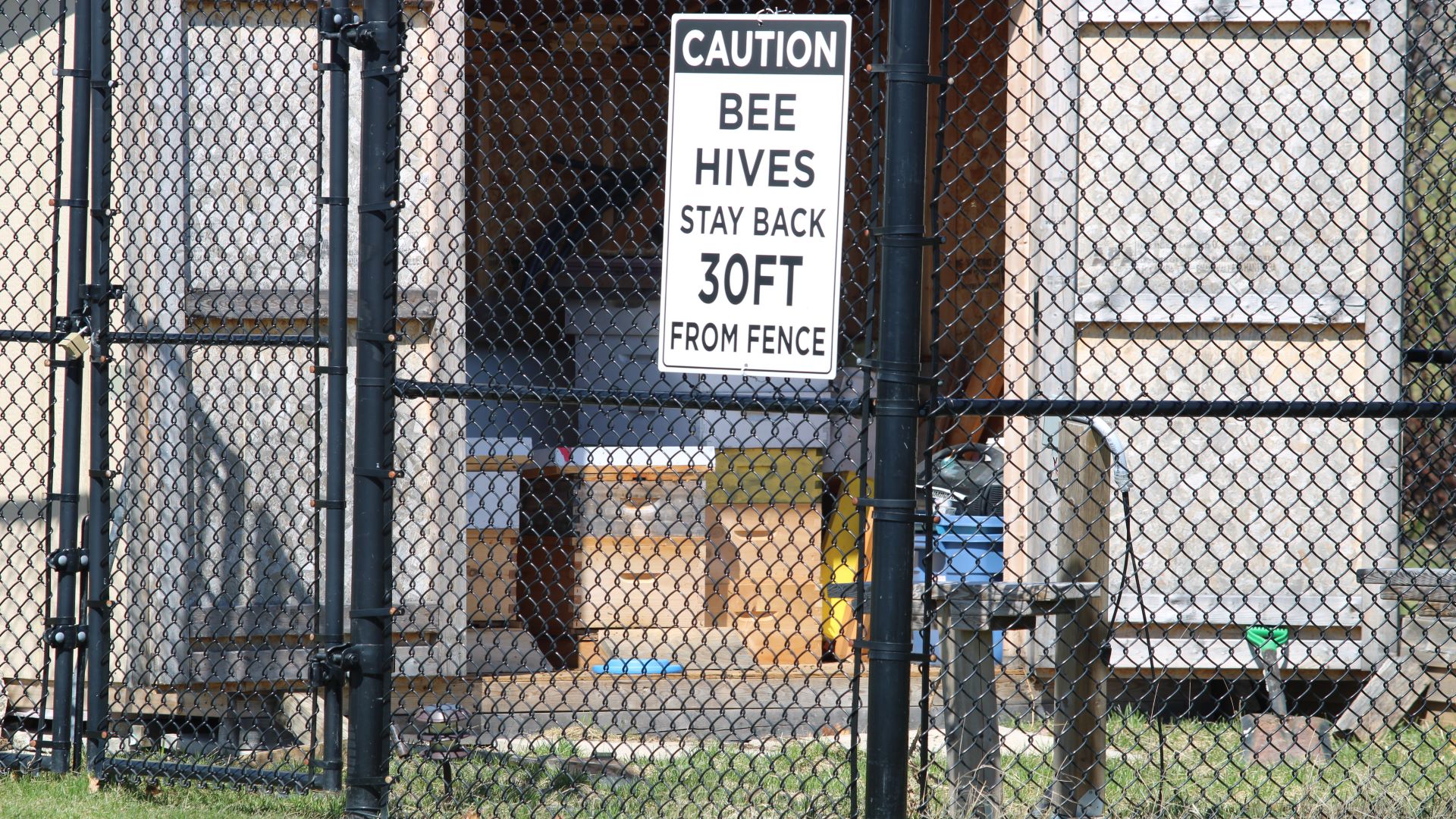
After two years, the beehives of Algonquin College have finally been opened. “The bees are alive and well,” said Daniel Halden, a chef instructor of the culinary management program. This […]
Photo: David Rotel
Chef instructor Daniel Halden is hoping the bees can flourish this spring.

After two years, the beehives of Algonquin College have finally been opened.

“The bees are alive and well,” said Daniel Halden, a chef instructor of the culinary management program.

This wasn’t always the case, as the bees had a difficult two years.

“Unfortunately because of the pandemic, we weren’t able to attend to our bees as diligently as we wanted to. Because of that, we lost the bees two years ago,” Halden said.

“For the first year of the pandemic, we didn’t have bees on campus,” he added.

Last year the college received nucs, which are small-sized hives containing small colonies of bees. After putting the hives in the nucs, they were tended to for over a year and then opened this spring.

The future for the bees is looking bright, as Halden is hoping that they will continue to flourish on campus. The college has two beehives, with each being able to contain up to 70,000 bees according to Halden.

“We use them as part of our farm before class. It’s important to have the bees around. We focus on their pollination skills,” Halden said.

The bees are a very important part of the college because of the honey they produce.

“Having honeybees around is great because not only do they pollinate your plants and make things grow better, but they also produce honey, which is a natural sweetener and really quite delicious,” Halden added.

Halden said the honey the bees produce is sometimes used in the culinary management program.

“We extract the frames and strain the honey. Though we haven’t had huge crops in the past, we’re able to have a lot more this year because it looks like we’re doing quite well,” said Halden.

Local media has recently reported beekeepers in Ontario have suffered major losses in bees. Thankfully, this has not affected the bees at the college.

“Luckily, our hives are surviving. But in years past, we have seen some loss,” said Halden.

Engineering students use ground penetrating radar to study tennis courts

Third-year civil engineering students Saheb Birgi, Saul Halpren, Prince Giciro and John Akinpelu faced a figurative crossroad for their civil engineering final project. The quartet, group 08CF, had chosen the […]
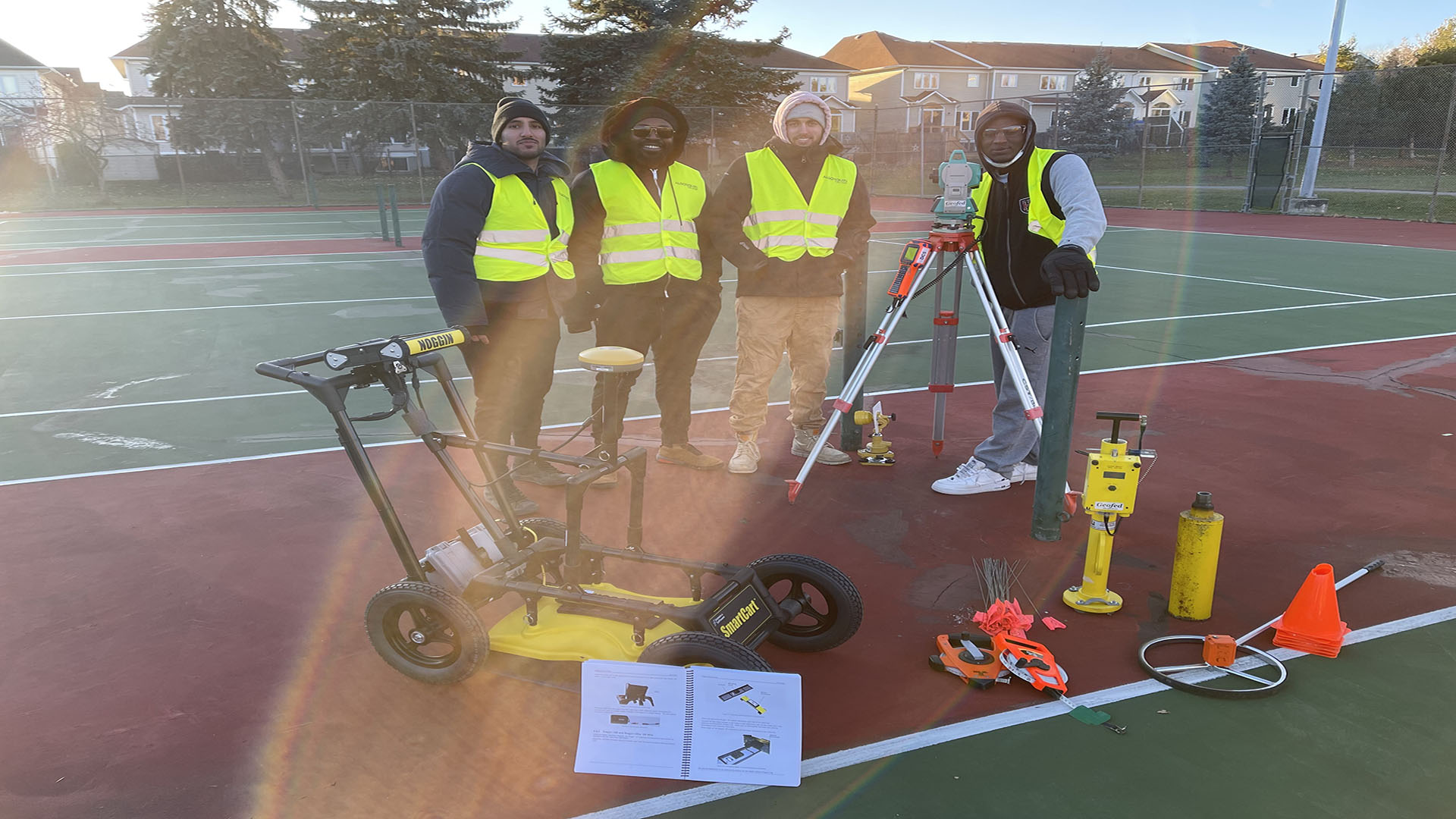
Group 08CF with some of the equipment used for their project.

Third-year civil engineering students Saheb Birgi, Saul Halpren, Prince Giciro and John Akinpelu faced a figurative crossroad for their civil engineering final project.

The quartet, group 08CF, had chosen the Elmridge Tennis Club in Gloucester for their project. Their goal was to analyze the the conditions of the courts then develop a permanent repair plan for the club.

The group made their first site visit on Friday, Oct. 15, 2021 and by Saturday, Nov. 6, 2021, they completed their site work. However, the group felt like they had not done enough.

“We asked ourselves what more could we do, and our professor mentioned [ground-penetrating radar],” said Saheb Birgi in a Zoom meeting. “So, the whole team did some research and we tried to see if we could get GPR equipment.”

“A ground-penetrating radar instrument makes it possible to measure the dimensions, depth and thickness of subsurface targets,” he said. This is done by sending radio waves into the ground at a certain speed and then recording the time taken to travel back to the receiver. This number is then divided by two to give us a depth image of what is underneath.”

The group was eager to give the idea a try.

“It was a struggle,” he said. “We drafted up an email, sent it to the course coordinator and our professor. They sent it to someone above them and it took a while for a reply.”

Unfortunately, they learned the college had no money for them.

“It finally got resolved and they were like ‘No. We don’t have a budget. If you want you can do it yourself.’ They were strongly advising us not to do it,” he said. “But once we actually got it done and got the equipment, they congratulated us.”

The students decided to reach out to Geofed Ltd, an Ottawa-based company, which turned them to Sensors & Software Inc., a Toronto-based company. The two parties came to an agreement allowing the students to borrow the equipment.

Birgi and Halpren drove to Toronto on Friday, Nov. 26, 2021. They signed a waiver, picked up the GPR and drove back to Ottawa. The group conducted the site visits over that weekend, before they drove the equipment back on Monday.

“We did like 20 hours of driving in three or four days,” said Birgi.

The group’s former professor, Federico Fernandez, also played a huge role in the project’s completion.

“He was willing to sign just in case something went wrong,” said Halpren. “If we broke the equipment, he’d have to pay for it. He took a risk doing that.”

“Yeah he actually put his name down,” said Birgi. “We were like ‘who’s going to be liable if say we were driving back and get into an accident?’ and he actually put his name down.”

Despite the inconveniences, Birgi says they would do it again if they had to.

“Yes, hundred percent. It was such a great learning experience,” he said. “I feel like we would never have known what a GPR system was if it wasn’t for this project and going out of our way in getting it, learning about it, and using it.

“Using the GPR equipment allowed us to observe the underground parameters at which the Elmridge Park Tennis Club built their courts. It confirmed that there are anomalies however, for the most part the deep subsurface construction was built very well, with minor discrepancies. Overall, using it provided another data set for us to compare with, thus makes the report more soundproof and thoroughly accurate,” he said.

The total value of the equipment loaned by Sensors & Software Inc. was $48,390.

At the time of writing, group 08CF project’s conclusions and recommendations have yet to be completed.

Algonquin students host a food sampler to support Ukraine

Algonquin College’s School of Hospitality and Tourism hosted a Ukrainian food sampler between April 12 and 14 to support Ukraine. The event featured traditional Ukrainian dishes such as pampushky garlic […]
Photo: Garrett Empey
These Ukrainian cookies were featured as a part of the Ukrainian sampler hosted by Restaurant international.

Algonquin College’s School of Hospitality and Tourism hosted a Ukrainian food sampler between April 12 and 14 to support Ukraine.

The event featured traditional Ukrainian dishes such as pampushky garlic bread rolls, Kyiv-inspired chicken canapés, Ukrainian pierogis and Ukrainian flag Easter sugar cookies.

“It’s not really really a full meal. More of just a small taste of Ukrainian culture,” said Tanya Skeates, the event’s organizer and a professor in the culinary arts program.

Some of the food items need to be heated up and so the packaging contains instructions on how to properly reheat them.

All of the money made from the event will go towards the charity World Central Kitchen, an organization founded by Chef José Andrés in 2014.

“Anywhere there’s humanitarian aid where people need to be fed, whether its volcanoes or a hurricane or the war in Ukraine he sets up kitchens to feed people,” said Skeates.

The event began around a month ago when Skeates had brought the idea up. She has since been a part of organizing the event.

“I always donate money to them, but this time I felt empty, and that I had to do more,” said Skeates. “So it thought hey, this is a great opportunity for the students to learn social responsibility and charity work.”

“So I asked our chair, Cory Haskins, and restaurant manager Cather Dewar, what they thought about doing a fundraiser and that’s how that came about,” said Skeates.

The event had about 15 faculty from the culinary and baking programs, as well as a few from the hotel management program. About 30 students also participated over three days of prepping and cooking.

Chef Margrit Werner and Mary Kosta were in charge of the baking, and Chef Scott Foeller and Sean Edwards organized the perogies and the chicken canopies.

The event sold 158 baskets and made around $7,800 but is still waiting for the official tally.

Algonquin Times podcast

Stay Informed

Sign up for our newsletter

Subscribe

* indicates required