main

Algonquin College kicks off fall 2022 semester with AC Day 1 festivities

For the first time since 2019, AC Day 1 orientation returned to campus on Tuesday with different events running from 7:30 a.m. to 12:00 p.m. Along with program introductions for […]
Photo: Cameron Ryan
AC Day 1 had over 8,000 attendees registered.

For the first time since 2019, AC Day 1 orientation returned to campus on Tuesday with different events running from 7:30 a.m. to 12:00 p.m. Along with program introductions for new Algonquin College students, AC Day 1 featured many social activities and workshops including a carnival, live music, gaming lounges, food and beverage stations and Indigenous performances.

Over 8,000 students registered to attend AC Day 1. Of the over 10,000 new Algonquin College students, 60 per cent registered for AC Day 1 related activities and events.

Algonquin College spent over $100,000 on services and items for AC Day 1, according to Lauren Laroque, the events officer at Algonquin College.

For many students, the campus experience is new and exciting. It is either their first post-secondary experience or their first time learning at the college in person because of virtual delivery of classes and events due to the pandemic.

Second-year architecture technician students Bhargav Timbadiya and Kuri Purohit had their first in-person day on campus on Tuesday.

“It feels alive,” said Timbadiya at a crowded area of the carnival outside of student commons.

AC Day 1 had over 8,000 attendees registered.
AC Day 1 had over 8,000 attendees registered. Photo credit: Cameron Ryan

Alex Lara, a first-year fitness and health promotion student, said he is happy events are back in person and people are meeting. “It’s nice to finally socialize,” he said.

Lots of college staff enjoyed seeing students return to campus.

“To see all the excitement and joy on-campus is amazing,” said academic advising coordinator Melissa Staddon, who has been working at Algonquin College since 2018.

As all three Algonquin College campuses and programs reopen over the fall semester, more events will return to in-person delivery.

Queen Elizabeth II dies; Algonquin College community reacts

When Queen Elizabeth II died at the age of 96 on Sept. 8, it made shockwaves and headlines around the world. For many, the Queen has been the head of […]
Photo: Liam Fox
Flags at half-mast at the Algonquin College Ottawa campus.

When Queen Elizabeth II died at the age of 96 on Sept. 8, it made shockwaves and headlines around the world.

For many, the Queen has been the head of the British monarchy their whole lives, marking a major change. The Queen was on the throne since February 1952 and was the longest reigning monarch in Britain. The former Prince Charles is now King.

When the news broke Algonquin Times reporters rushed to get the initial reactions of staff and students on campus.

“I think it was a long time coming,” said Ryan Oram, a music and industry arts student. “But I am glad that she went peacefully if she was to go. I am not too opinionated on the monarchy, however, I do not think this will have a big impact on Canadians other than our currency. They have power here but they do not really use it.”

Others were shocked by the news.

“It’s sad actually because she’s been the Queen for as long as I can remember, and she did a lot of things to foster community relationships and relationships within the Commonwealth,” said Elizabeth Delavan, a professor of nursing studies.

“I’m sure it’s gonna be a really, really tough time for the monarchy and for everybody over in England,” said Amber Schuler-Toll, an academic access advisor at the college.

“It’s impressive that she kept it up for so long, and she didn’t take a step back,” said Amanda Lenz, a first-year early learning community development student.

Some at the college view the Queen’s passing as a major historic moment.

“I think it’s a remarkable moment in history because this hasn’t happened in 70 years,” said Bradley Moseley-Williams, a professor in the public relations program.

“For my students in the public relations program, it was a teachable moment actually to see how this would be communicated so everything changes from language to whose face is on the money, a new setup for the royal family I think we might even be looking at perhaps a slimmed down monarchy but more than anything else I think it’s a moment in time for the world to stop and really realize this is a marker in history that will change things going forward,” he continued.

Algonquin College released a statement following the news.

“Queen Elizabeth II presided over the United Kingdom and the Commonwealth for over seven decades. Our condolences go out to the Royal Family, citizens of the United Kingdom, all Commonwealth nations and people across the globe who are mourning this significant loss,” the college said in a statement on Twitter.

Flags will be lowered to half-mast on the Perth, Pembroke and Ottawa campuses in recognition of the Queen’s death, the college said.

Algonquin College students clean up Ottawa campus

Four community-minded students from the Ottawa campus residence withstood summer heat on July 22 to participate in the first organized clean-up since COVID-19 hit, in an effort to keep their […]
Photo: Sophia Adams
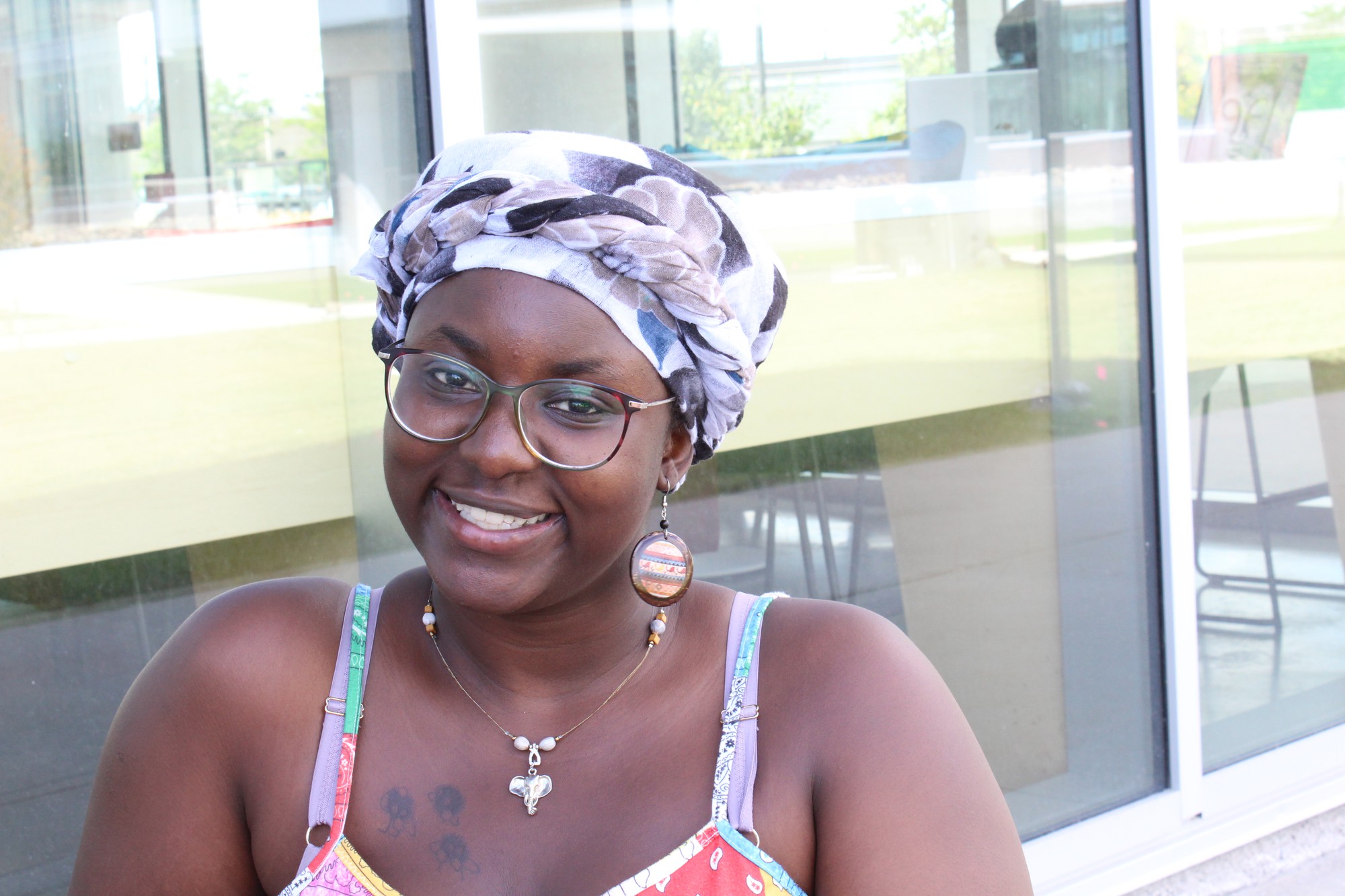
Ifeoluwa Olubode, culinary management student and residence occupant, volunteering with Campus Clean-up in July

Four community-minded students from the Ottawa campus residence withstood summer heat on July 22 to participate in the first organized clean-up since COVID-19 hit, in an effort to keep their living and working spaces free of garbage and mess.

In the main lobby of the Residence building, participants were greeted with a warm welcome from Algonquin College Residence staff. Volunteers got set up with gloves and garbage bags, and made their way through the residence green spaces to pick up and dispose of any litter.

Snacks and beverages were provided for participating in the clean-up, as students picked up garbage, talked with one another and worked to create a stronger and cleaner community.

Sadia Ahmed, far left; Raiyvn Halcro, second from left; Dana Deline, second from the right; and Pauline Phelan, far right.
Sadia Ahmed, far left; Raiyvn Halcro, second from left; Dana Deline, second from the right; and Pauline Phelan, far right. Photo credit: Sophia Adams

Raiyvn Halcro, Community Advisor at Algonquin College Residence and Conference Centre and Campus Clean-up coordinator said, “It is important to keep your community clean. The whole point of residence life is to build community, that is why we do this.”

Students living in the residence building started in the main courtyard and made their way to the Rosser Courtyard and along the outside perimeter of the residence.

“We all live here and so, seeing vape pods, coke cans, or smokes just thrown on the ground, you lose some pride in your community,” Halcro said.

In the warmer weather, students are outdoors more, which increases the chances that waste will be left behind. Algonquin is a “clean air” campus, and so there are no cigarette disposal stations, which means some smokers leave their butts on the ground.

Pauline Phelan, Residence Life Coordinator at Algonquin College
Pauline Phelan, Residence Life Coordinator at Algonquin College. Photo credit: Sophia Adams

Ifeoluwa Olubode, a culinary management student and residence occupant who heard about the clean-up through Algonquin College Residence’s Instagram, said that she cares about her environment, especially in the summer.

“I see garbage items that are not supposed to be on the ground distracting from the beauty and I want to help,” Olubode remarked on the beauty of the campus during the summer.

Pauline Phelan, Residence Life Coordinator, said that she is very passionate about climate action and residence involvement in it. By disposing of garbage, the clean-up aims to encourage an attitude of caring about the environment, and minimizing damage to the planet.

For many students, living in residence and away from their parents is the first step into a more independent lifestyle that Phelan described as the “taking your training wheels off” step. She is eager to ensure that this step is a pleasant one, and doing so begins with a clean and cared-for place of living.

Phelan also said that the event should occur more regularly and “more strategically.”

“When events are happening, or fall break is approaching, is when a clean-up should take place because more garbage will be collected at once,” Phelan said

After being unable to hold the Campus Clean-up during COVID-19, Phelan said that this was a good test run for future events and planning.

“Environmental education is really important and something that we need to do better. So, I figured good role modeling means I show up to these kinds of things. I am hopeful that others will too during the next one.”

Light show returns to Parliament Hill after two years

This summer, Parliament Hill is holding its annual Northern Lights Sound and Light Show again after a two-year hiatus due to COVID-19. It is a free 30-minute light show displayed […]
Photo: Tyler Beauchesne
The show highlighting Canadian history is displayed on the walls of Parliament in downtown Ottawa.

This summer, Parliament Hill is holding its annual Northern Lights Sound and Light Show again after a two-year hiatus due to COVID-19. It is a free 30-minute light show displayed on the Parliament buildings that explores the history of Canada.

The show is split up into six parts, with vivid illustrations recreating historical events in a tableau-style, with motion. These pictures are so well designed and placed, so that you forget they are just projections on a building. The story acknowledges Canada’s greatest successes when it came to Confederation, the First World War, and the Cold War, as well as highlighting the many inventors and innovators born in this country. It also addresses how Canada has failed in its treatment of Indigenous people throughout history, and broken promises over land treaties.

The show also honours the Queen’s Platinum Jubilee.

The show attracts large crowds of people from all over the world. “I’m from Miami, and this is my first time in Canada,” visitor Nicolas Royo said. “This was an amazing show, such an extraordinary event to witness. The storytelling was well done and felt new. I did not know a lot about Canada before coming here, but this show takes you through history and makes you feel like you are witnessing it personally. Putting that all into a story was a great way to learn the history for sure.”

Royo highly recommended the show to anyone visiting Ottawa in the summer: “If you are not from Canada and want to learn about the country, this will do it in a way that entertains you.”

The show plays from Thursday to Monday evenings every week until September 5. For more information, check out Ottawa Tourism.

Algonquin returns fully in person for the fall term

As students return to in-person classes at Algonquin College this September, they will find a lot more campus services, from food options to events, are once again open for business. […]
Photo: Wawina Nzibu
Practical Nursing student Aurore Athanasie says being back on campus will be an adjustment.

As students return to in-person classes at Algonquin College this September, they will find a lot more campus services, from food options to events, are once again open for business. After two-and-a-half years of pandemic restrictions and online learning, the re-opening is welcome to students and employees.

“It was pretty quiet for my first two semesters here,” said Radio Broadcasting student Ryan Lutton. “The cafe was barely open. I’ve noticed that half the cafeteria isn’t open now, like the Taste of Asia place. It’s going to be great when food services come back, and when the Booster Juice finally opens up again.”

Ryan Lutton, a Radio Broadcasting student, looks forward to being on campus, and attending live events in the fall.
Ryan Lutton, a Radio Broadcasting student, looks forward to being on campus, and attending live events in the fall. Photo credit: Wawina Nzibu

But Lutton and others also wonder if more people and activities on campus will cause a rise in COVID-19 cases.

“I know cases are rising again, which has me worried, but at the same time, I’m in an industry where I need to work face-to-face with people,” said Lutton. In radio, where you’re out at events and stuff, if you’re not interacting with people, you’re not doing the job properly. I’m ready for people to come back. I think that precautions are still not hard as they used to be, but people are also pretty tired.”

Studies have shown that the COVID-19 pandemic has deeply affected students’ physical, social, psychological, and developmental health, due to a lack of social interactions with their peers and teachers. Returning to in-person classes is seen as a positive move, but some students may have difficulties adjusting to being with peers on campus after so much time.

Practical Nursing student Aurore Athanasie says being back on campus will be an adjustment.
Practical Nursing student Aurore Athanasie says being back on campus will be an adjustment. Photo credit: Wawina Nzibu

Aurore Athanasie, a student in the Practical Nursing program, said, “having access to more classes in person means a lot because we need the physical training, and also to have direct help.” She also sees the challenges of going back to campus too. “I’ve adjusted my whole life to virtual classes, it’s more useful for me to have a hybrid because it is difficult to make the transition so quickly from virtual to in-person. We are also working, we’re full-time students and part-time workers. With the working aspect of your life, having the hybrid sessions helps you organize yourself better. Right now I think it is too soon to go full in-person, but I am excited to see people again.”

Camille Millar, Practical Nursing student
Camille Millar, Practical Nursing student Photo credit: Wawina Nzibu

Camille Millar, another Practical Nursing student, said “At some point, I will adjust. Before COVID, we all did go to places, very crowded places and somehow I will be okay with that. It will take some time.”

According to the college’s most recent statement on COVID-19 safety measures: “If a heightened risk to health and safety for employees and learners is indicated by local public health experts, the College could reimplement any or all of the previous protocols and safeguards. Any changes to the College’s direction on this matter will be communicated directly with employees and learners.”

Mood Check: Are international students city or country people?

People often describe themselves as being either a city or country person. Algonquin College is full of people from different backgrounds and lifestyles. Students come from all over the world […]
Photo: Serolf Flores, Development Services Worker Bottom right
Top right

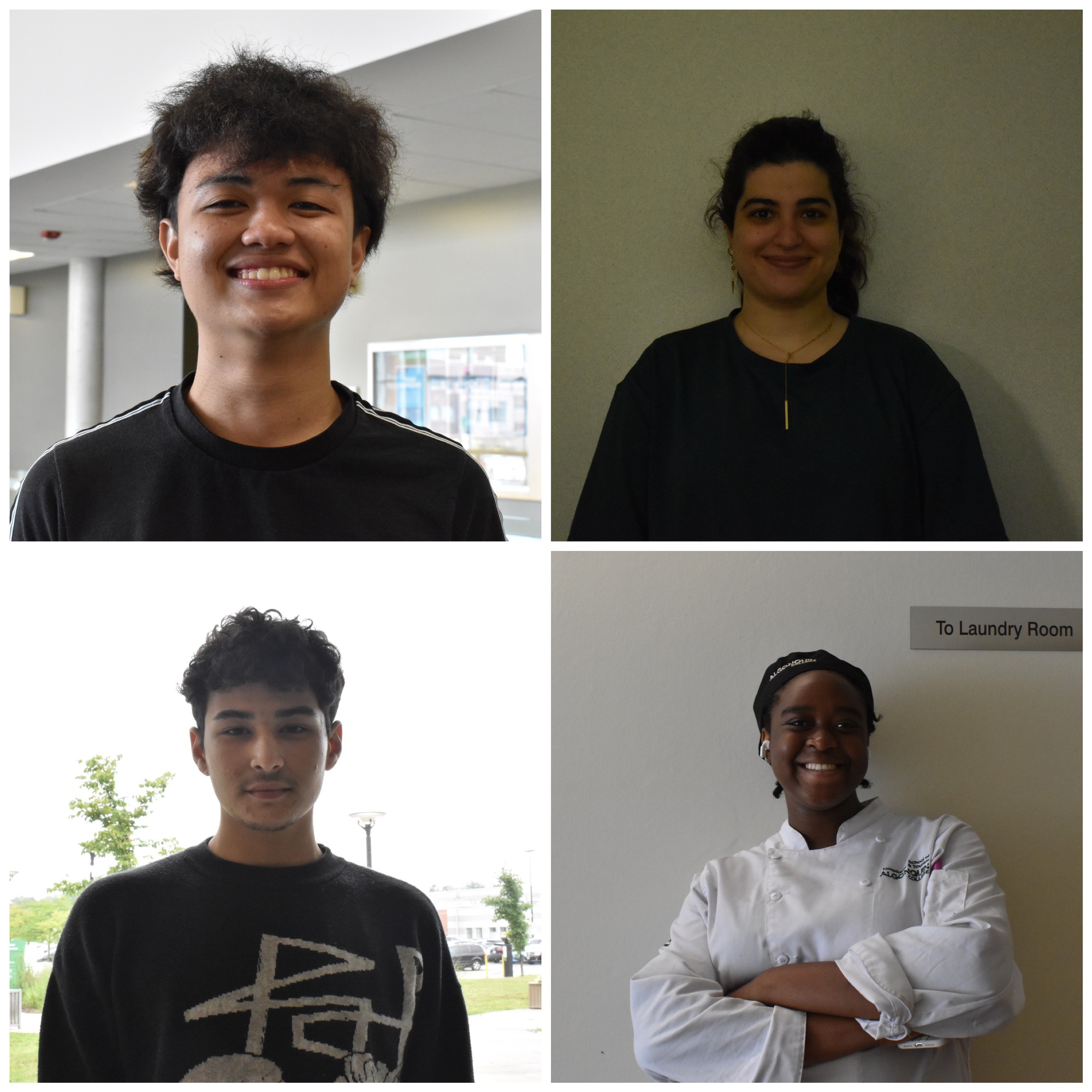
People often describe themselves as being either a city or country person. Algonquin College is full of people from different backgrounds and lifestyles. Students come from all over the world to be a part of Algonquin’s diverse community. How do they see themselves?

Serolf Flores, developmental services worker program.
Serolf Flores, Developmental Services Worker program Photo credit: Alyx Ewing

Name: Serolf Flores, international student from the Phillippines
Program: Development Services Worker

“I would say I am more like a city person because I grew up in the city and I have more interest in the city. Going out and seeing street lights, taking a bike or outdoor activities, like roller skating and hanging out with friends in the city where we can all be free.”

Oussama Zaanouni, marketing management program.
Oussama Zaanouni, Marketing Management program Photo credit: Alyx Ewing

Name: Oussama Zaanouni, international student from North Africa

Program: Marketing Management

“I’m a city person I think. Going out, drinking and going to parties; the city in general, like bars and clubs. There are a lot of different things like housing and transportation.”

Nourah Sayegh, culinary management program.
Nourah Sayegh, Culinary Management program Photo credit: Alyx Ewing

Name: Noura Sayegh, international student from Lebanon
Program: Culinary Management

“I grew up mostly in the city, so I am more familiar with the city. I don’t know anything about the country. I like to drive a lot around the city, which is very therapeutic. I like to do sports. Some places in my city had lots of fields to play football [soccer] or volleyball. Other than that, there’s shopping, going to the mall with friends and hanging out. If you were to compare my city to Ottawa, then it is kind of different because here there are more fields, trees and nature. There is barely any nature in my city. There are just small palm trees and barely any other trees, but there aren’t any fields of grass. You rarely see that.”

Ifeoluwa Olubode, Culinary Management program
Ifeoluwa Olubode, culinary management program. Photo credit: Alyx Ewing

Name: Ifeoluwa Olubode, international student from Nigeria
Program: Culinary Management

“Country. I love the country so much. I love animals so much. I also like gardening, going to peaceful gardens and I like being surrounded by nature. I’m not the type of person to like being around city noise and the busy city view isn’t cute. Back home, if someone is from the city you would say they are ‘more from the city’ and if someone is from the country, you would say ‘that person isn’t a city person’ or that they don’t ‘vibe with the city aesthetic’.”

ByWard Market festival celebrates music, arts and streetwear

The ByWard Market was filled with music, street vendors and the smell of barbeque on Aug. 13, thanks to the Ooh Festival. Many people made their way to the pop-up […]
Photo: Alex Campbell
People enjoying the Ooh Festival on York St. in the ByWard Market.

The ByWard Market was filled with music, street vendors and the smell of barbeque on Aug. 13, thanks to the Ooh Festival.

Many people made their way to the pop-up market to spend the afternoon shopping, listening to music and sampling what food trucks were offering.

“Me and my buddy came here to check out the music,” said Mike Lurch, a downtown resident. “The energy here is fun, and the barbeque smells good too.”

Diane Tate, a clothing vendor selling a variety of T-shirts, was happy with the turnout. “It’s a beautiful day and many people have made their way through here,” she said. “I’ve made quite a few sales today and met some very interesting people.”

Crowds walked around the booths browsing merchandise before gathering around the DJ, Trevor Mason, to relax, listen to hip-hop music and eat a barbeque lunch.

For many, celebrations like this one renews confidence that festivities are making their comeback after the pandemic.

“After the last two years, seeing everyone come down for this event, and others I’ve been to recently, has given me hope that events will be back to normal soon.” said event attendee Chris Cooper.

Why switching from university to college was the right move for me

In the spring of 2021, I was looking forward to going to university to become a teacher. I wanted to teach film and social studies as those were my biggest […]
Tyler Beauchesne, finishing his first year of journalism at Algonquin College.

In the spring of 2021, I was looking forward to going to university to become a teacher. I wanted to teach film and social studies as those were my biggest interests, and I was accepted by the three programs that I applied for due to making the honour roll back-to-back years at the end of high school. I was excited to enter this new chapter of my life because I thought this was exactly what I wanted to do. At least, at first.

Part of my experience was hindered at first because the residence building closed at this university due to COVID so I had to do my whole first year online. I learn better in-person, but that was fine since I could just go to the campus next year. My class schedule made it hard for me to be passionate about my program as the class that was about teaching was once a month at best. As the first semester ended, I came to the realization that this is not what I want to do, career-wise. Where do I go from here?

Over the winter break in 2021, I stumbled upon the journalism program at Algonquin College. It caught my attention as it lined up with my interests in film and audio with certain classes. I gave it a shot. This turned out to be one of the best decisions of my life. I always kept up with the news, but I never saw myself becoming a journalist because my writing skills were never the strongest throughout high school. I went into the program optimistic yet nervous. However, from the first class we had in person, I found myself getting more and more intrigued by the field that I would be working in. I realized right then that this what I wanted to do with my career.

After a few conversations, my parents knew I was serious, and agreed that it would be okay to try something else, although their preference was that I attend university eventually. I can still do this through the journalism program, which allows students to switch to the University of Ottawa for another two years.

I need to be clear about this: I am not saying that the college experience is better than the university experience for everyone. Both are beneficial in their own ways. I am enjoying the college experience more than university because it feels more “hands-on.” The university workload was more complex and while some can handle that just fine, I am not one of those students. The university program would allow me to actively learn in the field eventually, but the classes I took did not directly deal with what I wanted to do with my life. Almost every class that I am taking in college deals directly with different aspects of journalism. The first semester deals with the basics of journalism and the essentials that need to be known before we try to write professionally. The next semester, we are now members of the Algonquin Times and we now write stories to be published and learn how to improve our skills along the way.

I have learned that it is okay to switch programs if you realize what you are studying no longer interests you. I always thought I would become a teacher or work in the film industry somehow. While I still can in some way, I do not know if that fits all of my interests now. People change over time; it is natural and there is nothing wrong with that. You are not going to have the same friend group that you had in elementary school, and you are not going to have the same interests that you do in high school later in life.

Some people will have the same experience that I did with my program and feel pressured to stay in it even if it does not fit who they are as a person anymore. This could be because of the prestige behind their program or the jobs they can get with it. I would encourage those people to leave those programs and find something that they know will fit them better. Even if you have to spend a little more money, it will still be better than going down a career path that you will grow to resent.

Hundreds of Ukrainians learning English at Algonquin College

The Algonquin College Spiritual Centre is hosting Making English Easy for Ukrainians, attracting hundreds of Ukrainians forced to leave their country since the war began earlier this year, according to […]
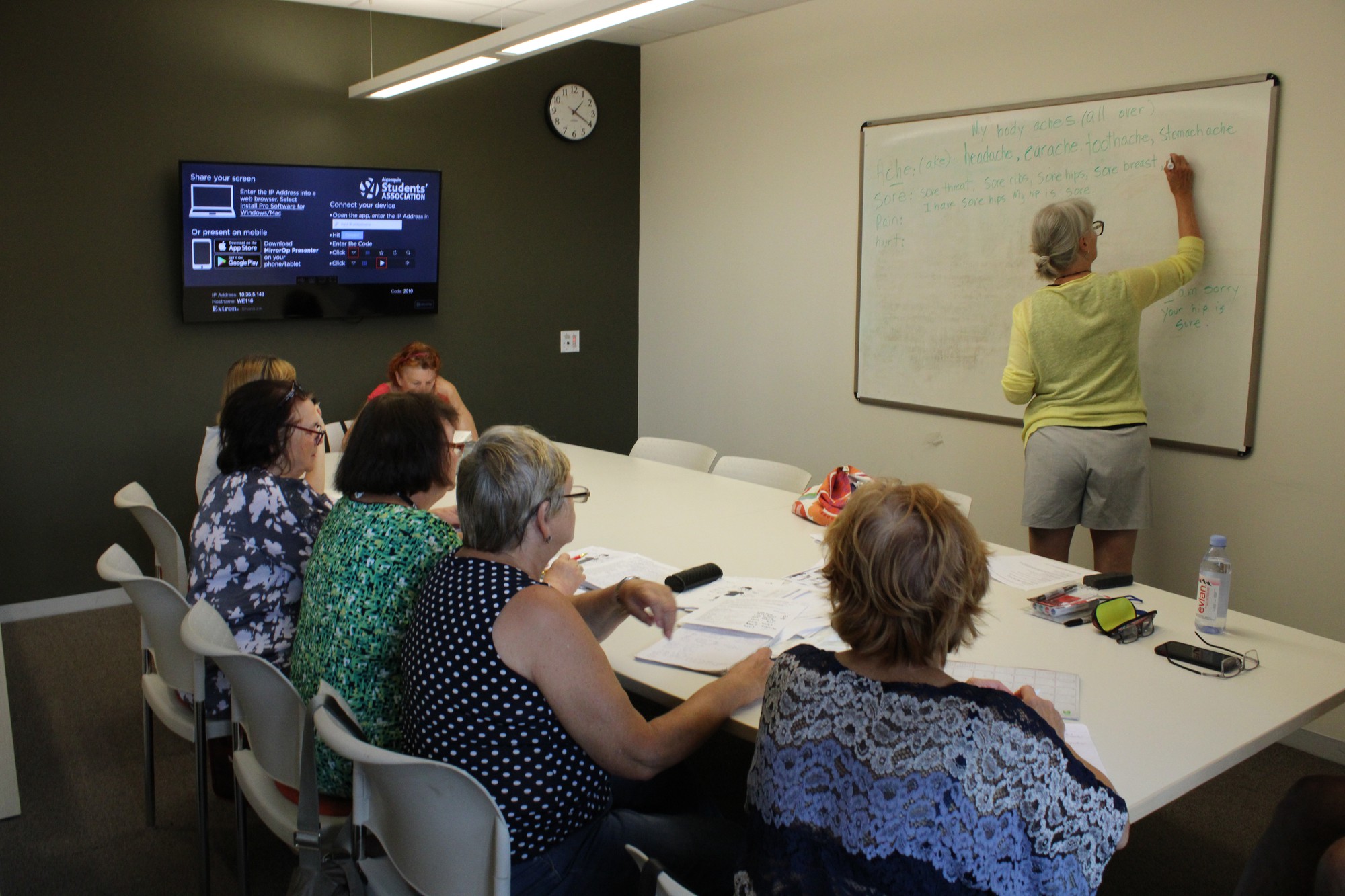
A group of Ukrainians learning English at Algonquin College study the teacher's notes on a white board.

The Algonquin College Spiritual Centre is hosting Making English Easy for Ukrainians, attracting hundreds of Ukrainians forced to leave their country since the war began earlier this year, according to the centre’s staff and volunteers.

An estimated 3,200 Ukrainians have arrived in the Ottawa area since February. In order to integrate into regular life in Canada, they must learn English or improve their existing skills as fast as possible.

From 1 to 2 p.m. on Tuesdays and Thursdays until August 15, qualified teachers offer English lessons to one of several groups, split by their ability, ranging from beginners with little to no English skills, to more advanced English speakers who have trouble with something specific, such as words that sound the same but mean different things. Learners spend the hour practising what they’ve learned with one of more than 30 volunteers from the community. Coffee and snacks have been donated by local churches.

“The first Tuesday we had 18 and by the second Tuesday we were up to 40 students,” said Yolande Parsons, Coordinator of the Spiritual Centre. “Some people have gotten jobs, which is really good news to hear.” More than 400 Ukrainians have come to learn English through this program, according to Campus Chaplain Yuriy Derkach.

Gary Miller, one of the volunteer English teachers, usually works with intermediate- level students.

“We talk about any sort of subject that is a concern, we help with pronunciation, we get people to talk about everyday subjects and just try to encourage them,” Miller said. Sorting people into levels helps make the lessons as valuable as possible for everyone. “If you have a mix, it doesn’t work. If you have to slow down for the beginners then the others just get frustrated and bored.”

Many of the volunteers are retired from teaching, and wanted to offer help to Ukrainians arriving in Canada due to the war.

“We’ve had such a great group of volunteers who’ve come to teach,” Parsons said. “There’s one church in particular, St. Marks Anglican Church, they’ve sent a few retired teachers and some ESL teachers. There are a couple of people from the college community who have also assisted in teaching, but mostly it is the community that has responded.”

According to Derkach, at first they were supporting Ukrainians already studying at Algonquin College, but then when their families came to Canada, they needed help as well.

Some of the Ukrainians have shown their appreciation to the organizers who have guided them while they learn English. “Most of them are really, really appreciative of what we’re doing. I will never forget one day, one of the ladies showed up with flowers for me. I was really thankful for that,” said Parsons.

How to combat break-week burnout

Break week came and went in the blink of an eye, as it always had. I did some reading, but I mostly took the opportunity to get some rest and […]
Madi Ivan-Feldcamp

Break week came and went in the blink of an eye, as it always had. I did some reading, but I mostly took the opportunity to get some rest and pick up extra hours at work. I hardly felt rejuvenated afterwards. “Break-week burnout” was something I noticed within myself.

According to an article published by the Canadian Journal of Higher Education in 2018, the fall break week was initially adopted by McMaster University in 2015, in response to several student suicides. The goal was to “provide students with a meaningful reprieve during a strategic moment in the course of their studies to improve academic performance and mental health and well-being.”

In other words, the point of the break week, also known as the reading week, is to catch up on all the work students may have procrastinated on or been overloaded with.

In my experience, it isn’t a guaranteed stress-reliever.

The same article mentions a national survey performed by the American College Health Association on the health of post-secondary students. Ninety per cent of Canadian post-secondary students said they felt overwhelmed and 13 per cent had suicidal thoughts within the last 12 months, despite universities across Canada implementing the fall break to combat these pressing issues.

There’s no doubt that feeling stressed and overwhelmed is consistent for most students, regardless of a break week. Many students use the reading week as a literal break, and although this is fine, it tends to be quite jarring once they return on Monday and get back to work.

“The break week isn’t a break – it’s a study week,” says Ahmed Elbadri, Algonquin College Student Success Specialist. “Students treat it like it a break, and they are less motivated to work during that week. When they return, they’re trying to compensate for what they’ve procrastinated.”

Although the break week – or, study week, as it should be addressed – is helpful in providing this time to catch up, it doesn’t amend the problem with stress and feelings of burnout among students.

If a student uses the break week to study and do their work, then the stress might be less when they return; the momentum from before the study week continues on and propels them back into classes again. But the burnout lingers because it feels like a missed opportunity to relax, especially if students chose to work.

If a student doesn’t use the study week to their advantage, it can have detrimental results.

“The break week is a make it or break it week for some,” Elbadri explains. “Will the student succeed?”

Sometimes, students drop out after the break. Maybe the workload becomes too much, and the guilt, shame and mental struggle of falling behind starts to catch up. Once there’s a break, everything stops and the relief of a week of silence is embraced. Then, on the following Monday, the noise starts again, and it sucks. I felt that way when I failed out of two first semesters of college a few years ago.

“Students feel like they’ve already lost, but that’s not true,” Elbadri says. “The discomfort goes away once you reach out. It is a huge relief. When professors and staff reach out to you, it’s not because they have to. It’s because they care. We want students to succeed.”

It isn’t easy to combat negative feelings while getting an education, but as students, it’s our responsibility to allocate time to properly address our schoolwork, while maintaining some semblance of mental health. If students decide to treat the study week like a break, then they must face the music on Monday, and the stress of those procrastinated assignments starts to bubble up all over again.

“A moment in my life made me confront a lot of things,” Elbadri says, “People hit rock bottom for things to click in their mind, and not everyone knows how to be self-sufficient.”

This lack of self-sufficiency seems to be the root of all evil. Speaking from experience, I had to learn how to keep an agenda and manage my time – this is still something that I’m actively working on, and something I highly recommend adopting.

Elbadri says the key to addressing workload issues is following the SMART acronym: Goals should be specific, measurable, attainable, realistic, and time-related. Write these thoughts down so you can see them.

The purpose of a study week is to help students reduce stress, by allowing them time without classes and new assignments so they can read, think and catch up on their school work. Let’s not think of it as a break week, or a “make it or break it” week. Let’s consider it a “meaningful reprieve” to address all concerns, from assignments to mental health.

Algonquin Times podcast

Stay Informed

Sign up for our newsletter

Subscribe

* indicates required