Built by students, pitched to industry: Algonquin’s robotics club shows off their tech to investors
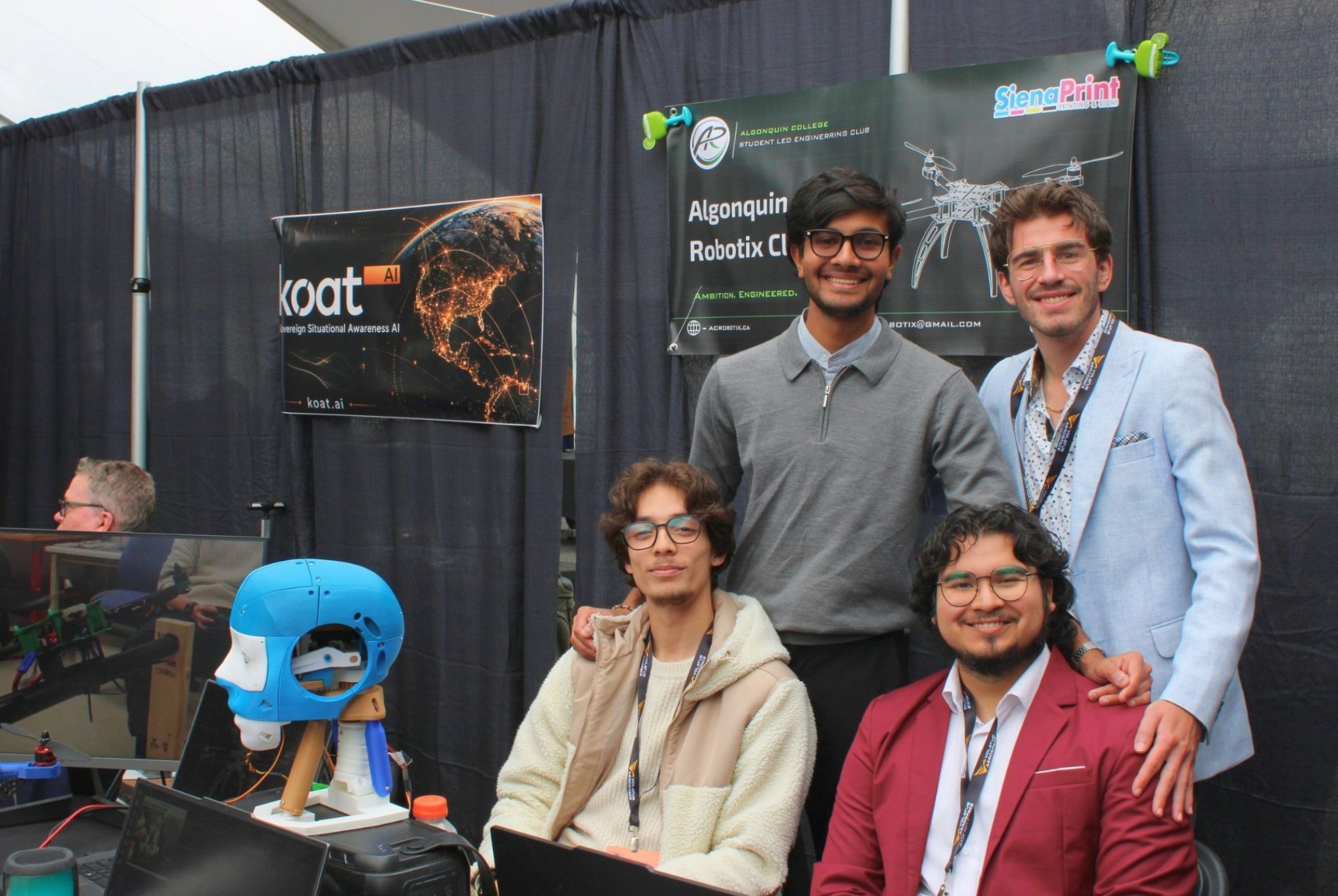
The fields of Area X.O were still dark on Sept. 29 when members of Algonquin College’s robotics club, lugging their drone and robot head, arrived at 5:30 a.m. after a long night of last-minute repairs.
One of the drone’s legs was printed in the wrong material, which took eight hours to replace. Club members worked late into the night on the replacement, with others taking time away from their internships to make it to one of Ottawa’s biggest technology showcases.
By the time GCXpo opened, they were ready to pitch. Sitting a block south of the Nepean Sportsplex, Area X.O was splattered with tents, the skies above dotted with drones.
“We’ve been pitching the entire day,” said Haeden Fethi-Henriquez, a robotics club member and computer systems technician student.
“It’s exhausting, but I think we got a bunch of bites. And, if I remember correctly, we have about six companies that might be interested.”
GCXpo (Government of Canada Exposition) is a Canadian technology event, designed to connect innovators with government, industry and investors through live demonstrations of emerging technology.
It began in 2022 under the name TCXpo, and through the years has evolved to expand its focus beyond smart mobility to all kinds of cutting-edge tech, including robotics.
Visibility was the main goal for the club at the expo. One of the club’s co-founders, Dwij Brahmbhatt, described their need for funding.
“We don’t have a set revenue coming in every month or every year. We don’t sell products,” said Brahmbhatt.
“The idea coming here is to find industry sponsors to either give us parts, money, connections in general, because that’s the only way we can get (a) good amount of money to make something which actually we can take it to compete or make something worthwhile for people.”
Miguel Fausto, one of the club’s co-founders, said the opportunity to meet potential sponsors face-to-face was an opportunity they couldn’t miss.
“It’s really different to talk with someone than sending an email,” said Fausto.
“Being here…gives the opportunity to show our projects and people can come to us, to ask about the projects and we can talk — show our passion about what we do.”
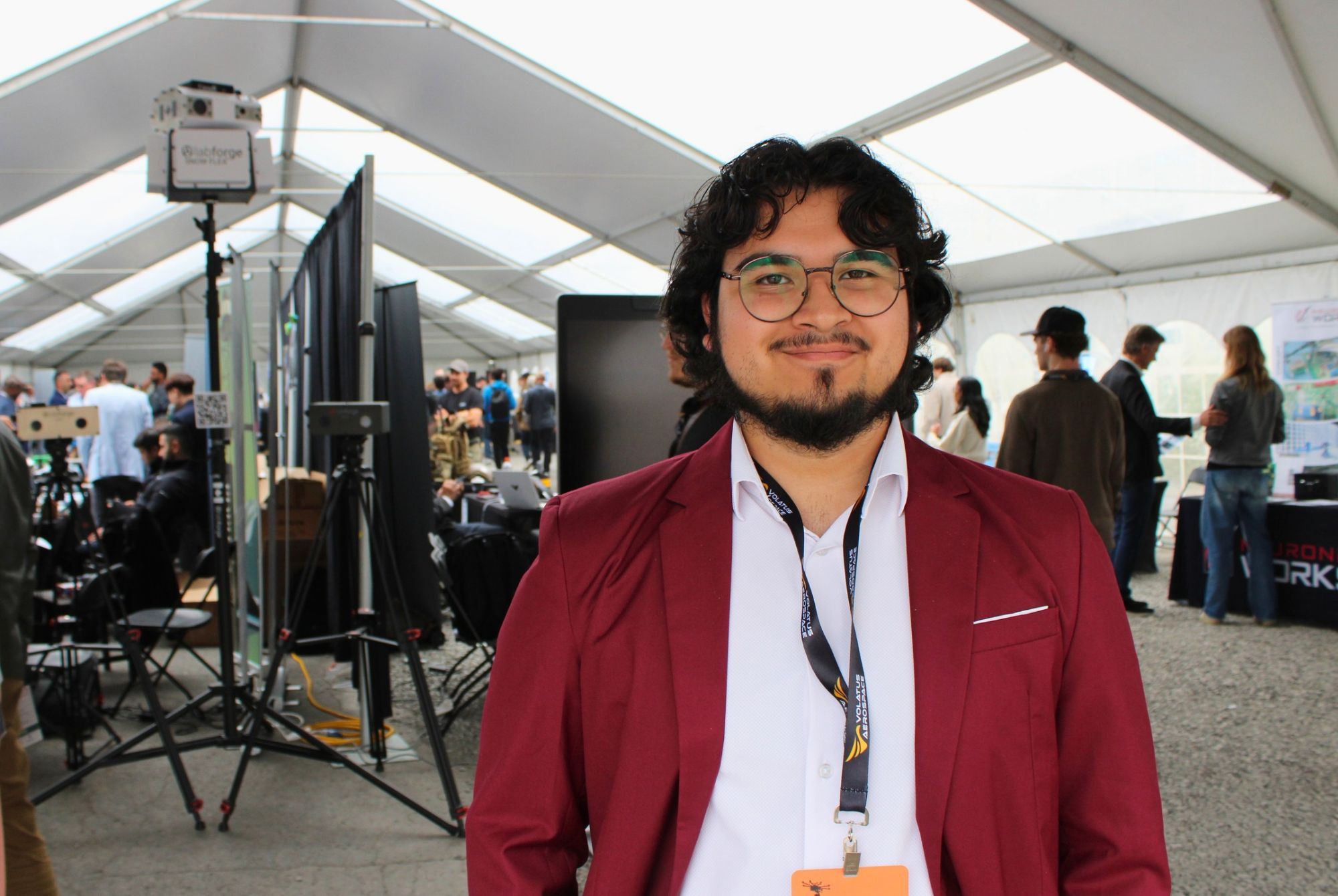
Fausto said the club has learned how to adapt their pitches, depending on who’s in front of the booth.
“The drone is more attractive for the tech guys,” said Fausto. “The robotic head is for the people that (are) not really in tech, but (are) really interested in knowing more about it.”
Their booth, located in the event’s main exposition tent, was a chance to show off the club’s projects, which are fully built by students rather than being purchased or assembled using commercial products.
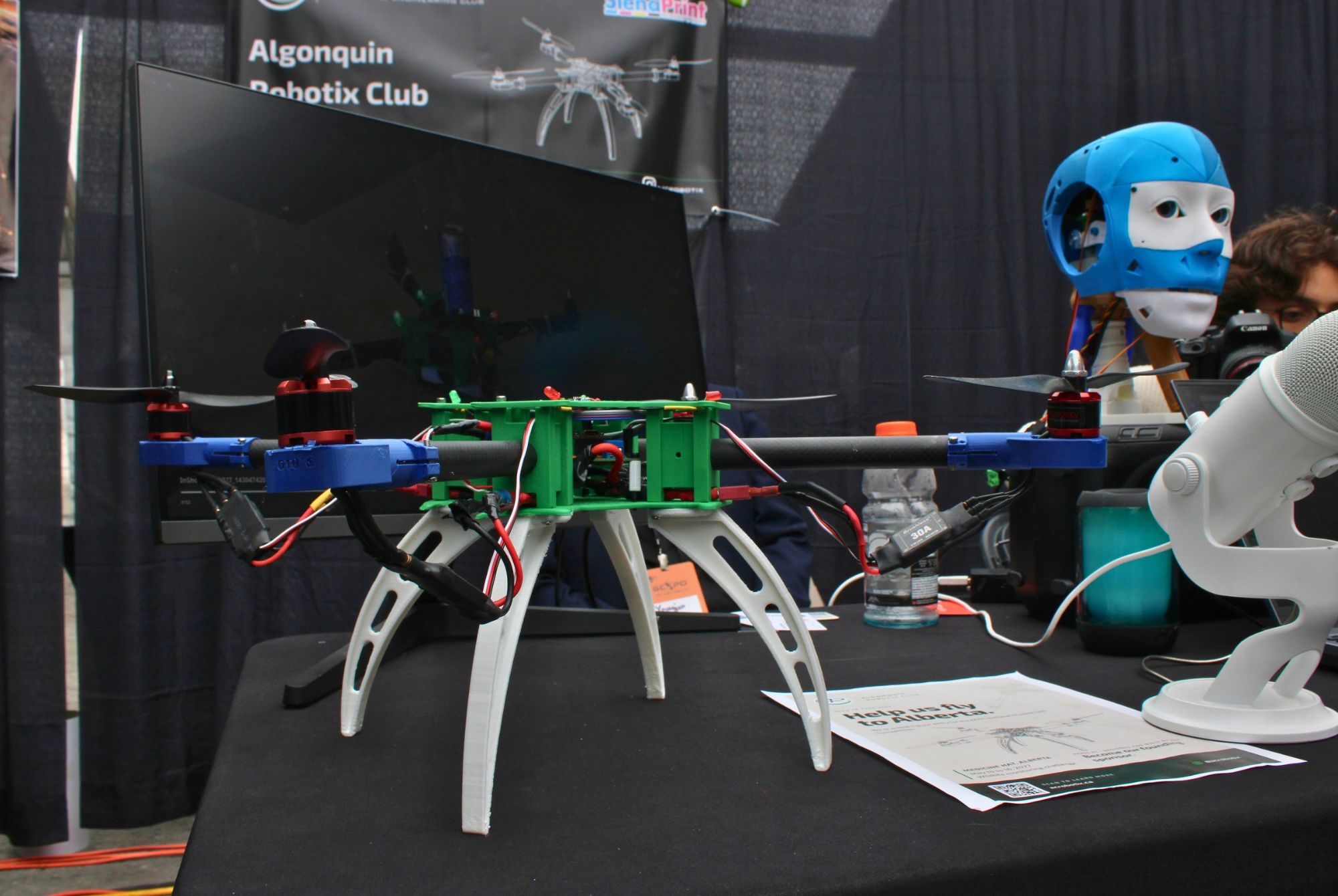
“Besides the motor (of the drone), everything you see was completely built by students at Algonquin, using the labs of Algonquin,” said Brahmbhatt.
“So the idea is that’s (the) main selling point…I can buy a drone from Costco by myself. Where’s the engineering in that?”
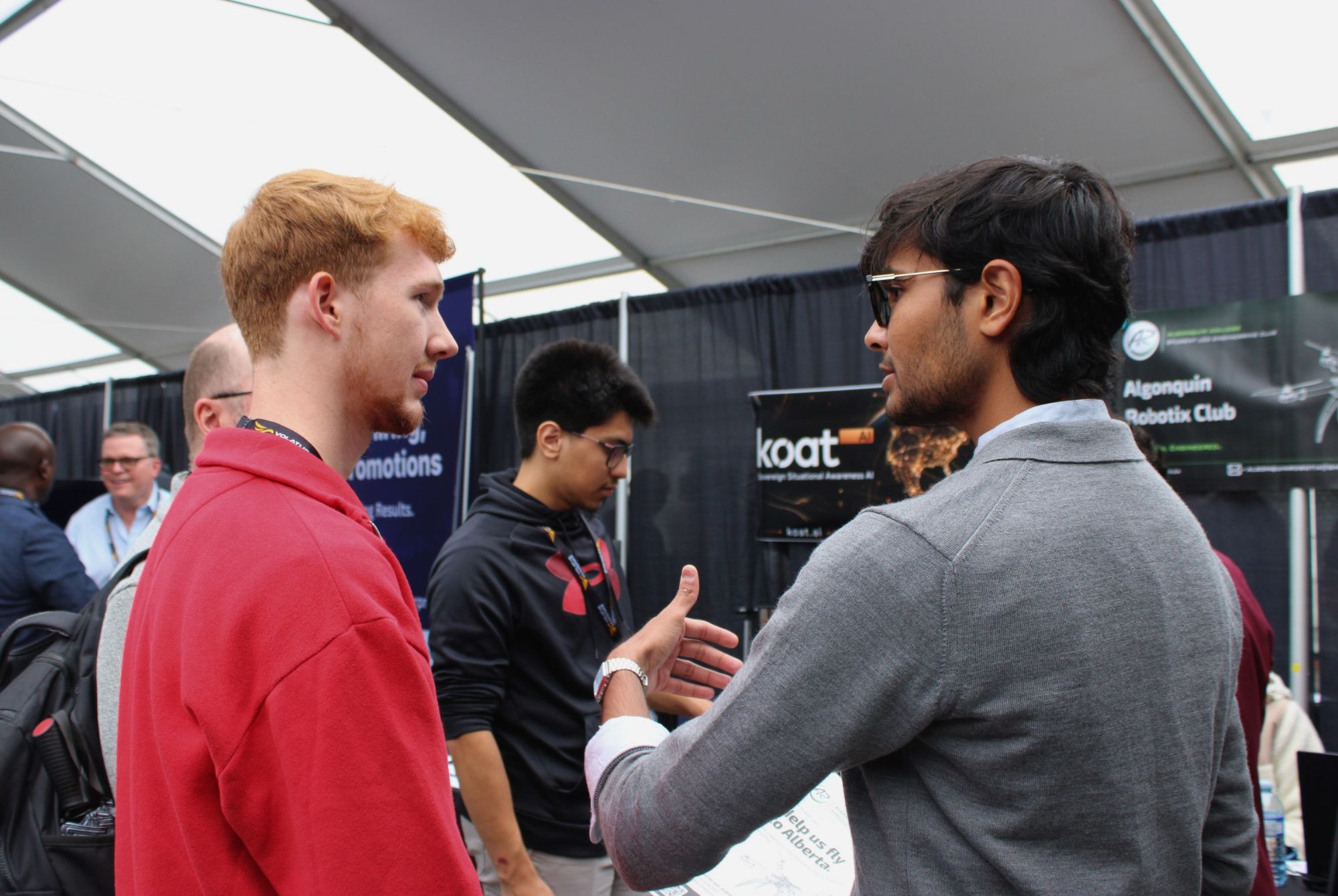
Alongside their drone, the club’s robotic head NIKO (neural intelligence knowledge operator) got an update in time for the expo that drew lots of attention. NIKO can now actually converse with and react to what it’s seeing.
That meant eventgoers were able to interact with the robot in real time. NIKO was overheard telling someone they “had nice glasses.”
Also helping with the booth was AC alumna Albatoul Abusneina.
Abusneina has been busy after graduation, enjoying her new position at Revolution Data Platforms as an associate business and project coordinator, but she still made time to come support her old club.
“Dwij said they finally figured it out, how to get in,” said Abusneina. “So I was really happy. I was like, you guys need any help?”
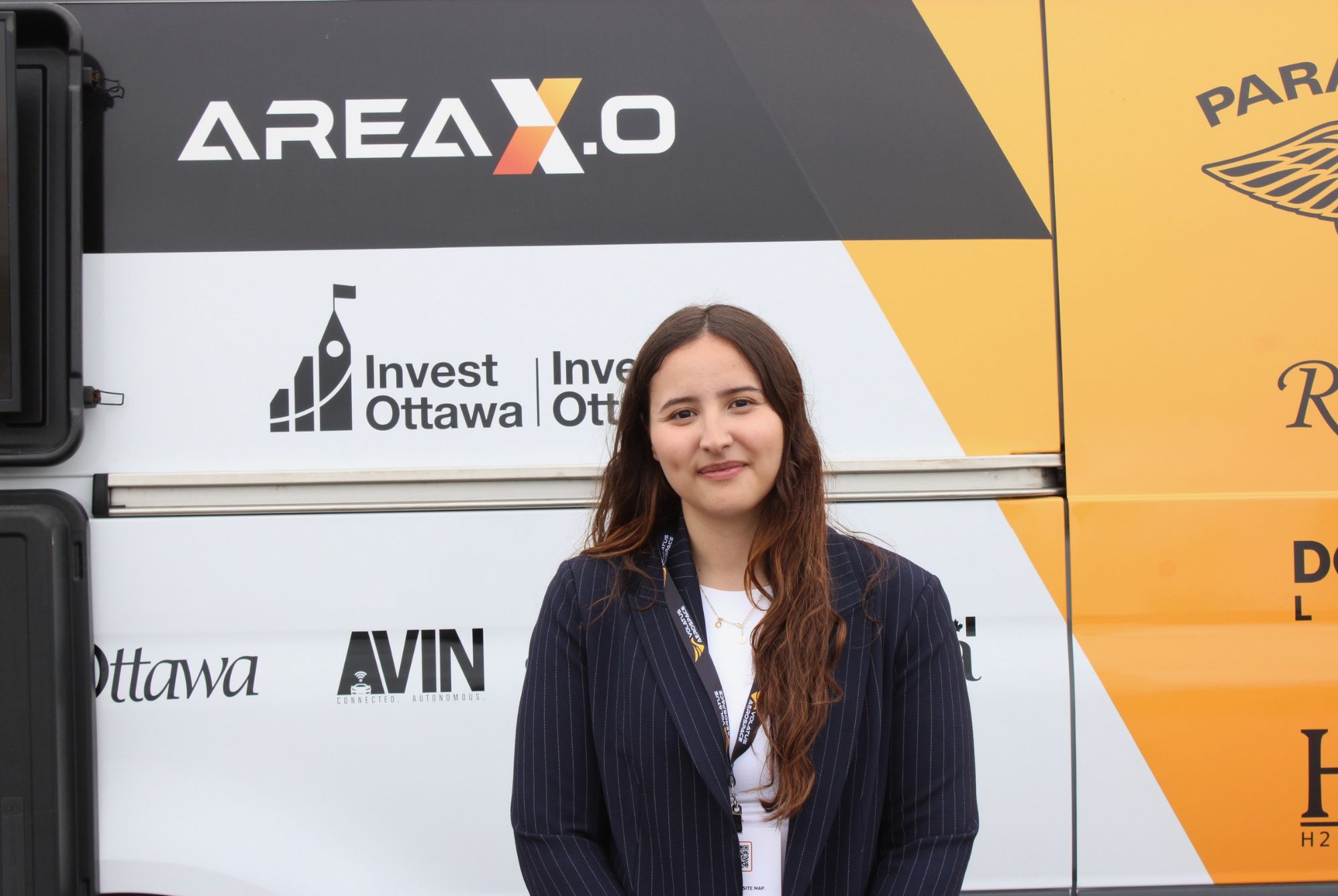
The team all agreed the event was a success.
However, the club’s fundraising efforts were about more than simply expanding their projects.
The students are preparing for the 18th annual Aerial Revolution Association of Canada’s National Student Uncrewed Aircraft Systems competition, taking place in May 2027 in Medicine Hat, Alta.
Their current drone AERIS (autonomous exploration and reconnaissance system) holds around 500 grams, while the competition will require a much higher payload.
They estimate they’ll need another $8,000 for the parts and materials to build the competition aircraft.
“We’re not starting from zero,” said Fausto.
“But there’s a long, long way to go.”