
Ottawa’s fall heat raises student concerns about future winters
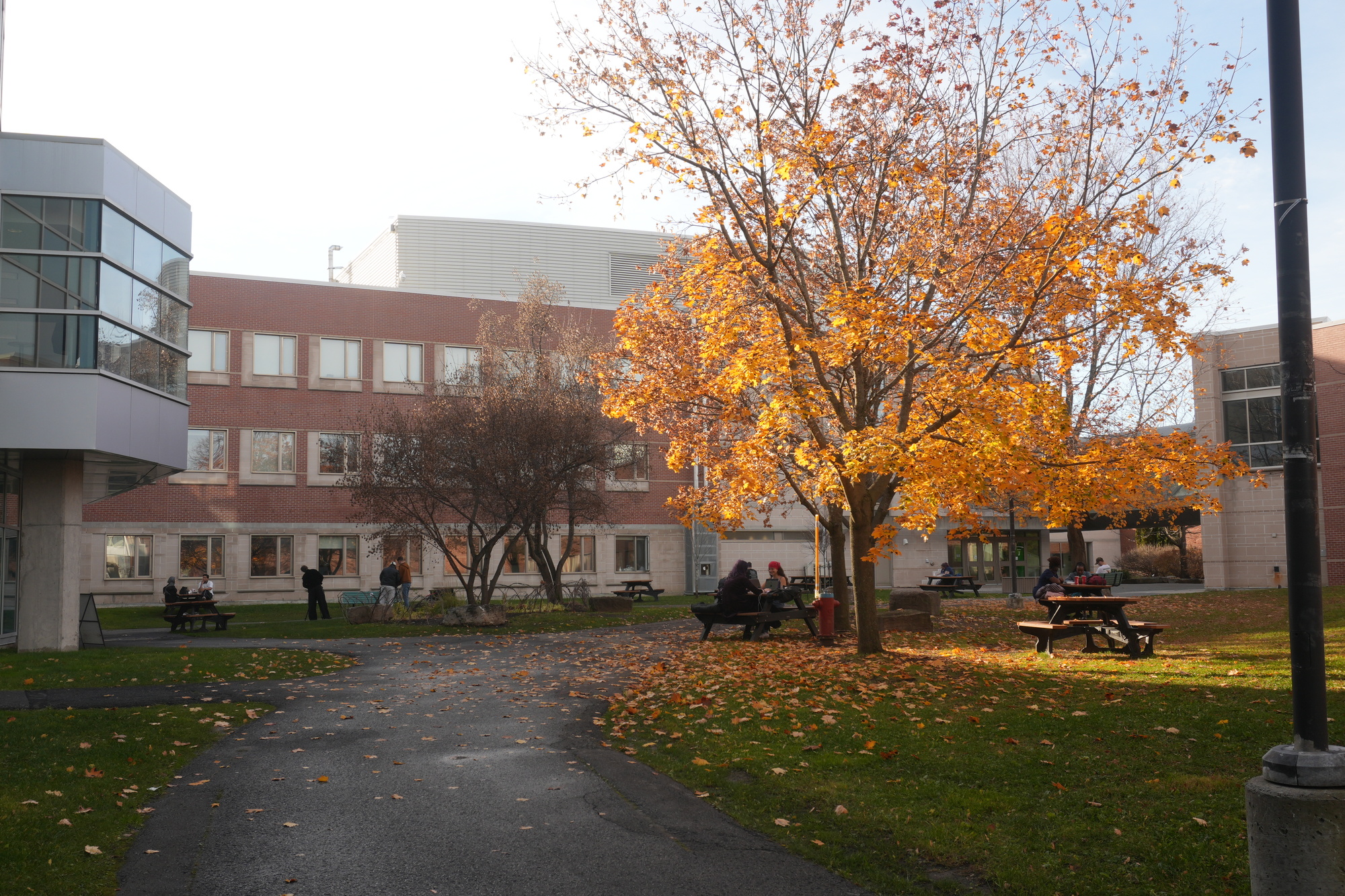
Ottawa students experienced an unexpected taste of summer Wednesday as temperatures reached 22.9 C, bringing oddly warm weather to the beginning of November.
Temperatures are expected to drop to around 2 C next week and Algonquin College students are experiencing a rapid shift in weather that has raised questions about Ottawa’s changing seasons related to climate change.
The unusually warm temperature has brought mixed reactions from students: while some enjoy the sunshine, others are curious about the weather patterns.
“It was definitely surprising considering Canada is known for being super cold once fall comes but…I am slightly happy about it,” said Annika Vrosky, a Level 3 animation student.
Students said the warmer weather has affected clothing choices but it has also allowed students to enjoy different parts of the campus.
“I love when we have warm weather with classes,” said Ruby Odendaal, a Level 2 interactive media and design student. “We don’t get to experience it too much but having the courtyard is nice to be able to sit in between classes at least.”
Teagan Batt, a Level 1 motive power technician student, said that the temperature changes can be frustrating.
Although the warm weather can be enjoyable for some, students are also worried that Ottawa’s changing weather could affect winter activities.
Delayed snowfall and earlier snowmelt could shorten opportunities for skiing, skating and other outdoor winter sports.
“The snow hasn’t come in yet and snow will almost likely leave early,” said Samer Boulos, a Level 1 motive power technician student. “I love winter sports and I just feel like I won’t be able to enjoy it for as long.”
These changes could also affect traditional Ottawa activities, which include skating on the Rideau Canal, a popular activity for both tourists and locals.
“I might want my son to experience (a winter sport) that may not happen anymore like skating on the canal.” said Odendaal.
According to the City of Ottawa and National Capital Commission’s June 2020 report, Climate Projections for the National Capital Region, Ottawa’s winter season could become four weeks shorter by the 2030s under a high emissions scenario, with annual snowfall decreasing by approximately 10 per cent.
Global climate change has increased base temperatures and an exceptionally strong El Niño event in the Pacific is changing the global weather.
According to Environment and Climate Change Canada’s Canadian Environmental Sustainability Indicators: Temperature Change in Canada report, Canada’s average temperature in 2025 was 2.1 C higher than it should have been and the country has also warmed nearly twice as fast as the global average since 1970.
Mac Clairmont, a Level 2 interactive media and design student, also expressed concern about increasingly unpredictable weather and extreme conditions.
“It’s weirder now than it was growing up, these earthquakes and big storms and stuff like that,” said Clairmont. “I feel like that wasn’t really a thing growing up.”