Event offered lessons in talking about sex and consent
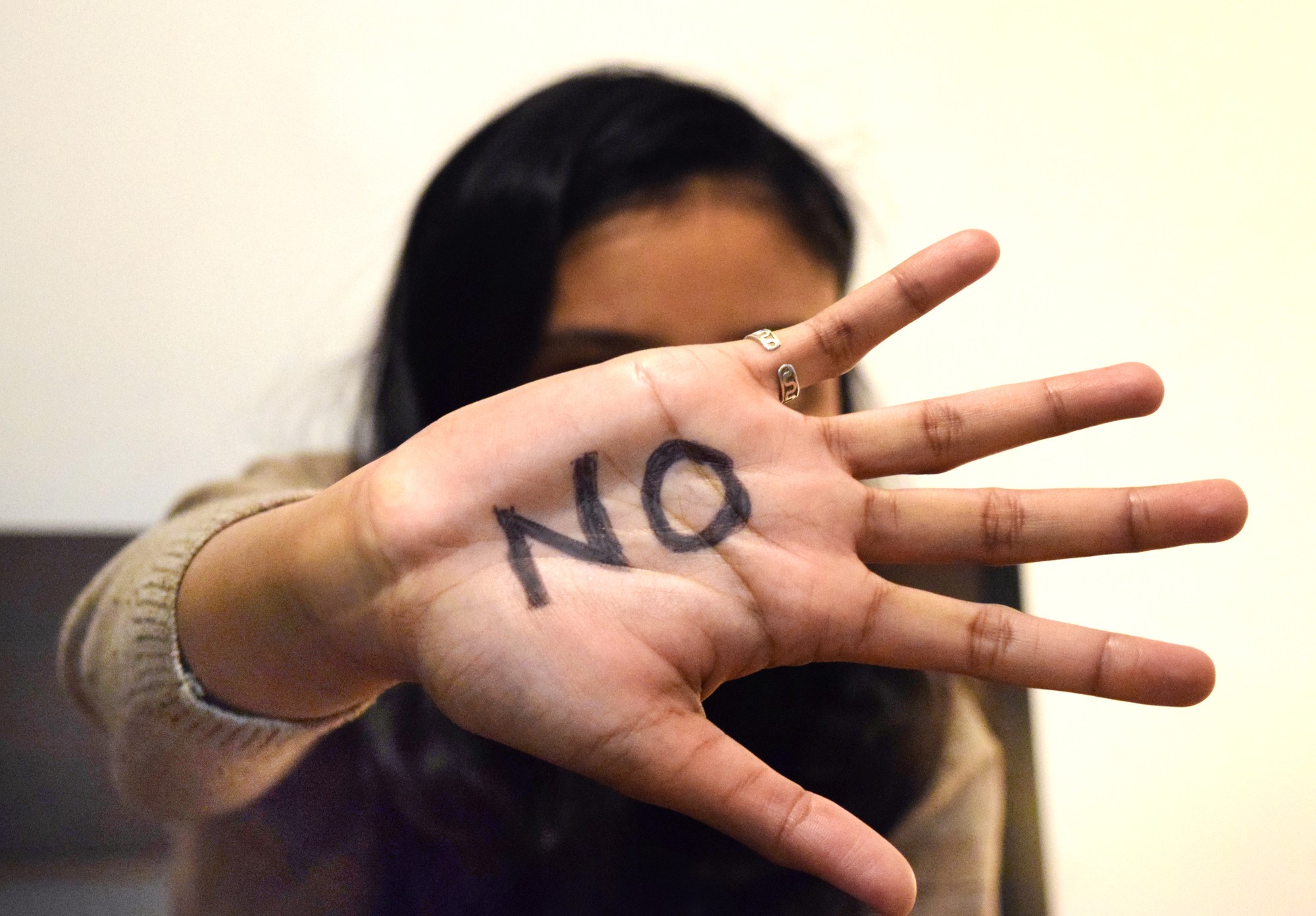
As part of the national addiction awareness week, Algonquin College’s Project Lighthouse in collaboration with Carleton University’s Stigma Ends at CU organized a virtual interactive session about consensual sex and substance abuse on Nov. 26. Over the one-hour event, about 49 participants learned about ways to navigate open and honest conversations about consent, healthy relationships […]
Photo: Kavya Nair
One in three women and one in eight men have experienced unwanted sexual behaviour in public, says a 2019 Canadian study

As part of the national addiction awareness week, Algonquin College’s Project Lighthouse in collaboration with Carleton University’s Stigma Ends at CU organized a virtual interactive session about consensual sex and substance abuse on Nov. 26.

Over the one-hour event, about 49 participants learned about ways to navigate open and honest conversations about consent, healthy relationships and recognizing substance abuse.

According to a study by Statistics Canada, one in three women and one in eight men have experienced unwanted sexual behaviour in public.

“It has been noticed that there’s a spike in the sexual assault when there are mass gatherings, especially during holidays and when there’s alcohol involved,” said Bailey Reid, senior advisor, gender and sexual violence prevention and support at Carleton University.

“When you indulge in sex with someone for the first time, always do it sober,” said Reid. “We don’t know how a substance will hit.”

Sarah Crawford, sexual violence prevention and harm reduction coordinator at Algonquin College discussed consent culture in current times. She explained how consent is generalized as a buzzkill in the younger generation.

However, she said, discussions about consent don’t have to be boring. “Moaning is one such way to make things interesting and know about consent,” she said.

“We are not taught to be self-aware,” said Amal Elmi, education and services coordinator at Carleton. “If it is taught at a young age, it’ll be easy to understand consent.”

For people who are looking for consent, Elmi recommended to “pick up on the non-verbal cues. Be aware and pay attention to responses.”

But there is a difference between consent and sexting, Crawford explained. “Sexting is not consent,” she said. “It is a virtual fantasy.”

“When you’re with someone in-person, always ask for consent and check-in,” she said.

While talking about how to say the dreaded word “No” to someone, Tanisse Teale, moderator of the event and president of Stigma Ends at CU advised people to stay calm in the situation.

“I try to stay calm,” Teale said. “I’ve tried giving fake numbers sometimes.”

But the gentle art of saying no is also our right, added Crawford.

“It is your right to say No. If you want to, just say it,” she said.

The speakers also touched upon ways to help friends that are intoxicated in an unsafe environment.

“The best way is to intervene,” said Elmi. “Disruption is an efficient method.”

These delicate situations can also be pressurizing and scary.

“A lot of ways to intervene don’t have to be confrontational. Bystander interventions are safer,” Crawford suggested.

The event concluded with a discussion about healing and coping with sexual assault.

“COVID-19 has had a negative impact on coping for survivors,” said Elmi. “Every survivor has a different coping mechanism. Some chose meditation, yoga, hanging out with friends or other spiritual means. But some use substance as a mechanism, and that’s fine too.”

Elmi also suggested that supporting rather than advising people who use substances to cope is more effective. “Don’t ask them to leave right away. If they’re feeling safe, let them live. Survivors know how to heal.”

Teale recommended that people shouldn’t judge but support and acknowledge the methods people choose to cope.

One of the event’s participants appreciated what they’d learned. “Thank You,” wrote one of the participants in the Zoom chat. “This was very enlightening. You guys are doing good work.”

The event also included separate breakout rooms for participants who wanted to speak privately with peer supporters.

Project Lighthouse and Subway Sex Menu are two of the resources for students by Algonquin College to help reduce sexual violence, understand safe and healthy relationships and support survivors of sexual violence.


Speed Demon

“Don’t patronize me, I am not to be easily underestimated.” Don’t use taciturn strategy or calculated empathy don’t stretch before or make a plan of attack my words are not checkpoints along the way my back is not your racetrack my hair is not your starting flag my legs are not your goal posts I […]

“Don’t patronize me, I am not to be easily underestimated.”

Don’t use taciturn strategy or calculated empathy

don’t stretch before or make a plan of attack

my words are not checkpoints along the way

my back is not your racetrack

my hair is not your starting flag

my legs are not your goal posts

I am not an opponent to defeat

or a time to beat

being with me is not a race

and my mattress is not the finish line.

Nicoline Antonovitch - Nicoline studies Professional Writing at Algonquin College and has appeared in Blank Spaces and other small publications. She writes with the vulnerability of an exposed nerve and cries at the drop of a hat. Her stubbornness, bushy black eyebrows, and love of sour cream all stem from her Slavic-European background.

Chefs of Affection

“The art of cooking is a love language.” They served up bliss and healing, Selflessness and comfort, Wonder and pride. They had built a special type of kitchen, Where they prepared stories, Apportioned attention, Deposited tenderness, And dealt forgiveness. They were known as the Chefs of Affection, And they didn’t mind if they starved, So […]

“The art of cooking is a love language.”

They served up bliss and healing,

Selflessness and comfort,

Wonder and pride.

They had built a special type of kitchen,

Where they prepared stories,

Apportioned attention,

Deposited tenderness,

And dealt forgiveness.

They were known as the Chefs of Affection,

And they didn’t mind if they starved,

So long as their kin were satisfied.

Chad Hetherington - A fashion enthusiast and leisurely, self-directed pupil of philosophy, Chad loves nothing more than love itself. I guess he also enjoys writing.

Best Friends Forever

“Nothing is more powerful than the bond of Best Friendship.” Hey there you! We’ve been through a lot. Like two laces, tied in a knot. Sharing one space all intertwined. Like all things should be, so aligned. Things are rocky and not always fine. Some are your fault, but some are mine. Hey! we’re human, […]

“Nothing is more powerful than the bond of Best Friendship.”

Hey there you! We’ve been through a lot.

Like two laces, tied in a knot.

Sharing one space all intertwined.

Like all things should be, so aligned.

Things are rocky and not always fine.

Some are your fault, but some are mine.

Hey! we’re human, we make mistakes.

But things are rocky and sometimes ache.

Friendship is a roller coaster,

Ups and downs go fast and faster.

You’d know since you’re the other half.

This fight can end with a quick laugh.

Hard to fight with your friend, so true.

Easy to end it all, who knew…

Nicholas Carchidi - Nick is a second year professional writing student at Algonquin College, hoping to pursue work in either journalism or scriptwriting. Nick hopes to become someone that makes his readers ponder about the many things in which life has to offer. In his down time, you can find him playing on his Nintendo switch, organizing his many Pokemon cards, or obsessively writing one of his many stories; most notably Radio Heads, a young adult drama about musicians.

AC students join their community in demanding a moratorium on moose hunting

Standing at several checkpoints throughout Quebec’s La Vérendrye Wildlife Reserve Park this fall, two Algonquin College students joined with other members of the Algonquin Nation to stop traffic and spread a message about moose hunting. “A study in the La Vérendrye Park showed declining population of moose,” Liam Cote, 21, said. “The community of Barriere […]
Photo: Angeleah Brazeau-Emmerson
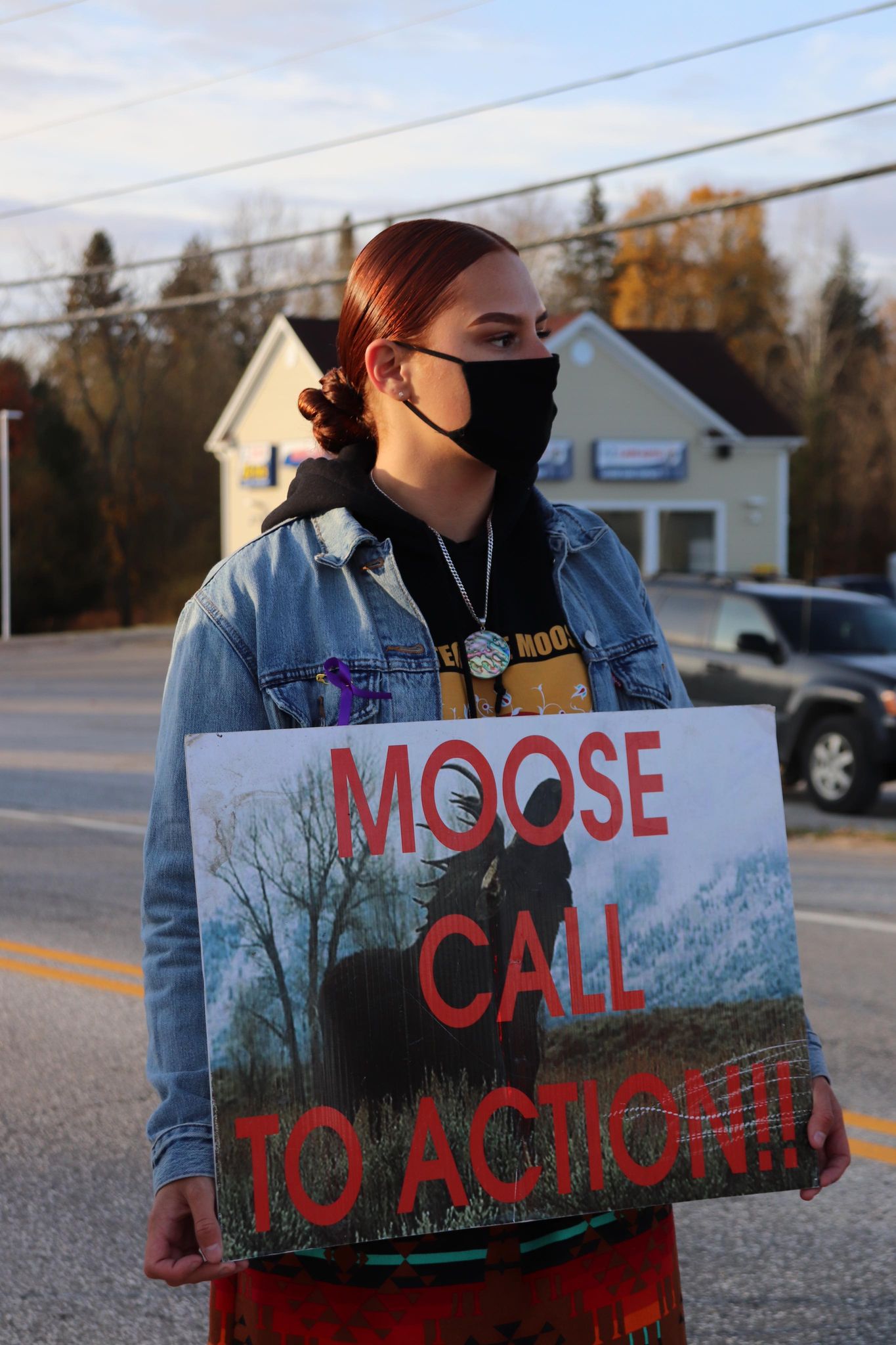
Kanawābinigig kīzis along Highway 117 during the moose call to action this fall.

Standing at several checkpoints throughout Quebec’s La Vérendrye Wildlife Reserve Park this fall, two Algonquin College students joined with other members of the Algonquin Nation to stop traffic and spread a message about moose hunting.

“A study in the
La Vérendrye Park showed declining population of moose,” Liam Cote, 21, said. “The community of Barriere Lake decided to block the entrances to the park and decline access to non-Indigenous hunters.”

Cote explained that blockades were setup along Highway 117 at entry points to the Wildlife Reserve, the first camp called Lepine-Clova Road, to support their call to action: a moose moratorium.

Leaving class to support their community

Cote is a first-year Algonquin College student in the pathways to Indigenous empowerment program. He lives in Ottawa with his grandmother during his studies.

“I had to let my teachers know what was happening in my community,” Cote said. “They were all super understanding and encouraging.”

This Fall, Cote would head to Kitigan Zibi as soon as he finished his classes on Thursdays. “I’d go and spend the weekend to then drive back to Ottawa for the school week,” he said. “I did that for about a month and a half.” Cote remained in school throughout the moratorium but was granted extensions on assignments.

As a second-year journalism student at Algonquin College, Angeleah Brazeau-Emmerson, 18, found it tough to focus on school when there was so much going on in her community.

She’d joined social media groups and conversation groups with members of her community about the issue. After that point, her phone would never stop ringing.

“I kept seeing everything about it on Facebook,” she said. “My mom was out there, then I read about a group of hunters that were going to attack. My brother was out there, my community is out there and I can’t be there because I have class.”

“I got so overwhelmed and stressed that I was just not feeling good anymore and it was hard to stay focused on my studies when all of this was happening in our community, to our people,” she said.

Stopping cars

Brazeau-Emmerson was invited to several youth meetings during the call to action and joined other community members her age.

“It was really nice to see the youth lead the meeting,” she said. “The goal was to get youth to feel a part of this and know they have a voice.”

She took part in a gathering outside by a sacred fire and another ceremony the morning before the traffic slowdown.

“The ceremony was a way to open the day with positivity and bring that energy with us throughout the day because we knew it was going to be rough,” she explained. “I really felt like I was a part of something, and it was nice to be around a sacred fire and our elders.”

The day of the blockades, she spent some time at one of the check points asking people to roll down their car window and hear their message.

“How we did it is we’d let about 50 cars go in and every five minutes we’d stop and go talk to each of the cars,” she explained. “We just wanted to share information with them, if they wanted to, of course.”

Videos later uploaded to social media from the slowdowns showed someone hitting one of Brazeau-Emmerson’s community members with their car and was heard yelling racial slurs.

“I got super emotional at the start,” Brazeau-Emmerson said recalling her first day at the traffic slowdown.It was hard because you’re standing there with a sign and people are just looking at you and breaking you a part as if you are not human.”

“And then you’d get that one car where they smiled at you and I just wanted to cry.”

Why a moose moratorium?

Brazeau-Emmerson explained that if hunting kept happening at the rate it was, there would be no moose for her future children.

“We just want the hunting to stop so the decline in moose population can stop,” she said. “We need to slow down the rate, at least, until it’s safe for people to hunt again and our generation as well as the following generations can hunt.”

Cote agreed that this was important now, for the sake of the future generations. “People my age are doing this because we want there to be moose for our kids,” he explained. “I want to be able to go moose hunting with my kid.”

“It’s also part of our teachings and it’s sacred to us,” he added.

Signs were used to illustrate the message of the moose moratorium. One sign showed common logos of corporate store branches such as Dollarama, Provigo, Maxi, Giant Tiger and Metro, under “your store,” while moose and lobster pictures appeared under “our store.”

Kitigan Zibi community member at the Moose Moratorium.
Kane Dumont holding a sign along Highway 117 during the moose call to action this fall. Photo credit: Angeleah Brazeau-Emmerson

“Barriere Lake doesn’t have a store near them,Cote added. “Hunting is their only resource for food. And we want to protect the moose and stand in solidarity with our people.

Kitigan Zibi community member at Moose Moratorium.
Malia Herodier holding a sign saying "protect the moose" along Highway 117 during the moose call to action this fall. Photo credit: Angeleah Brazeau-Emmerson

Cote will continue to stand by his community and his rights and pursue Indigenous studies.

“My grandmother always tells me to never let people forget that they’re still on unceded Algonquin Anishinaabe territory. We never gave up the land and we will always fight for it.”


Poetry project honours victims of gender-based violence

Sunday, Dec. 6 is the National Day of Remembrance and Action on Violence Against Women, and Project Lighthouse is hoping to do something special. The importance of the day cannot be understated, according to Sarah Crawford, the sexual violence prevention and harm reduction coordinator at Algonquin. “It’s an important day because we’re honouring the women […]
National Day of Remembrance & Action on Violence Against Women Logo

Sunday, Dec. 6 is the National Day of Remembrance and Action on Violence Against Women, and Project Lighthouse is hoping to do something special.

The importance of the day cannot be understated, according to Sarah Crawford, the sexual violence prevention and harm reduction coordinator at Algonquin.

“It’s an important day because we’re honouring the women who were murdered at l’École Polytechnique de Montreal in 1989,” said Crawford.

On that day, Marc Lépine entered a classroom and separated the men from the women. He would then open fire on the women.

“It’s 31 years later and we’re still working on reducing gendered violence,” said Crawford. “We are still seeing the same issues we were 30 years ago, and that’s a problem.”

Although no in-person events can be done thanks to the COVID-19 pandemic, Project Lighthouse still hopes that students will participate by sharing messages of support for all those affected by gendered violence.

Students are being asked to answer the question “How do you hope to create a world without gendered violence?” After the answers have been submitted, 50 answers will be selected and used to create poetry art. Those selected will also receive a small token of thanks from Project Lighthouse.

“Normally, we’re on campus and I would have a big event,” said Crawford. “We would normally have a memorial, but the event is actually on Sunday, so I wanted to ask people throughout the week to submit their thoughts and have those conversations.”

“The idea is that people will submit their ideas about how they can help live in a world without gender-based violence,” she said. “There have already been some submissions, but I’m still hoping to get more. I thought this was a nice, easy way for people to raise awareness.”

Students can submit their responses until Sunday. The final poetry project will be available for viewing next week.

Algonquin College first in province to adopt new cloud-based technology

Algonquin College has partnered with Unit4, a cloud-based software enterprise to provide a new Student Information System, making Algonquin the first post-secondary institution in Ontario to upgrade to the most modern SIS. This opportunity provides a new Software-as-a-Service network that promises a more personalized and flexible learning experience for students and a faster method of […]
Photo: Douglas Boyle
Students and faculty will be accessing the old network until February

Algonquin College has partnered with Unit4, a cloud-based software enterprise to provide a new Student Information System, making Algonquin the first post-secondary institution in Ontario to upgrade to the most modern SIS.

This opportunity provides a new Software-as-a-Service network that promises a more personalized and flexible learning experience for students and a faster method of administration for employees.

College president Claude Brulé delivered the announcement that the college would be upgrading on Nov. 30.

“I am pleased to announce that we will be working with Unit4 on this initiative. I have had an opportunity to talk with Mike Ettling, the CEO of Unit4. It gives me great confidence that people are at the forefront of Mike’s thinking and of everything Unit4 does. This aligns so well with our Algonquin College values.” said Brulé.

This software upgrade comes after years of deliberation as the college has been readying itself to transition from the old ways of learning to something more suitable to the 21st century.

The announcement was made at an unveiling event and it included Brulé, senior vice-president Chris Janzen and vice-president of student services Laura Stanbra as speakers.

“We recognize that we need to have technology that will help us achieve our learner-driven goals and meet the evolving needs of the 21st Century learner,” said Stanbra. “This includes the replacement of our current student information system. It has served us well, but just as learner needs change so does technology,”

The upgrade is a major part of the college’s Enterprise Resource Planning strategy as Algonquin College strives to be a global leader in a personalized, digital learning experience. The upgrade includes modernization of the current system in place and new identity and access management.

Janzen believes this project is going to be a net positive for everyone. Calling for all students and faculty to become partners in this project throughout the transition process. Accepting there will be challenges, he delivered an optimistic message to students.

“While change can present some challenges, I give you my commitment to ensuring our transformation journey will be smoothed by a dedication to effective communications, engagement, and training,” said Janzen.

The project is set to begin in February.

Pembroke’s valedictorian calls grads to change the world by chasing their dreams

Abhishek Gupta, a spring graduate of the outdoor adventure naturalist, had gone back home to Punjab, India when he received the news that he was selected as the valedictorian of Algonquin’s Pembroke campus on June 12, 2020. “I had mixed feelings about it,” he said. “It made me feel special and honored at the same […]
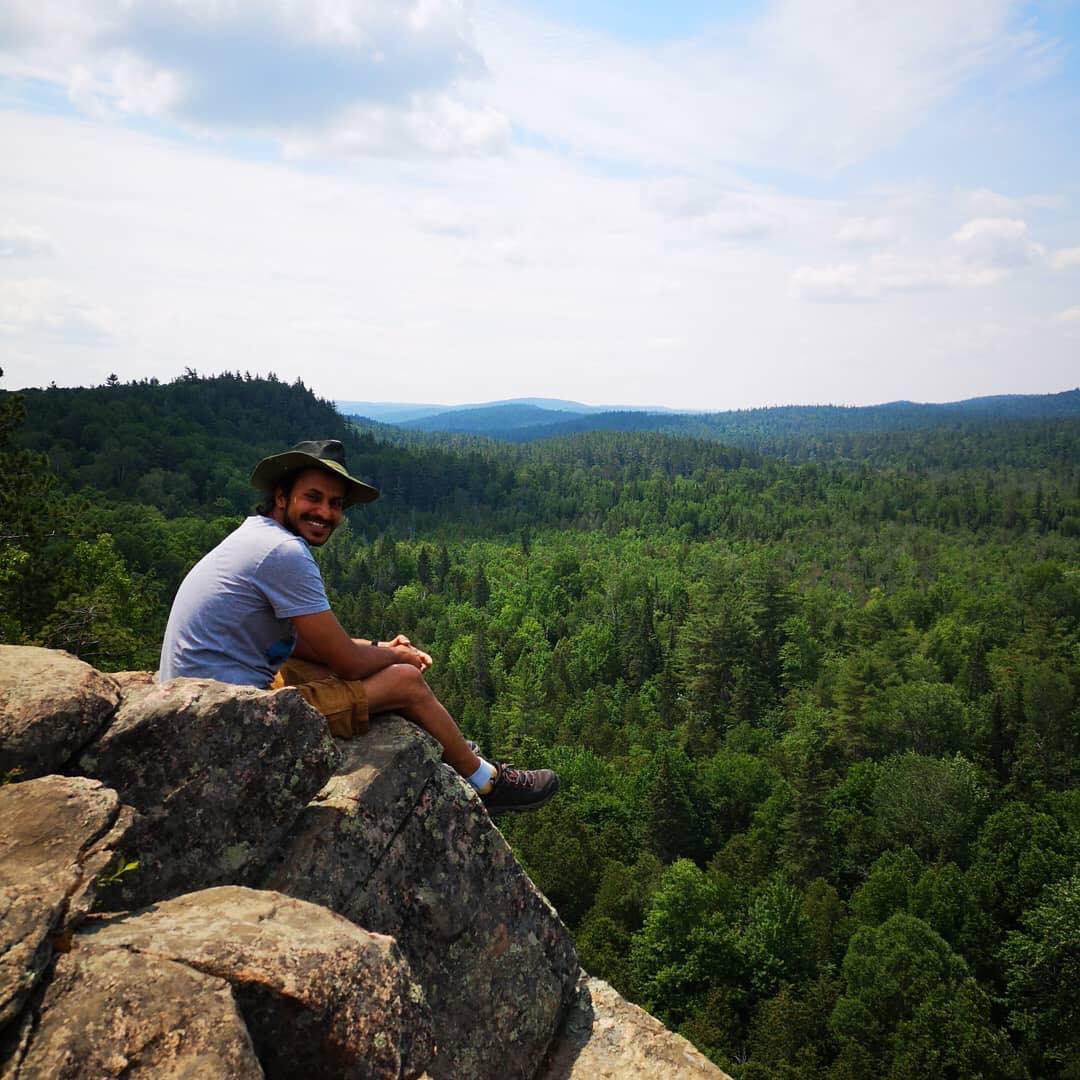
For his final expedition from the school, Gupta went to West Virginia, U.S. to do a hiking trip in the Appalachian Mountains.

Abhishek Gupta, a spring graduate of the outdoor adventure naturalist, had gone back home to Punjab, India when he received the news that he was selected as the valedictorian of Algonquin’s Pembroke campus on June 12, 2020.

“I had mixed feelings about it,” he said. “It made me feel special and honored at the same time. I felt the pressure of being a valedictorian which meant I will be representing the entire batch of 2020.”

Gupta, 32, came to Canada in 2018 after finishing a Masters in business administration in New Delhi, India.His new diploma allows him to unite his previous education with his passion for the outdoors.

“My dream is to open a nature school where learning is the by-product of playing in nature, where the screen time is replaced by green time,” he said.

Since the graduation ceremony was delivered remotely, and he was asked to deliver his speech from it from a place that showed that he was clearly in India.

“I actually spent days travelling through the Himalayas, plains, villages and farms to find a spot,” said Gupta. “It was almost impossible recording outdoors as there were many things that are beyond my control but I still enjoyed the whole process as it gave me a reason to travel and explore.”

While preparing the speech he said he was just satisfied with a hunch that he knew he’d found his essence of his speech. “I felt like I had something to say and I am going to say it from my heart,” he said. “I am going to thank the people for giving me such an amazing time, for giving me knowledge.”

The interviews took place in April 2020 which required the candidate to write a valedictory address and present it to the committee. Jamie Bramburger, chair of the Pembroke Campus valedictorian selection committee said that Gupta’s message was inspirational and a reflection of the experience the students have at the campus.

“The speech focused on the caring campus community while also providing a global call to action for our graduates to make a difference in the world through the pursuit of their dreams,” said Bramburger.

The final nomination is based on its content and message to the graduating class, the candidate’s ability to speak publicly and engage with the audience.

Gupta shared his story, what he learned and a message for the graduates in the current situation, learning remotely.

Ian Pineau, professor of leadership, had taught Gupta different courses during three semesters. “What stood out most throughout the entire course was the consistently high standard of all elements of his work,” said Pineau, who also taught him risk management and student directed field trip course. “This includes academics but possibly even more importantly his ability to get along with everyone, his time management skills, his willingness to learn and take on new challenges.”

Gupta interned at the YMCA-YWCA Camp Otonabee in Dunrobin as an out-tripper for students during summer 2019.

“I can use the entire nature to teach the students the concepts they learn through textbooks about science, ecology, plants, animals, earth, atmosphere and so much more,” said Gupta. “The best part is to see their transformation within two weeks and I could see their growth and how independent and confident they became. So this experience motivated me to pursue my interest in outdoor education.”

He had contracts from four different organizations after the completion of his program but they were cancelled with the then-new outbreak of COVID-19. He will come back to Canada in December.

“The entire process gave me confidence that I can trust my instincts. It made me dig deep to bring the best out of me that I wanted to share with others. It made me realize that we are just limited by our own thinking, we can achieve big only if we think big.”

Project Lighthouse affected by Ottawa Rape Crisis Centre’s closure

When Kimberly Piper, a second-year student in Algonquin’s social service worker program, first heard that the Ottawa Rape Crisis Centre would be temporarily closing its doors, she worried for survivors of sexual violence. “I feel like we’re just sending the message essentially that they don’t matter,” she said. “We’re letting them down.” The ORCC announced […]
Photo: Madalyn Howitt
The temporary closure of the Ottawa Rape Crisis Centre leaves survivors of sexual violence with limited resources for support in the city.

When Kimberly Piper, a second-year student in Algonquin’s social service worker program, first heard that the Ottawa Rape Crisis Centre would be temporarily closing its doors, she worried for survivors of sexual violence.

“I feel like we’re just sending the message essentially that they don’t matter,” she said. “We’re letting them down.”

The ORCC announced in a memo on Nov. 10 that they would be shutting down their services for six to eight months starting Dec. 2 and laying off roughly 10 staff members.

One of the clients that had access to ORCC’s specially trained counsellors is Algonquin’s own Project Lighthouse.

“They come to all of our events and are really involved,” said Sarah Crawford, sexual violence prevention and harm reduction coordinator at Project Lighthouse. The initiative aims to reduce sexual violence at the college and support survivors through community outreach, education and counselling services.

“We have a great relationship with the counsellor provided to us by ORCC,” said Crawford. “We have clients who were seeing her regularly twice a week. That’s now gone.”

The sudden announcement left many people in the city’s social work communities stunned.

Charu Malhotra is a registered psychotherapist who worked at the ORCC for 14 years. She said she was shocked when she found out the centre would be closing. “It didn’t make sense to me,” she said. “This seems to have been done without consultation or anybody’s awareness and knowledge.”

Lauren Scarsella, a former employee at the ORCC, said she felt heartbroken when she heard the news. “There’s nothing like the ORCC that offers free services to trauma survivors. It’s an essential service.”

The centre offers a 24-hour crisis line, free counselling and education on sexual violence and advocacy for victims. Malhotra said the help line in particular is a much-needed resource for survivors.

“When I worked the crisis line, I would often be the first person they ever told,” she said. “The safety of either the anonymity of the crisis line or knowing they’re getting a therapist or a counsellor with specialized training – that’s gone.”

The shutdown of the ORCC leaves the Sexual Assault Support Centre as the only English-language support centre in the city. Crawford is also concerned the sudden closure of the ORCC will leave a gap in the services they provide to students.

“It will be very problematic if survivors try to access the stress line but don’t get appropriate guidance on the services they could access if they were in distress,” she said. “Our main concern is that people are given appropriate referrals and survivors are not left behind.”

Scarsella is especially concerned with how the decision to close was communicated to clients and the public.

“The way that this has been handled is profoundly unethical,” she said. “One of the most important aspects of a therapist-patient relationship is building trust. This includes beginning to discuss the eventual end counseling services months in advance, not weeks.”

According to the ORCC’s board of directors, the closure is to update the centre’s IT infrastructure, perform renovations on the building and reassess its core programs and services.

Thameena Nazir worked as a counsellor at ORCC throughout the pandemic but left in September after growing frustrated with what she says was a lack of support from the board in shifting to remote delivery during the pandemic.

“During the pandemic we were trying to do our job safely from home,” said Nazir. “But for whatever reason our board just couldn’t either support us or let us do it ourselves. Every suggestion we had for the board, we would either get no response from them, or hear ‘we can’t do this,’” she said.

Like others, Nazir is worried for the ORCC’s client base that will be forced to find alternative resources during the closure.

“When somebody is struggling and is traumatized by something, calling somewhere where they know their counsellor has been there for them, building a therapeutic alliance, all those things that we work with survivors are instantly gone,” she said. “Now you have to call another agency where you don’t know anybody. How easy is it for someone to pick up that phone and call somebody? It’s pretty difficult.”

Many are questioning why the closure is expected to last until spring.

“If someone was to go to the emergency room with a broken leg, we wouldn’t make them wait for months to get the proper services,” said Piper. “I think it is a huge disservice to them and their healing process.”

For people like Piper, understanding the need for immediate support after experiencing assault hits close to home.

“I’m a survivor of rape,” Piper said. “At a very young age I was raped. I think if there had been an accessible source of support for me it would have been a game changer. It’s taken a long time for the healing process for me. I wonder how my path of healing would have been different had I had that support immediately. I think that’s crucial.”

Crisis counsellors organized a virtual community meeting on Nov. 19 to discuss the unexpected closure. The Save ORCC Community Action group brought 100 concerned citizens together to consider ways that the non-profit can be supported.

The upcoming holiday season, when many people will be feeling isolated, is particularly concerning to crisis workers.

“The holidays are one of the most triggering times of the year because they’re family oriented,” said Malhotra. She notes that COVID-19 has increased isolation and mental health issues for many people already. A recent report from the Sexual Assault Centre of Edmonton stated that between March and July of this year when lockdown measures were in effect, calls to the centre increased by 44 per cent.

Experts are worried that the added stress of the pandemic will make the holidays this year even more difficult for survivors of sexual violence. “We’re living through a health crisis that is causing a mental crisis,” said Scarsella.

Nazir said she hopes the ORCC’s board of directors will be more open about their decision-making process going forward into the new year.

“What I would really like to see is the board to have a clear plan and be accountable for what they’ve been doing for the last 10 months,” said Nazir.

Her advice to survivors in the meantime is to take care of their mental health. “There’s so much happening right now, and this is just another blow. It’s okay to feel upset and it’s okay to feel in pain and it’s okay to feel angry about it and hopefully some kind of change or some kind of accountability can come from this. I think it’s just important to keep honoring survivors.”

Students seeking sexual assault support services in Ottawa can reach out to:

Centre d’aide et de lutte contre les agressions à caractère sexuel

The Sexual Assault Support Centre

Holiday season is a time to let our humanity shine.

Each year as the holiday season approaches, we inevitably hear the calls for peace on earth and good will towards each other. They are universal messages that ring true, and they resonate particularly deeply this year across our College community. It is a time when we take extra care to think past ourselves. We turn […]

Each year as the holiday season approaches, we inevitably hear the calls for peace on earth and good will towards each other. They are universal messages that ring true, and they resonate particularly deeply this year across our College community.

It is a time when we take extra care to think past ourselves. We turn to our neighbours, classmates, colleagues and the strangers we meet on the street and send best wishes and offer kindness. In so many ways, we’ve already been called upon this year to show our humanity. We’ve been asked to put the safety of our College community front and centre in all that we do.

We’ve had to be more patient – waiting in line at the store, wearing our masks, washing our hands, tiptoeing around the house while a housemate finishes a Zoom lecture, and becoming daycare moms and dads. We’ve had to study in distracting home environments, self-screen to enter campus buildings, and prepare – or participate in – virtual classes for the first time. And many of us have been asked to work and learn exclusively from home – instead of from the comfort and familiarity of our campuses.

I personally want to thank every learner and employee for the patience and professionalism you have displayed this year. Thank you for the resilience and flexibility you have shown throughout the pandemic. And that thank you extends to the parents, spouses, partners, children and friends who have also made sacrifices to accommodate members of our College community – to allow them to continue to learn and work effectively.

While we wish things were back to normal on campus, it is remarkable how we have come together to face these ongoing challenges. Your collective efforts have helped us get to the end of a successful fall term. I also want to wish every learner success in their end-of-term exams and evaluations – and recognize the dedicated academic and service teams supporting our students during this crucial period.

Every year at this time, we also see an outpouring of goodwill towards those who are vulnerable and in need of assistance. This year, the need will be even greater. So many have been adversely affected by the pandemic and are struggling financially, with daily stresses taxing their own health.

Those of us wrestling with anxiety should always keep in mind the College’s own mental health resources. The holidays can be a lonely time for some people, and this year may be more difficult by being separated from loved ones. Please do not hesitate to connect if you are feeling isolated.  We must also be cognizant of those among us feeling alone and vulnerable – and strive to reach out to connect with peers, colleagues and friends who may be in need of extra support.

During the holidays, I hope we all find time – even a few precious hours – to set aside the world and its challenges and truly find some peace. I know many of us will be making sacrifices this year by not having our traditional gatherings. It will be difficult, but remember that we have earned this time to lay down our burdens, kick up our feet and take refuge in the company of the people we hold dear – even when everyone cannot be together around the same dinner table.

As the temperature drops and the days grow shorter, we see lights illuminate our neighbourhoods and our own homes and dorm rooms, reminding us that soon enough we will return to brighter days. To you and your loved ones, I wish a happy and healthy holiday season.

Algonquin Times podcast
Algonquin Times on Instagram
Algonquin Times horoscopes
Follow Algonquin Times on Instagram
Algonquin Times horoscopes
Algonquin Times on Instagram
Algonquin Times podcast

Stay Informed

Sign up for our newsletter

Subscribe

* indicates required