SLiDESHOW Episode 2: African Bronze Honey

Hey! Welcome to SLiDESHOW! Weโ€™re your hosts, Alfred Carreon and David Green, two students from the Algonquin College Journalism program running you through the ins-outs and behind the scenes of […]

Hey! Welcome to SLiDESHOW! Weโ€™re your hosts, Alfred Carreon and David Green, two students from the Algonquin College Journalism program running you through the ins-outs and behind the scenes of the SLiDE [Service Learning in Design and Engineering] lab. In this episode, weโ€™re talking about African Bronze Honey, a project that was made to help the beekeepers in Africa keep their jobs and make healthier honey for Canadian consumers.

Hope you enjoy this episode and continue to listen to this podcast to learn more about the SLiDE lab in Algonquin College and all the work the students and teachers do to help socially-minded businesses reach their goals!ย  If you would like to hear more about the SLiDESHOW, please follow the Algonquin Times and CKDJ, our home radio station, for more.

SLiDESHOW Episode 1: PoPTikR

Hey! Welcome to SLiDESHOW! Your hosts Alfred Carreon and David Green are two students from the Algonquin College Journalism program running you through the ins-outs and behind the scenes of […]

Hey! Welcome to SLiDESHOW! Your hosts Alfred Carreon and David Green are two students from the Algonquin College Journalism program running you through the ins-outs and behind the scenes of the SLiDE [Service Learning in Design and Engineering] lab.

In this episode, weโ€™re talking about PoPTikR, a growing app that helps bring more local Canadian businesses into the spotlight.ย  You also get a sneak peek into the SLiDE Lab where all the magic happens!

Hope you enjoy this episode and continue to listen to the SLiDESHOW podcast and all the good the students and teachers are doing for small businesses.ย  If you would like to hear more about the SLiDESHOW, please follow the Algonquin Times and CKDJ, our home radio station, for more

The SLiDESHOW Project

The SLiDESHOW Project is a podcast series that tells the story of a social innovations lab at Algonquin College, in Ottawa, Canada.ย  Itโ€™s a space where students and organizations team […]

The SLiDESHOW Project is a podcast series that tells the story of a social innovations lab at Algonquin College, in Ottawa, Canada.ย  Itโ€™s a space where students and organizations team up to boost the profile of a group doing good in the world.ย  Each episode focuses on a non-profit or a small business, and the students that help at the Service Learning in Design and Engineering Lab, or the SLiDE lab.ย  Join us as we delve into learning more about what SLiDE has to offer.

The bees live on at Algonquin College

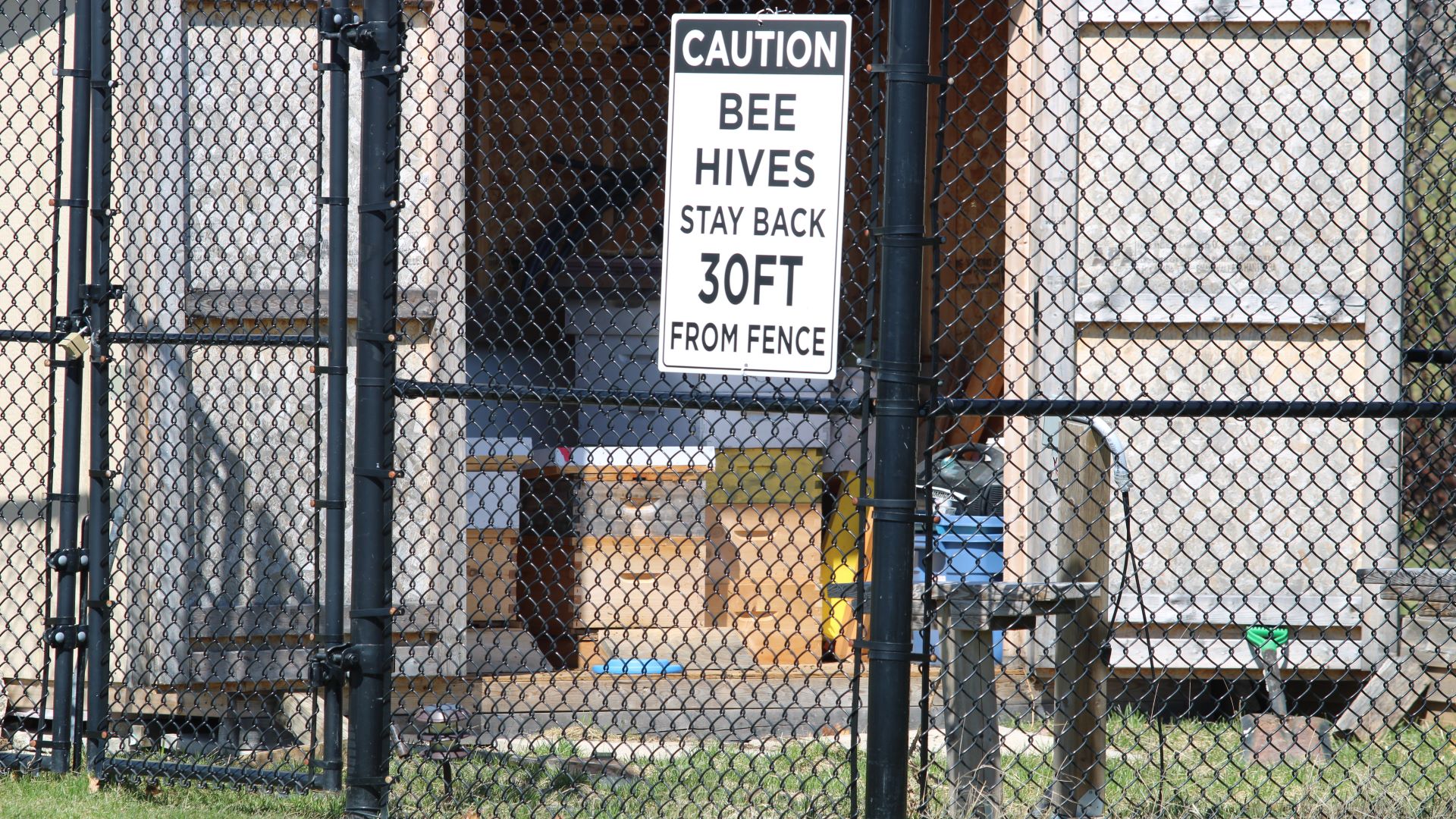
After two years, the beehives of Algonquin College have finally been opened. “The bees are alive and well,” said Daniel Halden, a chef instructor of the culinary management program. This […]
Photo: David Rotel
Chef instructor Daniel Halden is hoping the bees can flourish this spring.

After two years, the beehives of Algonquin College have finally been opened.

“The bees are alive and well,” said Daniel Halden, a chef instructor of the culinary management program.

This wasn’t always the case, as the bees had a difficult two years.

“Unfortunately because of the pandemic, we weren’t able to attend to our bees as diligently as we wanted to. Because of that, we lost the bees two years ago,” Halden said.

“For the first year of the pandemic, we didn’t have bees on campus,” he added.

Last year the college received nucs, which are small-sized hives containing small colonies of bees. After putting the hives in the nucs, they were tended to for over a year and then opened this spring.

The future for the bees is looking bright, as Halden is hoping that they will continue to flourish on campus. The college has two beehives, with each being able to contain up to 70,000 bees according to Halden.

“We use them as part of our farm before class. It’s important to have the bees around. We focus on their pollination skills,” Halden said.

The bees are a very important part of the college because of the honey they produce.

“Having honeybees around is great because not only do they pollinate your plants and make things grow better, but they also produce honey, which is a natural sweetener and really quite delicious,” Halden added.

Halden said the honey the bees produce is sometimes used in the culinary management program.

“We extract the frames and strain the honey. Though we haven’t had huge crops in the past, we’re able to have a lot more this year because it looks like we’re doing quite well,” said Halden.

Local media has recently reported beekeepers in Ontario have suffered major losses in bees. Thankfully, this has not affected the bees at the college.

“Luckily, our hives are surviving. But in years past, we have seen some loss,” said Halden.

Engineering students use ground penetrating radar to study tennis courts

Third-year civil engineering students Saheb Birgi, Saul Halpren, Prince Giciro and John Akinpelu faced a figurative crossroad for their civil engineering final project. The quartet, group 08CF, had chosen the […]
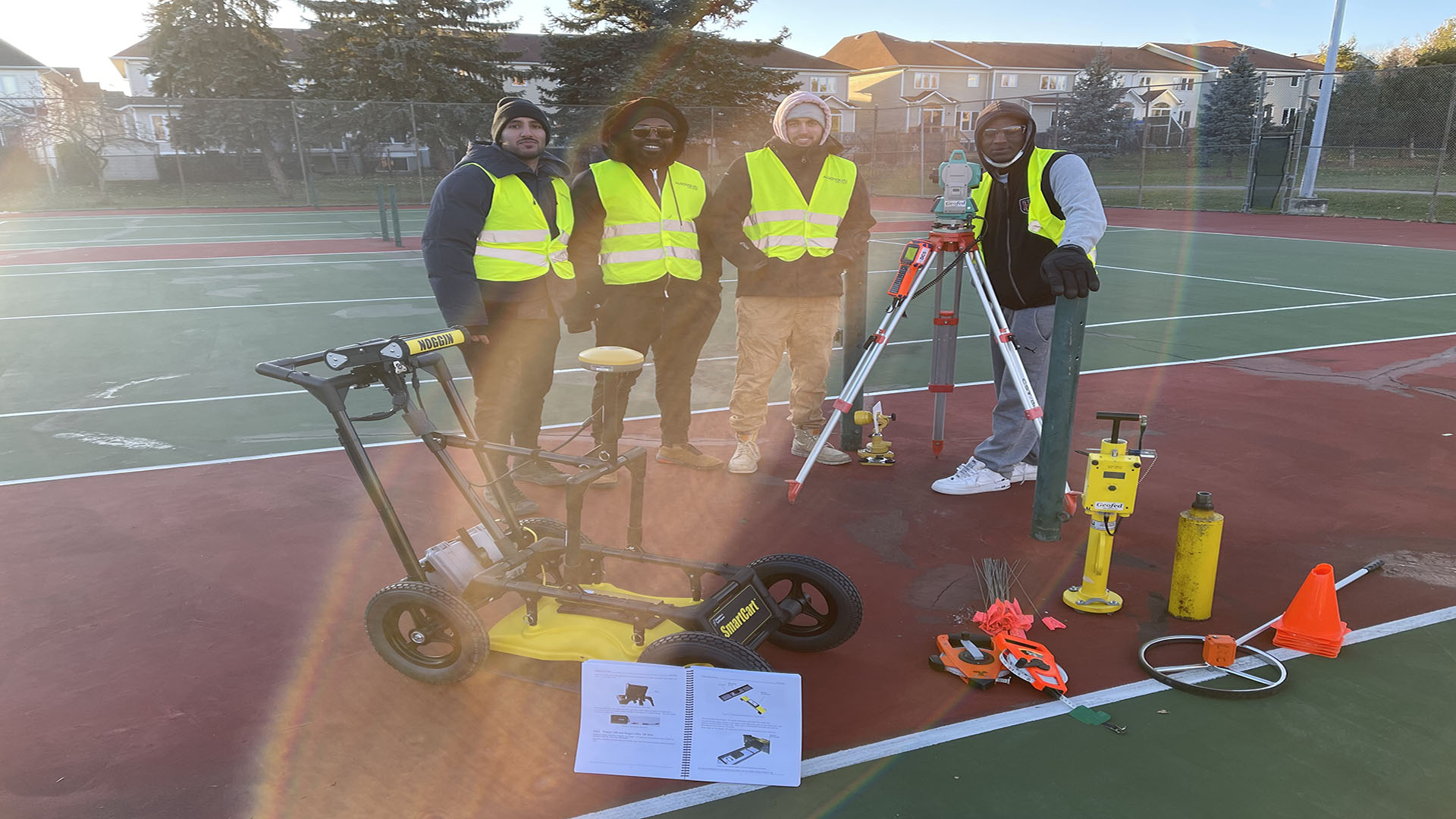
Group 08CF with some of the equipment used for their project.

Third-year civil engineering students Saheb Birgi, Saul Halpren, Prince Giciro and John Akinpelu faced a figurative crossroad for their civil engineering final project.

The quartet, group 08CF, had chosen the Elmridge Tennis Club in Gloucester for their project. Their goal was to analyze the the conditions of the courts then develop a permanent repair plan for the club.

The group made their first site visit on Friday, Oct. 15, 2021 and by Saturday, Nov. 6, 2021, they completed their site work. However, the group felt like they had not done enough.

“We asked ourselves what more could we do, and our professor mentioned [ground-penetrating radar],” said Saheb Birgi in a Zoom meeting. So, the whole team did some research and we tried to see if we could get GPR equipment.”

“A ground-penetrating radar instrument makes it possible to measure the dimensions, depth and thickness of subsurface targets,” he said. This is done by sending radio waves into the ground at a certain speed and then recording the time taken to travel back to the receiver. This number is then divided by two to give us a depth image of what is underneath.”

The group was eager to give the idea a try.

“It was a struggle,” he said. “We drafted up an email, sent it to the course coordinator and our professor. They sent it to someone above them and it took a while for a reply.”

Unfortunately, they learned the college had no money for them.

“It finally got resolved and they were like ‘No. We don’t have a budget. If you want you can do it yourself.’ They were strongly advising us not to do it,” he said. “But once we actually got it done and got the equipment, they congratulated us.”

The students decided to reach out to Geofed Ltd, an Ottawa-based company, which turned them to Sensors & Software Inc., a Toronto-based company. The two parties came to an agreement allowing the students to borrow the equipment.

Birgi and Halpren drove to Toronto on Friday, Nov. 26, 2021. They signed a waiver, picked up the GPR and drove back to Ottawa. The group conducted the site visits over that weekend, before they drove the equipment back on Monday.

“We did like 20 hours of driving in three or four days,” said Birgi.

The group’s former professor, Federico Fernandez, also played a huge role in the project’s completion.

“He was willing to sign just in case something went wrong,” said Halpren. “If we broke the equipment, he’d have to pay for it. He took a risk doing that.”

Yeah he actually put his name down,” said Birgi. “We were like ‘who’s going to be liable if say we were driving back and get into an accident?’ and he actually put his name down.”

Despite the inconveniences, Birgi says they would do it again if they had to.

Yes, hundred percent. It was such a great learning experience,” he said. “I feel like we would never have known what a GPR system was if it wasn’t for this project and going out of our way in getting it, learning about it, and using it.

“Using the GPR equipment allowed us to observe the underground parameters at which the Elmridge Park Tennis Club built their courts. It confirmed that there are anomalies however, for the most part the deep subsurface construction was built very well, with minor discrepancies. Overall, using it provided another data set for us to compare with, thus makes the report more soundproof and thoroughly accurate,” he said.

The total value of the equipment loaned by Sensors & Software Inc. was $48,390.

At the time of writing, group 08CF project’s conclusions and recommendations have yet to be completed.

Algonquin students host a food sampler to support Ukraine

Algonquin College’s School of Hospitality and Tourism hosted a Ukrainian food sampler between April 12 and 14 to support Ukraine. The event featured traditional Ukrainian dishes such as pampushky garlic […]
Photo: Garrett Empey
These Ukrainian cookies were featured as a part of the Ukrainian sampler hosted by Restaurant international.

Algonquin College’s School of Hospitality and Tourism hosted a Ukrainian food sampler between April 12 and 14 to support Ukraine.

The event featured traditional Ukrainian dishes such as pampushky garlic bread rolls, Kyiv-inspired chicken canapés, Ukrainian pierogis and Ukrainian flag Easter sugar cookies.

“It’s not really really a full meal. More of just a small taste of Ukrainian culture,” said Tanya Skeates, the event’s organizer and a professor in the culinary arts program.

Some of the food items need to be heated up and so the packaging contains instructions on how to properly reheat them.

All of the money made from the event will go towards the charity World Central Kitchen, an organization founded by Chef José Andrés in 2014.

“Anywhere there’s humanitarian aid where people need to be fed, whether its volcanoes or a hurricane or the war in Ukraine he sets up kitchens to feed people,” said Skeates.

The event began around a month ago when Skeates had brought the idea up. She has since been a part of organizing the event.

“I always donate money to them, but this time I felt empty, and that I had to do more,” said Skeates. “So it thought hey, this is a great opportunity for the students to learn social responsibility and charity work.”

“So I asked our chair, Cory Haskins, and restaurant manager Cather Dewar, what they thought about doing a fundraiser and that’s how that came about,” said Skeates.

The event had about 15 faculty from the culinary and baking programs, as well as a few from the hotel management program. About 30 students also participated over three days of prepping and cooking.

Chef Margrit Werner and Mary Kosta were in charge of the baking, and Chef Scott Foeller and Sean Edwards organized the perogies and the chicken canopies.

The event sold 158 baskets and made around $7,800 but is still waiting for the official tally.

‘RES’IPES

Minister Filomena Tassi visits Woodroffe campus post-budget to tour and listen

Filomena Tassi, the federal minister of public services and procurement, visited and toured Algonquin College’s Woodroffe campus on Thursday, April 14. The MP for Hamilton West—Ancaster—Dundas is travelling to various […]
Photo: Magan Carty
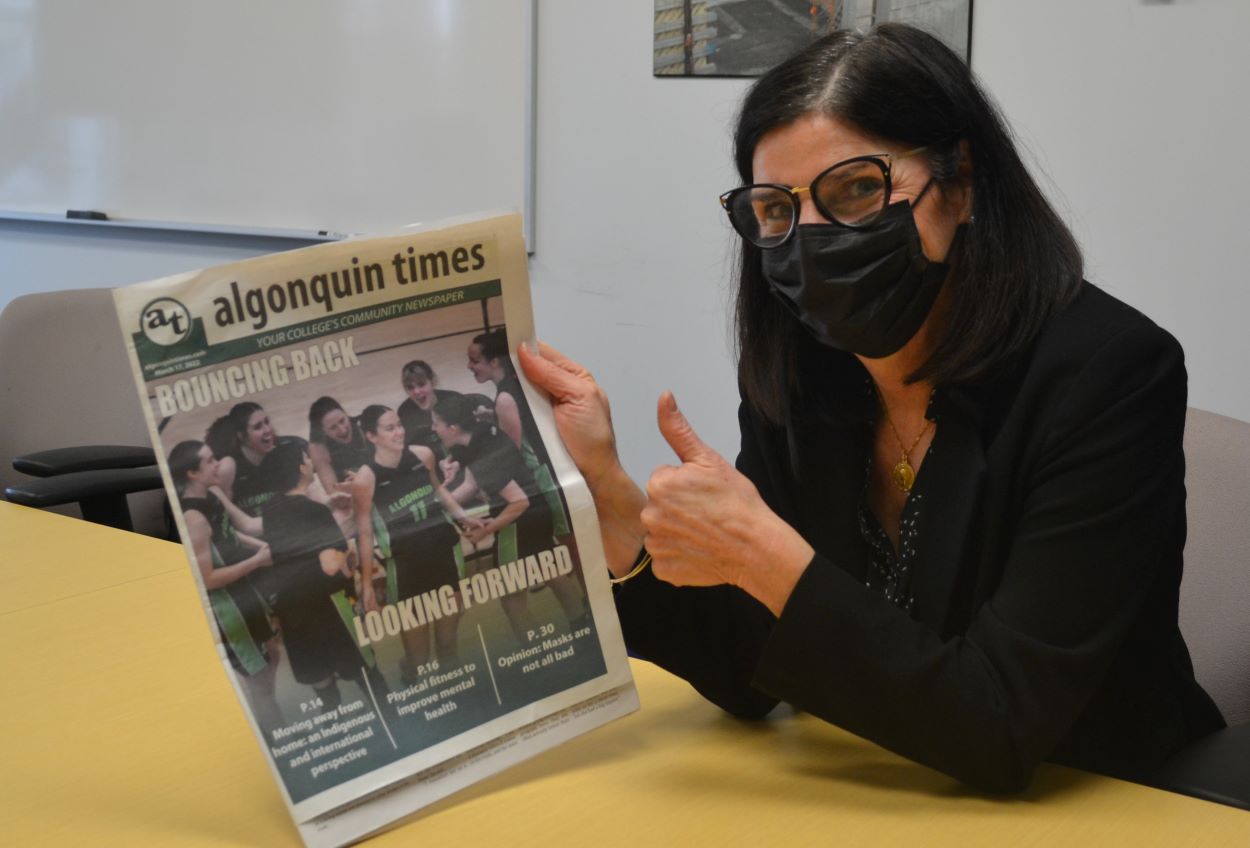
Minister Filomena Tassi sits down with a copy of the Algonquin Times during her in-person visit to the college on Thursday, April 14.

Filomena Tassi, the federal minister of public services and procurement, visited and toured Algonquin College’s Woodroffe campus on Thursday, April 14.

The MP for Hamilton West—Ancaster—Dundas is travelling to various parts of the province to talk about the 2022 federal budget, which was released last week.

Minister Tassi said it is important not only to talk about the budget, but to get input from stakeholders across the country.

“We’re always listening,” she said. “The way that we make informed decisions is by taking the time to really listen to Canadians.”

Access to quality post-secondary schooling is important to Minister Tassi, who believes “education is meant to empower.” She spent 20 years as a high school chaplain and has confidence in the ability of young people to positively impact the future.

“If we can provide students with the supports they need to recognize their gifts and their passions, and be able to develop those gifts and passions, then there’s no greater investment than that,” she said.

No matter what post-secondary institution a person chooses to attend, it should feel like home, according to Tassi.

This is how her daughter made a final decision between two schools. After visiting both campuses, she chose the place that felt like she was meant to be there.

“Students know when their school is there for them, and I feel that here at Algonquin,” said Tassi.

Community colleges play a vital role in contributing to the future of economic growth. The more comfortable and safe students feel to take risks, the more of a difference they will make in their communities after graduation.

Tassi wants every student to be able to dream big and speak up about what they need so they can be the best they can be.

She knows the contributions of students are going to make a huge difference across the country.

“The best way that Canadians can benefit from the gifts of students is to provide them with the opportunity to have those gifts flourish and develop,” said Tassi.

She also acknowledges certain students experience more barriers than others, for reasons far beyond their control.

“It is critical that we bring down those barriers,” she said, “because the success of our future relies upon it.”

We need a $2 fee to help student refugees

According to the United Nations Human Rights Commission, there are about 22 million refugees in dozens of countries around the world. In recent months, four and a half million Ukrainians, […]
Photo: Nathan Drescher
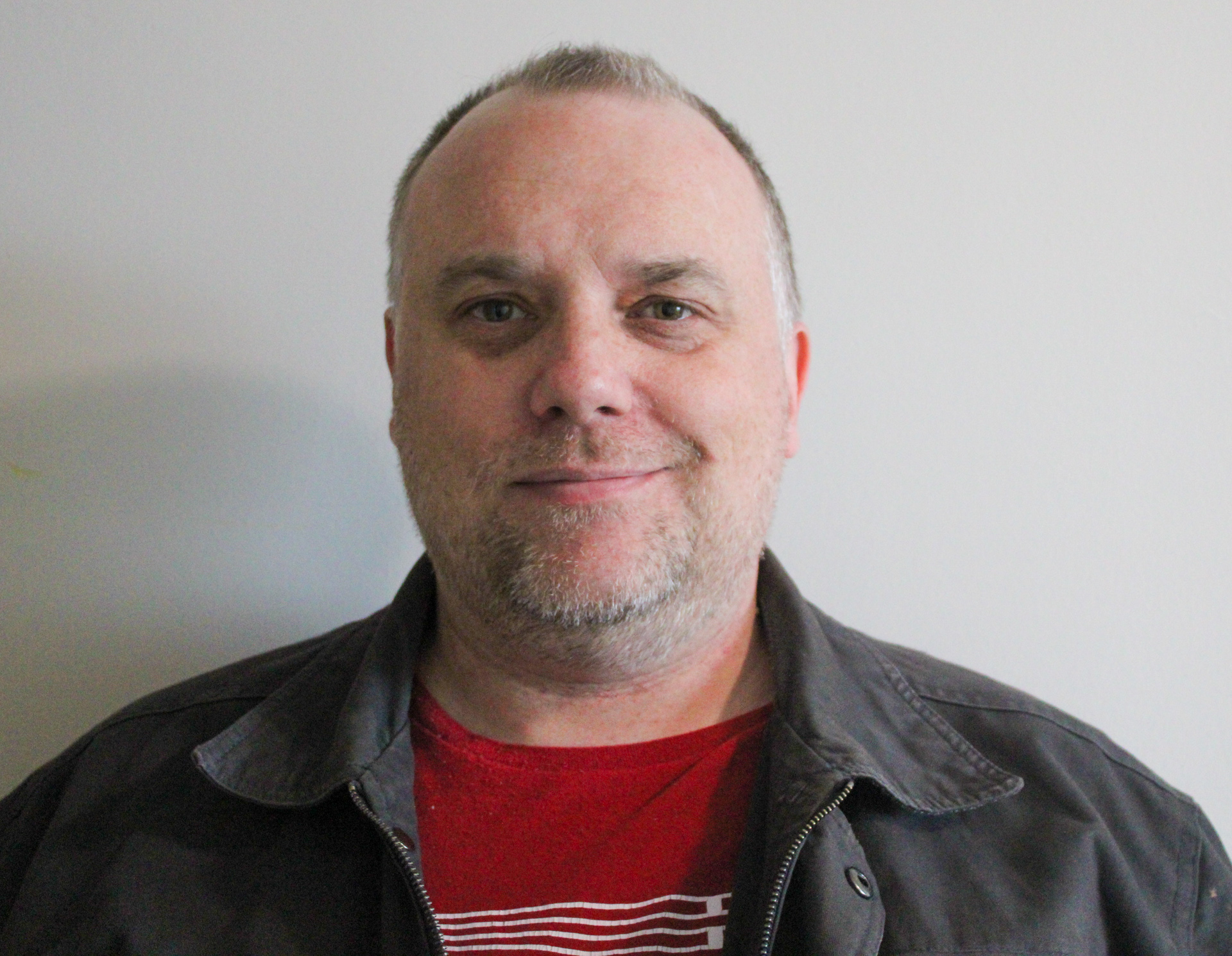
"A proposed fee of $2 per student per year should be a no-brainer for everyone at Algonquin College," writes the author.

According to the United Nations Human Rights Commission, there are about 22 million refugees in dozens of countries around the world. In recent months, four and a half million Ukrainians, the largest refugee cohort since the height of the Syrian civil war eight years ago, have joined this unlucky community.

Refugees face challenges finding clean water to drink or a warm bed for their children at night. Sickness and poverty are rampant among refugee populations and personal security remains an issue, particularly for women and children. The UNHCR, various non-governmental organizations and UN Peacekeepers try their best to help, but they’re a drop in the bucket. There are just too many refugees. The world hasn’t seen a refugee crisis like this since the end of the second world war.

This is why a proposed fee of $2 per student per year should be a no-brainer for everyone at Algonquin College. This money, less than a cup of soybean vanilla latte at the Commons’ Starbucks, would directly help one refugee come and join us here at the college.

The World University Service of Canada has been sponsoring student refugees since 1978. They sponsor more than 100 refugees every year to come and study in Canada.

The student WUSC is sponsoring will most likely be from Syria or Somalia. These two countries have been rocked by violence and instability for years, making life impossible for regular people. There are just over 3 million refugees from Syria alone, while nearly a million Somalians have fled their homes over the past decade, according to the UNHCR.

While the popular image of refugees living in UN tent cities comes to mind, the truth is much more complicated. Most refugees live in city centres, grouped together in gymnasiums or squatting in abandoned buildings. They have little access to food and sanitation. NGOs spend a lot of their time with outreach activities, trying to get their kids vaccinated and delivering life-saving water and food.

WUSC is one of those NGOs and they try to gather candidates for sponsorship to Canada. It’s not cheap.

The government does not help with private refugee sponsorship, and the sponsoring organization undertakes a legal contract with the federal government to care for the refugee for 12 months. Which means they need to house, feed, clothe, supply health insurance and help the person settle into a new community and a new way of life.

This is Algonquin College’s first year in the program and the WUSC local committee needs $40,000 to provide for the lucky person who is coming. Myriam Thanasse, a physics professor with the pre-health sciences program and the chair of the WUSC local committee, says the group has submitted a proposal to the SA asking that a $2-fee be applied to the approximately 20,000 students at Algonquin College. This would cover the cost for one refugee student.

The Students’ Association would need to hold a college-wide referendum in order to get the fee implemented. Although they haven’t announced it yet, Thanasse is optimistic it will happen. In the mean time, the WUSC local committee and the college have already begun the process of bringing a student refugee here for September.

Ultimately, $2 is not a lot of money. It’s less than a single OC Transpo bus ride, yet it will change someone’s life forever. Everyone should vote in favour of the fee, whenever the referendum is held.

Perth students learn their craft by building sheds and selling them to the public

On the Perth campus of Algonquin College on a day in mid-March, the sounds of laughter are mixed with the sounds of construction. To the left side of the building, […]
Photo: Myriam Landreville
Students work on their shed while their teacher oversees their work.

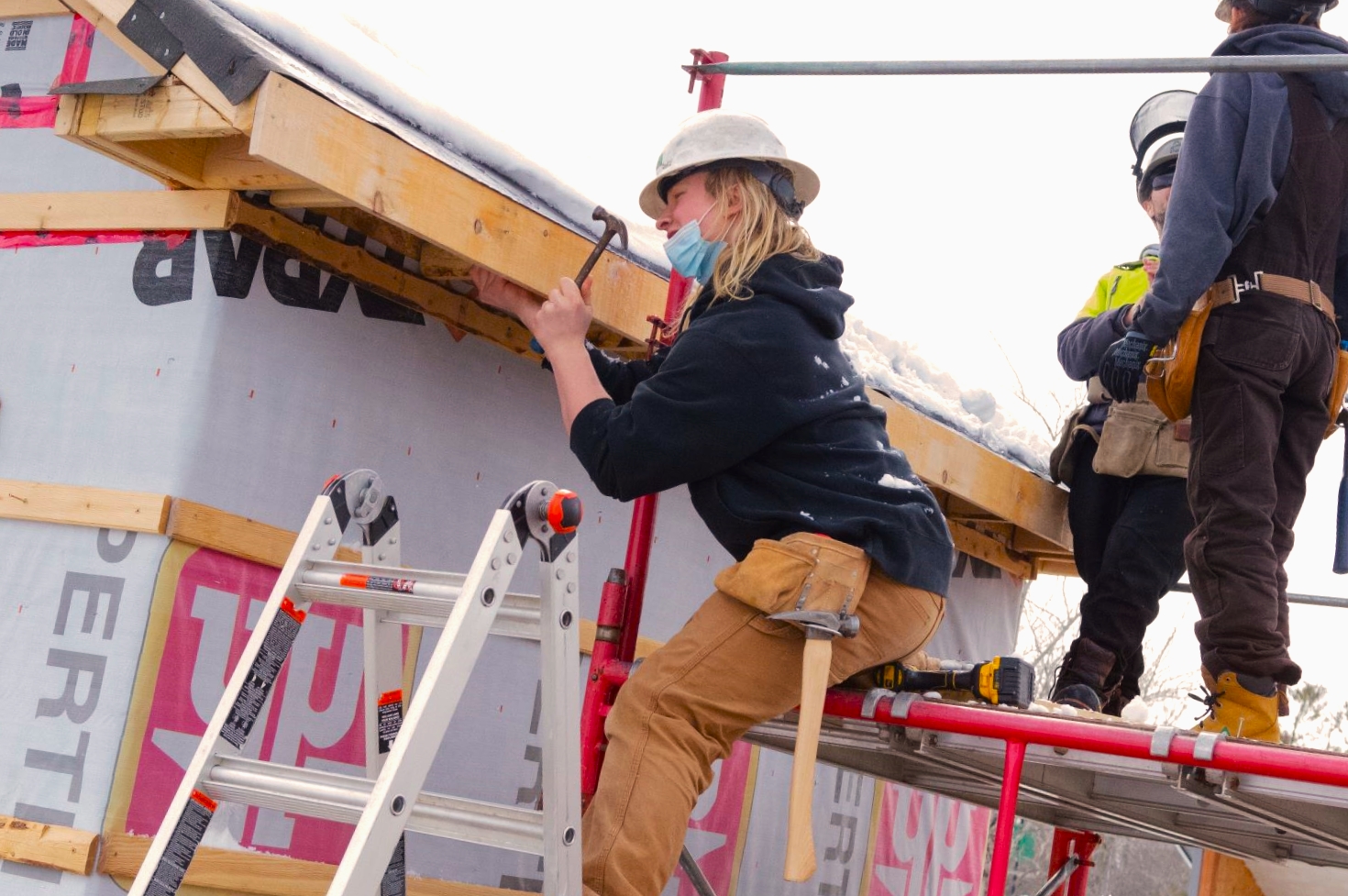
On the Perth campus of Algonquin College on a day in mid-March, the sounds of laughter are mixed with the sounds of construction. To the left side of the building, students hammered away on their sheds. Joking with each other as they worked, they also tossed snowballs at each other whenever the teacher looked away.

But still there was a sense of seriousness in the students. They were eager to show off their projects and explain everything they’ve learned to a visiting reporter. Such as how they built the blueprint for the sheds using a computer software. Whenever one classmate had a question, three others jumped in to help.

Throughout the first and second semester, students in the heritage carpentry and joinery program have been learning all the skills to build a house with modern and traditional techniques.

Now, their skills are being put to test. For their final project they need to build a shed they have designed themselves.

“We start with a theoretical empty lot and they can now take it from that to a completed, above code house,” aid Shawn Thomson, a professor in the program. “Foundations, floor systems, framing of walls and roof systems, hanging windows and doors, exterior and roof finishes.”

The program is hands on with Thomson overseeing the students and helping them whenever they have questions.

As the students build their sheds it is clear there is a lot of camaraderie in the program. The students laugh and joke with each other while they build precise and wooden structures.

“I really enjoy this program,” said Logan Gilchrest, a student in the program. “We get to learn the history of heritage building which is important and we also get to be outside and have the hands on experiences.”

The students’ hard work will be available to buy. The sheds are auctioned off to pay for building material.

The bidding starts at $2,000 and buyers must provide their own transportation.

To buy one of the sheds and get more information, you can visit the Algonquin College event website.

Algonquin Times podcast

Stay Informed

Sign up for our newsletter

Subscribe

* indicates required