Algonquin returns fully in person for the fall term

As students return to in-person classes at Algonquin College this September, they will find a lot more campus services, from food options to events, are once again open for business. […]
Photo: Wawina Nzibu
Practical Nursing student Aurore Athanasie says being back on campus will be an adjustment.

As students return to in-person classes at Algonquin College this September, they will find a lot more campus services, from food options to events, are once again open for business. After two-and-a-half years of pandemic restrictions and online learning, the re-opening is welcome to students and employees.

“It was pretty quiet for my first two semesters here,” said Radio Broadcasting student Ryan Lutton. “The cafe was barely open. I’ve noticed that half the cafeteria isn’t open now, like the Taste of Asia place. It’s going to be great when food services come back, and when the Booster Juice finally opens up again.”

Ryan Lutton, a Radio Broadcasting student, looks forward to being on campus, and attending live events in the fall.
Ryan Lutton, a Radio Broadcasting student, looks forward to being on campus, and attending live events in the fall. Photo credit: Wawina Nzibu

But Lutton and others also wonder if more people and activities on campus will cause a rise in COVID-19 cases.

“I know cases are rising again, which has me worried, but at the same time, I’m in an industry where I need to work face-to-face with people,” said Lutton. In radio, where you’re out at events and stuff, if you’re not interacting with people, you’re not doing the job properly. I’m ready for people to come back. I think that precautions are still not hard as they used to be, but people are also pretty tired.”

Studies have shown that the COVID-19 pandemic has deeply affected students’ physical, social, psychological, and developmental health, due to a lack of social interactions with their peers and teachers. Returning to in-person classes is seen as a positive move, but some students may have difficulties adjusting to being with peers on campus after so much time.

Practical Nursing student Aurore Athanasie says being back on campus will be an adjustment.
Practical Nursing student Aurore Athanasie says being back on campus will be an adjustment. Photo credit: Wawina Nzibu

Aurore Athanasie, a student in the Practical Nursing program, said, “having access to more classes in person means a lot because we need the physical training, and also to have direct help.” She also sees the challenges of going back to campus too. “I’ve adjusted my whole life to virtual classes, it’s more useful for me to have a hybrid because it is difficult to make the transition so quickly from virtual to in-person. We are also working, we’re full-time students and part-time workers. With the working aspect of your life, having the hybrid sessions helps you organize yourself better. Right now I think it is too soon to go full in-person, but I am excited to see people again.”

Camille Millar, Practical Nursing student
Camille Millar, Practical Nursing student Photo credit: Wawina Nzibu

Camille Millar, another Practical Nursing student, said “At some point, I will adjust. Before COVID, we all did go to places, very crowded places and somehow I will be okay with that. It will take some time.”

According to the college’s most recent statement on COVID-19 safety measures: “If a heightened risk to health and safety for employees and learners is indicated by local public health experts, the College could reimplement any or all of the previous protocols and safeguards. Any changes to the College’s direction on this matter will be communicated directly with employees and learners.”

Mood Check: Are international students city or country people?

People often describe themselves as being either a city or country person. Algonquin College is full of people from different backgrounds and lifestyles. Students come from all over the world […]
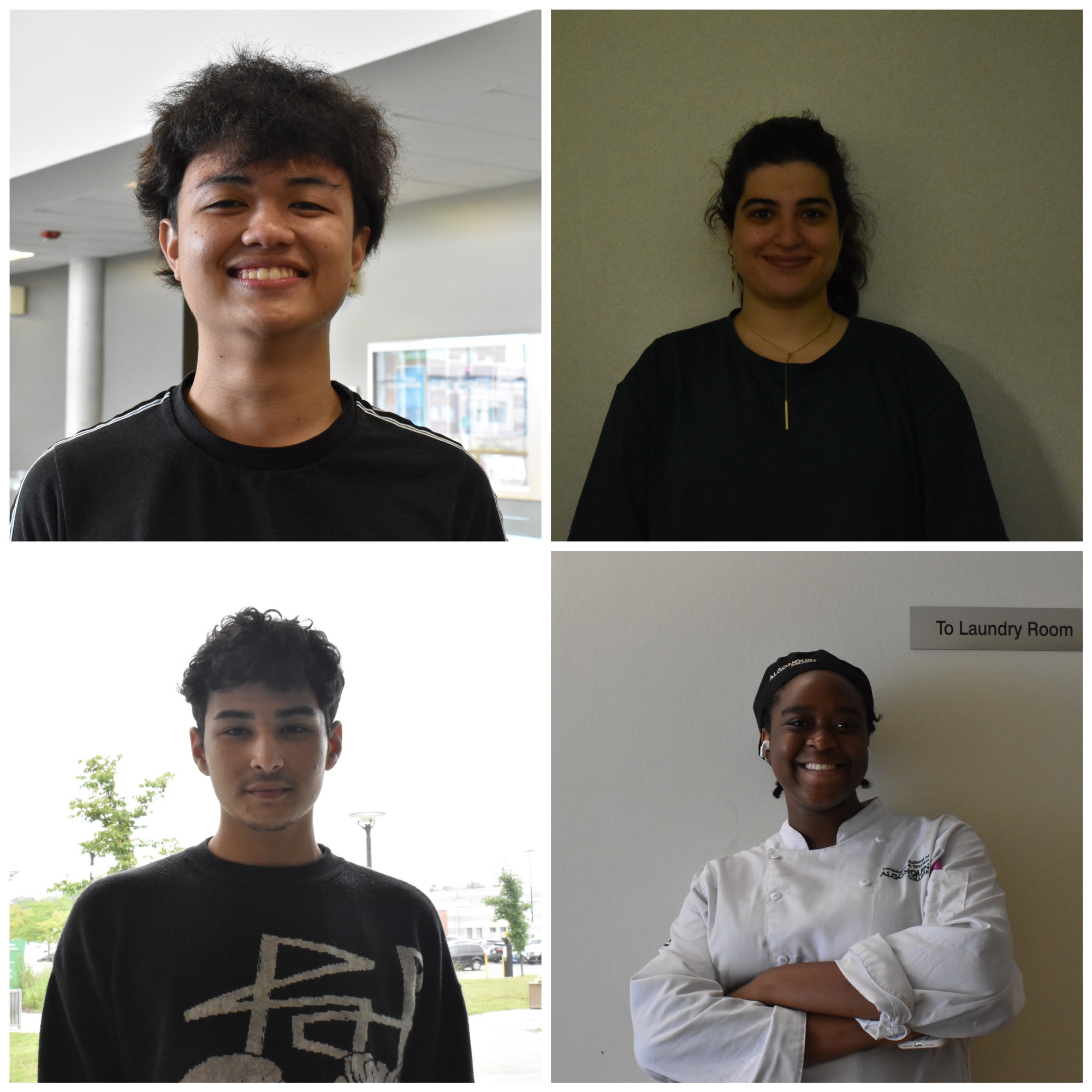
Photo: Serolf Flores, Development Services Worker Bottom right
Top right

People often describe themselves as being either a city or country person. Algonquin College is full of people from different backgrounds and lifestyles. Students come from all over the world to be a part of Algonquin’s diverse community. How do they see themselves?

Serolf Flores, developmental services worker program.
Serolf Flores, Developmental Services Worker program Photo credit: Alyx Ewing

Name: Serolf Flores, international student from the Phillippines
Program: Development Services Worker

“I would say I am more like a city person because I grew up in the city and I have more interest in the city. Going out and seeing street lights, taking a bike or outdoor activities, like roller skating and hanging out with friends in the city where we can all be free.”

Oussama Zaanouni, marketing management program.
Oussama Zaanouni, Marketing Management program Photo credit: Alyx Ewing

Name: Oussama Zaanouni, international student from North Africa

Program: Marketing Management

“I’m a city person I think. Going out, drinking and going to parties; the city in general, like bars and clubs. There are a lot of different things like housing and transportation.”

Nourah Sayegh, culinary management program.
Nourah Sayegh, Culinary Management program Photo credit: Alyx Ewing

Name: Noura Sayegh, international student from Lebanon
Program: Culinary Management

“I grew up mostly in the city, so I am more familiar with the city. I don’t know anything about the country. I like to drive a lot around the city, which is very therapeutic. I like to do sports. Some places in my city had lots of fields to play football [soccer] or volleyball. Other than that, there’s shopping, going to the mall with friends and hanging out. If you were to compare my city to Ottawa, then it is kind of different because here there are more fields, trees and nature. There is barely any nature in my city. There are just small palm trees and barely any other trees, but there aren’t any fields of grass. You rarely see that.”

Ifeoluwa Olubode, Culinary Management program
Ifeoluwa Olubode, culinary management program. Photo credit: Alyx Ewing

Name: Ifeoluwa Olubode, international student from Nigeria
Program: Culinary Management

“Country. I love the country so much. I love animals so much. I also like gardening, going to peaceful gardens and I like being surrounded by nature. I’m not the type of person to like being around city noise and the busy city view isn’t cute. Back home, if someone is from the city you would say they are ‘more from the city’ and if someone is from the country, you would say ‘that person isn’t a city person’ or that they don’t ‘vibe with the city aesthetic’.”

ByWard Market festival celebrates music, arts and streetwear

The ByWard Market was filled with music, street vendors and the smell of barbeque on Aug. 13, thanks to the Ooh Festival. Many people made their way to the pop-up […]
Photo: Alex Campbell
People enjoying the Ooh Festival on York St. in the ByWard Market.

The ByWard Market was filled with music, street vendors and the smell of barbeque on Aug. 13, thanks to the Ooh Festival.

Many people made their way to the pop-up market to spend the afternoon shopping, listening to music and sampling what food trucks were offering.

“Me and my buddy came here to check out the music,” said Mike Lurch, a downtown resident. “The energy here is fun, and the barbeque smells good too.”

Diane Tate, a clothing vendor selling a variety of T-shirts, was happy with the turnout. “It’s a beautiful day and many people have made their way through here,” she said. “I’ve made quite a few sales today and met some very interesting people.”

Crowds walked around the booths browsing merchandise before gathering around the DJ, Trevor Mason, to relax, listen to hip-hop music and eat a barbeque lunch.

For many, celebrations like this one renews confidence that festivities are making their comeback after the pandemic.

“After the last two years, seeing everyone come down for this event, and others I’ve been to recently, has given me hope that events will be back to normal soon.” said event attendee Chris Cooper.

Why switching from university to college was the right move for me

In the spring of 2021, I was looking forward to going to university to become a teacher. I wanted to teach film and social studies as those were my biggest […]
Tyler Beauchesne, finishing his first year of journalism at Algonquin College.

In the spring of 2021, I was looking forward to going to university to become a teacher. I wanted to teach film and social studies as those were my biggest interests, and I was accepted by the three programs that I applied for due to making the honour roll back-to-back years at the end of high school. I was excited to enter this new chapter of my life because I thought this was exactly what I wanted to do. At least, at first.

Part of my experience was hindered at first because the residence building closed at this university due to COVID so I had to do my whole first year online. I learn better in-person, but that was fine since I could just go to the campus next year. My class schedule made it hard for me to be passionate about my program as the class that was about teaching was once a month at best. As the first semester ended, I came to the realization that this is not what I want to do, career-wise. Where do I go from here?

Over the winter break in 2021, I stumbled upon the journalism program at Algonquin College. It caught my attention as it lined up with my interests in film and audio with certain classes. I gave it a shot. This turned out to be one of the best decisions of my life. I always kept up with the news, but I never saw myself becoming a journalist because my writing skills were never the strongest throughout high school. I went into the program optimistic yet nervous. However, from the first class we had in person, I found myself getting more and more intrigued by the field that I would be working in. I realized right then that this what I wanted to do with my career.

After a few conversations, my parents knew I was serious, and agreed that it would be okay to try something else, although their preference was that I attend university eventually. I can still do this through the journalism program, which allows students to switch to the University of Ottawa for another two years.

I need to be clear about this: I am not saying that the college experience is better than the university experience for everyone. Both are beneficial in their own ways. I am enjoying the college experience more than university because it feels more “hands-on.” The university workload was more complex and while some can handle that just fine, I am not one of those students. The university program would allow me to actively learn in the field eventually, but the classes I took did not directly deal with what I wanted to do with my life. Almost every class that I am taking in college deals directly with different aspects of journalism. The first semester deals with the basics of journalism and the essentials that need to be known before we try to write professionally. The next semester, we are now members of the Algonquin Times and we now write stories to be published and learn how to improve our skills along the way.

I have learned that it is okay to switch programs if you realize what you are studying no longer interests you. I always thought I would become a teacher or work in the film industry somehow. While I still can in some way, I do not know if that fits all of my interests now. People change over time; it is natural and there is nothing wrong with that. You are not going to have the same friend group that you had in elementary school, and you are not going to have the same interests that you do in high school later in life.

Some people will have the same experience that I did with my program and feel pressured to stay in it even if it does not fit who they are as a person anymore. This could be because of the prestige behind their program or the jobs they can get with it. I would encourage those people to leave those programs and find something that they know will fit them better. Even if you have to spend a little more money, it will still be better than going down a career path that you will grow to resent.

Hundreds of Ukrainians learning English at Algonquin College

The Algonquin College Spiritual Centre is hosting Making English Easy for Ukrainians, attracting hundreds of Ukrainians forced to leave their country since the war began earlier this year, according to […]
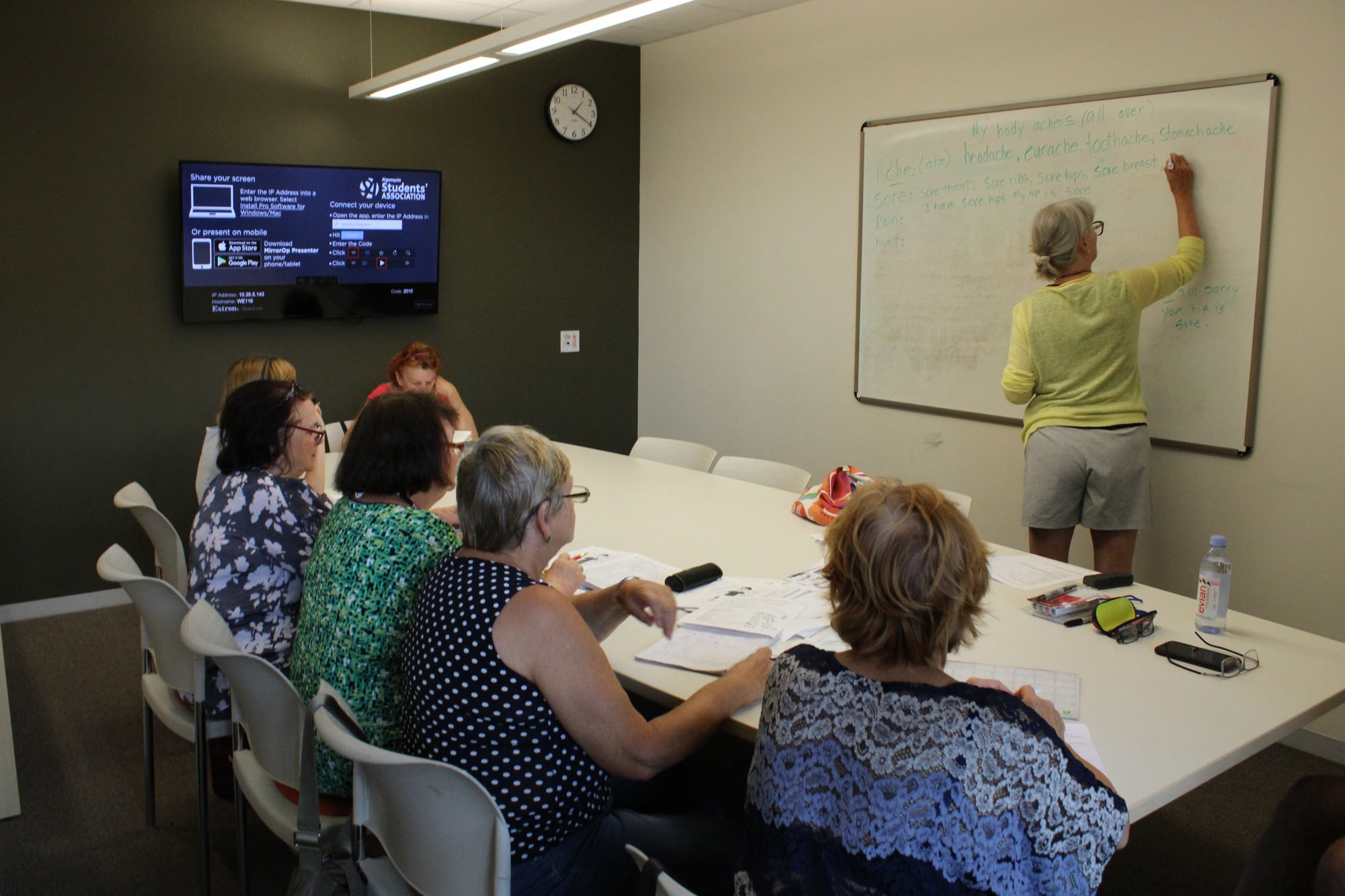
A group of Ukrainians learning English at Algonquin College study the teacher's notes on a white board.

The Algonquin College Spiritual Centre is hosting Making English Easy for Ukrainians, attracting hundreds of Ukrainians forced to leave their country since the war began earlier this year, according to the centre’s staff and volunteers.

An estimated 3,200 Ukrainians have arrived in the Ottawa area since February. In order to integrate into regular life in Canada, they must learn English or improve their existing skills as fast as possible.

From 1 to 2 p.m. on Tuesdays and Thursdays until August 15, qualified teachers offer English lessons to one of several groups, split by their ability, ranging from beginners with little to no English skills, to more advanced English speakers who have trouble with something specific, such as words that sound the same but mean different things. Learners spend the hour practising what they’ve learned with one of more than 30 volunteers from the community. Coffee and snacks have been donated by local churches.

“The first Tuesday we had 18 and by the second Tuesday we were up to 40 students,” said Yolande Parsons, Coordinator of the Spiritual Centre. “Some people have gotten jobs, which is really good news to hear.” More than 400 Ukrainians have come to learn English through this program, according to Campus Chaplain Yuriy Derkach.

Gary Miller, one of the volunteer English teachers, usually works with intermediate- level students.

“We talk about any sort of subject that is a concern, we help with pronunciation, we get people to talk about everyday subjects and just try to encourage them,” Miller said. Sorting people into levels helps make the lessons as valuable as possible for everyone. “If you have a mix, it doesn’t work. If you have to slow down for the beginners then the others just get frustrated and bored.”

Many of the volunteers are retired from teaching, and wanted to offer help to Ukrainians arriving in Canada due to the war.

“We’ve had such a great group of volunteers who’ve come to teach,” Parsons said. “There’s one church in particular, St. Marks Anglican Church, they’ve sent a few retired teachers and some ESL teachers. There are a couple of people from the college community who have also assisted in teaching, but mostly it is the community that has responded.”

According to Derkach, at first they were supporting Ukrainians already studying at Algonquin College, but then when their families came to Canada, they needed help as well.

Some of the Ukrainians have shown their appreciation to the organizers who have guided them while they learn English. “Most of them are really, really appreciative of what we’re doing. I will never forget one day, one of the ladies showed up with flowers for me. I was really thankful for that,” said Parsons.

How to combat break-week burnout

Break week came and went in the blink of an eye, as it always had. I did some reading, but I mostly took the opportunity to get some rest and […]
Madi Ivan-Feldcamp

Break week came and went in the blink of an eye, as it always had. I did some reading, but I mostly took the opportunity to get some rest and pick up extra hours at work. I hardly felt rejuvenated afterwards. “Break-week burnout” was something I noticed within myself.

According to an article published by the Canadian Journal of Higher Education in 2018, the fall break week was initially adopted by McMaster University in 2015, in response to several student suicides. The goal was to “provide students with a meaningful reprieve during a strategic moment in the course of their studies to improve academic performance and mental health and well-being.”

In other words, the point of the break week, also known as the reading week, is to catch up on all the work students may have procrastinated on or been overloaded with.

In my experience, it isn’t a guaranteed stress-reliever.

The same article mentions a national survey performed by the American College Health Association on the health of post-secondary students. Ninety per cent of Canadian post-secondary students said they felt overwhelmed and 13 per cent had suicidal thoughts within the last 12 months, despite universities across Canada implementing the fall break to combat these pressing issues.

There’s no doubt that feeling stressed and overwhelmed is consistent for most students, regardless of a break week. Many students use the reading week as a literal break, and although this is fine, it tends to be quite jarring once they return on Monday and get back to work.

“The break week isn’t a break – it’s a study week,” says Ahmed Elbadri, Algonquin College Student Success Specialist. “Students treat it like it a break, and they are less motivated to work during that week. When they return, they’re trying to compensate for what they’ve procrastinated.”

Although the break week – or, study week, as it should be addressed – is helpful in providing this time to catch up, it doesn’t amend the problem with stress and feelings of burnout among students.

If a student uses the break week to study and do their work, then the stress might be less when they return; the momentum from before the study week continues on and propels them back into classes again. But the burnout lingers because it feels like a missed opportunity to relax, especially if students chose to work.

If a student doesn’t use the study week to their advantage, it can have detrimental results.

“The break week is a make it or break it week for some,” Elbadri explains. “Will the student succeed?”

Sometimes, students drop out after the break. Maybe the workload becomes too much, and the guilt, shame and mental struggle of falling behind starts to catch up. Once there’s a break, everything stops and the relief of a week of silence is embraced. Then, on the following Monday, the noise starts again, and it sucks. I felt that way when I failed out of two first semesters of college a few years ago.

“Students feel like they’ve already lost, but that’s not true,” Elbadri says. “The discomfort goes away once you reach out. It is a huge relief. When professors and staff reach out to you, it’s not because they have to. It’s because they care. We want students to succeed.”

It isn’t easy to combat negative feelings while getting an education, but as students, it’s our responsibility to allocate time to properly address our schoolwork, while maintaining some semblance of mental health. If students decide to treat the study week like a break, then they must face the music on Monday, and the stress of those procrastinated assignments starts to bubble up all over again.

“A moment in my life made me confront a lot of things,” Elbadri says, “People hit rock bottom for things to click in their mind, and not everyone knows how to be self-sufficient.”

This lack of self-sufficiency seems to be the root of all evil. Speaking from experience, I had to learn how to keep an agenda and manage my time – this is still something that I’m actively working on, and something I highly recommend adopting.

Elbadri says the key to addressing workload issues is following the SMART acronym: Goals should be specific, measurable, attainable, realistic, and time-related. Write these thoughts down so you can see them.

The purpose of a study week is to help students reduce stress, by allowing them time without classes and new assignments so they can read, think and catch up on their school work. Let’s not think of it as a break week, or a “make it or break it” week. Let’s consider it a “meaningful reprieve” to address all concerns, from assignments to mental health.

Monkeypox cases rise to 15,600 globally

Local: CTV News On Wednesday, Rogers Communications Inc. acknowledged it has work to do in regaining customer trust after the July 8 massive network outage. One of the ways Rogers […]

Local: CTV News

On Wednesday, Rogers Communications Inc. acknowledged it has work to do in regaining customer trust after the July 8 massive network outage. One of the ways Rogers plans to build its consumers’ faith is to spend $150 million on customer credits. The credits are to compensate customers who were unable to use both their cellular and internet services during the time of the network outage.

National: CBC News

Pope Francis arrived in Quebec City on Wednesday to hold a private meeting with Governor General Mary Simon, Prime Minister Justin Trudeau, and Indigenous leaders at the historic Citadel. The Pope begged for forgiveness and expressed his sorrow and shame for the treatment of Indigenous children in residential schools.

International: Global News

Monkeypox case numbers keep rising, with confirmed cases of 15,600 around the world, according to the World Health Organization (WHO). There are approximately 16 million vaccine doses available. Canada, the European Union, and the United States approved the Bavarian Nordic’s Imvamune vaccine or MVA-BN. It is normally used to treat smallpox. There are also two others vaccines, LC16 and ACAM-2000, that are being considered in fighting against monkeypox.

Algonquin students “craft and chat” at biweekly Perth campus event

Craft & Chat, a biweekly event on the Algonquin College Perth campus, provides students with an opportunity, in person or online, to engage in a variety of activities, from crafts […]
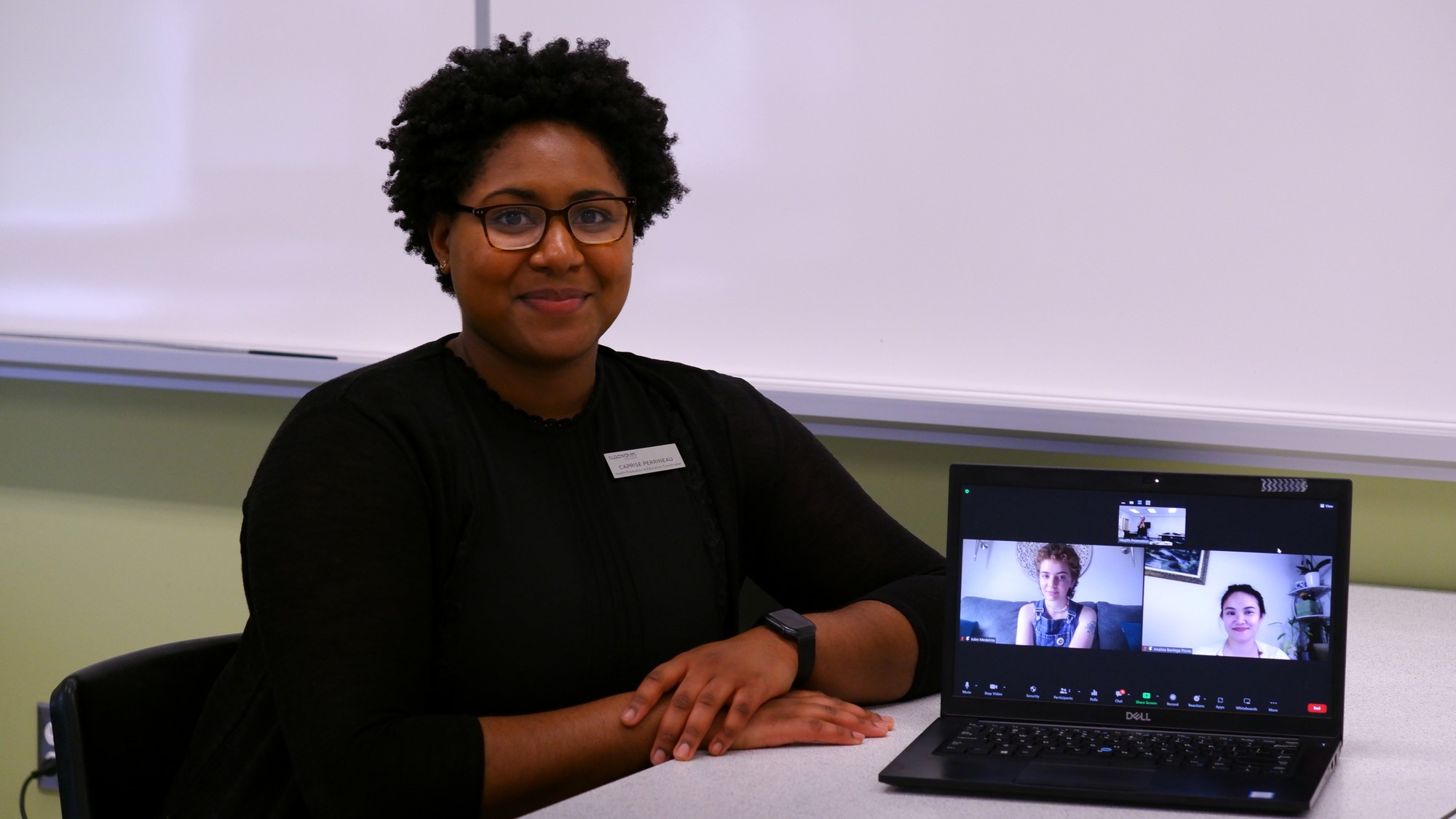
Caprise Perrineau, AC Health and Education Promotion Coordinator, alongside Zoom event goers Jules Medeiros (left) and Analiza Flores (right)

Craft & Chat, a biweekly event on the Algonquin College Perth campus, provides students with an opportunity, in person or online, to engage in a variety of activities, from crafts to games, share their feelings and make friends alongside counsellors.

Caprise Perrineau, Algonquin College Health & Education Promotion Coordinator, ran the event solo on Wednesday, July 20, with two students joining via Zoom to chat and play a game of Pictionary. Both students attend classes on the Woodroffe campus.

Pictured on the left is Jules Medeiros, Social Service Worker program. On the right is Analiza Flores, Personal Support Worker program. 
Screenshot credit: Caprise Perrineau, Health & Education Promotion Coordinator, who hosted the event.
Pictured on the left is Jules Medeiros, Social Service Worker program. On the right is Analiza Flores, Personal Support Worker program.
Screenshot credit: Caprise Perrineau, Health & Education Promotion Coordinator, who hosted the event.

“I was interested in this event because I’m an international student, and that comes with lots of challenges. It is overwhelming being in a foreign country,” said Analiza Flores, a PSW student, who joined Craft & Chat for the fourth time. “It’s a lot of fun. I get to talk to people and get advice on my mental health.”

Jules Medeiros is in the Social Service Worker program and was the second person on Zoom. They enjoy this event because it provides them with great hands-on experience for their program.

Typically, Perrineau cohosts Craft & Chat with Christina Latifi, an Algonquin College counsellor.

When events like Craft & Chat were just an idea, Latifi reached out to Perrineau for help in addressing the overall wellness of students for each campus. The creation of Craft & Chat was important because Perth campus is a small community with different kinds of needs than the Ottawa campus.

They also wanted to address a noticeable disconnect between domestic and international students at the college. Their hope for this event, and others like it, is to give students an opportunity to relate to one another in a relaxed atmosphere.

When everybody arrives at Craft & Chat, they all introduce themselves and say why they’re there. Usually, there’s a jumping-off point introduced by Perrineau or Latifi.

“Talking about problems is a vulnerable thing to do, but this event is a special space for that,” says Perrineau. “Sometimes, up to eight people will join us, which is a lot for Perth. We sit around a table, set up the computer to include the Zoom people, and talk about mental health. Sometimes we play Pictionary and talk. It’s a lot of fun.”

Craft & Chat is a wonderful way to feel a sense of community and destress.

“Caprise and Christina are amazing,” said Medeiros. “It’s personal, but, also not. We discuss our mental health with no pressure.”

Craft & Chat provides snacks and loot bags to attendees. If you’re joining online, you can pick up your loot prior to the event. The bags this time contained Pur hand sanitizer, Kleenex, a condom reading “no glove no love,” lube, salt with instructions for a saltwater gargle, peppermint tea, blood-alcohol-level information flyers, an AC Health Services pen, and a card with information for Good 2 Talk, a 24-hour post-secondary student helpline.

Because of its success this summer, Perrineau and Latifi will continue Craft & Chat in the fall semester.

Ottawa BluesFest rocks with country headliner Luke Bryan

On Thursday, July 14, RBC BluesFest was busy with evening performances on three different stages. Artists that night included Caitlyn Smith, The Tea Party and headliner Luke Bryan. Georgia-born Bryan […]
Photo: Alyx Ewing
Sacha performing on the RBC stage at BluesFest, July 2022.

On Thursday, July 14, RBC BluesFest was busy with evening performances on three different stages. Artists that night included Caitlyn Smith, The Tea Party and headliner Luke Bryan.

Georgia-born Bryan appeared at the back of the stage and made his way to the front to interact with the audience during his first song. His performance included the songs “I Don’t Want This Night to End,” “Kick the Dust Up” and “Kiss Tomorrow Goodbye.” The entire night, Bryan joked about how polite Canadians are and the small talk they like to make with him since he arrived in Ottawa. Bryan’s performance concluded the seventh night of RBC BluesFest in Ottawa.

Early in the evening, the crowd cheered when Minnesota-born country singer Caitlyn Smith took to the RBC stage. She performed the songs “High,” “Damn You for Breaking My Heart,” and “Good As Us.” Throughout her performance, Smith was jumping around and engaging with the crowd, even making jokes about growing up close to Canada.

Fans enjoyed other performers as well. “I was really excited to see Gentlemen of the Woods,” said Jacob Lawrence, an Ottawa resident attending the performance in the Barney Danson Theatre at the Canadian War Museum.

Behind the RBC Stage was a Ferris wheel and a few games, including ring toss and baseball throw. An all-white drum set was on display, along with artwork lining the fence to promote other headlining artists, such as Marshmello and Alanis Morissette.

The River Stage behind the Canadian War Museum hosted the rock band The Tea Party, from Windsor, Ont. On stage, Jeff Martin, Jeff Burrows and Stuart Chatwood were all involved with the audience. You could see Martin and Chatwood interacting with each other while playing their guitars and singing. Songs included “The River,” “The Bazaar” and “Psychopomp.”

“Tonight was pretty good, other than a lot of smoking, but you see that everywhere,” said Emma Lalonde, a Barrhaven resident. Lalonde also attended the event on Saturday to see headlining country singer Luke Combs.

Other local volunteers at the festival also had the chance to see a number of performers. “This is my first volunteering since high school. I saw Luke Combs last Saturday and this my second show. I have been moving around to the different beer tents to help out,” said Ottawa resident Chelsea Martin.

Other artists performing Thursday night included Sacha, Janette King, Lucy Dacus, Crash Test Dummies, Braden Foulkes, Wide Mouth Mason, Matthew Chaffey, The Redhill Valleys, and Mello-T.

“I have been coming out here straight out of high school, so 22 years. I have been there every year that they held it on Elgin Street. This is my staycation and I love the music,” says Jay Salls, an Ottawa resident attending the event that night and through the week.

Learning online: Will it remain popular post-pandemic?

In March 2020, almost everything closed down and everyone was advised to quarantine at home. Post-secondary students had to suddenly shift from the on-campus classroom to remote learning. Even with […]
Photo: Tyler Beauchesne
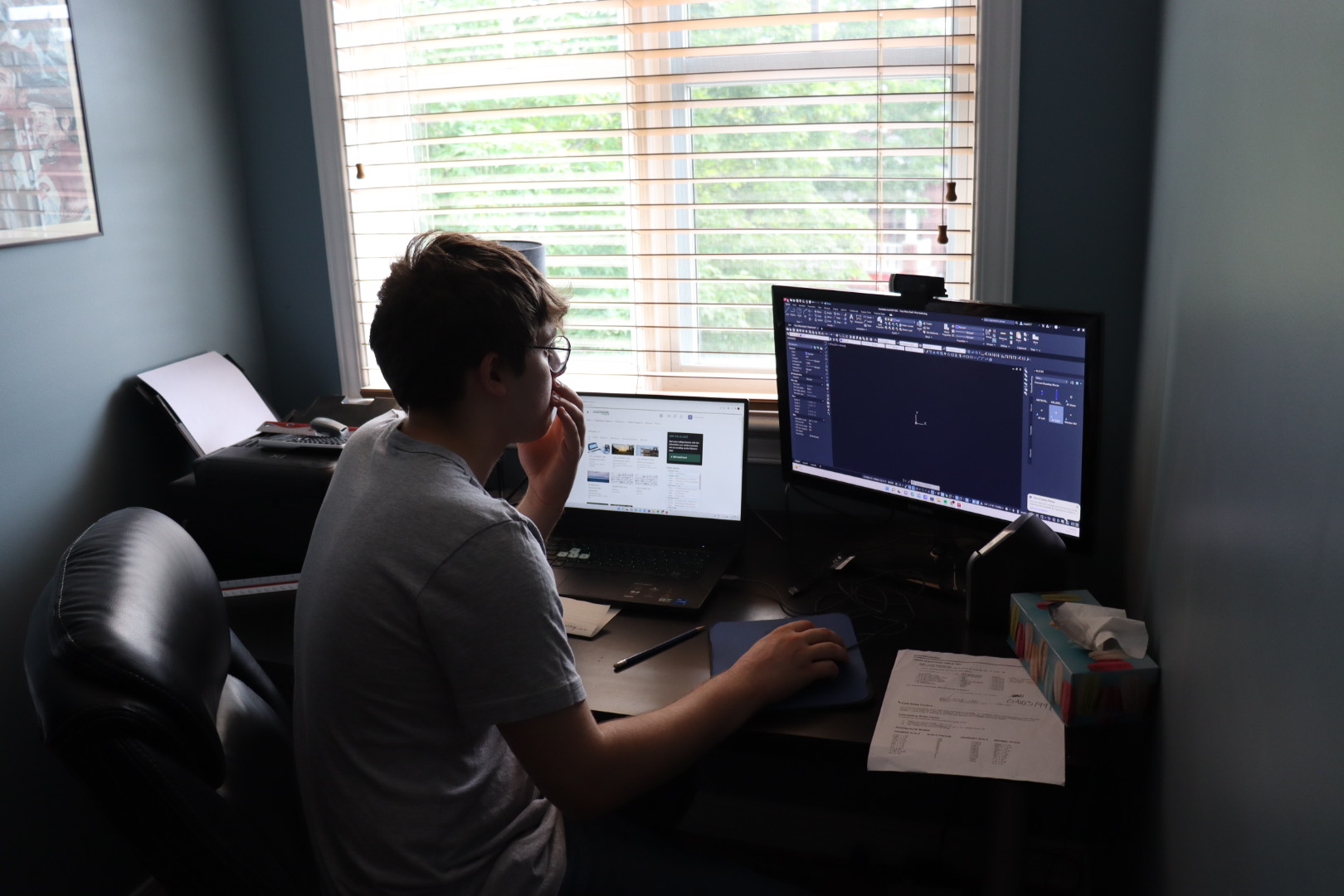
Josh Chiarello, Architectural Technician student at Algonquin College. More courses now are "hybrid," with some in-class and some online learning.

In March 2020, almost everything closed down and everyone was advised to quarantine at home. Post-secondary students had to suddenly shift from the on-campus classroom to remote learning. Even with quarantining over, online classes are still a popular option among some students, and some in-person courses have turned into hybrids, with an online session one day and in-person the next.

“We saw a little uptick in people attending online programs during the pandemic,” said Julie Eaves, an administrator for online programs at Algonquin College. “Students who want different experiences when it comes to their learning will always choose what is best for them. The choice of online learning is more to do with how it fits them as a person over what has happened with the pandemic.”

A recent American study shows that 46 per cent of U.S. students prefer to take fully online courses, and 68 per cent who take in-person classes think that technology should have a greater use.

“I would say hybrid and online classes would be a more common option for students in the future,” said Isabelle St-Pierre, an associate professor for the Department of Nursing at the Université du Québec en Outaouais. “For example, I am a registered nurse and I teach nursing. I do not believe that you can teach students how to become nurses without an in-person component to the learning,” she added.

“I teach both at the undergraduate and graduate level. At the graduate levels, the course I teach (epistemology and nursing theory) is always offered online, regardless of being in a pandemic or not,” said St. Pierre. “One of the advantages of having the course online during the pandemic was that sick students or students who needed to quarantine were still able to attend class; whereas if it was in person, they would have had to miss class. Therefore, in my case, the fact that the course was online improved attendance.”

Rachael Wise is a certified student psychologist and licensed behavioral therapist at Education and Behavior, a website dedicated to providing research-based strategies to help students learn more effectively. She writes about the advantages and disadvantages of online learning and the effects it can have on students.

“Online classes can be more comfortable for some students because they can do independent assignments outside of class hours, which allows for more flexibility,” writes Wise. “Students can also take more breaks when needed and learn with less fear and anxiety about others judging them.”

Wise also notes how some students are visual learners and need to be shown how to do something with a demonstration, which may be challenging through a screen. Many students learn more effectively in a classroom, and some courses, such as nursing, need an in-class component.

Because of the pandemic, online courses are becoming more normalized as an option for learning and even preferred by a good number of students. Post-secondary institutions are realizing that some forms of online learning are here to stay, pandemic or not.

Algonquin Times podcast

Stay Informed

Sign up for our newsletter

Subscribe

* indicates required