Mayoral race heats up as candidates debate transit and housing in front of students
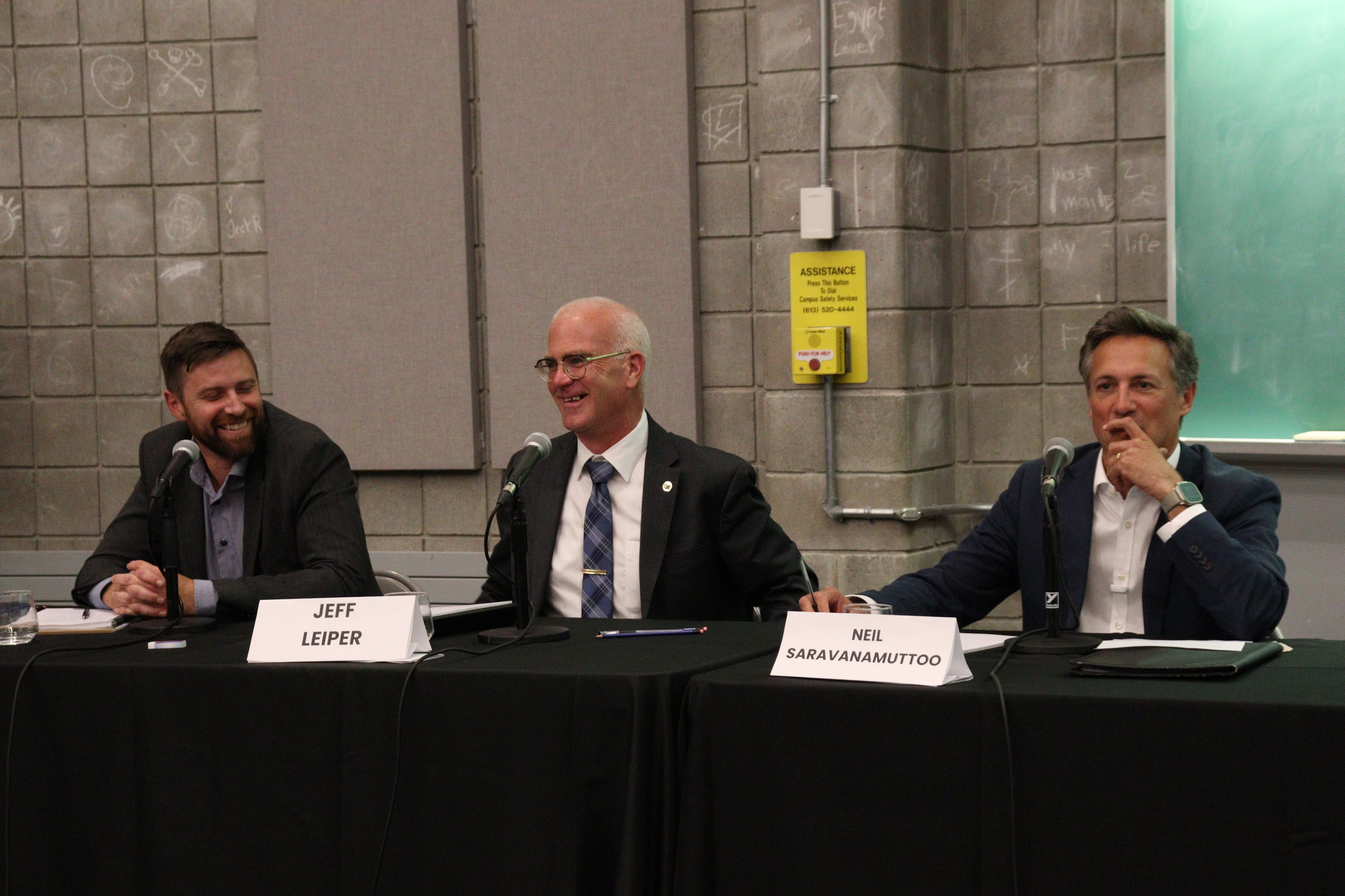
Three of the four frontrunners in this year’s mayoral election debated policy ideas in front of an audience of over 300 students, ranging from buses to bylaws.
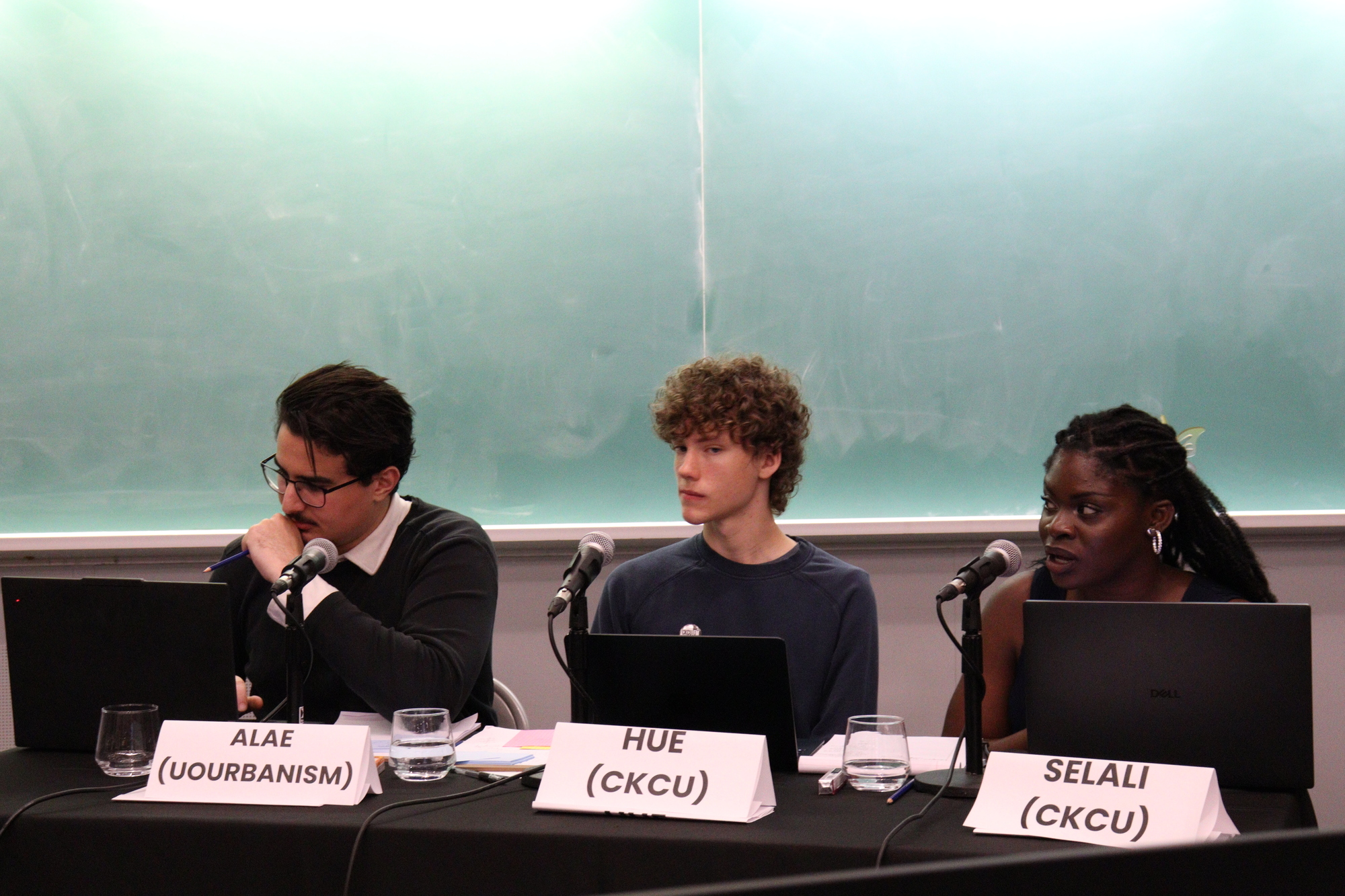
The Tuesday evening debate in the Carleton University Minto Building was organized by multiple organizations, including the Carleton University Students Association (CUSA), Ottawa Youth Vision Project (OYVP) and the UOttawa Students Union (UOSU).
Mayoral candidates Alex Lawson, Jeff Leiper and Neil Saravanamuttoo debated housing, transit, culture and nightlife, as well as city services and safety, over a two-hour period. Notably absent was incumbent Mark Sutcliffe, who was invited but did not attend.
After the candidates shared their opening remarks by introducing themselves, the first question asked how they would lower rent for students. The candidates outlined how the city could provide assistance for housing, including building public housing.
Leiper wants to create a city acquisition fund “so that the city has not-for-profit partners and can purchase those properties and keep them affordable in perpetuity.”
Saravanamuttoo questioned why the city has made little progress on affordable housing. “It’s quite simple. It’s because developers run the city, I hate to say it,” said Saravanamuttoo.
Lawson intends to implement a 12-month period for the reduction of development charges to be passed down to the homeowners and renters, something that Leiper doesn’t believe will help.
“I can pretty much guarantee you that when development charges are cut, those will flow to the developers’ bottom line,” said Leiper.
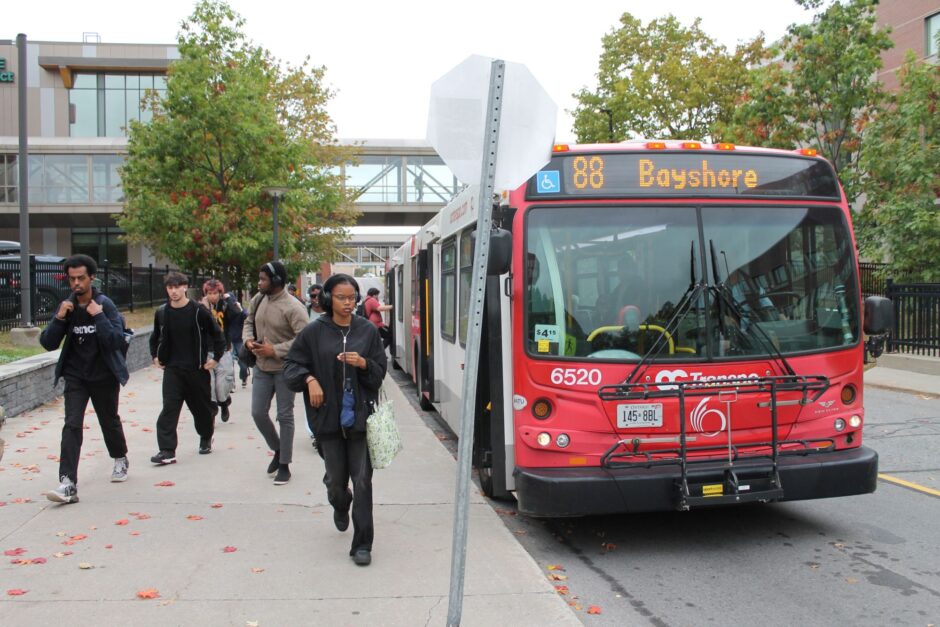
When it came to transit, the candidates had different ideas on how to improve reliability and set a fare that reflects the service that is being provided.
Leiper blames the New Ways to Bus cuts by the city as a major contributor to the transit problems students experience.
“One of the first things that I am going to do in my very first budget as mayor is reverse the cuts that have been made by Mark Sutcliffe to our bus system. That is job one,” said Leiper, who also would like to work towards a fare freeze.
Saravanamuttoo proposes a buck-a-ride fare to tackle transit affordability.
“Let’s have a price that actually reflects more the quality of the service that we’re currently providing,” said Saravanamuttoo.
“So it’s going to be terrible, but at least it will be cheaper,” Lawson jokingly rebutted.
Saravanamuttoo questioned why Leiper, formerly on the transit commission, didn’t raise the red flag as to why the city was not buying new buses.
Leiper said that the priority of Sutcliffe and former mayor Jim Watson “has been the lowest possible tax increase. When I am mayor, I am going to prioritize purchasing buses.”
Lawson and Leiper disagreed with Saravanamuttoo’s buck-a-ride proposal.
“I don’t think providing less funding is going to be the solution and I don’t think just saying that it’s a terrible service that we should charge less is a solution. I mean, we probably all bought headphones at the dollar store. You only do that once,” said Lawson, who would like to bring back express bus routes and have on-demand shuttle buses in rural communities.
Leiper does not believe that the uploading of the LRT system to the province will help with budget shortfalls from buck-a-ride.
“That is going to rob several hundred million dollars that would need to be replaced in order to put fuel in buses and to pay drivers and mechanics,” said Leiper.
When Leiper and Lawson emphasized the importance of nightlife and the arts are to economic development, Saravanamuttoo felt safety concerns were keeping people away from the downtown. “The whole issue of how we build a vibrancy at nightlife, we have to talk about the homelessness issue first,” said Saravanamuttoo, who mentioned La Village Transitiôn in Gatineau, where homes are made from shipping containers, as a possible solution.
The candidates generally supported the ANCHOR (Alternative Neighbourhood Crisis Response) project, recognizing that there should be alternative means of dealing with mental health crises instead of having the police involved.
“It is important that the police do the work, that police are supposed to deal with criminal issues,” said Leiper. “For every increase in the police budget comes forward, we need alternative responses to mental health.”
“When it’s just somebody that needs to be talked down to or has experienced an episode that they can’t get through, police showing up can make it a lot worse,” said Lawson.
All of the candidates disagree with the Lansdowne 2.0 project, a revitalization project that has been approved by city council, budgeted for $419 million.
“Lansdowne 2.0, if it’s a good idea, it is not a good idea right now, and it has been shrouded in secrecy, and the decisions that were made were made quickly. I’m glad that Jeff Leiper voted against it,” said Lawson.
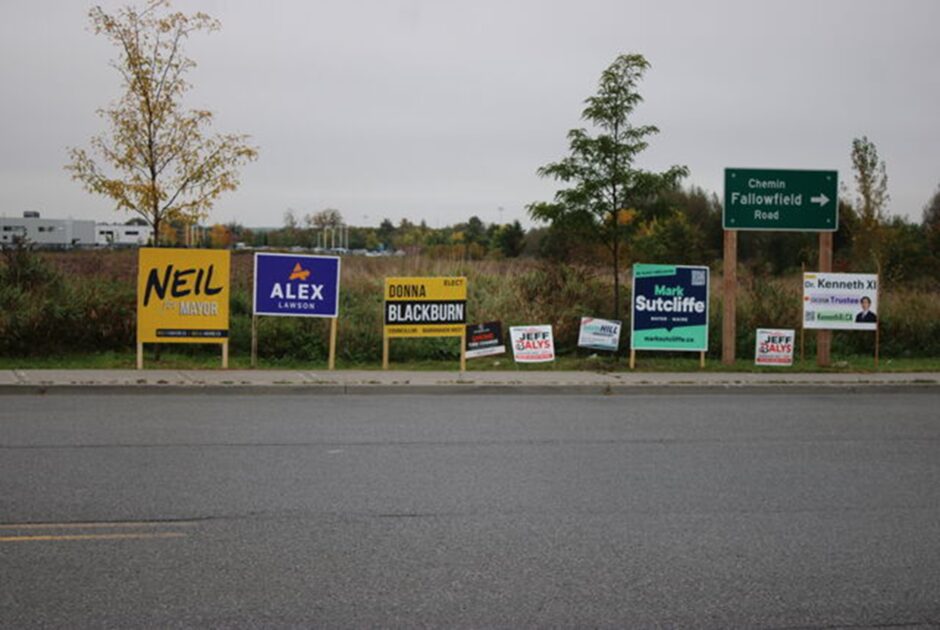
The municipal election is being held on Oct. 26, with the advanced voting day happening on Oct.16. Polls will be open from 10 a.m. to 8 p.m.