main

Finding my way in my new Canadian life
A few months ago, my favourite Bollywood actress, Deepika Padukone, was caught in a drug-scandal involving cannabis and I, to my surprise, shrugged it off. Cannabis is illegal in India, […]
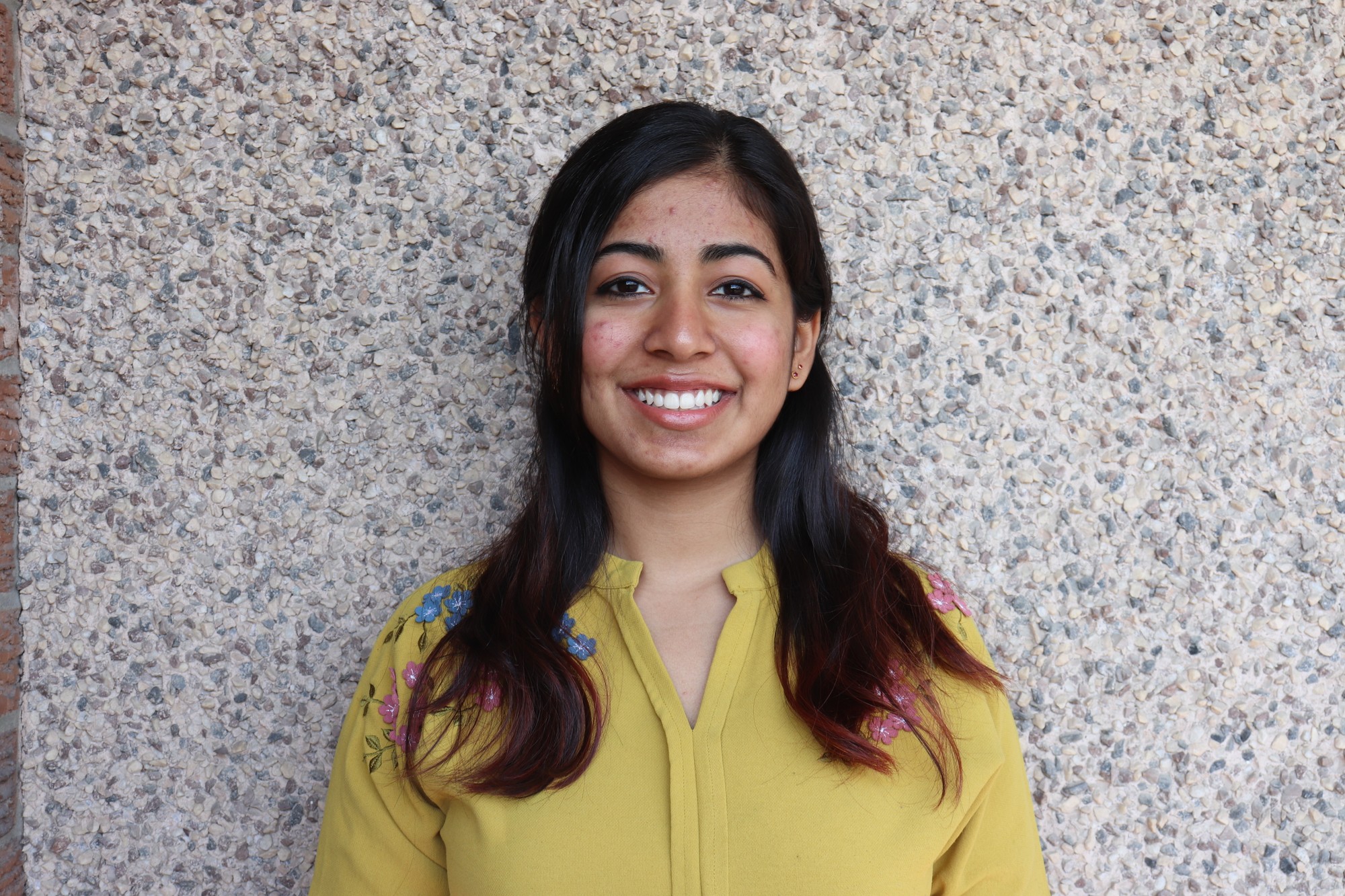
"I had gone from saying 'what?' to 'pardon?' and from 'please' to 'excuse me,'" writes the author, Hritika Jimmy.

A few months ago, my favourite Bollywood actress, Deepika Padukone, was caught in a drug-scandal involving cannabis and I, to my surprise, shrugged it off.

Cannabis is illegal in India, my country of birth, so why had that not been a bigger deal to me? Was I too “Canadian” to bother?

With a distance of over 11,000 km between me and New Delhi, I was bound to a rollercoaster of changes. I had gone from saying “what?” to “pardon?” and from “please” to “excuse me.” I now even throw in the occasional – and the most odd for me – “sorry.”

I came to Ottawa 15 months ago when I was 17 to pursue post-secondary education. I had never seen such a calm place and yet felt such an inner storm simultaneously. So many things surprised me, for instance, students have part-time jobs while they study, children have licenses at 16 and people here are far too polite.

I’m not alone in finding different aspects of Canadian life surprising. Ashmi Mary Shajan, 20, a student from Kerala, India, has been surprised by things too.

“I got a lot of freedom,” she said. “I started working here and the level of independence that it gave me is unparalleled.” Shajan came from India in 2018 to study fitness and health promotion and she is going to pursue her second course in at Algonquin College in radiology.

Onam is a harvest festival in Kerala, India. We prepare and eat rice with over eight side dishes on a banana leaf.

One of the things that made me independent was food. I had never cooked to survive before in my life, and McDonald’s and Tim Hortons could only go so far to feed me. YouTube became my most-used app and I started cooking. It felt good to eat home cooked food once again. It felt good to send pictures of my meal to family’s group chat.

But I also discovered aroma, the aroma of caramelized onion with spices and curry leaves. As a new cook, I also discovered that my cooking efforts had other consequences. Once while travelling on the bus, I noticed that an elderly woman sitting beside me had covered her nose her until I got up to leave. Snapping out of my initial confusion I found out that my jacket smelled like butter chicken.

I was hurt by her actions but no one was at fault. She was polite in her own way like most Canadians are said to be. But the problem with politeness is that any disapproval of hard feelings are only passively expressed.

After thinking a lot about her gesture, the aroma, how to change, if I should change, I concluded: if we go to someone’s home and they expect us to remove our shoes before entering, we do so. So when we come to someone else’s country we learn to respect their views and values. We observe their norm and comply with respect.

Adapting does not mean succumbing. It meant to learn new things to add to our pre-existing beliefs. So when we embrace a new culture, we adjoin it to our own and it results in our growth.

Contactless food drive connects to the Algonquin community

The Students’ Association Food Cupboard hosted their second drive-thru donation outside of C-Building on Wednesday, Dec. 9. This time around, the Food Cupboard saw twice as many participants’ and received […]
Photo: Chanelle Pinard
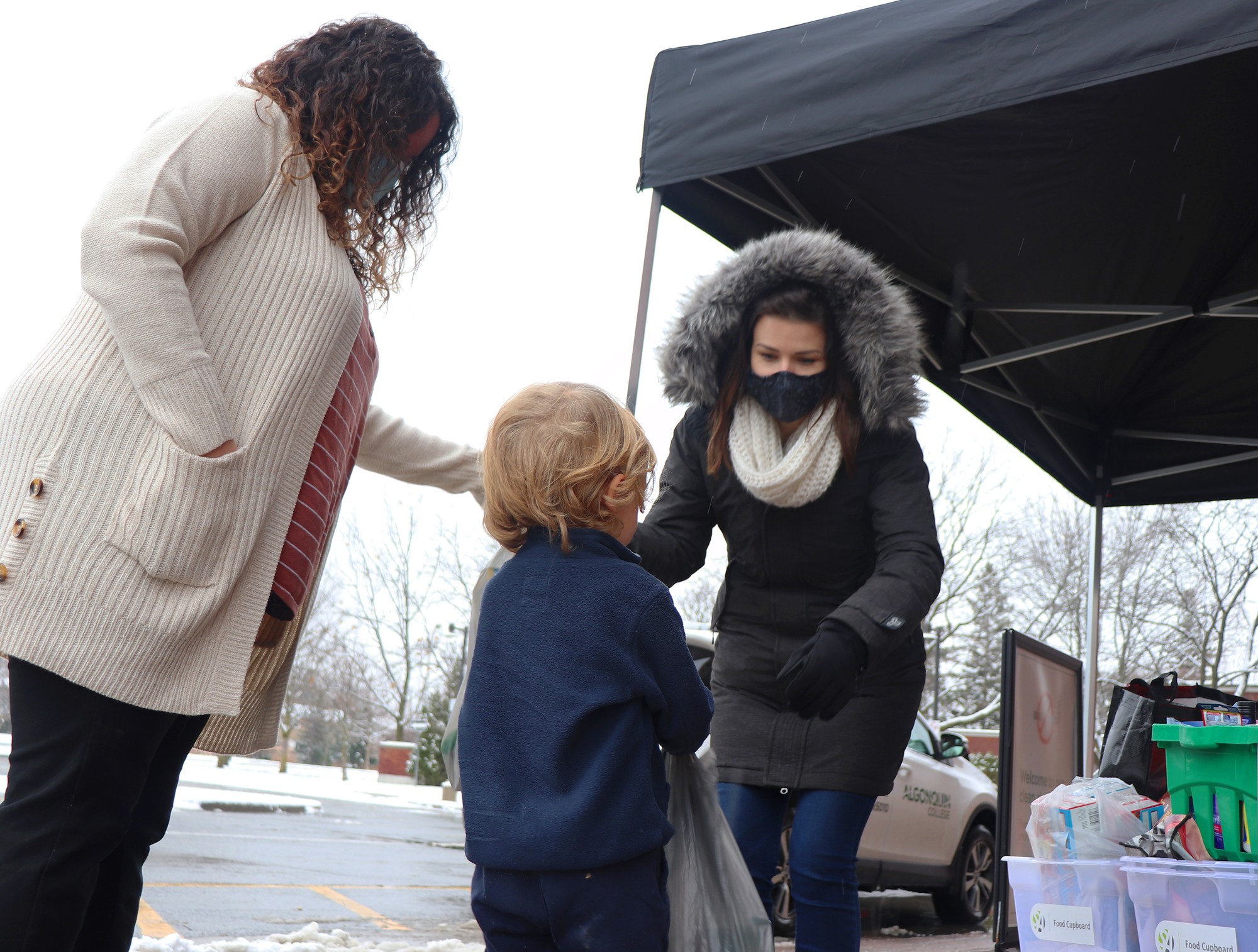
Donors dropped off food at the contactless food drive on Dec. 9 to help support students in need during this time.

The Students’ Association Food Cupboard hosted their second drive-thru donation outside of C-Building on Wednesday, Dec. 9.

This time around, the Food Cupboard saw twice as many participants’ and received double the amount of food donations than they did at the first contactless drive in October.

Jessica Clark, coordinator of the Food Cupboard organized this event to help Algonquin students who are struggling financially and need assistance.

The event in October was their first contactless donation drive. “This is, by far, so amazing,” she said about the December event. “The first one was still successful, but we didn’t see as many people. I think that people are learning this is a thing that is happening, more people are showing up.”

The event was open to the general public and accepted monetary donations, non-perishable food items and basic hygiene supplies.

“You’d be surprised, sometimes people think they’re donating odd items but then it’s items that students really need,” said Patrick Newell, senior manager of Student Life at the SA.

Clark said items like toothpaste, toothbrushes and toilet paper are always helpful. People bring in things like diapers, feminine hygiene products and even cat food that always seem to benefit students’ needs.

Sometimes she has international students come in and are surprised by some of the foods offered.

“Some people come and donate because they have an international student in mind,” said Newell.

A donated bottle of sauce.
Donors drop off items that satisfy international students’ taste buds. Photo credit: Chanelle Pinard

Nine donors dropped off 517 items in total. One in which also donated two months ago to assist Algonquin students.

“One person came and donated these three boxes,” Newell said, pointing to the filled boxes of donations waiting to be brought into the college. “The first person came and donated probably $600 worth of food, so the people that are coming are donating large quantities.”

Statistics Canada published an overview of a six-month update on social, economic and justice impacts of COVID-19 on Oct. 20. This overview analyzes Canadians’ response the virus and shifting health concerns.

A postsecondary crowdsourcing survey conducted by Statistics Canada earlier in the pandemic said that students are extremely concerned about their finances. This stress continues even with the assistance of the Canada Emergency Student Benefit last summer.

Students’ three main worries according to Statistics Canada include: Using up their savings, paying for tuition next term and taking on more student debt.

“The government announced today that the normal grocery bill for a family of four is going to go up five per cent which is up $700 per year,” said Newell. “Which is a lot of money for low-income families.”

Newell said it’s handy when people donate single-usage items, so Clark doesn’t have to divide the quantities. Sometimes Clark has to divide tubs of detergent or olive oil so she can help 20 students instead of one for example.

“They have the choice of either requesting a gift card if they’re not near campus or able to get to campus or not comfortable coming,” she said. “I can email them a gift card that allows them to go to a grocery store near where they live, or some would prefer the food and supplies and are on campus anyways or near, so they would just come.”

Students could either drop in at the Food Cupboard on campus or book an appointment in a normal semester. Going forward because of COVID, they have to book an appointment online prior. This confidential service connects people from the community to help support students’ needs.

Every player is equal in ringette

While the NHL is on pause for now until mid-January 2021 at the earliest, I feel this is a good opportunity to consider the merit of another ice sport: ringette. […]
Sam McGowan in her Ottawa Ice uniform.

While the NHL is on pause for now until mid-January 2021 at the earliest, I feel this is a good opportunity to consider the merit of another ice sport: ringette.

One of the most important rules in ringette is passing the ring over the blue line. With this rule in place, you have to pass it over to one of your teammates, unlike hockey where one person can go from one end of the ice to the other and carry the team. With ringette, it’s the whole team that is involved. Every player is equal.

But ringette isn’t equal when it comes to its reputation. I should have know since I’ve been playing the sport for 14 years. People would always say, “Ringette isn’t a real sport” or ask me, “If ringette is a real sport, how come it’s not in the Olympics?”

I’ve always wondered about this too. Internationally, ringette is played in a number of countries around the world, including Finland, Sweden, the United States, France, Slovakia, Russia, the Czech Republic and Abu Dhabi.

As Algonquin doesn’t have a hockey team, I’m prepared to accept that it doesn’t have a ringette team either. However, what I won’t accept is that people seem to diss ringette over hockey. As fellow ice-sport athletes, we’re all in the same boat here: we want to play as a team and compete.

Throughout my years of playing ringette, playing on many different teams, raising money, travelling across Ontario for tournaments, I’ve made new friendships and countless memories, I’ve earned many medals and I’ve worked my ass off to get to the top.

And for five years, I’ve also played spring hockey too. Did the people on the hockey side think a ringette player could play competitive hockey? They did not.

I am proud of the accomplishments I’ve made to make me the person that I am today. Quitting ringette in March of last year to focus on school was the hardest thing for me. Knowing that I’ll never get that physical feeling of winning or losing a game with my team is unexplainable. I do want to get back on the ice and play again but due to COVID-19, I don’t think that will be possible a while and it may not feel the same.

Ringette has taught me that no matter how small or big you are, the colour of your skin or your age, every girl and woman on the team is equal. Even though ringette isn’t in the Winter Olympics, girls and woman are playing for the love of the sport and the sport itself is still growing.

Ringette has made it to the Canada winter games our next step is to make it into the Winter Olympic Games.

Algonquin College leads federal program to provide training to Indigenous youth

The college is leading a $2.5 million program to provide Indigenous youth with job training and skills in response to the COVID-19 pandemic. The COVID-19 Rapid Response Initiative, is funded […]
Photo: Julien St-Jean
Algonquin College is leading a $2.5 million federal program to provide Indigenous youth with training related to the impacts of COVID-19. The college was selected for their prior connections and work with First Nations communities across Canada.

The college is leading a $2.5 million program to provide Indigenous youth with job training and skills in response to the COVID-19 pandemic.

The COVID-19 Rapid Response Initiative, is funded by the federal government as part of Phase 2 of the COVID-19 Support Fund. The program is expected to run until the end of March of 2021, and will provide between 250 to 275 Indigenous youth across Canada with training based on their community’s experience in the pandemic.

Training is decided upon and administered within the communities with funding received through the college.

So far, training has covered skills such as COVID-19 screening, horticulture, soil management and food production processes. However, training varies from case to case based upon the community’s needs.

“Almost half of the partners are doing something related to food security,” said Jeff Turner, Algonquin’s partnership development specialist. “Food security has been an issue on First Nations for quite some time. But it was really highlighted during COVID because trucks were arriving empty or very with very little food on it.”

“And in Akwesasne – one of our other partners closer to us – they’re focusing on greenhouse nutrition, plant material growth and cultivation,” said Turner. “They’re incorporating a delivery truck to take food to elders and vulnerable people on their First Nation that had trouble getting food during the lockdown we experienced in March.”

Algonquin’s role in the project has mainly been to find partners through prior relationships with Indigenous communities and then providing them with funding. However, nine of the communities involved in the program had no prior relationship with Algonquin until recently.

“There’s the exposure to elders and Indigenous knowledge sharing that’s really quite vital and quite important,” said Turner. “They’ll get the benefit of hands-on experience, coaching and mentoring.”

Turner stressed how communities have been hit hard by the pandemic, and that many Indigenous youth have been out of work since March. “And the whole purpose is to give these youth exposure to work experiences, to gain some skill sets by actually working and not just reading about it,” he said.

Youth participating in the program will receive a wage during the training while also getting the opportunity to work within their community.

“One of the communities that is participating, the unemployment rate is 80 per cent in their First Nation,” said Turner. “So now, they’re going to have 20 youth there, at least till the end of March, that are all getting paid, learning, growing, developing, all because of this.”

Turner explained how he had received “letters of thanks” and phone calls from communities because of the impact the initiative will have on the youth

“COVID has been tough on everybody and this program is providing some hope,” said Turner. “I think that’s really special.”

More information on the initiative can be found in the college’s Dec. 9 announcement.

Remaining flu shots are for students going on winter field placements

Students readying to do winter field placements have begun to get their flu shots. Trina Budd, manager of health services, would like to encourage students to help stop the spread […]
Photo: Alvin Tsang
Garvishtha Arya, a student in interactive media design, waiting for her appointment with Health Services.

Students readying to do winter field placements have begun to get their flu shots.

Trina Budd, manager of health services, would like to encourage students to help stop the spread of the flu this winter. They can do this by getting vaccinated before going on their winter internships.

“Up to and including Dec. 4, we have provided 388 flu shots,” Budd said.

The first shipment of vaccines was enough to give 332 flu shots to students and campus staff.

The second shipment of flu vaccines arrived on campus sometime after Nov. 23.

“We still have a limited supply, but we continue to be able to offer the flu vaccine to students and employees approved to be on campus,” Budd said. “We are also definitely able to offer it to students who require it along with their immunizations for program placements.”

Programs that still require students to complete in-person field placements include child and youth care, community and justice services, early childhood education and more.

“We are not expecting a third shipment at this time,” Budd said.

Garvishtha Arya, a student in interactive media design, was standing outside the flu vaccination clinic on Friday, Dec. 11 at around noon.

“I tried to get a flu shot last month, but my program wasn’t eligible,” Arya said. “It’s actually a co-op program, but I guess others need it more than me. I know how it is, and I’m not upset by it. I’m waiting here to do blood test work today. I’m eligible for that.”

The blood work clinic operated across the hallway from the flu vaccination clinic.

The last day for flu shot appointments was Saturday, Dec. 12.

“It’s my understanding that the community flu shot clinics run by Ottawa Public Health are still open and have availability,” Budd said.

When we don’t learn together on campus, we miss out on student life

Upon starting the journalism program, you quickly realize your job is not to break the biggest story of the century. Your job at the Algonquin Times is to publish a […]
Photo: Charlotte Riethman

Upon starting the journalism program, you quickly realize your job is not to break the biggest story of the century.

Your job at the Algonquin Times is to publish a community newspaper. To bring an entire school together with relatable news.

People at college often stick with people in their program. You might have a friend in a different program that you cross paths with, but most times, we each stick to ourselves. That is where the Times comes in. We try to tell stories that offer you insight into what people in other programs are doing.

However, our recent stories have been told under the looming shadow of a global pandemic. The last thing we wanted was to be the constant reminder of the pain we are all feeling, but as reporters, we are mandated to bring you that news.

This pandemic has affected us all in many different ways, we would be remiss in ignoring that.

It has been a difficult year for everyone, and there is a growing sense of feeling like an imposter. We can wear our Algonquin College swag and tell our friends and family we are in college, but it certainly doesn’t feel like it.

For many of you, including the first-level journalism students who are about to take over this paper, your entire post-secondary educational lives have been strictly online. And as announced by President Brulé in an email on Nov. 17, next year’s fall-term would be strictly online except for those programs that absolutely require face-to-face learning.

You can’t help but ask, what are you missing?

College, university, graduating high-school: these events are supposed to mark the beginning of your adult life. Our culture is built around it. So many movies start with that first day at college or that inspiring world trotting gap year. We’re all familiar with these coming of age stories.

You are meant to form friendships that will last you the rest of your life, expand your mind and be introduced to new ideas and ways of thinking or just finally get out of that shitty little town you grew up in.

But in Fall 2020, many of us are stuck. We are still at home. Sure, we might be learning new things, but the friends we are supposed to make, the parties, the reckless behaviour, none of that is happening.

The good news is, a vaccine is coming, this crisis will have an end and it’s on the horizon. There is a good chance you’ll make it to campus for in-class learning, eventually.

The biggest story in the world was once the fall of the Berlin Wall, until the next biggest story happened. No one ever thought an event would match the devastation of 9/11, until a pandemic ravaged the world. There is no doubt that this time will fundamentally mark this generation.

We are at a turning point; marked but alive. We will use what we have learned to improve the brave new world that is about to unfold before us, and we are stronger for it.

How a trip to Ottawa changed everything for one paramedic grad and valedictorian

It all started with a trip to Ottawa in grade 12. That’s when the seeds of Kendra Sankey’s future career were planted. Sankey, 24, valedictorian for the School of Police […]
Photo: Kendra Sankey
"As a valedictorian recipient, I feel very proud of the hard work and dedication that is required to be successful in the paramedic education and profession," says Sankey.

It all started with a trip to Ottawa in grade 12. That’s when the seeds of Kendra Sankey’s future career were planted.

Sankey, 24, valedictorian for the School of Police and Public Safety, and graduate of the paramedic program says it was a privilege to be chosen for the award.

“It was a tremendous privilege and honour to be chosen to speak on behalf of my class and the PPSI,” said Sankey. “I fully committed myself to the program for two-years so I’m thrilled to have completed it and be chosen as the valedictorian.”

During her last year of her bachelor of science at Dalhousie University in Halifax, Sankey says she was “geared up” to head to medicine school and continue learning there. That was before she found out about the paramedic program through a friend of hers.

“I’ve been very interested in the field of medicine since I was in high school,” said Sankey. “One of my best friends had just completed the paramedic program and when I was chatting with her about it, it sounded like a really good fit for my lifestyle. I would be able to have a better work life balance and be able to pursue other interests that I value.”

But that’s not the only way she decided she wanted to work in medical services. Sankey says her interest started also from a road trip she took to Ottawa when she was in high school.

“I’m originally from the east coast, but I came to Ottawa on a trip with Encounters with Canada when I was in grade 12,” she said. “The theme of the week was health and sciences and we were carted around the city and shown parliament, the museums and learned a lot about health and sciences in Ottawa. On one of the days we were given a tour of the Ottawa Paramedic Service headquarters and I remember thinking to myself ‘Wow, this is so cool. I can totally see myself working here.’ Six years later here I am. It’s funny how life happens like that sometimes.”

Sankey was hired with the Ottawa Paramedic Service this summer right after finishing her studies.

When classes were suspended at Algonquin College in March, there was stress in the air as clinical practice hours had to be met by students.

For Sankey, adapting to the pandemic was something that she says was a challenging time for her peers in the program.

“We were pulled off the road in mid-March, and that left a lot of us unsure of when we would graduate because we needed to finish our 500 hours of clinical practice,” explained Sankey. “We were lucky to have such dedicated instructors who worked relentlessly to help us get back on the road to finish out hours.”

Sankey says every year usually comes with a challenge in the program, and the year 2020 sure didn’t disappoint.

“Every year typically has a big challenge that the students need to overcome during the school year,” she said. “In our year we had COVID. It brought us many challenges that nobody really saw coming. We were forced to adapt to then pandemic.”

When thinking back to a proud moment during her tenure in the paramedic program, Sankey instead reflects on the entire experience.

“I’m exceptionally proud of the person that I’ve become and the character I’ve built completing the paramedic program,” she said.

Sankey says she’s often described as someone who’s a hard worker and likes to attribute her success to her passion and her attitude.

“I’m often described as very driven and focused. I attribute all too my success to my work ethic,” she said. “When I’m passionate about something, I’m 100 per cent committed to it.”

Ashley Murfin, program coordinator and one of Sankey’s professors says that she was always a joy to have in her classes.

“Kendra was a joy to have in the program,” said Murfin. “The paramedic program is intense from the very first week and Kendra always came to classes and labs with a positive, helpful and inquisitive attitude.”

When asked about one word that would best describe Kendra, Murfin used the word “dedicated.”

“Kendra showed superior dedication, persistence and perseverance in the paramedic program,” explained Murfin. “I do not think anyone has an easy time through this intense program. It is truly those who dedicate their full commitment to their students, build collaborative lab practice teams and spend the time practicing until everything flows smoothly that do well.”

Winter term ancillary fees have been reduced again

Algonquin Students’ Association president Emily Ferguson says the sports fee included in students’ tuition will again be reduced in the winter term. “To account for the suspension of varsity sports, […]
Photo: Kened Sadiku
With the winter term quickly approaching, SA President Emily Ferguson says the college is looking at all options for financial circumstances.

Algonquin Students’ Association president Emily Ferguson says the sports fee included in students’ tuition will again be reduced in the winter term.

“To account for the suspension of varsity sports, the SA has reduced the sports fee from $72.63 to $52.97,” said Ferguson. That’s a total savings to students of $19.66.

As tuition prices for programs remain relatively the same, the next question is what the college might be doing for the other fee portions.

“Other than the suspension of all varsity sports, all other services and facilities included in the sports fee are available (to students),” said Ferguson.

This includes the Fitness Zone which is now open to students and staff only.

Ferguson also says that all fees, including the sports fee, are “reviewed on an annual basis” in compliance with the ministry’s binding policy directives.

She also says it’s critical to note that this fee stays in place for the maintenance of the facilities on campus. For example, making sure all resources are still available for services on campus that are open.

“It’s important to keep in mind that a significant portion of this fee is applied to ensuring the facility loan obligations are met as well as ensuring the appropriate resources are in place to maintain the facilities.”

The college has already seen its fair share of service stoppages or restrictions for health and safety safety reasons around the Ottawa campus. For instance, all visits to health services since mid-March must be pre-booked with no walk-ins available.

Ferguson says the SA understands the college has encountered many financial hardships as a result of the pandemic.

“The SA understands that the college and all post-secondary institutions have encountered unforeseen costs resulting from the COVID-19 pandemic,” she said. “Setting up faculty and support staff to teach and work from home is just one example. We also appreciated a significant loss in revenue from a reduced amount of students.”

“Rather than advocating for a reduction in tuition, the SA and your board of directors are advocating for the preservation of student services and access to education.”

Student waits for return to on-campus learning before continuing education

For students who are applying to college specifically for a hands-on, in-person and technical learning experience, seeing schools transition to a completely online platform may be their worst nightmare. That’s […]
Photo: Supplied by Dayna Sandell
Dayna Sandell, 20, Carleton University transfer student and future AC student.

For students who are applying to college specifically for a hands-on, in-person and technical learning experience, seeing schools transition to a completely online platform may be their worst nightmare.


That’s exactly what happened to Dayna Sandell, 20,
a transfer student from Carleton University’s psychology program.

“I am a very hands-on learner which is part of why I transferred from university to college,” Sandell said. “But now, I can’t get the hands-on experience I was looking for from behind a screen.”

Sandell waited out the fall term 2020 and applied to practical nursing and social work at Algonquin College for the winter term, which also went remote due to the COVID-19 pandemic.

“I felt caught between a rock and a hard place with making the choice of going back to school in-person because I want to be safe,” she said.

Algonquin College president Claude Brulé announced in an email on Nov. 17 that in-person classes would be suspended until June 30, 2021.

“Our current model of limited on-campus and primarily remote course delivery is anticipated to continue through the Fall of 2021.” Brulé wrote. “However, we remain hopeful and prepared to expand on-campus offerings, pending any changes with the pandemic and public health guidelines.”

The issue some students are facing is that online learning is not for them. Common theories, such as the VATK inventory and Kolb’s learning inventory, suggest that every individual has a unique learning style based on their innate preferences. The Algonquin College website refers to these theories on their website tools.

The VATK theory separates learners into four categories of learning styles: visual (learning through watching, visualizing,
colours and graphics), auditory (use of language, verbalization and sounds), tactile (hands-on, physical touch and manipulation) and kinaesthetic (learning in a physically active, practical manner such as role-playing scenarios).

“I would say I’m a mix of a visual learner and a tactile learner,” Sandell said. “I need to see how to do things and then have the opportunity to do them myself to learn.”

Her plans of pursuing education in the fall of 2020 are now being postponed to winter 2022 if programs return to campus by then.

“It’s delaying the speed in which I originally intended on things to happen for me,” Sandell said. “But I believe everything happens for a reason and it won’t hold me back from growing as a person.”

Sandell’s parents’ success as adult learners is keeping her hopeful that this delay will not take away from her achieving her goals.

“My parents both went back to school when they were adults and now they have careers they love,” she said. “I believe them going back to school after having had life experiences allowed them to be more understanding of the concepts being taught and be more serious about their education.”

Remote learning can be a challenge for all types of learners, as the in-class experience is not the same as the virtual one. Despite these challenges and changes, Sandell remains positive.

“I am willing to wait as long as I have to. In the meantime, I have a good job and I am still young,” Sandell said.

“It’s not holding me back in life because plans change, life happens, and that’s ok. I have all the time I need.”

Algonquin Times podcast

Stay Informed

Sign up for our newsletter

Subscribe

* indicates required