main

Elections Ontario voting booth being held in the Student Commons

Students now have the opportunity to participate in the provincial voter registration month by registering at the booth, located in the Student Commons here at Algonquin College. The next election […]
Photo: Griffin Waller
Samantha Ranger, a host, sits at the Student Commons voting booth at Algonquin College.

Students now have the opportunity to participate in the provincial voter registration month by registering at the booth, located in the Student Commons here at Algonquin College.

The next election will be held Thursday, June 2, to elect members of the provincial parliament to serve in the forty-third Parliament of Ontario.

Samantha Ranger, a host at the Student Commons booth is participating in a tour that has been active for two weeks, made up of five teams having visited Kingston, Brockville and Cornwall, now landing here in Ottawa.

This week they also visited University of Ottawa and will be at Algonquin College Friday, March 25.

“As for next week, we are still unsure where we’ll go,” said Ranger.

According to Elections Canada, a study in 2019 showed that out of 369,000 eligible 18-year-olds, only 121,000 were registered to vote, covering 33 per cent.

Younger electors were also less likely to say they were registered, 64 per cent, with 25 and older landing at 92 per cent, said Elections Canada.

Andrew Gottschalk, an electrical engineering technician student here at Algonquin College, as well as Aleksei Batrakov, an applied arts and technology student, both intend to vote at the upcoming election.

“Yes, we both hope to vote in the election,” said Gottschalk, being aware of the booth on campus.

You can participate in weekly voting games at settlethedebate.ca. And you can also register to vote online here at Elections Ontario.

More than half of Canadians are worrying about the price of food

Local Ottawa Citizen: Three men were stabbed in the ByWard Market around 2 a.m. on Wednesday morning as they left a bar. The stabbings occurred during a fight between two […]

Local

Ottawa Citizen: Three men were stabbed in the ByWard Market around 2 a.m. on Wednesday morning as they left a bar. The stabbings occurred during a fight between two groups of people. Ottawa Police Services are asking witnesses to contact them.

National

Global News: An Ipsos poll commissioned by Global News found that 60 per cent of Canadians are worried they cannot afford to feed their families amidst rising inflation. CEO of Ipsos Public Affairs, Darrell Bricker, said prices are now the issue Canadians worry about the most, above health care and climate change.

International

CBC: Former US Secretary of State Madelaine Albright died on March 23, 2022, at age 84. Albright was Secretary of State from 1997 to 2001 in the Bill Clinton administration. She was the first woman to serve in the role.

Why I have grown to love the Canadian take on Lebanese food

Nothing brings out that feeling of familiarity like food does. For Lebanese people, food is perhaps the most beloved part of our culture, and one that we indulge ourselves in […]
Photo: Aadil Naik
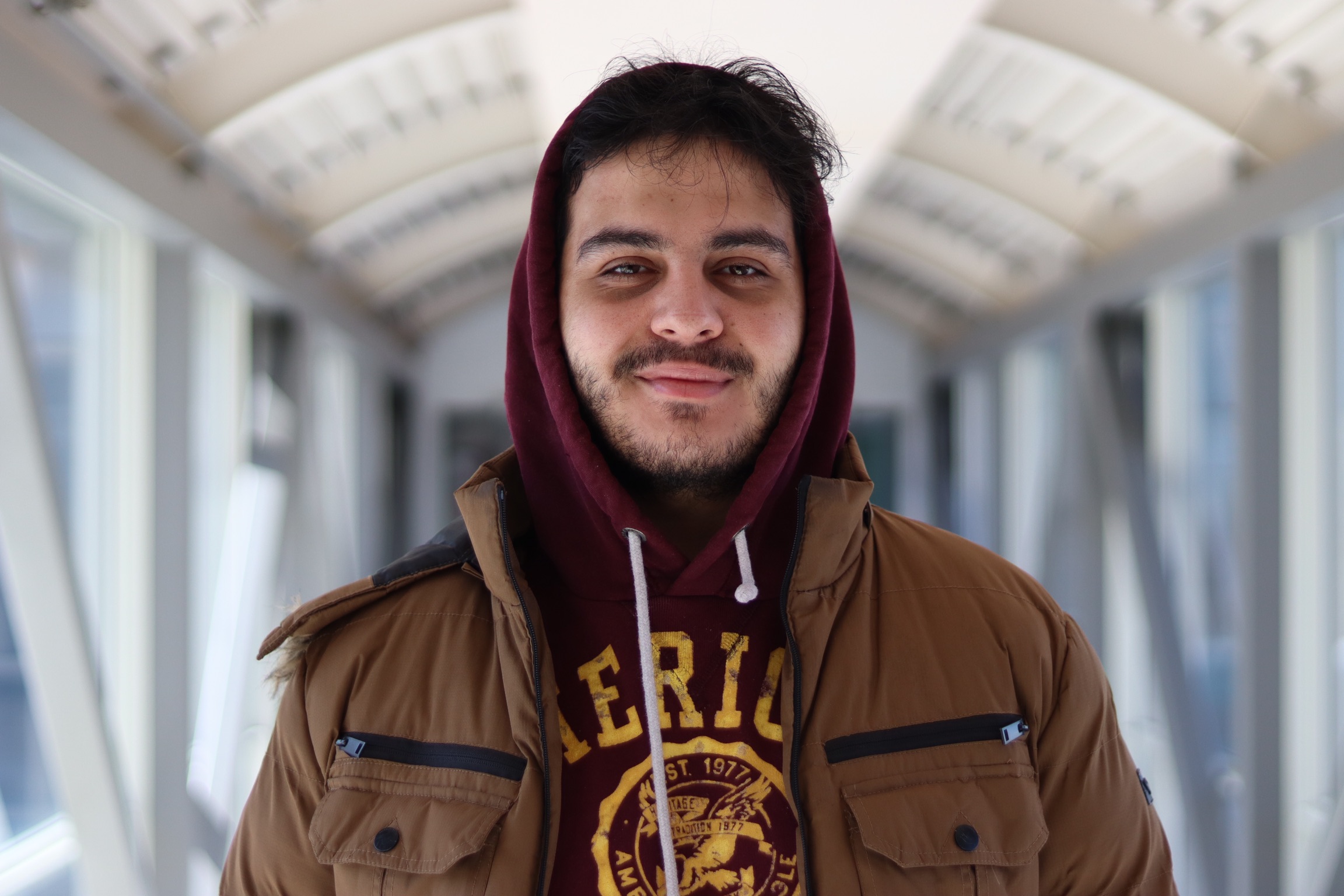
"By going from restaurant to restaurant, trying each one again and again in search of food that would mentally take me back home, I became more and more attached to what restaurants here are serving," writes the author.

Nothing brings out that feeling of familiarity like food does. For Lebanese people, food is perhaps the most beloved part of our culture, and one that we indulge ourselves in the most.

Since the Lebanese Civil War in the 1980s, many Lebanese people have left the country in search for a better life. A lot of them ended up in Canada, with the idea that it is a country that takes care of its people, and thus, they could establish a new, more peaceful life here.

However, many of them still cling to their traditional ways of living in the hopes of preserving some sense of homeyness.

Thus, as a Lebanese university student who was outrageously homesick when I arrived in Canada in 2017 to study journalism at the University of Ottawa, it was through familiar food that I attempted to quench my thirst for home.

The options were plentiful. There is a shawarma restaurant on what feels like every block and a lot of places serve what we call “Manoush’eh” (men-ou-sheh) but is known as pie here. There is humus in every store and many restaurants serve what is known in Lebanon as “Masheweh” (ma-sha-weh), which is essentially barbecued meats such as kebabs and chicken taouk.

However, before I ever got to discover all that, my first experience with my home’s food happened in the University of Ottawa cafeteria. The experience left me disheartened and discouraged, to say the least.

It was like someone spilled a drink all over a beautiful painting, as I witnessed how they massacred the traditional shawarma right in front of my eyes. A traditional chicken shawarma has the following elements: the chicken, the garlic sauce, the fries and the pickles. That’s all that it needs to create the lovely taste attributed to the sandwich that has seen it reach global acclaim.

So when I saw the chef throw all kinds of different vegetables into the sandwich and a multitude of different sauces, I was quite bewildered. However, the true tragedy was not in the overcompensation of the sandwich, but how underwhelming the taste of it all was.

The shawarma served to me that day lacked key fundamentals in the spicing of the chicken and garlic. It tasted bland when compared to the way it is served back home and left me disappointed. I was still in need of the right food to fill the hole in my heart.

However, I decided to stay optimistic. Perhaps it was just this specific cafeteria that served it to unacceptable standards, and surely other restaurants within Ottawa would do it justice?

Thus, the search for home began. I went on trying every single restaurant that reminded me of home, be it for shawarma or for any other traditionally Lebanese food. However, wherever I went, the feelings of being underwhelmed and disappointed seemed to follow, as it became a common theme with each experience.

They all lacked that kick – that extra bit of flavour that would make the food taste so good back home. However, one thing they did manage to do right, even if I did not realize it right away, was that they were slowly wiping away any feelings of homesickness I’d had at the start.

What took some time to understand was that even if the Lebanese food here was not an exact replica of the food back home, it didn’t need to be. This wasn’t Lebanon, this was Canada. Rather than cling on to the bits of Lebanon I found here, I needed to establish a new sense of familiarity in a new land.

By going from restaurant to restaurant, trying each one again and again in search of food that would mentally take me back home, I became more and more attached to what restaurants here are serving.

Despite them not living up to my expectations initially, I’d still crave the food from these restaurants. What was happening? I came to the conclusion that I had grown to love the Canadian take on Lebanese food.

Now I have specific favourites I often go back to: Food Frenz in Sandy Hill has potentially the best Manoush’eh I have ever had in my life. Fairouz on Clarence Street is like a piece of Lebanon got teleported to Ottawa. And Shawarma House in Kanata makes shawarma the most accurately I’ve seen in Ottawa.

Through my attempt to find familiarity and feel as though I am still back in Lebanon, I created a new sense of comfort with the options available here. In turn, I was able to find my place in my new home.

College students relieved after faculty strike averted

After a week of uncertainty, Algonquin College students were relieved to learn that the faculty bargaining team and the College Employer Council reached an agreement and called off the scheduled […]
Photo: Stephane Gunner
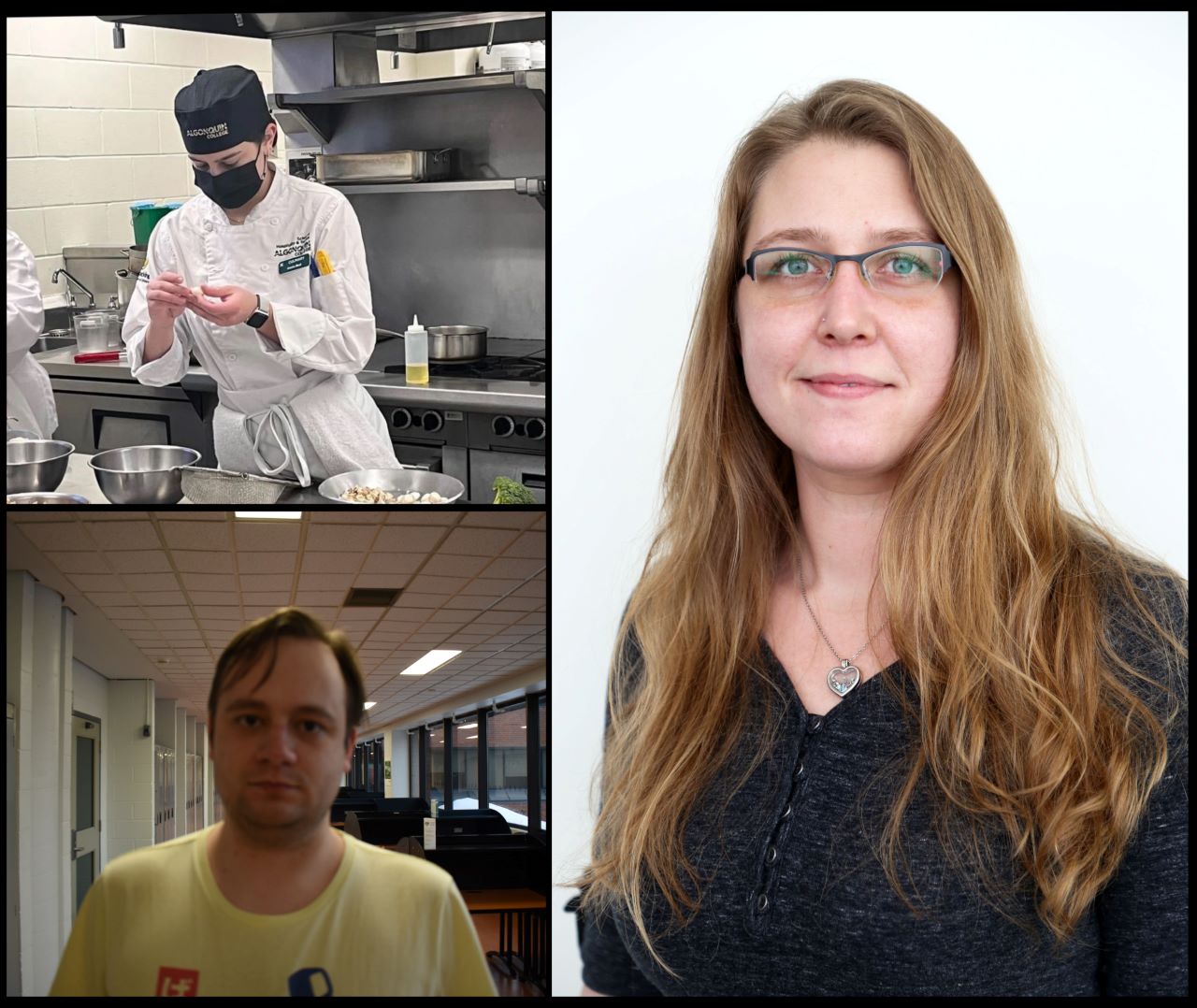
Amelia Medl (top left), Shane Deavy (bottom left) and Laila Doyon (right), are all grateful a strike didn't happen.

After a week of uncertainty, Algonquin College students were relieved to learn that the faculty bargaining team and the College Employer Council reached an agreement and called off the scheduled strike late Thursday night before the 12:01 a.m. deadline.

The Applied Arts and Technology bargaining team representing the college faculty and the CEC issued a joint statement just over an hour before the strike deadline on March 17 announcing they’d agreed to enter binding arbitration interest and end the work-to-rule actions.

In an announcement by Algonquin College, President Claude Brulé wrote that both parties reached an agreement.

“For our learners and our employees, everyone was really anxious about this and we all want to put our students first. The quality of education is important to us all and we did not want to interrupt the learning process,” said Brulé. “It was great news to be able to announce this and all the students were able to return to class.”

Laila Doyon, a student in electrical engineering technology, said the past two years have been very tough.

“Online learning is not ideal for anybody and the mental health aspect was really hard on everyone,” she said.

Doyon, who is in her program’s last semester, says the stress of working on a final project was made more difficult by the uncertainty of a potential strike. As she has a job coming out of the program, she also didn’t know if that might be at risk too. “It was like we were not kept in the loop about anything,” she said.

For Doyon, she felt like the CEC and the union were attacking each other, because of how they were talking.

“It felt like bullying and it doesn’t feel right that we were put in the middle of it. It was like being part of a divorce,” said Doyon. “I don’t know what is going to happen next. I am worried something will happen next because we have now been conditioned that something will happen. So, it has been difficult and still is. It will remain until the year is done until I actually have my graduation.”

Culinary management student Amelia Medl, said that she was so relieved after reading the email on her phone.

“I was smiling and laughing,” said Medl. ” I was so happy because I waited for that email. I stayed up late because I knew there would be an email saying if it would happen. I mean not having classes is obviously super stressful because I have a bit of a schedule that I’m on. I want to graduate and obviously I like what I’m doing.”

Medl said she was anxious the semester would wrap up earlier and the students would have to go.

“I was just kind of stressed out about that, but it was a super big relief that it didn’t happen,” she said.

Business administration student Shane Deavy was a student during the 2017 strike. Last week’s experience gave him a bad feeling he’d felt before from the previous strike.

“I was here in Algonquin for a different program,” he said. “So I was kind of hoping that they wouldn’t have one, but also expecting that they would if that makes sense.”

Deavy said when he heard the news about the potential strike, he felt incredibly disappointed.

“I mean, nobody wants to go on a strike. But if you’re going to strike, at least give us our money back or say something more on the guidelines as to what will happen,” said Deavy. “Get your shit together. We’re already paying a lot of money as is to come here, especially international students.”

Brulé said the college is pleased they were able to reach an agreement and now the matter is being placed before an arbitrator and those next steps will be put in place in the weeks to follow.

“To me, it’s a very positive step forward,” said Brulé. “It allows us to continue what we want to do. Our mission is to transform hopes and dreams into lifelong success. This is the heart of it. We all want our students to be successful. This allows us to complete the winter term uninterrupted and we’re delighted.”

Online Editor

The Algonquin Times is a newspaper produced by journalism and advertising students for the Algonquin College community. Follow us on social media! Algonquin Times Twitter Twitter (Events & Promos) Facebook Facebook (Events & Promos) Instagram Snapchat

Putin threatens to cleanse Russia of ‘scum and traitors’

Local Ottawa Citizen: Dr. Brent Moloughney, the deputy medical health officer for Ottawa Public Health, says that they are wary about signs of a rise in transmission of COVID-19 as […]

Local

Ottawa Citizen: Dr. Brent Moloughney, the deputy medical health officer for Ottawa Public Health, says that they are wary about signs of a rise in transmission of COVID-19 as cases begin to slowly rise. Moloughney says that they are watching the situation closely and advise those who are prone to severe illness to remain cautious amid masking requirements being lifted soon.

National

CBC: The federal government will abolish the COVID-19 testing requirements for fully vaccinated travellers starting April 1. According to experts, the spread of Omicron has made the practice useless. However, vaccine mandates for travel through air, ship and rail will remain in effect.

International

National Post: Vladimir Putin has threatened to get rid of Russians who are working against Russia in favour of the United States and its allies, calling them “scum and traitors.” Three weeks into the war with Ukraine, Russia is suffering economically due to international sanctions. Putin stated that Russians living abroad are traitors to the motherland as well.

Public relations students launch charity campaign

The room in the N building was filled with keen, well-dressed public relations students on the afternoon of Wednesday, March 17. Level 2 students were waiting for their turn to […]
Photo: Leslie Bader
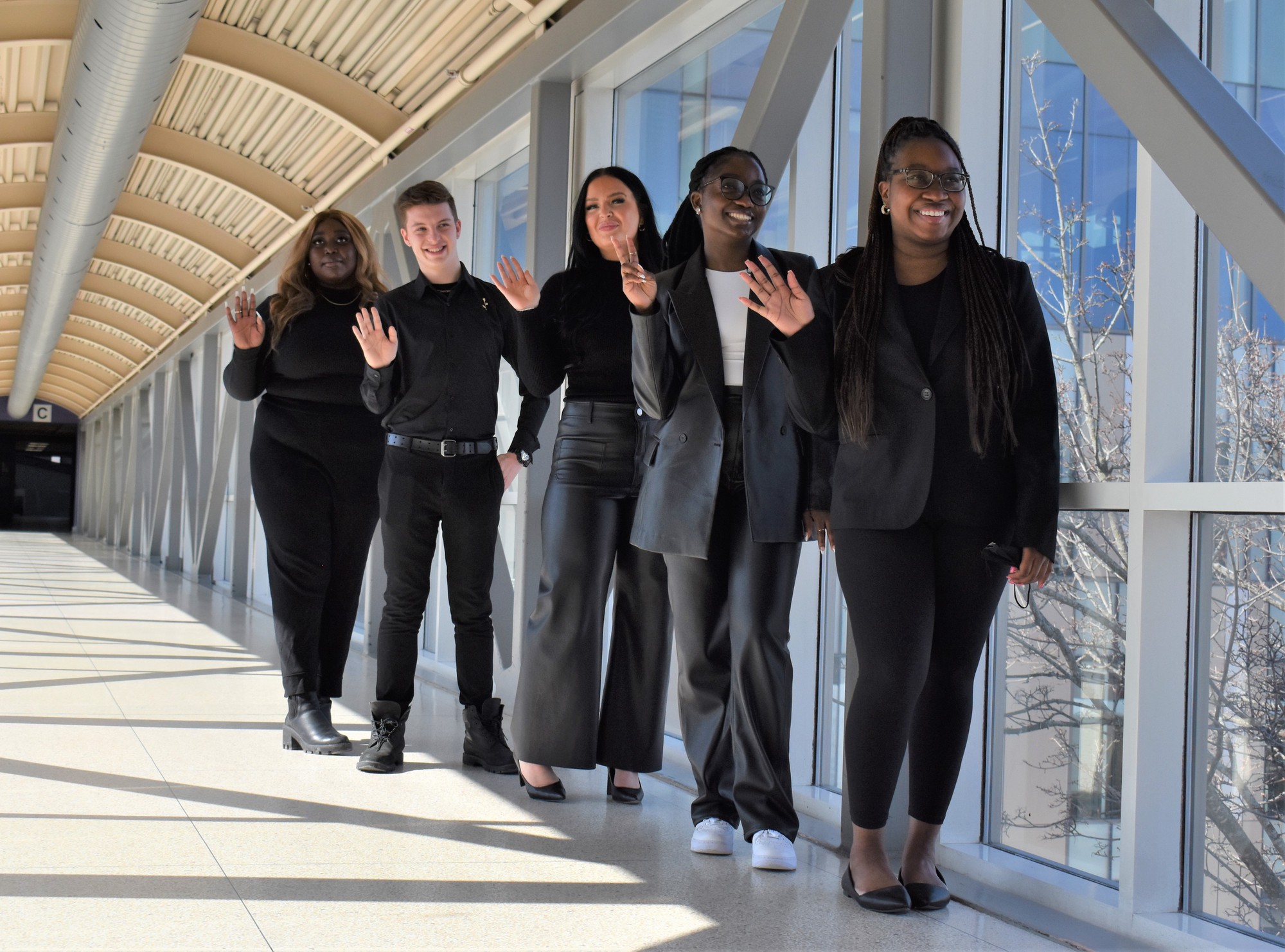
โ€œWe chose this charity because it was close to home, because many of us have used their resources,โ€ said Bolu Olutunda, team lead for the "Sparkling Portraits" event.

The room in the N building was filled with keen, well-dressed public relations students on the afternoon of Wednesday, March 17. Level 2 students were waiting for their turn to host their first, professional news conference for their colleagues, teachers and students in the radio and journalism programs.

Every year, the class holds an awareness and fundraising campaign to support a local charity.

This year, teams have organized seven events under the banner “Hear to Hear You,” which will support the Sexual Assault Support Center of Ottawa.

“We chose this charity because it was close to home, because many of us have used their resources,” said Bolu Olutunda, team lead for the “Sparkling Portraits” event.

Olutunda and four of her colleagues have organized a paint and wine night, which will take place on April 6 at the Barley Mow Orleans. (The official date will be announced when more is known about the faculty strike.)

According to Astria Mabwoto, the team’s spokesperson, two local artists will lead painting tutorials and host discussions on art and mental health. “Friends, colleagues and family members can get together to paint, while enjoying food and refreshments,” said Mabwoto.

Tickets are available on Eventbrite for $25 individual, $45 couple and $65 for a group of three. There will be a raffle for three prizes and a painting competition at the end of the evening.

Sarah Ouellet, logistics lead, told attendees that research from Statistics Canada suggests that 75 percent of post-secondary students either witness or experience sexualized behaviour.

“We are extremely proud to be representing a charity that has been supporting survivors for almost 40 years,” said Ouellet.

The Sexual Assault Support Centre Ottawa offers help via phone, groups and individual sessions. Grounded in feminist theory and action, SASC is dedicated to social justice and political action. It is a highly inclusive and diverse organization.

It’s time for Canadians to embrace soccer as the gargantuan sport that it is

Jonathan David raced past the half-way line and charged at the goal, eventually chipping El Salvador goalkeeper Kevin Carabantes to score the final goal of the game, securing an important […]
Photo: Aadil Naik
"It comes from a community feeling, from how it brings you closer to your friends and family, and all the good memories associated with watching your team win."

Jonathan David raced past the half-way line and charged at the goal, eventually chipping El Salvador goalkeeper Kevin Carabantes to score the final goal of the game, securing an important win that put Canada one step away from the World Cup in Qatar.

Les Rouges, as they are nicknamed, now need one win from their remaining three games to secure a seat at the first ever winter World Cup. If they are to do so, it will surely be a monumental moment in the history of Canadian sports.

If they are to qualify, this would be only the second time the Canadian national men’s team would have done so, having last made it all the way back in 1986, a whopping near 40 years between them.

As a result of that, now more than ever is the best time for Canada to start embracing soccer as the gargantuan sport that it is, fully support their national team and push them to go as far as possible in the tournament.

Soccer is the biggest sport in the world and by a large margin too. According to the World Atlas website, it is estimated to have around four billion fans worldwide, which is double of Canada’s current favourite sport, hockey, with over 80 per cent of Canadians watching hockey every week according to a survey done by CityNews.

The biggest sporting event in North America, the Super Bowl, pales in comparison to the World Cup final when it comes to viewers. The World Cup final in 2018 had a record-breaking three and a half billion viewers tune in, which dwarfs the highest viewership ever recorded for the Super Bowl, which was nearly 115 million viewers in 2015. In 2022, 112.3 million viewers turned out for the Superbowl.

If Canada were to make it to the 2022 World Cup, they would be playing the sport on the grandest stage of them all, being watched by almost every nation in the world and as such need to be able to hold their own against the best of the best.

This requires the right support, not just by the Canadian Soccer Association, but by Canadian citizens as well. From the former, a lot of investment is required to push the team to newer highs, giving the coaching staff and players the resources to compete with the top dogs of the sport.

The current crop of players is the best Canada has had in years and they need the right support in order to reach their full potential. Players like Alphonso Davies and Jonathan David only come around once a generation and the Canadian national team needs to take advantage of them while they still can.

Davies recently won the 2021 Canada Soccer Player of the Year, having recently broken the all-time record for assists in the Men’s National team with 15 career assists along with Canada‘s record for eight career assists in FIFA World Cup Qualifiers.

Davis, along with David, play with two of the biggest clubs in Europe, the home continent of soccer. Davies is playing with the most successful club in German football, Bayern Munich, while David plays for French giant Lille. Both are superstars who will play a big role in the sport for years to come, and with the right support, more Canadians can follow suit.

From the fans, what is needed is to embrace the sport and show soccer the same love they show hockey. The passion for the game, the culture, it all needs to be advanced to make Canada the soccer juggernaut it has the potential to be.

The debates on which sport is best always go into the details of the sport, such as whether it is a fast paced one versus a slow paced one, but in reality, the love of sport is much deeper than that.

It comes from a community feeling, from how it brings you closer to your friends and family, and all the good memories associated with watching your team win. At the World Cup in Qatar, with the right promotion, the Canadian National Team can start a new era by providing Canadians at home with good memories of the team’s effort.

Kids at home will go from not knowing a single player to idolizing some of them. The seeds of this cultural shift has already begun as the men’s national team picked up victory after victory.

If Canada goes on to play on the biggest stage of the biggest sport in the world, it can light a spark across the nation that will see the sport reach its highest highs in the country. It is now or never for Canadians, and it is time to embrace soccer fully.

Police foundations program emphasizes modern priorities in law enforcement

Every Thursday Brian Kovach and his Siberian Husky go to shelters including the Shepherds of Good Hope, the Ottawa Mission, Cornerstone for Women or the Veterans’ House to volunteer for […]
Photo: Liam Fox
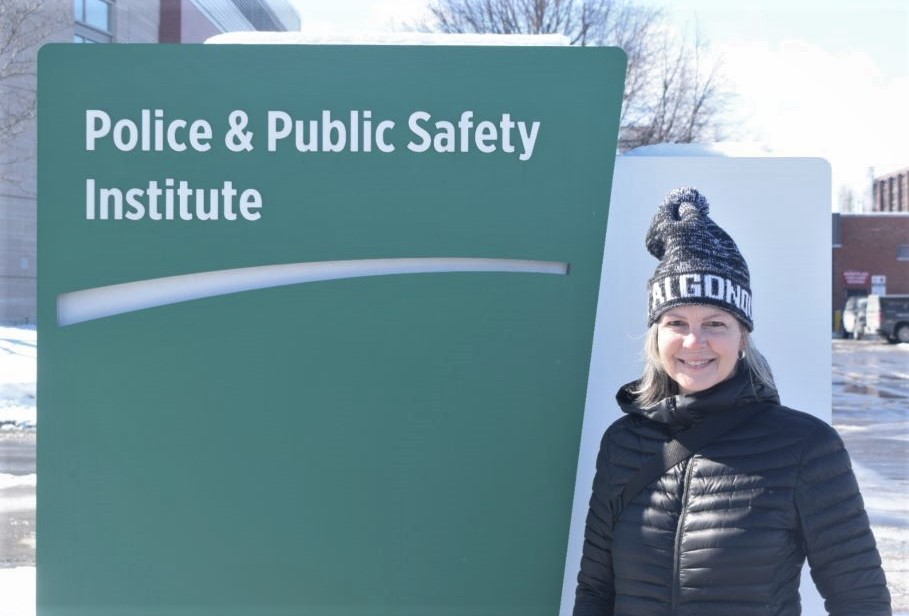
Jill Reeves, a professor in the police foundations program at Algonquin College, said the police foundations program has always been progressive and forward-looking.

Every Thursday Brian Kovach and his Siberian Husky go to shelters including the Shepherds of Good Hope, the Ottawa Mission, Cornerstone for Women or the Veterans’ House to volunteer for Love on a Leash, a non-profit organization providing emotional support to people through pet therapy.

“Doing that really allowed me to expand on being able to communicate with the general public and people I do not know and engage in conversations with people,” said Kovach, a second-year police foundations student.

Kovach’s program has put an emphasis on teaching students how to work with the community.

“Your words are the most powerful tool you have as an officer. You want to talk because that’s the best thing. You do not want to have a physical struggle with anybody, nobody wants that to happen.”

Following the murder of George Floyd in May 2020, where former Minneapolis police officer Derek Chauvin kneeled on Floyd’s neck for over nine minutes, the “defund the police” movement and changes to police reform have gained popularity in jurisdictions across Canada and the United States.

There have been many changes to law enforcement since. Many police departments in North America have received budget cuts and there have been changes to use of force rules, including bans on chokeholds. There have also been efforts for increased transparency between police services and the public.

The police foundations program at Algonquin College has made changes of its own. The program has placed an increased priority on students interacting with the community and volunteering.

Although being delivered remotely since March 2020, police foundations have added and adapted courses to reflect this.

“The program has always been progressive and forward-looking, focusing on contemporary trends, and certainly human rights and freedoms and protection thereof,” said Jill Reeves, a police foundations professor, in an email to the Algonquin Times.

“In the Fall of 2021, we brought in a new program of study which reflects current trends and goals in law enforcement. We included more fitness time for students to contribute to wellness, included new courses like Victimology and Community Service and modified police powers to include a focus on ethics, professionalism and the law.”

In addition to the recent changes to the program, police foundations have integrated the Charter of Rights and Freedoms into all levels of the program and have always had courses that highlight public accountability in law enforcement such as diversity in Canada, conflict management, psychology and sociology.

“These courses strike a good balance between hard skills (investigations, interviewing, legislative based courses) and social science/theory courses leading to well-rounded candidates for hire in a variety of fields,” said Reeves.

Curriculum changes of the police foundations program are in sync with the priorities and policies of the Ottawa Police Service, according to Sgt. Maria Keen, who is a platoon sergeant in the Ottawa police and a part-time professor in the police foundations program at Algonquin College.

The Ottawa police are a progressive service and have led the way for changes in policing policies for many other police services, said Keen.

“When it comes to harassment policy or equity, diversity and inclusion policies, we are way ahead of the game, and those policies were either already developed or were in the process of being developed before any incidents or anything like that occurred,” she said.

The 37-year-old Kovach enrolled in police foundations after being laid off from his job as a cook at Algonquin College to pursue a career in policing. Now, he and his fellow students are learning skills in de-escalation, use of force rules and interacting with people who are mentally unstable.

Kovach feels police are sometimes generalized by the public. “We should not judge a whole group of people based on a person or couple people’s actions,” he said.

Kovach wants to make a positive impact on communities through police work. “I feel like I can make a difference. I feel like I might be a suitable candidate and I have good intentions,” he said.

Police Foundations is a popular field of study at Algonquin College with over 400 students currently enrolled in the two-year program at the Ottawa and Pembroke campuses.

“Hiring rates in law enforcement fields increased creating more opportunities over the past five years,” said Reeves. We expect this trend to continue as we come out of the pandemic with opportunity in policing, security, corrections and border services.”

Non-commissioned police officer jobs in Ontario are projected to have 7,001 to 8,000 job openings between 2021 to 2025 with an 11.1 to 12 per cent growth rate, according to Ontario’s Ministry of Labour, Training and Skills Development.

Ottawa Police Service is looking for candidates with lots of community service and volunteering experience and diversity in work experience, education, cultural diversity and bilingualism, said Sgt. Keen, who formerly worked in recruiting for the Ottawa Police Service.

Although there is a growing demand for police officers in Ontario, many graduates of the program will not enter a career in policing.

“There are many fields of law enforcement and justice where our students are employed, not just policing,” said Reeves. Over the past five years, hiring in all agencies has been strong. We have graduates in all levels of policing, by-law, special constables, corrections, border services, security and inspection.”

Other graduates will stray from the law enforcement field and choose to further their education, work in social service or find roles working for non-profit organizations.

“Some students go onto university in areas like law, psychology, criminology, emergency management and victimology,” said Reeves. “Many will work in areas where they perhaps began volunteering like grassroots, helping agencies like Children’s Aid, Distress Centre, Shepherd’s of Good Hope, the Mission and any of the local community housing facilities.”

Russian student finds herself cut off from home

When Elizavita Sidorovich first heard that Russia had invaded Ukraine, the Music Industry Arts student wasn’t surprised. “I just knew that something was going to happen,” she said. “They’ve been […]
Photo: Nathan Drescher
Elizavita Sidorovich, a Music Industry Arts student, has received an outpouring of help from her peers and faculty at the college.

When Elizavita Sidorovich first heard that Russia had invaded Ukraine, the Music Industry Arts student wasn’t surprised. “I just knew that something was going to happen,” she said. “They’ve been doing this since 2014.”

What Sidorovich, 20, didn’t realize, however, was how the war in Ukraine was about to affect her personally.

Sidorovich is an international student from Russia who is studying at Algonquin College. Sanctions by the Canadian and Russian governments have left international students like her struggling to buy groceries here in Canada.

Before she came to the college in August 2021, Sidorovich spent her childhood learning the lyrics to American songs and dreamed of being a musician. She knew she wanted to leave Russia as soon as she finished high school. She wanted to live somewhere less suffocating. To get out.

Then she found the college in a pamphlet back home in Moscow.

“It was the first school listed on the first page,” she said. “Music Industry Arts it said. It was like it was made for me.”

Sidorovich’s fall term in the program was a success. She was a straight-A student and quickly made many friends. She called it a life-changing experience.

“The first time I ever smiled in public was here in Canada,” she said. “People in Russia think there’s something wrong with you if you smile in public.”

But then Putin invaded Russia on Feb. 24, 2022, and the world reacted. As crippling sanctions against Russia kicked in, Sidorovich found herself cut off from her parents back home. They couldn’t send her money. She couldn’t buy food or pay her student residence fees.

“I hate Putin. I hate what he’s doing,” Sidorovich said, scrunching up her face in disgust. “I don’t know anyone back home who likes him. He’s robbed Russia for 20 years. Now he’s sending 18-year-olds to another country. For what?”

But what individual young Russians have to say about the war hasn’t changed things for the world, for Ukrainians, or for Russian students like Sidorovich.

Canada’s Parliament passed the Special Economic Measures Act as part of a coordinated wave of unprecedented sanctions against Russia. The sanctions target a series of individuals in Russia, mostly the infamous oligarchs and people in positions of power.

But it also goes after the financial and energy sectors. Russia’s banks have been kicked off the global SWIFT network which allows for fast, borderless money transfers. People like Sidorovich are suddenly cut off from their homes.

Algonquin College is working to keep up with the rapidly changing situation.

“We’ve reached out to these students through email to inform them of various supports that are available,” said Ernest Mulvey, the director of the college’s International Education Centre.

Normally, the IEC arranges study permits, helps international students set up health insurance and gets them settled when they first arrive in Canada. “Right now we’re dealing with exceptional circumstances,” he said.

The IEC is doing what it can to support students just now. They’ve added a full-time staff member to a desk devoted to guidance for students affected by this war.

“Let me be clear: the college recognizes that Russia has illegally attacked and invaded Ukraine,” Mulvey said. “This war affects three cohorts of international students at the college. First and foremost, Ukrainian students. But also Russian and Belorussian students.”

In the email sent out to these students, Mulvey recommended college counseling services and an emergency bursary for students.

“It cannot be used for tuition, but recipients can use it for things such as groceries and rent,” he said of the bursary.

However, when Sidorovich attempted to access the emergency bursary, she was told the college couldn’t do much beyond offering a food card.

“With the sanctions against Russia our support will be extremely limited beyond this food card,” said Krisha Marshall, the financial aid assistant registrar, in an email to Sidorovich. “You will need support from the Embassy and/or you may need to consider returning home if the situation doesn’t improve.”

Krisha Marshall was unable to comment to the Algonquin Times specifically about Sidorovich’s case for confidentiality reasons, but said that there are many supports in place.

“Financial Aid and Student Awards has many supports for students in emergency situations, all students and situations are assessed individually, with specific criteria to assess needs,” she said. “Potential support for students ranges from food, shelter, emergency supplies, and travel home.”

Marshall also said that financial aid has been approached by some students concerning support.

“We have had a total of three students referred, and as per standard practice, have asked for information regarding their emergency need. No students to date have been denied an emergency bursary and their applications are open and waiting to be processed once information is received.”

Marshall also has some tips for students who need to access emergency support through Financial Aid.

“The students need to provide basic financial information and other information regarding their emergency need,” she said. “In addition, we have budget assist tools on our website and students work with a student awards and bursary officer to ensure that all options of support are considered.”

At the program level, Sidorovich has received an outpouring of help from her peers and faculty at the college.

“Ellie is a straight-A student and a wonderful person,” said Colin Mills, the program coordinator of the Music Industry Arts program at Algonquin College and one of her professors. “The department is doing what it can for her. Her classmates threw a surprise birthday party for her and everyone brought gift cards.”

Mills’ main concern is seeing his students succeed in the MIA program. “My goal is to see Ellie graduate from the program, ” he said. The program is 12 months long and ends in August. “We just got to get her through to the end.”

Some of Sidorovich’s peers have said they’ll buy her food or let her sleep on their sofas. “They gave me $350 worth of grocery cards for my birthday,” she said. “Colin got me a birthday cake. My tuition is paid to the end, at least. If worse comes to worst, I can live with my best friend.”

But no matter what happens, Sidorovich says she’s not going back to Russia.

“I never want to return there,” she said. Her study permit lasts until 2023, and under Canadian immigration laws, she can convert that to a work permit upon graduating from a Canadian college or university. After one year, she can apply for permanent resident status.

All of which means she just has to get through these last four months of college. “It’s expensive to live on res,” Sidorovich explained. “I need another $5,500 for the last three months. It’s due on April 14, but my parents can’t send me the money.”

Sometimes there are days or even hours when money transfers suddenly go through. “We watch it all the time. If the opportunity comes up, my dad will send me everything at once.”

She doesn’t want to live on someone’s sofa. “But if it’s what I need to do, then it is what I will do,” she said.

Sidorovich remains pragmatic and optimistic. She’s even thinking about her post-college plans. “I really like Kitchener,” she said. “I might move there.”

UPDATE, March 25, 2022: Since this story was published, Elizavita Sidorovich says the college has told her it will pay her residence fees and her meal plan. She has also been given another $150 grocery card.

Ontario colleges and faculty unions to resume bargaining

Local News Ottawa Citizen: As a strike deadline approaches, bargaining between Ontario colleges and faculty unions will resume. The College Employer Council and the Ontario Public Service Employees Union will […]

Local News

Ottawa Citizen: As a strike deadline approaches, bargaining between Ontario colleges and faculty unions will resume. The College Employer Council and the Ontario Public Service Employees Union will meet on Thursday. The run will end at 12:01 a.m. on Friday, according to the union. If significant progress is made when talks continue, the deadline could be extended. Algonquin President Claude Brulé said the college was doing everything it could to minimize disturbance.

National News

CBC News: The federal government will announce on Thursday that pre-arrival COVID testing for visitors entering Canada will be removed. According to sources familiar with the situation, Canada is eliminating testing requirements at airports and land border crossings. The health, transportation and tourism ministers will attend a press conference on Thursday morning to announce the border modifications. Travellers entering the country must currently present proof of a negative antigen or molecular test before flying or arriving at the border.

International News

CBC News: Russian forces destroyed a theatre in Mariupol where hundreds of people were sheltered and rained fire on other cities on Wednesday, despite the two sides projecting confidence about efforts to negotiate a cease-fire. According to Ukraine’s foreign ministry, the bombing ripped apart the centre of the once-elegant structure, where hundreds of residents had been living after their homes were destroyed in the conflict. Officials reported several people were buried in the rubble, but there was no immediate information on deaths or injuries from what the Mariupol municipal council described as an airstrike on the theatre.

Algonquin Times podcast

Stay Informed

Sign up for our newsletter

Subscribe

* indicates required