180 years later: The Sisters of Charity’s legacy in Ottawa
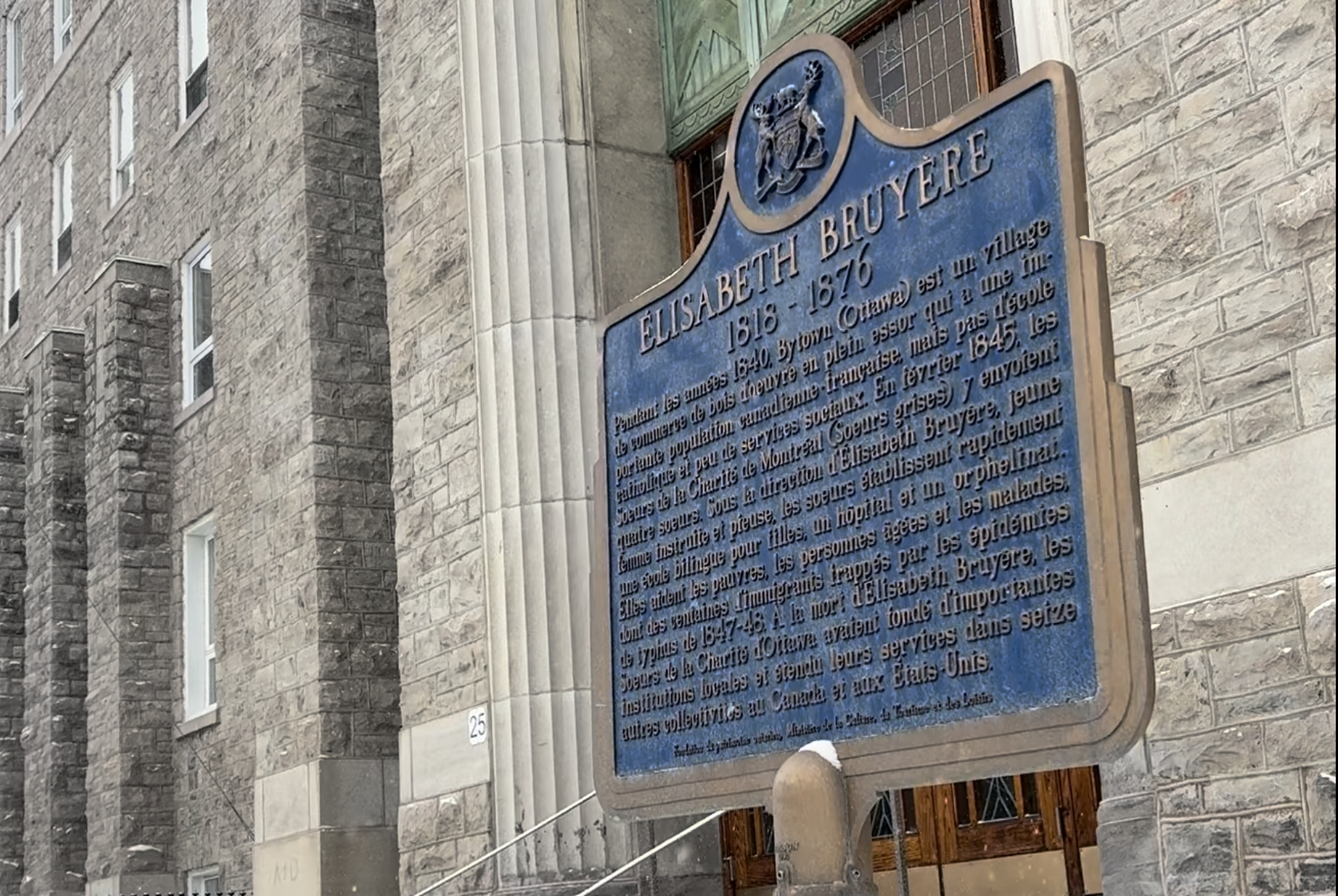
On Feb. 20, 1845, the church bells of Bytown were ringing as residents rushed out onto the frozen Ottawa River. Mother Élisabeth Bruyère, along with three other Grey Nuns of Montreal, had completed their two-day journey to the town. By the request of Kingston’s Bishop Phelan, Bruyère was sent to establish social infrastructure for the women, children and elderly of Bytown, now Ottawa.
“Bytown was rejoicing with the arrival of the Sisters. They knew there would be all kinds of activities that would enhance their quality of life,” said Sister Louise Charbonneau, the vice-postulator of the cause of the venerable Élisabeth Bruyère.
The Sisters of Charity of Ottawa were established on that day and 2025 marked their 180th anniversary. The original celebrations were counter-intuitive to the charity’s humble nature. The Sisters seldomly celebrate their own achievements.
They carry on Bruyère’s legacy in silence through the Sisters of Charity Motherhouse and the Bruyère Health hospital on Bruyère Street.
The Motherhouse exhibits multiple artifacts of the Sisters’ foundress, including Bruyère’s coffin which features a vase with her heart in it and a museum in their Historical Site.
“I like to think of Bruyère as one of Ottawa’s best kept secrets,” explained Charbonneau. “Most people have never heard about Bruyère, and even less about her works of charity and the Sisters of Charity of Ottawa.”
Charbonneau and Sister Louise Séguin, the curator of the Historical Site, have guided many tours of the Motherhouse, educating visitors on Bruyère and her impact in Ottawa, alongside her Sisters of Charity.
Emma Anderson, a University of Ottawa professor who specializes in religious studies, has been arranging class field trips with the Sisters for years.
“I have been taking students there for almost 20 years,” said Anderson. “It shows visitors a lot about the flavour of Canadian Catholicism in the mid-19th century.”
The Sisters of Charity often find themselves in Anderson’s lectures across various courses, such as religion in Canada and saints and heretics. Despite teaching religious studies, Anderson admitted most students had never heard of the Motherhouse before their class trip.
“It is pretty rare for people to know about it. The only time I had a student who did know about the Motherhouse was because one of his aunts was a nun there,” she said. “It is a real shame that the Historical Site is so little known: it is a little jewel of local history.”
As the vice-postulator of Élisabeth Bruyère’s cause, Charbonneau aims to spread the word of Bruyère and her works in a Bytown with very few social services.
“Bytown was a small and rough lumber town. There weren’t a lot of social, medical, or educational services,” said Anderson. “The Sisters of Charity undertook to provide all of these: a huge job for a very small number of nuns.”

By her fourth month in Bytown, Bruyère became a pioneer of social innovation. The Sisters of Charity had established a school, an orphanage, a home for the elderly and a hospital, which would become Bruyère Health.
“Others might have seen what the need was, but they didn’t commit to making a difference. Bruyère and her group committed to making a difference,” said Charbonneau.
In 1847, the typhus epidemic hit Bytown, due to a large number of Irish immigrants who migrated over in unsanitary ships. The small number of Sisters in the town cared for hundreds of patients. Most of them, including Bruyère, ended up getting sick because of the constant exposure to the disease.
Bruyère’s group gained the trust and adornment of the Bytown citizens for their medical bravery. However, this reputation would be questioned in 1871, when Ottawa experienced its first smallpox outbreak.
Patients were treated very poorly, at the time, due to the contagiousness of smallpox. The Sisters would care for people in private isolated spaces, to limit the spread of it. Any dead bodies were buried at night, so the citizens did not see them.
The community criticized the efforts of the Sisters, as they were not as visible as they had been during the typhus epidemic. Bruyère chose to not publicly defend her group.
“One of the priests wanted Mother Bruyère to speak up and defend herself. She said, ‘No, God knows what we are doing and that’s sufficient’,” said Charbonneau.
The Sisters continued to treat patients with smallpox, away from the public eye and to minimal fanfare.
Bruyère passed away on April 5, 1876. Her medical legacy is carried on to this day by the hospital she helped build.
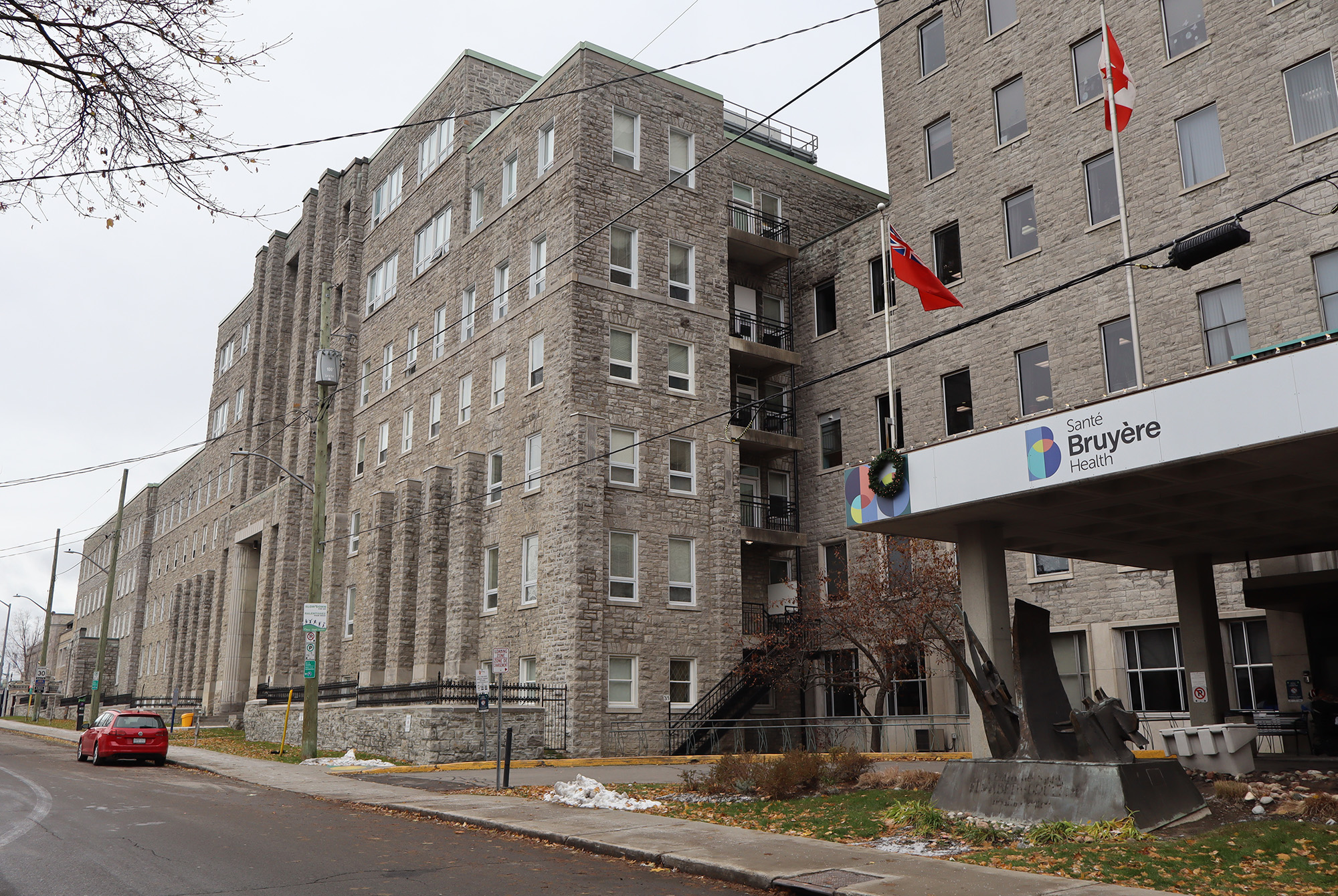
Originally known as the Ottawa General Hospital, Bruyère Health took after the Sisters’ foundress, in her name and values. The hospital’s mission statement mentions compassionate care, the Catholic mission and educating the future generation. All the while focusing on rehabilitation, complex care and research.
“(Bruyère Health) truly fits a gap in our system. I often say if Bruyère wasn’t here, there would be a slow down in the entire healthcare system in Ottawa,” said Marie-Eve Pinard, Bruyère Health’s director of mission effectiveness.
As of April 2025, Bruyère Health had 863 beds across their four locations, and had 58,200 visits in the last fiscal year across their two Academic Family Medicine facilities.
A Sister has not been on the board of Bruyère Health since the early 2000s, however the hospital still maintains its Catholic values thanks to the Catholic Health Sponsors of Ontario.
Today, the Sisters of Charity of Ottawa are less visible than ever before, but their impact is still apparent all around their city. Rather than singing their own praises, they prioritize the causes their foundress did 180 years ago.
“Our nature as a religious institute is humility and support in the background. People might think, ‘The Sisters have gotten older and we don’t see them as much anymore,’” explained Charbonneau. “We’re still there and our heart still beats to the rhythm of Élisabeth Bruyère’s heart for God’s people.”