Turning trauma into art: Ottawa event gives human trafficking survivors a space to heal
Katie Closs was 16 years old when she was taken by a stranger at knifepoint. That man would become her trafficker for the next week.
“He had (the knife) hidden so people couldn’t see it, but I knew it was there,” said Closs.
“I couldn’t scream because I feared for my life.”
On the seventh day, Closs’s captor stepped out to get something at the store. It was the moment she had been waiting for.
“I made the scary choice to run for it at that point,” said Closs.
Closs escaped through a window, running in just her socks through the snow up Montreal Road in Vanier. She never looked back, but that one week completely reshaped her life.
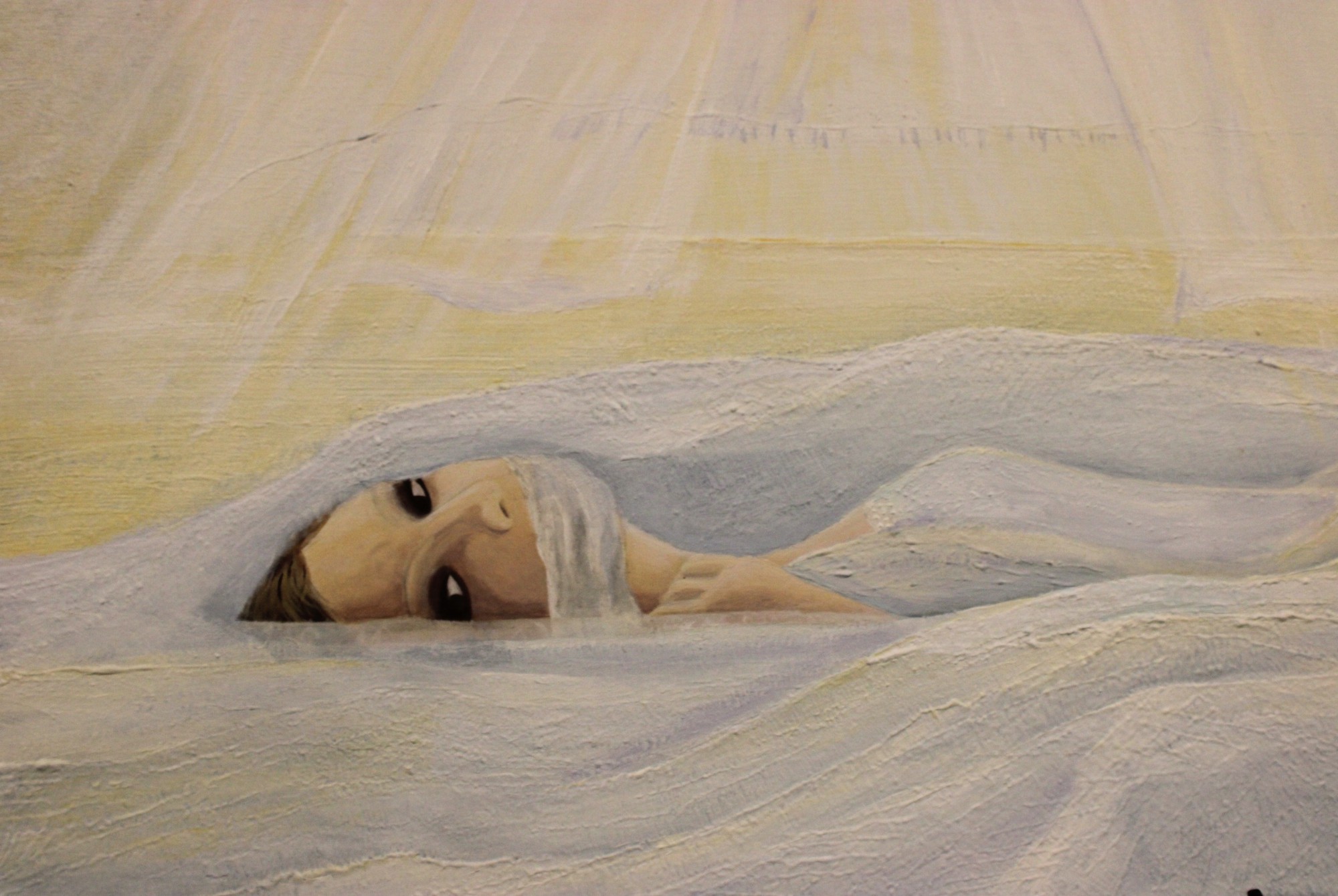
At Ottawa’s sixth annual Hope and Healing event on Oct. 13, recovery took shape through art, offering a glimpse of what it looks like to turn painful experiences into paintings, sculptures and mixed media.
Escaping a trafficker doesn’t mean escaping the experience. The fear, trauma and difficulty to reintegrate back into “normal life” lingers long after the immediate danger has passed.
For survivors like Closs, healing and recovery didn’t happen overnight — it took years.
Closs described being so terrified of her trafficker coming back or hurting her family that she lied to police about her week-long disappearance.
“I look back at it today and think what could I have done in that situation? What would have helped me and why didn’t I speak up?”
After sharing her story of survival, Closs performed a traditional Indigenous jingle dance to open the event.
Hosted by the Ottawa Coalition to End Human Trafficking (OCEHT) and spearheaded by Wendy Gee, the event brought survivors, advocates and community members together in a supportive, healing environment.
“What it was born out of was a place where survivors could use their creativity and move through some of the trauma that they had endured when they were being trafficked,” said Gee, executive director of A New Day Youth and Adult Services.
“Many survivors have this creative outlet that we had seen and this was a safe way for them to talk about and work through their trauma.”
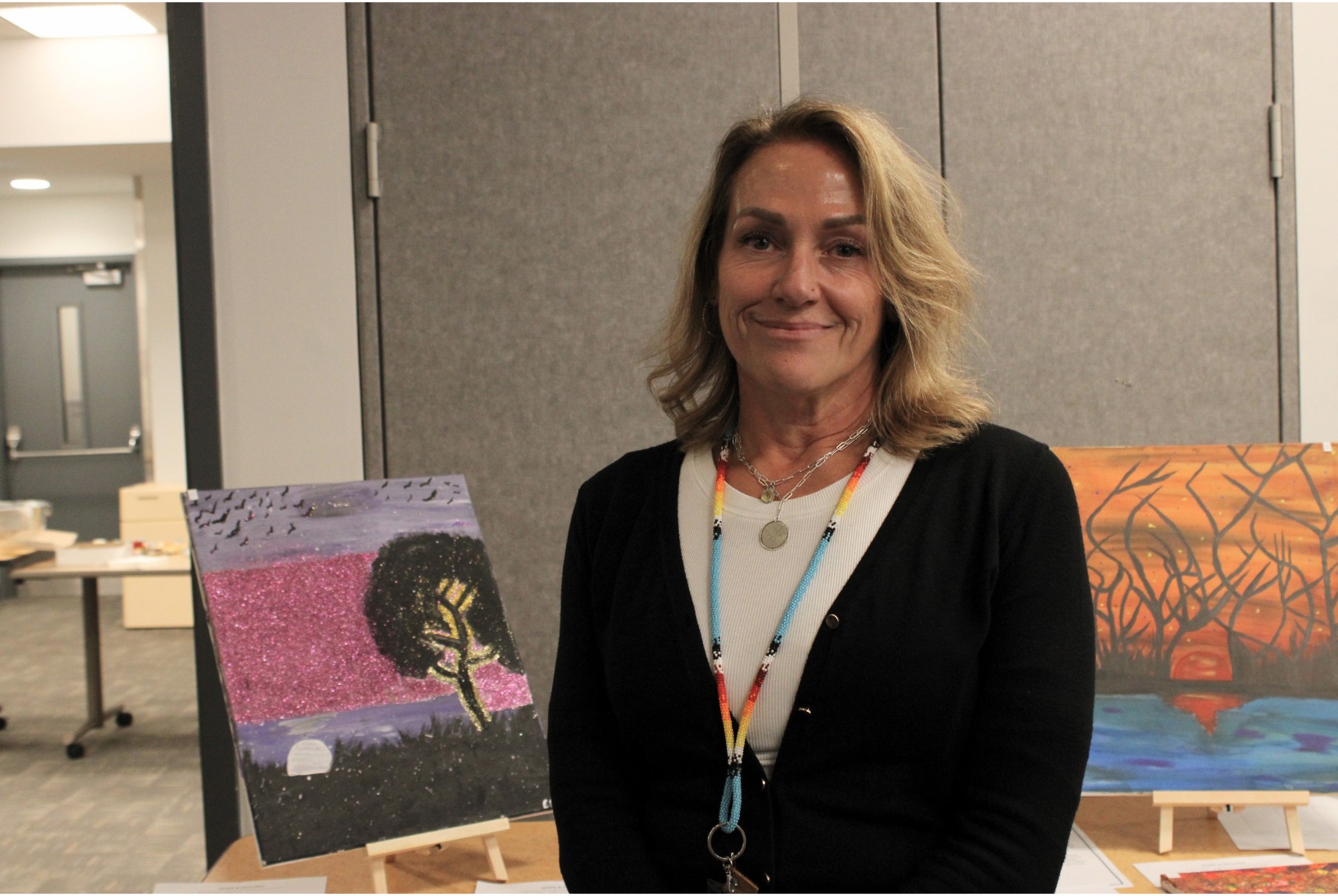
Gee believes the highlight of the event is seeing the artists make something beautiful out of the horrible things that have happened to them.
It’s a rare occasion to show off such intimate creations without fear of being judged.
Following Closs’s jingle dance, two more survivors performed powerful spoken word pieces, sharing messages of pain, resilience, hope and recovery.
After the performances, attendees had a chance to explore the art displayed around the room, all made by survivors with materials provided by OCEHT.
The reactions were audible and often visceral, the room filled with murmured conversation and sounds of appreciation.
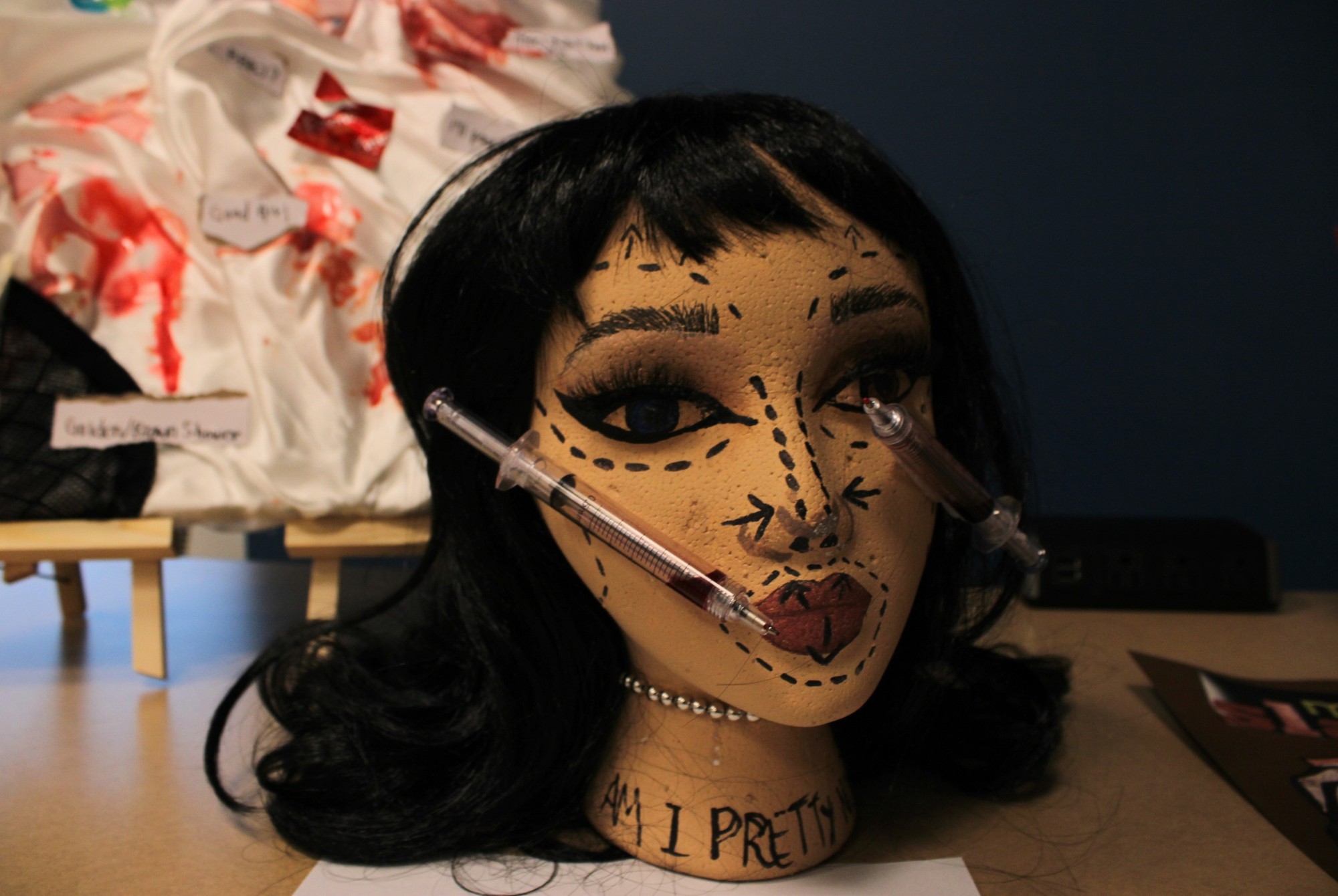
Among the pieces displayed were paintings of all sizes, mannequin heads and a painted skateboard. People could bid on pieces they liked, with all proceeds going directly back to the artists.
Gee said participants have been paid up to $500 for their art at past events.
“I think people that go deeply appreciate the hard work and the love that goes into each piece — that resonates with somebody,” said Gee. “It really does.”
Helping with the event was art and trauma therapist Linnea M., who due to the sensitivity of her work with clients asked that she only be identified by her last initial.
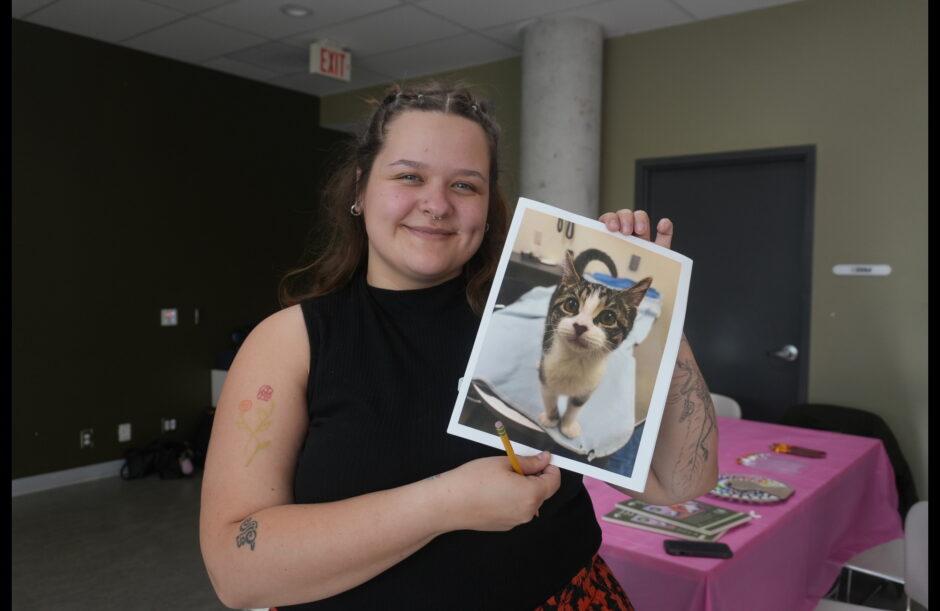
Linnea had a table set up outside the main event space, covered with collaging materials where people could sit, connect and create some art of their own.
“So much of the human experience isn’t done through words,” said Linnea.
“A lot of people don’t necessarily have access to their own voice. Maybe the art can help that.”
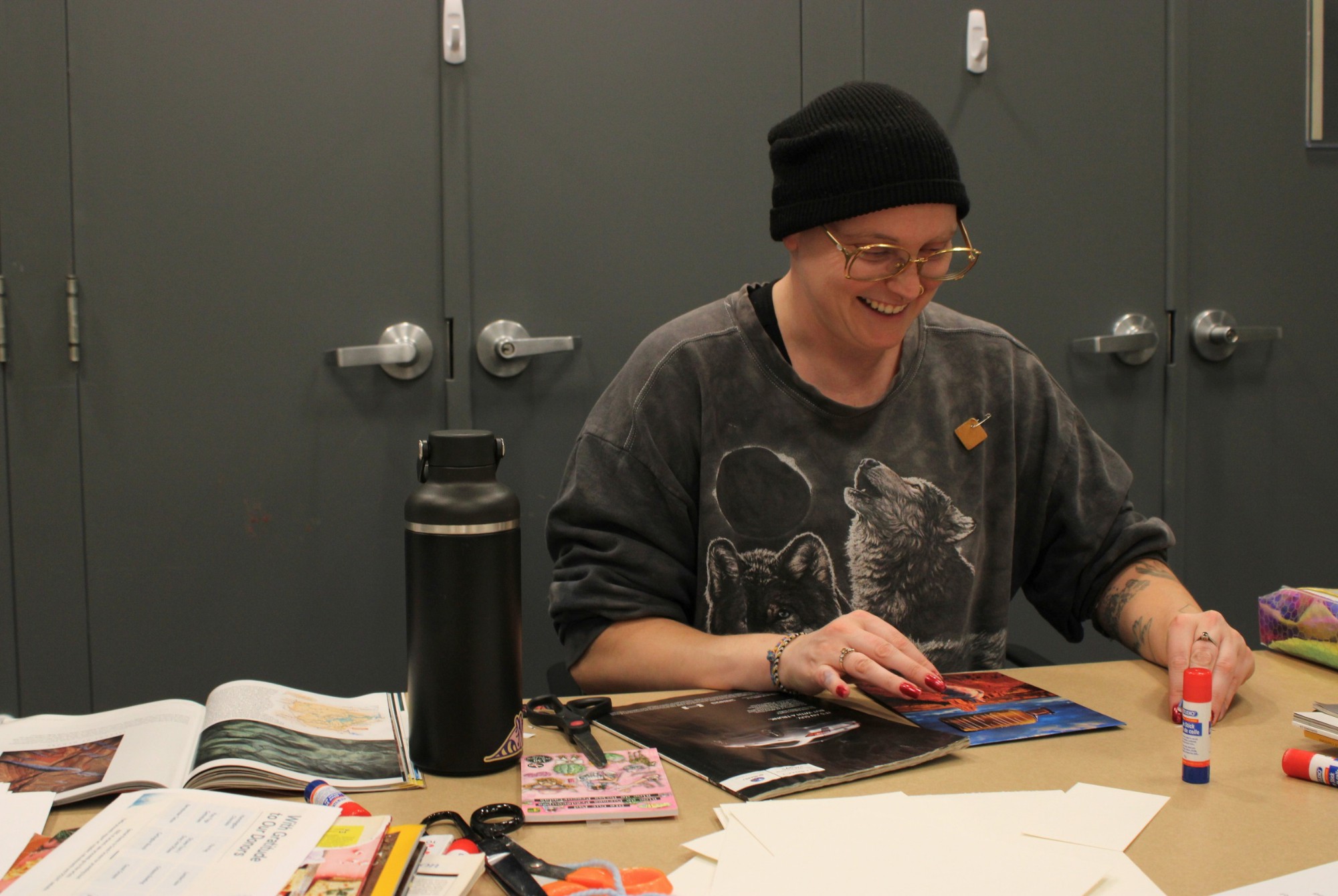
Linnea has been an art therapist for around six years, working with clients from A New Day Youth and Adult Services and its offshoot program, Mind Space.
She believes all art creation can be a therapeutic process, even if the processing that’s happening is subliminal.
“When I make my art, I’m always going through something,” she said. “I can tell a week later, oh, I see what I was going through. I can see I was trying to figure things out.
“You kind of just have to know that your subconscious is guiding you in the right way.”
Human trafficking is a growing problem in the nation’s capital.
According to the latest Trafficking in Persons report from Statistics Canada released in December 2025, there were more than twice as many human trafficking cases and three times as many charges completed nationally in 2023-24 compared with 2013-14.
A news brief from the Ottawa Police Service published in July 2026 stated that between January 2023 and July 2026, its human trafficking unit reviewed 266 reports of human trafficking, resulting in 20 investigations that led to 244 criminal charges being laid. The same report said that around two-thirds of all reported cases across Canada occur in Ontario.
“The reality is it happens way more than people are willing to admit, way more than people want to think about,” said Hala Kassem, program manager at A New Day Youth and Adult Services.
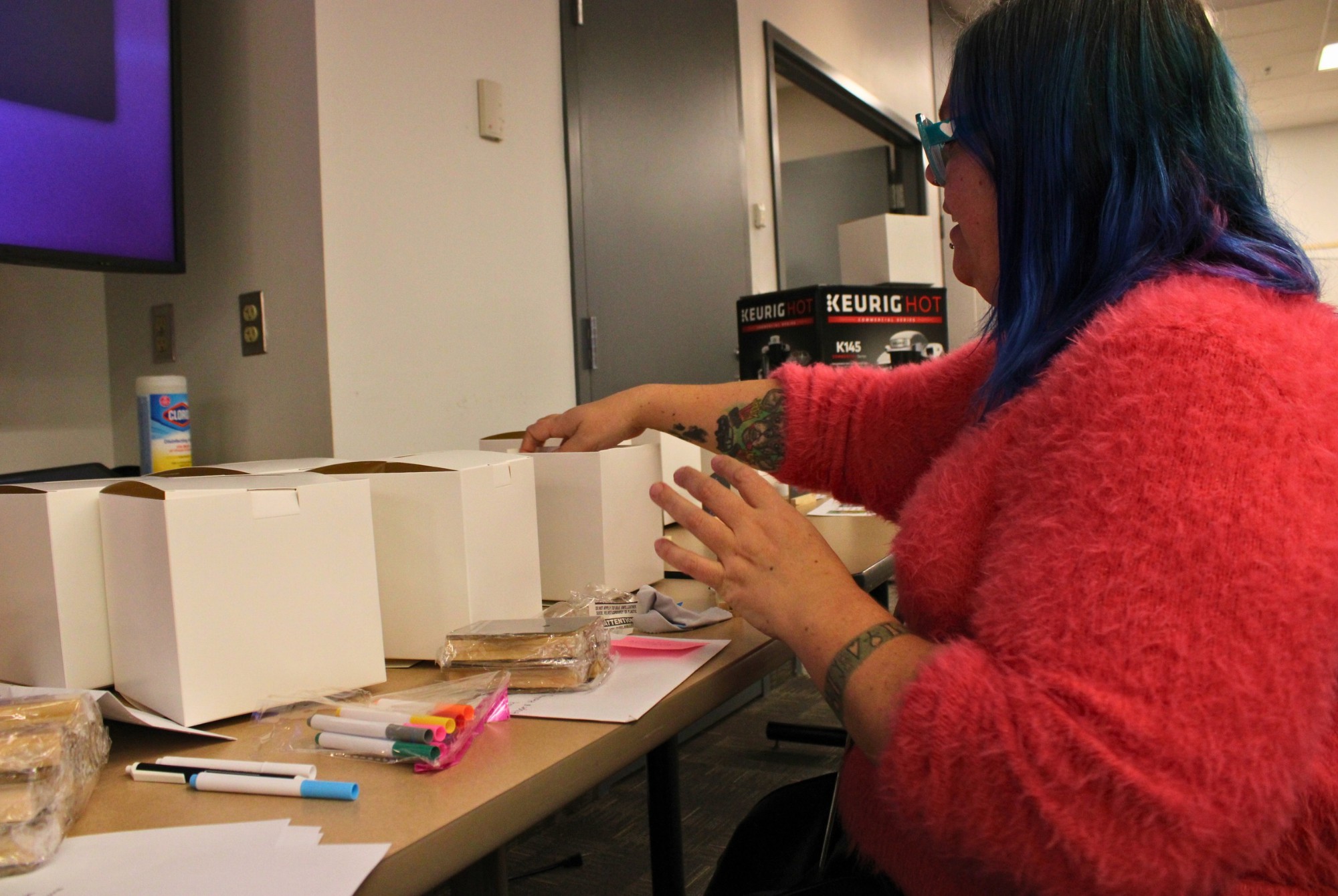
Artists collectively made around $900 at the event and OCHET collected over $2,000 from ticket and raffle sales.
It’s not often survivors have the chance to be provided with free art supplies and be paid for their creations. One of the biggest barriers is accessibility.
“I forget, because I’m so privileged. I live in an apartment that has all the art supplies,” said Linnea. “I work out of an art studio. I constantly have supplies for whatever…But not everyone has access to a space.”
Linnea said “it’s very eye-opening.”
“It really has reminded me of just how scary art can be for a lot of people,” she said.
“Yet, how helpful it can be as well.”