
A short drive past Perth and up a long laneway is Willow Creek Stables. Owned by Korrine Affleck and Wayne Jordan, the farm provides a home for rescued Newfoundland ponies and a breeding program for this critically endangered equine species.
After rescuing a Newfoundland pony a few years ago, the couple learned of their endangered status and decided to begin a breeding program. They currently have 14 full-breed and three part-breed Newfoundland ponies on the farm.
Since the fall of 2021, wood shavings from the Perth Campus of Algonquin College have been donated to Willow Creek Stables located just outside of Perth. The wood shavings are used for bedding on the farm, which frees up money for other necessities.
Several of the large oversized bales of hay are needed weekly Willow Creek Stables at a considerable cost as the ponies are not able to eat Ontario grass as it is too rich for their digestive system. Algonquin College’s Perth Campus is helping to support Willow Creek Stables which, in turn, is helping to increase the number of Newfoundland ponies, a critically endangered breed.
Inside the immaculate barn, Affleck and Jordan both expressed their thanks to Algonquin College for the donation of the shaving. From their stalls, Maggie and Moonlight, the two oldest Newfoundland ponies at WCS, acknowledge their owners’ presence in their own special way. Maggie continued eating her hay, looking up at Affleck occasionally, while Moonlight came to the stall door to interact with Jordan.
Moonlight was a victim of abuse, Affleck explained, and was in very poor physical condition when he arrived at Willow Creek Stables. Jordan was instrumental in helping him heal from the abuse. As Jordan stroked his head, Moonlight’s eyes shone with pleasure at Jordan. Soon Maggie was on her way over to visit Affleck in search of a treat.
The Newfoundland pony is known for its docile temperament, they don’t carry genetic diseases and enjoy being outside whatever the weather, Affleck says. They range between 12-14.2 hands tall, four and five feet, weigh between 500 and 900 pounds and have many adaptations for the Newfoundland climate. These surefooted animals have short ears to protect them against blackflies, thick hair and low-set tails help keep ice and snow off them before noting they are usually healthy animals with no genetic diseases.

This rather short, stocky but hardworking equine emerged as a distinct breed from ponies brought by the first European settlers a few hundred years ago and are considered a landrace species. A landrace species is one which has evolved in response to the climate of an area, in this case Newfoundland, rather than human genetic breeding.
Prior to the 1970s there were thousands and thousands of Newfoundland ponies on its namesake island. In 2021 there are only an estimated 500 Newfoundland ponies, of which only 200 are breeding animals worldwide.
Heather Megill, a retired teacher living in South Stormont, grew in Newfoundland and has many childhood memories of the Newfoundland ponies which lived on the Avalon Peninsula. “I saw them often in small outports around St. John’s as they grazed in small outports around St. John’s as they grazed in open fields,” she said. They were called Torbay ponies in the St. John’s area.
“The terrain is very rocky and hilly with extremely poor soil for growing, so the fields around rural homes were left wild,” Megill said. “You would sometimes see small herds of ponies as they trotted down the rural roads between fields.”
Larry Sharron, a friend of Megill’s, who grew up in Botwood a community in the central Newfoundland, explained how “from 1945-1960, many families had a Newfoundland pony.” The ponies were used to bring the firewood and coal used in heating homes in winter, with ponies usually wintering in outbuildings on the farm.
In spring they were pastured, gathered into small herds, with people keeping track of their location. He recalled as a youngster, he and his friends would locate a herd and “catch one or two and ride them bare back through the trails” and in the fall “the men would locate the herd and their pony home for winters work.”
One of his former neighbours, Sharron said, had a close and long-lasting relationship with a Newfoundland pony. They had spent their lives working together and were often seen in the neighbourhood.
With the opening of the Newfoundland portion of the TransCanada Highway in 1966 and the subsequent end of rail service in the province, there was a correspondingly increase in road traffic. Affleck mentioned records show in the early 1970s there were approximately 12,000 Newfoundland ponies roaming freely in the province.
As road traffic increased, so did the collisions between the wandering Newfoundland pony and vehicles which eventually led to municipalities enacting anti-roaming by-laws. With the need to feed their ponies with imported and costly hay, the day of the Newfoundland pony began to wane.
Andrea Hyde, information specialist in the Legislative Library of Newfoundland and Labrador, explained she had found records in the provincial department of Fisheries, Forestry and Agriculture regarding the decline of the Newfoundland pony. These records indicated the pony population decline was due to several factors. Hyde described these as including horsepower being replaced by mechanical power, owners gelding stallions and communities passing anti-roaming legislations.
This led to thousands of ponies being exported to off-island slaughterhouses and eventually sold as food in European countries. Within a few years their numbers had declined to the point where this gentle, friendly pony was listed as “critically endangered by Rare Breeds Canada, The Livestock Conservancy and Equus Survival Trust” according to information available on the website of the Newfoundland Pony Society.
The Newfoundland and Labrador Heritage Animals Act was passed in December of 1996 after the NPS convinced the government “that the Newfoundland Pony was a living part of the province’s cultural history” requiring legal protection before there few too ponies to maintain a healthy population.
This legislation required all Newfoundland ponies who were exported to have an export permit and mandated the NPS “to protect and maintain the Newfoundland Pony Registry.” The registry provides a lineage report and location of ponies as well as the opportunity for DNA testing of ponies.
In addition to the NPS, there is also the Change Island Newfoundland Pony Sanctuary which provides a breeding program to increase the number of Newfoundland ponies. The NPS is currently working to establish a Newfoundland Pony Heritage Park and Pasture near Trinity Bay in Newfoundland which will provide breeding and pastureland for the ponies.
Increasing the number of Newfoundland ponies is crucial to ensuring their survival. There are currently more Newfoundland Ponies living outside of Newfoundland in other Canadian provinces and the United States. In 2021 there are only an estimated 500 Newfoundland ponies, of which only 200 are breeding animals worldwide.
With the pony population numbers critical, the good news in the Newfoundland pony community was that nine foals were born in 2021.


Local News
CBC News: The National Capital Commission announced the Rideau Canal was closed effective at 10 p.m. Wednesday night due to mild weather conditions, which has affected the ice. The NCC, that manages the skate way announced that red flags will be hoisted, and all the entry points will be closed. “The closure will help preserve the ice so it can be reopened as soon as possible,” said the commission.
National News
CBC News: The Vancouver Canucks announced Thursday afternoon that they hired former Hockey Canada women’s Olympic gold medalist Cami Granato, as an assistant general manager. Granato, formerly a pro scout for the National Hockey League’s newest franchise the Seattle Kraken, spent ample time in Vancouver’s Rogers Arena in search of talent for the league’s newest team. “Cammi is a tremendous leader and has earned the respect of the hockey world. She has a great mind for the game and experience and influence at all levels,” said Jim Rutherford, the Canucks president of hockey operations, in a statement.
International News
CTV News: Marinella Beretta’s body was found in a chair in the living room of her home in Northern Italy, two years after her death reported CNN affiliate SkyTg24 on Monday. The cause of Beretta’s death is unknown according to Francesca Manfredi, a Como city hall press officer. The medical examiner reported she died sometime toward the end of 2019, based on the extent of the decomposition.


Local News
CTV News Ottawa: Steve Kanellakos, the city manager of Ottawa, announced Wednesday morning that the Ottawa police have made the decision to designate specific parking spots for the truckers in the convoy. The parking spot will be located at 1500 Bronson Ave. The police are hoping that this will help with the congestion happening on the residential street due to the trucks.
National News
The Canadian Press: Christine Elliott, the health minister of Ontario announced Wednesday afternoon, that the province has no plan to scale back mandates. Unlike the other provinces such as Alberta, that are removing vaccine mandates, Ontario will still keep in place their mask and vaccine mandates. Although the Ontario government will continue with their plan to ease back restrictions in three weeks intervals.
International News
CBC News: Sweden will no longer be doing wide-scale testing throughout the country. Karin Tegmark Wisell, Sweden’s public health agency chief, told the national broadcast SVT that starting Wednesday wide-scale testing will no longer be available due to the cost overweighing the benefits. Only health-care workers, elderly-care workers and vulnerable citizens will be granted free PCR testing. Rapid testing will be available for the rest of the citizens to buy at local pharmacies. Sweden does have a high vaccination rate of 85 per cent, leaving health officials optimistic towards the future.

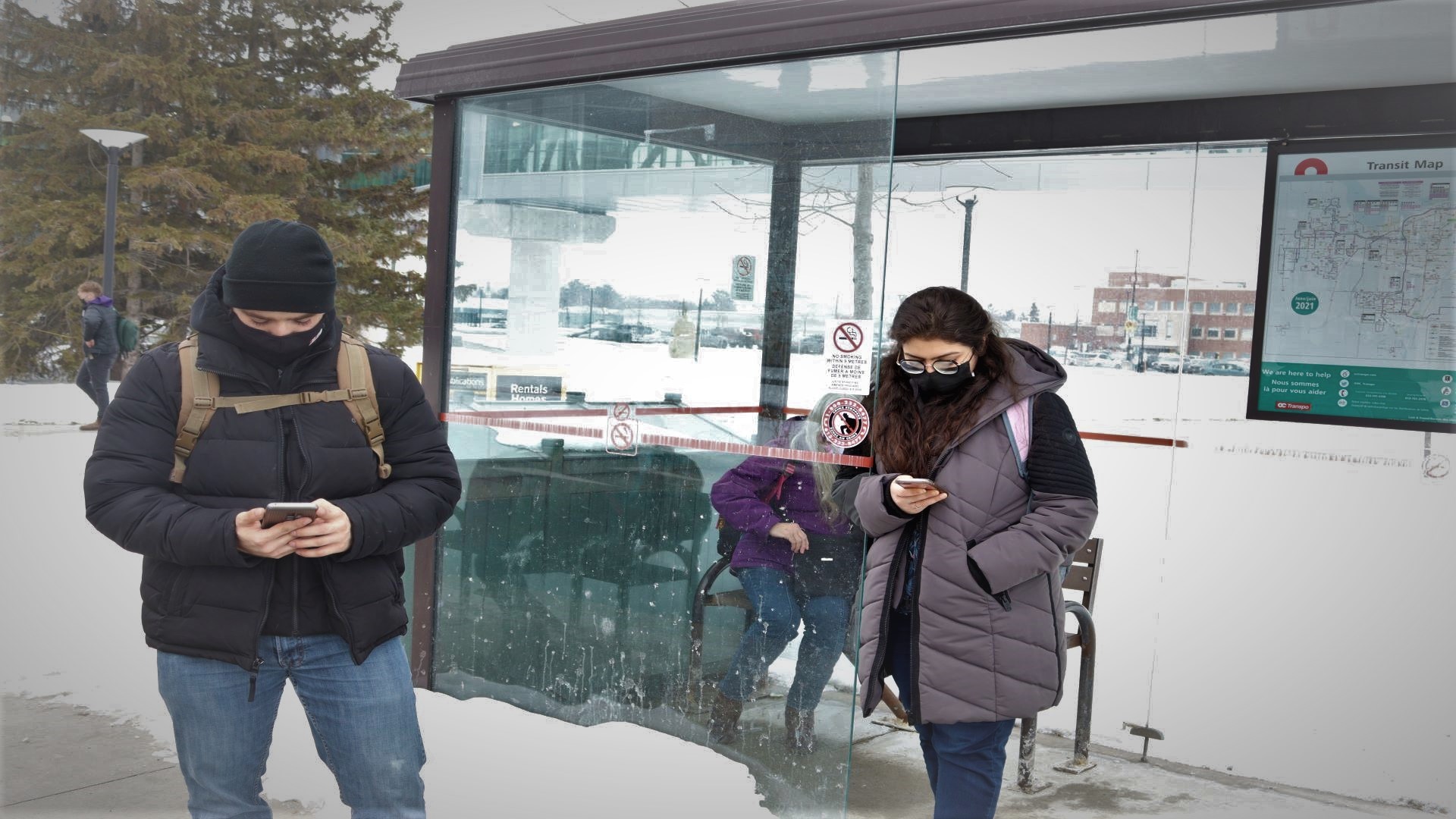
Parking fees and rising gas prices have caused students and staff to set aside more commuting funds than they initially expected, according to Lisa Fournier, a first-year paralegal student at Algonquin College.
With gas prices reaching $1.50/litre , students and staff at Algonquin College are familiar with cutting back on extra-curricular driving, according to Fournier.
“I am sad about the increased gas prices,” she said. “As a student, I pay my own rent and bills, so the increased prices have required me to focus more on only going to places I absolutely have to.”
Travelling from all over Ottawa and the surrounding area, and even parts of Quebec, students are familiar with the time, money and mileage spent to get to and from the college.
“I actually did the math with a classmate and the move to hybrid will save her $400 a month on gas – she lives in Arnprior, Ont,” said Fournier. “My transportation is more reliable than OC Transpo. Given the recent weather, I would be nervous to rely on public transit and their timing.”
A daily commute to Algonquin College campus from Arnprior, Ont. is 62.2 kilometers one way.
While alternative modes of transportation are an option, and always have been, the uncertainty of OC Transpo arrival times has prompted certain students to stick to their own vehicles. Among other things, the bus fare can add up quickly with each trip costing $3.65. A monthly bus pass would cost $122.50.
“I prefer driving to campus because it means I can avoid waiting for the train and risking running late to class,” said Melissa Cousineau, a second-year animation student.
“My transportation is more reliable than OC Transpo. Given the recent weather, I would be nervous to rely on public transit and their timing,” said Fournier.
O-Train fare is the same as OC Transpo – $3.65 per ride. While buses and the O-train are accessible for some people, such is not the same for Cory Haskins, the academic chair for the school of hospitality and tourism at Algonquin College.
“I have not considered alternative modes of travel. Bus service from my neighborhood is very limited,” said Haskins.
“I prepaid for my parking pass at school and am no longer getting the benefit of having a parking space there, that I have paid for. But I am saving significantly on gas, and just have to go to and from work now,” said Fournier. Day, weekly or monthly passes can be purchased at the College, costing $18, $121, and $736, respectively.
Claude Brulé, president and chief executive officer at Algonquin College sent an email in late January, stating classes would remain hybrid, causing students and staff to move forward predominantly via remote delivery.
“I prefer remote learning for many things, and the commute is one of them,” said Cousineau.
While many students, and staff at Algonquin College pay a lot for travel, and parking at the college. Such isn’t the same for those living within walking distance, or living in residence. Although, living closer has provided alternate issues such as increased rent costs and no hands on learning, according to Angela Arthur, a first-year early childhood education student at Algonquin College.
“I do think that it’s not value for money for me as I’m paying such huge fees and still studying online,” said Arthur.
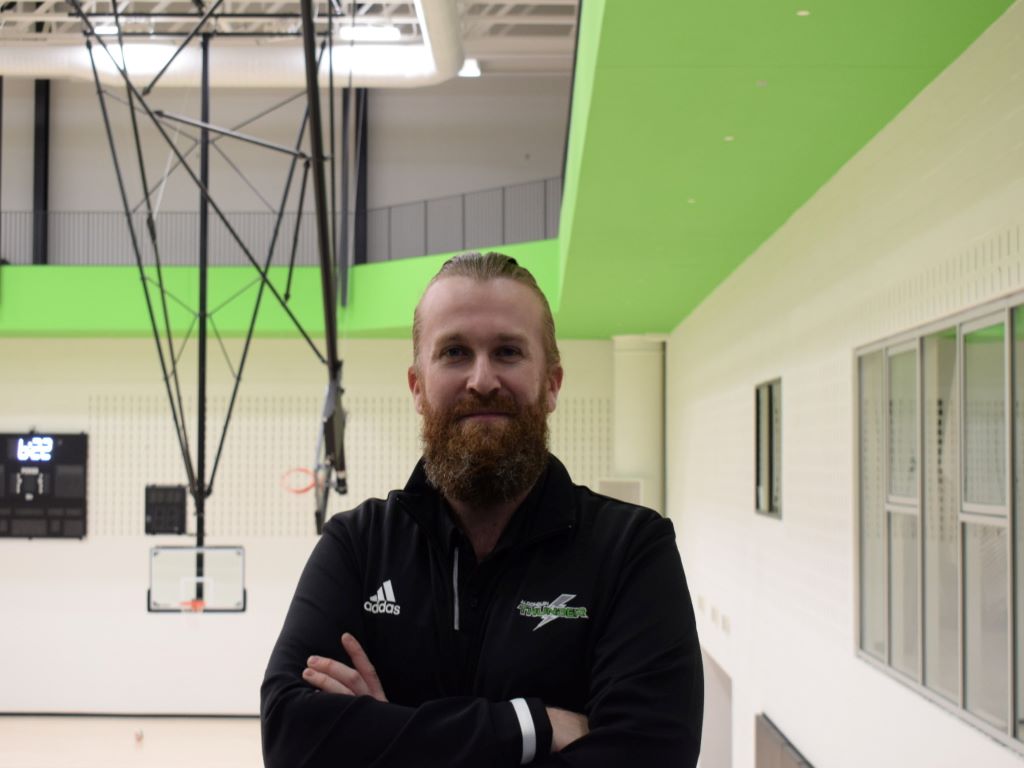
The Ontario Colleges Athletic Association announced in a statement varsity basketball and volleyball will be returning to competitive play on Wednesday, Feb. 9.
It was March 8, 2020, when Algonquin College’s women’s basketball team last played.
Now, the team is preparing to play for the first time in almost two years.
The Algonquin Wolves women’s basketball team will open their return to competitive play on Friday, Feb. 11, against Durham College in Oshawa. The team’s first home game on their new court at the ARC will be on Friday, Feb. 18, against Loyalist College.
The season will have eight regular-season games, followed by playoffs.
The Wolves began practising for a return to competitive play in October 2021 but got shut down from playing when the Ontario government announced new COVID-19 restrictions on Jan. 2, including a ban on indoor sports. The team’s first game was originally scheduled for Jan. 11.
“I couldn’t be happier about being back in the gym,” said Jaime McLean, the head coach of the women’s basketball team at Algonquin College.
McLean has been coaching the team since the 2017-18 season.
“Finally stepping back onto the floor, I had those going into a championship game nerves,” said McLean.
“Returning to competitive play is something that I thought would never come back to us,” said Jade Lyons, a forward on the team.
Lyons previously played for Carleton University’s women’s basketball team. Carleton University attended U Sports nationals and finished sixth in the country while Lyons was on the team.
“Being able to return to play is something that I have waited for since the day that it was taken away from me,” said Lyons. “Being within the sports environment again is so stress relieving and is a really huge part of my life.”
“I can’t even describe how excited I am to begin playing again,” said guard Sydney Moore. “It was the one thing I felt I missed most with COVID, just being able to compete.”
This is Moore’s first season playing with the Algonquin Wolves and her second playing OCAA basketball. Moore last played with St. Lawrence College during her freshman year in 2019-20, a season in which she won rookie of the year.
The pandemic has been tough for athletes and coaches alike.
“COVID really messed up a lot of plans and the lockdowns almost felt endless,” said Lyons.
“During COVID everybody has had those highs and lows,” said McLean. “But then, being in touch with our athletes and keeping in the loop on how they’re doing and stuff, sort of kept that coaching flame going.”
The Algonquin Wolves have an optimistic view on expectations for their upcoming season.
“I think we can have a winning record but it’s about being competitive in every game,” said McLean.
Players and coaches have a positive attitude towards their season partly because of the work ethic of the team.
“I think we have a strong group of girls who are willing to put in the time and effort required to win,” said Moore.
“I would say that my expectations for this season would be to win most of our games, persevere through adversity and continue to work harder every day and every game,” said Lyons.
Winning each game will be even more important for the Algonquin Wolves as every game is even more meaningful than before because of the shortened eight-game season.
“Playoffs are going to come much quicker than in previous years and we need to ensure that we take every game seriously,” said Lyons.
A shortened season is not necessarily a negative change for teams returning to play after a pandemic-caused hiatus, said McLean.
“With a shortened season it’s kind of actually something that’s beneficial in disguise,” said McLean. “It’s going to be nice to have a shortened season to just get everybody back into competing again.”
In their previous 2019-20 season, the Algonquin Thunder played 16 regular-season games. In the seasons before 2019-20, the team played 17 games.
For the Algonquin Wolves women’s basketball team, it is a year of many new changes: a new return to play, a new team name switched from the Thunder to the Wolves, new team members and a brand new court.
The new court is one of the main attractions at the new $50 million ARC and has athletes excited to be the first at Algonquin College to call it their home court.
“The ARC building is a phenomenal building that I feel privileged to be able to call home court,” said Lyons. “It is an amazing facility that offers all athletes so many opportunities to get stronger and better.”
The new court at the ARC is larger than the previous court located in the A-building at the Algonquin College campus.
“I’ve got to double how loud I am just to communicate up and down the floor,” said McLean.
Bleachers at the ARC will be empty of fans to begin the season.
“Due to COVID-19 protocols, the OCAA has determined that there are to be no spectators at games until reviewed on February 21,” said Cheryl MacEwen, manager athletic operations – varsity.
Playoffs across all OCAA sports are set to begin on March 9 and will wrap up on March 17 with championship games.


Local News
CTV News Ottawa: Ottawa police are growing concerned about the children who are allegedly living inside the trucks that are a part of the convoy. The police are discussing the next steps with the Children’s Aid Society but according to Deputy Chief Steve Bell, they are not considering enforcement activity. Bell believes that 25 per cent of the trucks parked outside of Parliament have children living in them and there are health concerns regarding the conditions.
National News
CTV News: The premier of Saskatchewan Scott Moe announced at a press conference on Tuesday that proof of vaccination will no longer be mandatory as of Feb. 14 at 12:01 a.m. Moe believes that the vaccination policy has done its job and encouraged residents to get vaccinated but that now it is creating a divide in the province. The Saskatchewan NDP has asked the government to share a clear map indicating the easing of restrictions. The NDP said they find it hard to trust Moe and believe that the Saskatchewan government wants to be the first province to ease restrictions.
International News
CBC News: New Zealand is seeing its own convoy protest outside of Parliament. People from all over the country drove to Parliament on Tuesday to protest vaccine mandates. Most of the protestors were unmasked and their vehicles blocked roads in Wellington for several hours. Prime Minister Jacinda Ardern is not going to meet with protesters and believes that the convoy does not represent the majority of the country.

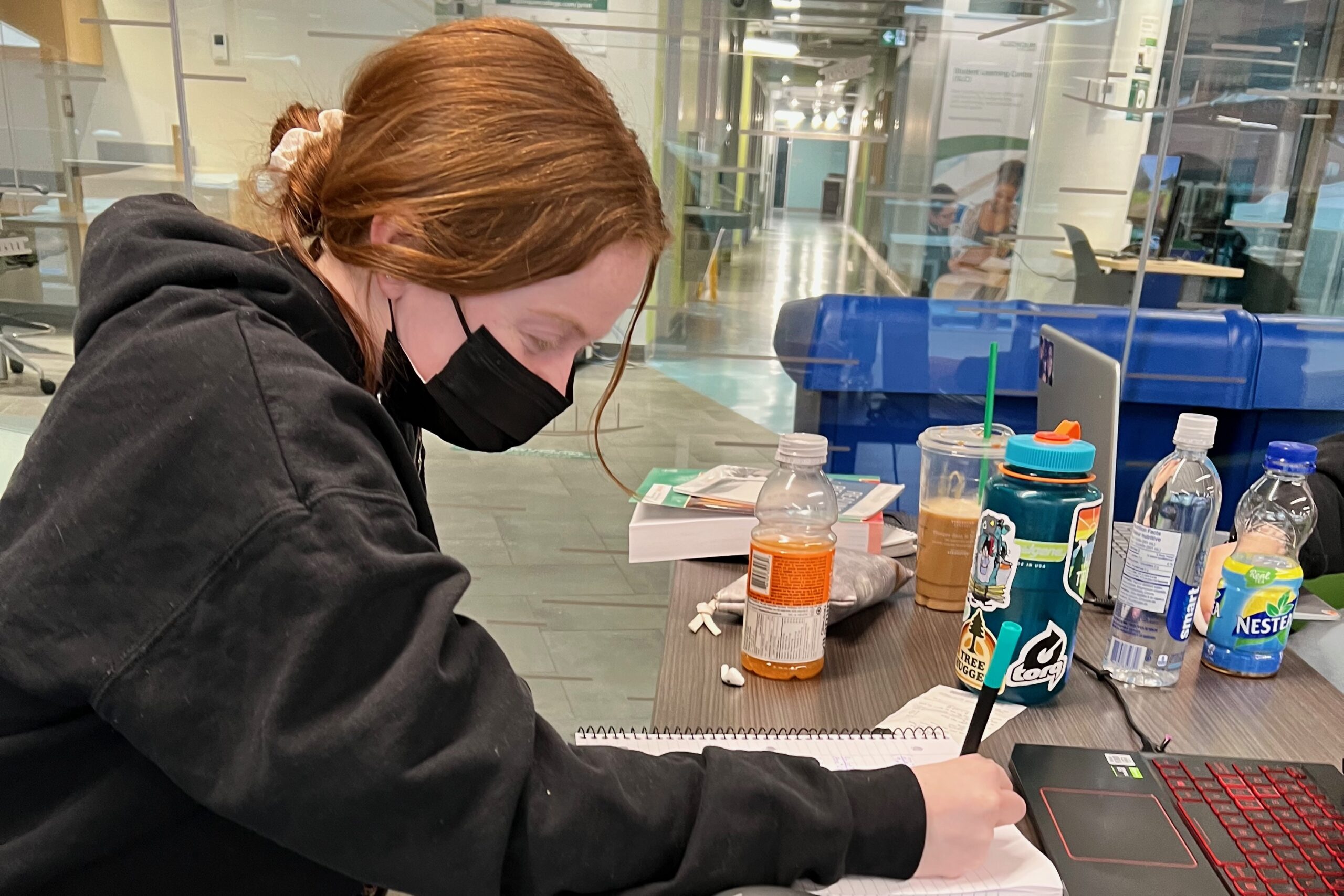
Danielle Allard, a professor of communications at Algonquin College, once had 61 students working on a single Google Doc at the same time, so she knows first hand there is a place for digital notes in a student’s life.
“Digital has its place,” Allard said. “It is a living to-do list. Paper is hard to change. When I need to update my list, I prefer digital. Or when I need to be creative on the go.”
But digital isn’t the only way to go. There’s no denying that paper notes are tried and tested. Ever since the first grain shipment was painted out on a papyrus in the Nile delta, humankind has employed paper for keeping track of everything. Paper notes are the tried-and-tested method of note-taking for students throughout history.
Which is the best method for taking notes? Should you write everything on paper, or type it all out on a digital notepad? This debate has raged as long as there have been computers. Students and faculty have their own preferences, but who is ultimately right?
But when digital devices appeared in the early 1980s, and with them, electronic word processors, the game changed. Not since humans stopped nailing words into stone tablets has our method of keeping notes seen such disruption. Some students are torn between the two.
“Paper notes are easier to use than digital notes,” said Gwyneth Jones, a first-year Algonquin College student in the architecture program. “I would need three screens running at the same time if I tried to take digital notes in this program.”
First-year paramedic program student Kayden Beaudoin agrees. “I prefer paper notes,” he said. “Paper notes help me memorize the material.”
Beaudoin doesn’t completely rule out digital notes, however. “For projects, I prefer notes on my computer to stay organized. But for taking down info to memorize, I write it out.”
Danielle Allard, the professor who can see there is a place for digital notes in a student’s life, advises most students to stick to paper.
“Paper allows people to engage in the act of writing,” she said. “People here at the college are mostly kinaesthetic learners. They prefer hands-on learning that is actively engaging.”
She also recognizes how useful digital notes can be in group projects. “It’s great for visual learners,” she said.
Still, some students have completely embraced technology in their studies.
Katie Bishop, a first-year Algonquin College student in the paramedic program, prefers taking digital notes. “I lose paper notes too often,” she said. “I like that with digital notes. I can upload them to the cloud. It’s more efficient and I can access them anywhere. It’s really helpful for images and diagrams.”

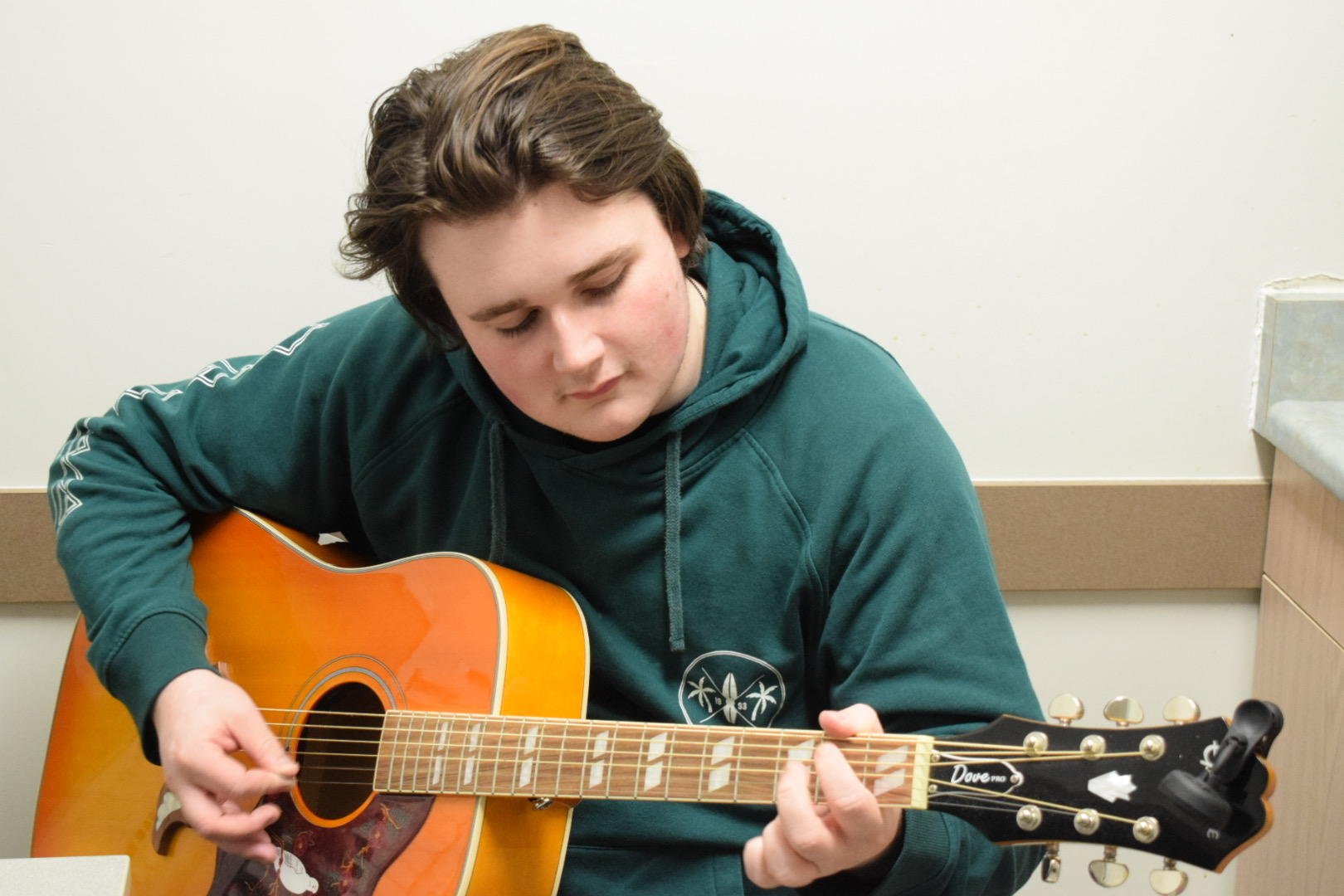
The COVID-19 pandemic has left impacts on almost everything — the music industry arts program at Algonquin College is no different.
The MIA program was previously almost fully on campus but is now largely online. “Obviously the pandemic, like I’m sure many programs in the college, has drastically changed what we do,” according to Colin Mills, the MIA program coordinator and creator.
Conceptually the program is the same, but the way these concepts are taught to students has shifted, especially for hands-on classes.
“I think in the big picture they’re learning the same stuff, but I think the practical component of it with the students actually touching things and being able to be in front of something they’re learning about all the time is lacking,” said Mills.
MIA still does have practical components tied to the course despite the pandemic.
Students have six hours of class time in the program’s recording studio every week and get an additional 15 hours of studio time to themselves each semester. Previously, students would have 10 hours of studio classes a week and additional studio time to freely use.
Although affected by the pandemic, MIA has not lost its popularity. The 42-week-long program started the fall semester with the program’s maximum intake of 80 students.
Virtual classes are more difficult for many students and teachers in the MIA program.
“Being in a class, you have the responsibility to focus more,” says Aiden Flikas, a second-term student in the MIA program. “When you’re at home and at your dorm, it’s easy to just lose track and not have that personal connection with professors that you would have in-person.”
Not only is it more difficult, but it is also less enjoyable to teach virtually, said Mills.
“It’s a little bit more challenging for us to make sure they all can meet the same knowledge at the end of the semester than they would’ve if they were 100 per cent in person.”
Virtual classes have meant the connection between students and professors has been reduced.
“We have so many students that have never turned their camera on, and I’ve never had a one-on-one meeting with them, so I really don’t know anything about them and I really miss that,” said Mills.
“I can deal with living in my basement eight hours a day and teaching from home but I just miss that student connection.”
Other students in the program prefer if the course continues to be delivered virtually.
MIA student, Aidan Elliot-Perreault, prefers to make music in his room instead of in the studio because he can use his own instruments and go at his own pace.
“I can record almost everything as well in here, as I can in there,” said Elliot-Perreault, about recording music in his room instead of in the recording studio. “I feel like the classroom I definitely learn less because I have less time to use tools to my full ability.”
Despite classes being mainly virtual, there has been musical collaboration between students in the MIA program.
During the fall semester, two students from the MIA program, Aaron Crozier and Nathan Zinck met over discord to collaborate on a song called Orange which was released on Oct. 8, 2021, on Spotify, Apple Music and Tidal.
Students in MIA have been collaborating on music to make use of the diverse talent in the program, said Crozier.
Collaboration in the Ottawa music industry is also frequent, according to Mills.
“I remember a time where no one was talking to each other or helping each other out,” said Mills. “I’ve sort of seen artists helping artists and producers helping other producers and a little more comradery.”
For unknown artists trying to break mainstream, Ottawa is a good starting point. “It’s a good market to sort of build your fan base and build your career, and then hopefully build it enough that people take note,” said Mills.
Students in the MIA program are taught tools to succeed in the music industry such as networking, marketing and social media, but getting exposure in the industry is ultimately up to artists and producers in the program, said Mills.
“We give them all of the tools to go out and hopefully know how to get that exposure,” he said. “With the success that some of our students have found, a lot of it is self-driven.”
For artists in the MIA program trying to get exposure, Mills has a simple piece of advice: “get out there and meet people.”
“The more people you meet, the more opportunities will come.”