Transit, flooding and public safety dominate Ward 9 candidates debate
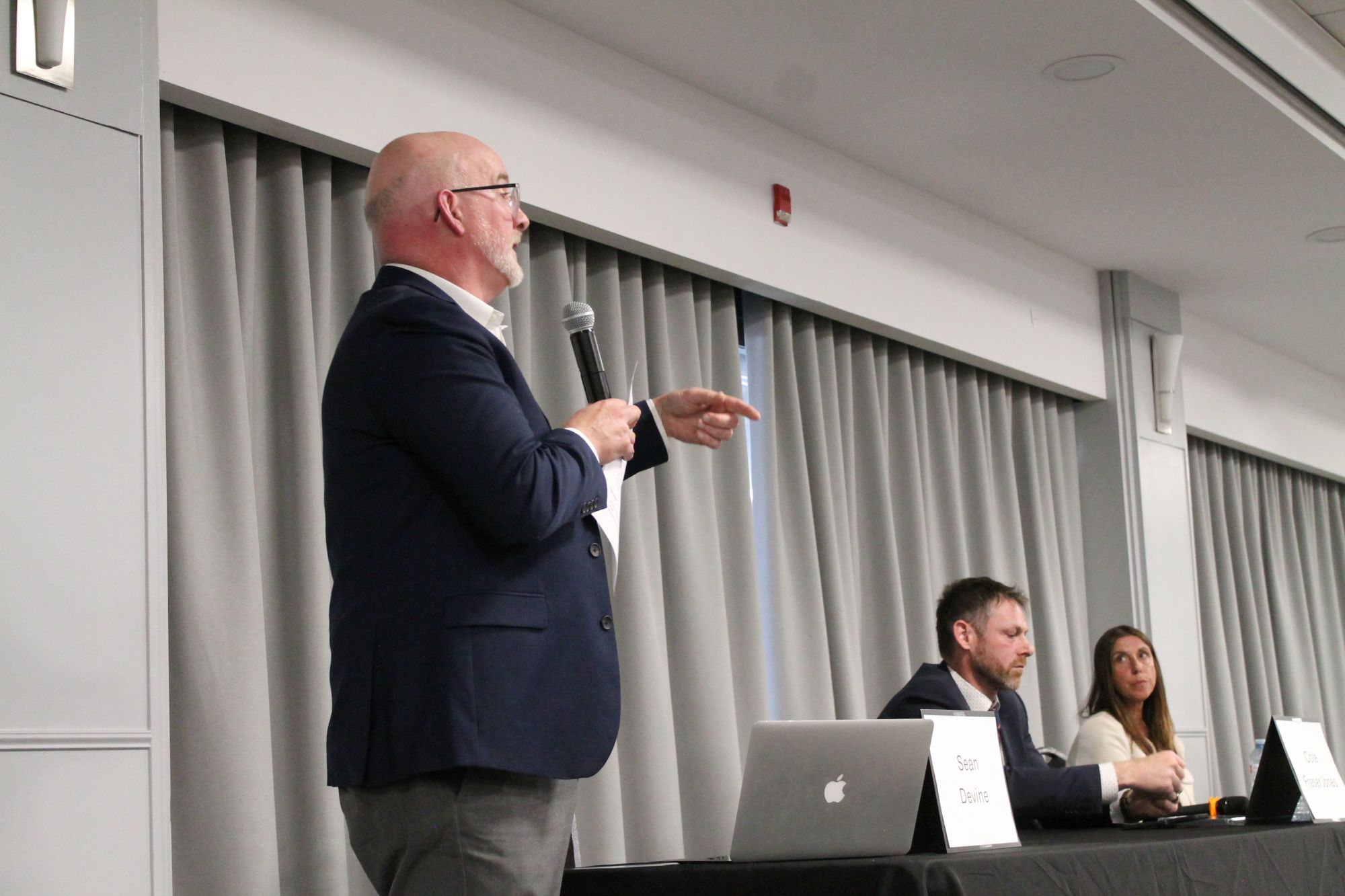
With about 200 residents in attendance at the Nepean Sportsplex on Oct. 15, three candidates faced off to make their case for Knoxdale-Merivale Ward in one of the city’s more contentious races.
The Knoxdale-Merivale Community Association hosted the debate.
Incumbent Sean Devine, a former playwright and community association director, Anna Ielo-Tal, a federal public servant, and Cole Fraser Jones, a veteran and current public servant in the federal government, discussed several issues, including transit, infrastructure maintenance, development and neighbourhood safety.
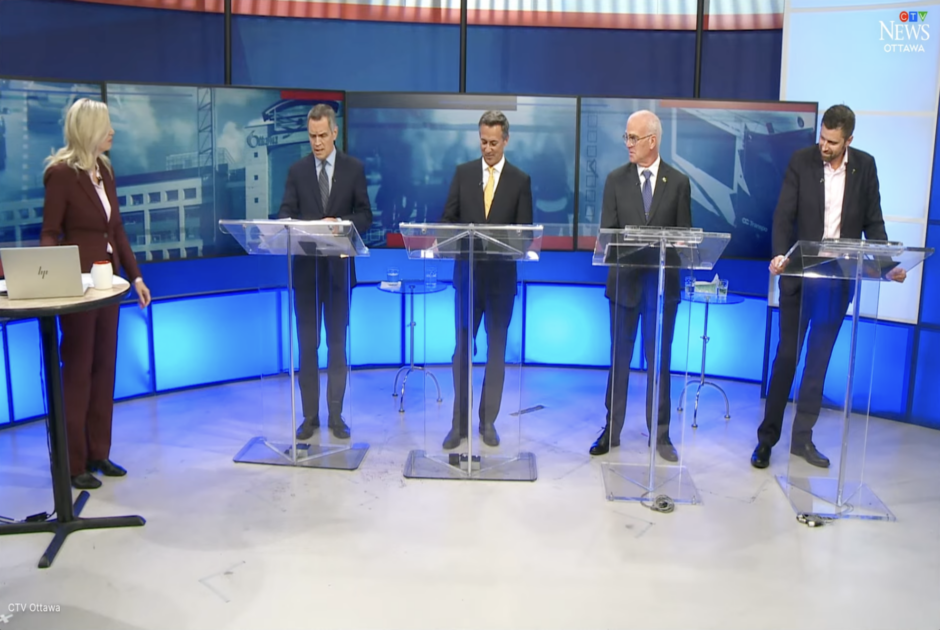
A previous televised debate held last month saw friction between Devine and Ielo-Tal carry over onto social media, with accusations by Devine that Ielo-Tal misrepresented his positions and Ielo-Tal responding to accuse Devine of bullying.
However, the Oct. 15 debate did not repeat any of that spiciness, remaining focused on the topics.
Ongoing transit woes among top priorities for candidates
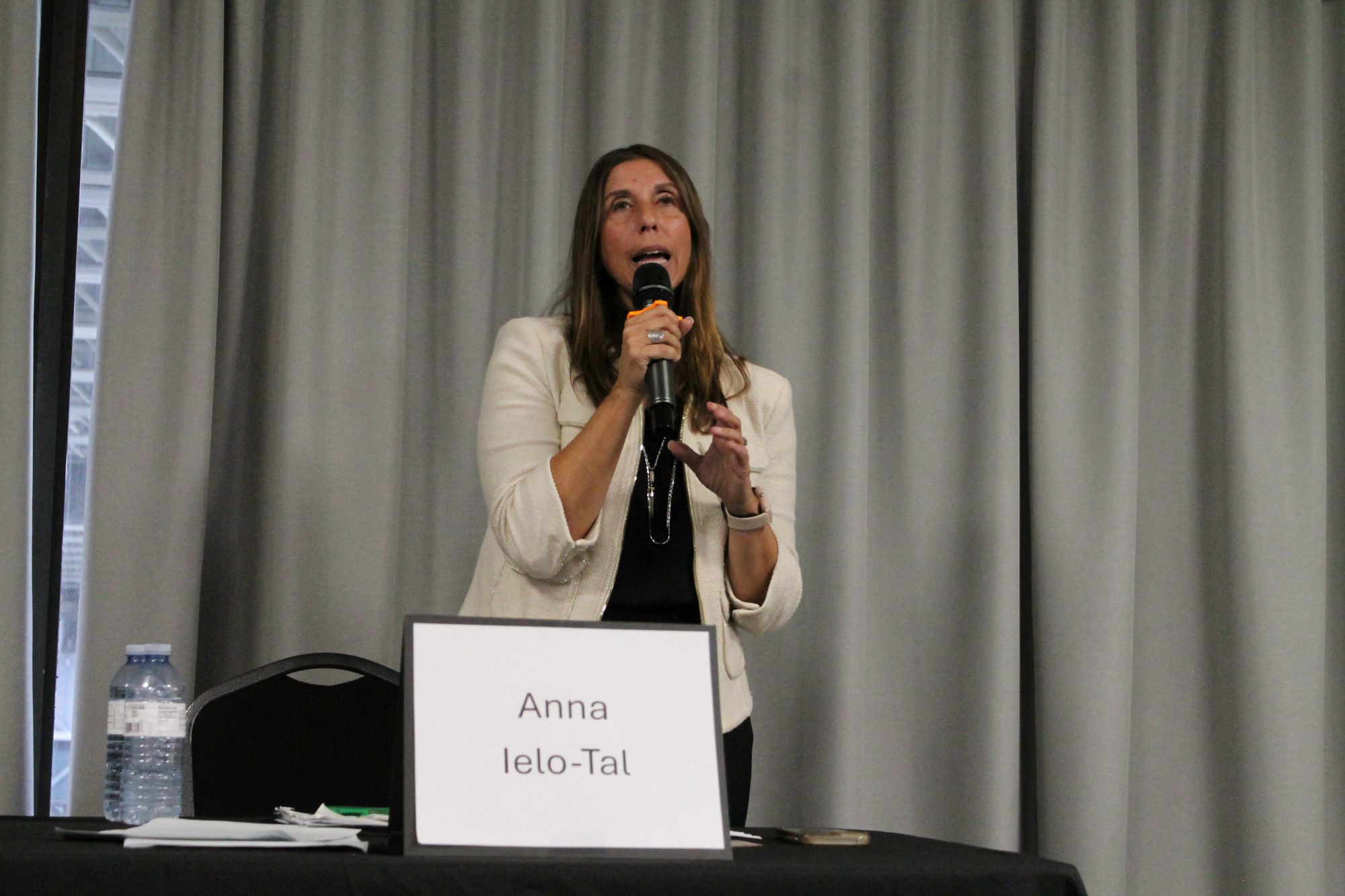
Ielo-Tal opened the transit portion by slamming the state OC Transpo.
“Transit is a mess. Everyone is going to say the same thing. I would really advocate to bring back express buses,” said Ielo-Tal.
She also addressed reliability, saying that residents deserve a transit system that they can count on.
“When the bus says it’s going to come, it actually has to come,” she said. “Putting back the trust in our transit system to make it more reliable is something I would push for.”
Devine pointed out he had worked with OC Transpo to bring back express bus route 282 to the ward and would continue to encourage ridership.
“I’m going to be working on making sure that bus is packed, because if it’s packed, they will add more and more runs to it,” he said
He then turned to concerns about light rail transit, saying the current construction had not been well planned. He added that he had pitched a transportation plan to both the federal and provincial governments that would aim to increase transit capability using existing rail infrastructure.
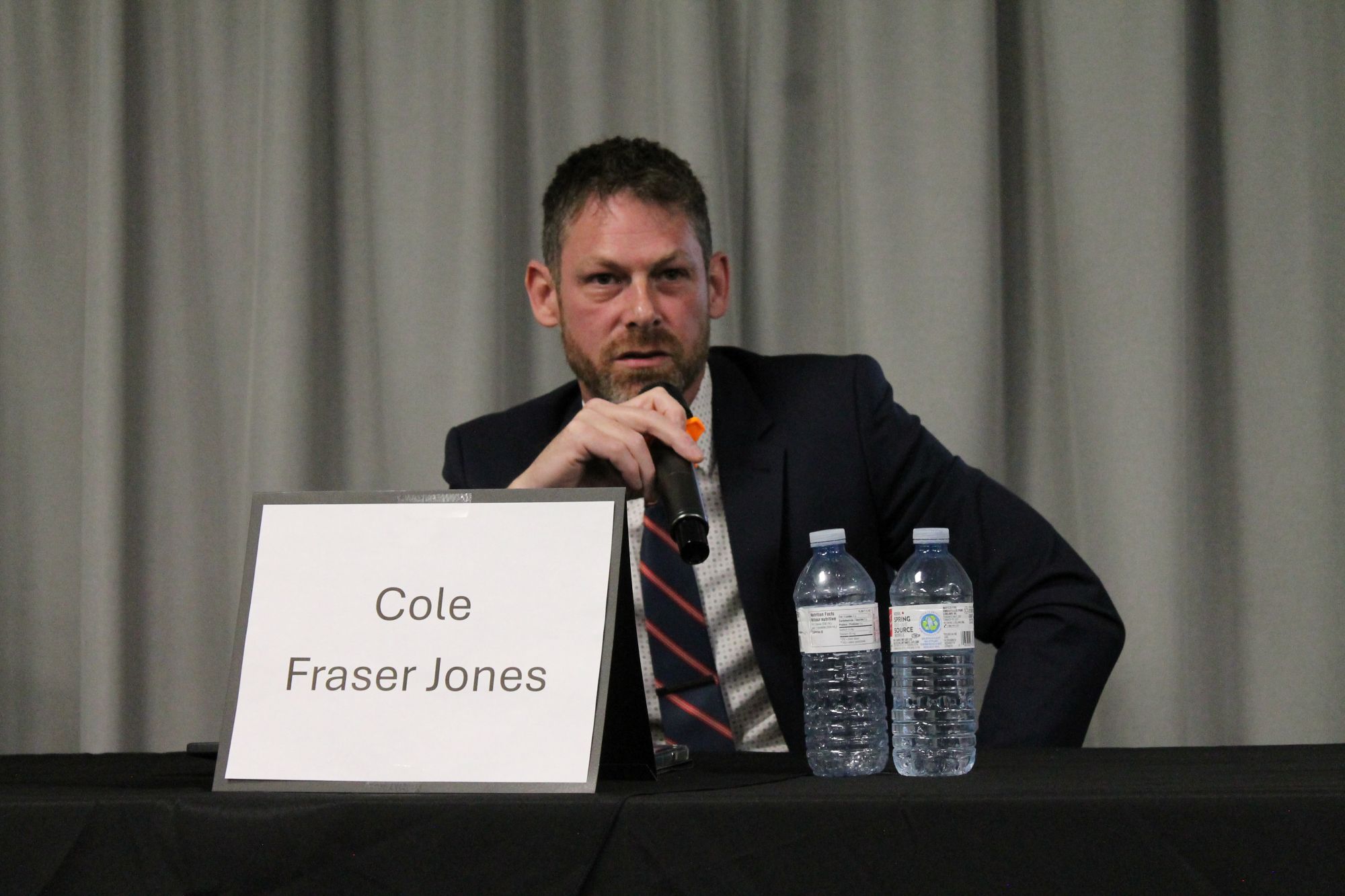
Fraser Jones agreed LRT construction has been problematic, saying, “it’s painfully obvious to me that the whole thing was poorly designed as the wrong vehicle for the wrong climate.”
However, he differed on whether the city should continue using what has already been built.
“Unfortunately, the track’s gotta be tore up,” said Fraser Jones, adding that he would like to see the next mayor appoint a special cabinet and secretary of transit to ensure political accountability on future transit decisions.
Infrastructure resilience amid a time of climate change and city hall inaction
Ielo-Tal said that citizens had told her, following numerous summer flooding events, that the city lacked emergency preparedness and “could have done a lot more” but did not share a plan for infrastructure maintenance or improvements.
Offering a more comprehensive response, Fraser Jones said development has not adequately accounted for environmental realities and climate change.
“The less fields we have and the less grass we have, and the more roofs and more roads we have, there’s less places for the water to go,” he said. “The only real solution is to upgrade the infrastructure for the density that we’ve added. If we’re going to add more intensity on top of it, it has to come in the proper order.”
Devine said, “We can’t stop a storm from coming, but we better damn well do a better job of protecting ourselves against them.” He criticized mayoral candidates for not making extreme weather preparedness a priority in their campaigns.
“I am grateful that the city has said that it needs to invest in infrastructure, because we absolutely do. In Carleton Heights, which was one of the areas hardest hit, that infrastructure has not seen any updates or upgrades in the last several decades,” said Devine.
He added that, following a motion he brought to council, the city is conducting a citywide investigation on critical infrastructure updates.
Clashes over police budget and neighbourhood safety efforts
All three candidates expressed concerns about community safety and policing efforts in the ward.
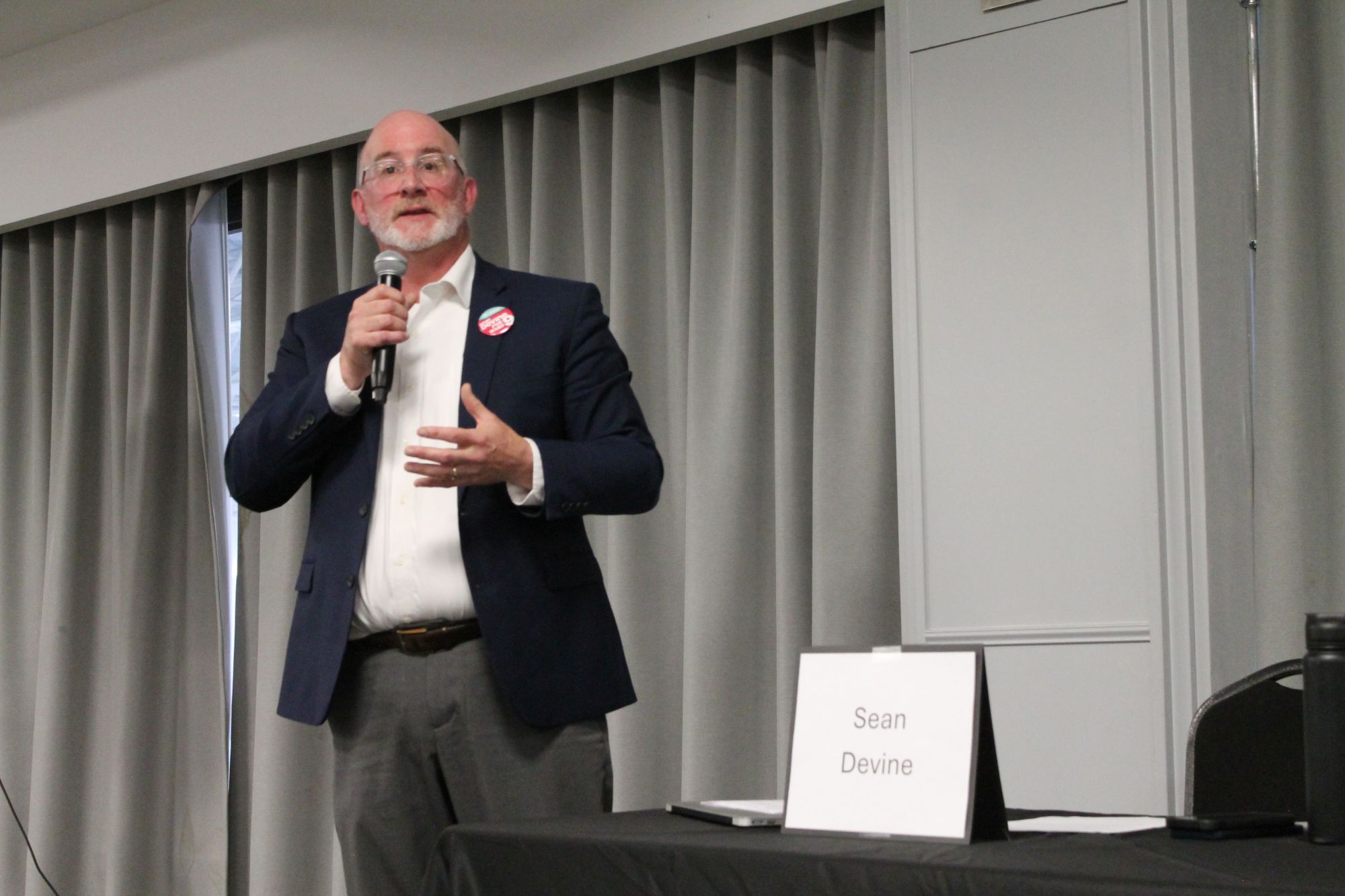
Devine, who voted against increases to policing in three of the four budgets during his first term, said the problem was less about the amount of money for policing than how the funds were allocated within the department.
“In the fourth year I proudly and gladly supported the police budget because I finally started seeing some of the improvements that I was looking for,” he said. “One of those is the new district policing model…I’m really excited (for it).”
Responding to increases in funding, Ielo-Tal said, “I would never not support the police budget,” adding “I’m not sure why Sean didn’t.”
She said she would also start a neighbourhood watch by engaging community members, working with police and focusing on crime prevention measures such as adding more lighting in parks and community spaces.
Like Devine, Fraser Jones said he would not support increases to policing.
“The police budget is already 10 per cent of the city budget, so clearly it’s not a money problem,” he said. “The OPS has clearly a lot of fiscal issues and organizational issues.”
“I won’t ask residents for more money until we figure out where the current spending is going,” said Fraser Jones.
Debate enlightened and confirmed residents choices
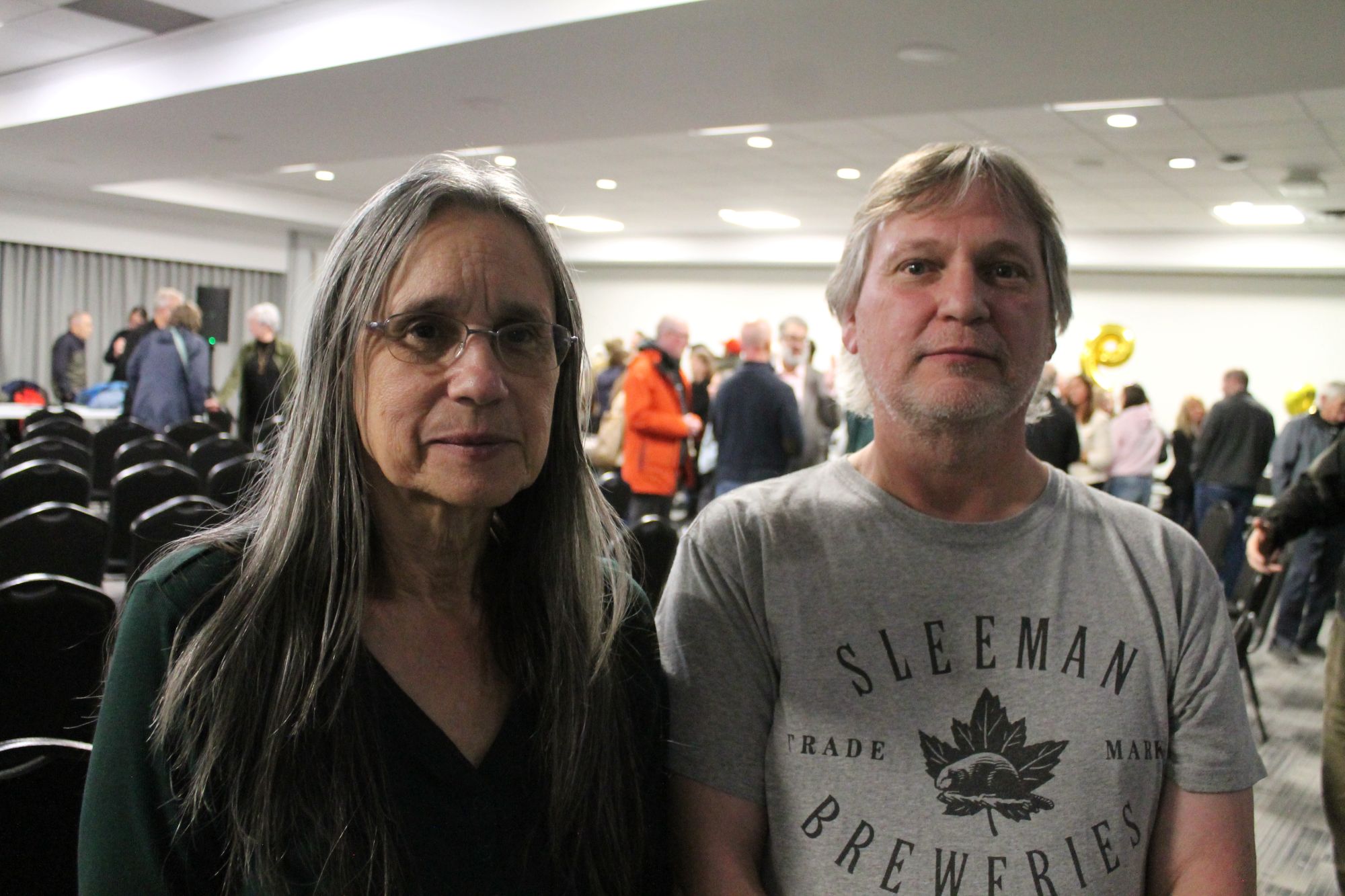
Dave Hay and Pauline Budd, both residents of Ward 9, said they came to the debate with different levels of information about the candidates.
“To be honest, I actually didn’t look at anybody’s platform. I came in blind,” said Hay. “I wanted to hear what they had to say.”
He added he had not made up his mind but was intrigued by what he had heard.
“There were some very interesting answers, and it could go either way. I’m not really sure who yet,” he said.
For Budd, the debate confirmed her support for Devine as ward councillor.
“He’s very hands-on, easy to get a hold of and he has a newsletter as well that is very detailed,” she said.
Election Day is Monday, Oct. 26. Polling stations will be open from 10 a.m. to 8 p.m.